
Andrew Finkle recently presented a thesis to the University of Waterloo, exploring the potential for more effective materials. In ‘Cellulosic Nanocomposites for Advanced Manufacturing: An Exploration of Advanced Materials in Electrospinning and Additive Manufacturing,’ Finkle continues the trend in refining techniques and additives for better performance.
This study centers around polymer nanocomposites; however, today researchers and manufacturers around the world are engaged in research using additives to create other unique materials too like composite hydrogels, bronze PLA, and composite SLS—all in hopes of accentuating specific projects which may require different mechanical properties or distinct features related to functionality.
The Role of 3D Printing in Medicine
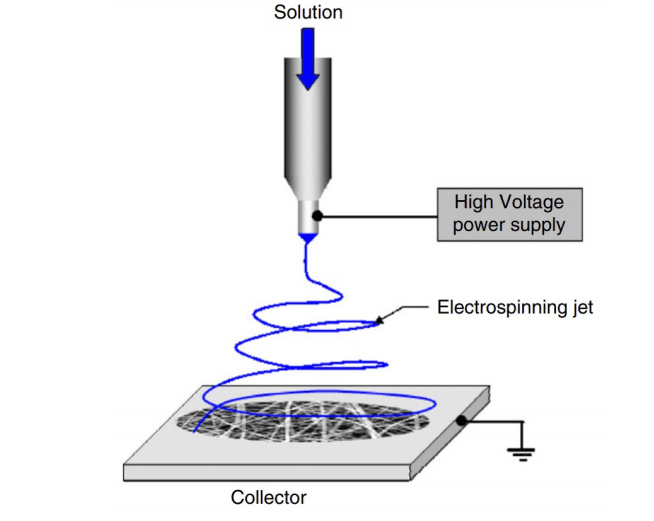
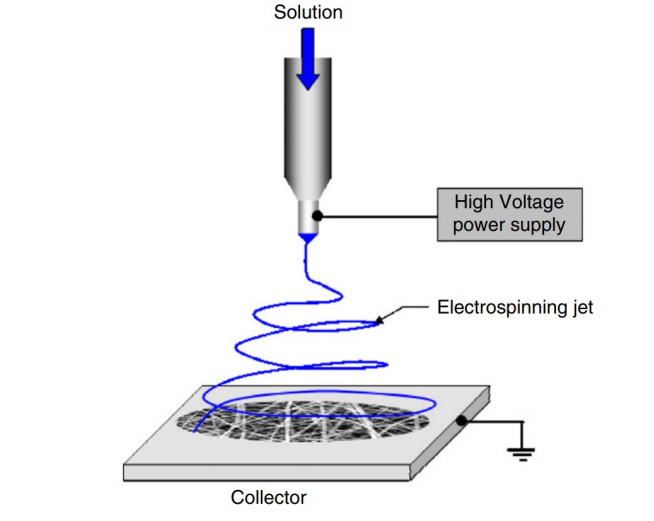
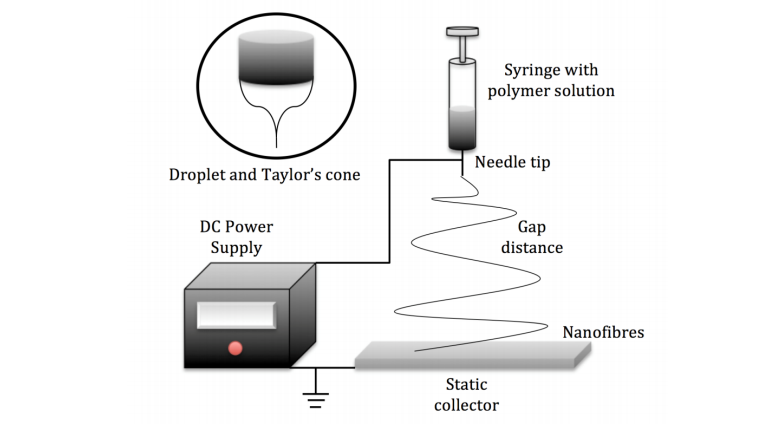
Schematic diagram of typical electrospinning technique [3].
In terms of hardware and techniques, Finkle examines both electrospinning and fused filament fabrication (FFF) for use with thermoplastic nanocomposites in the production of electrospun fiber mats and 3D printed parts. The new filaments developed in this study contain reinforcements like nanocrystalline cellulose (NCC), meant to improve mechanical properties over traditional methods.
Biocompatible Materials and Processes
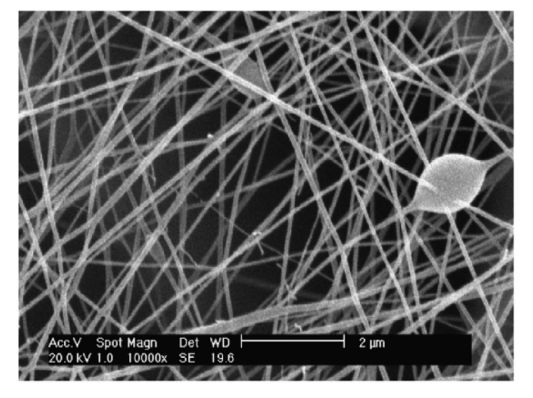
Typical morphology of electrospun polyamide-6 nanofibers observed with scanning electron microscope [4].
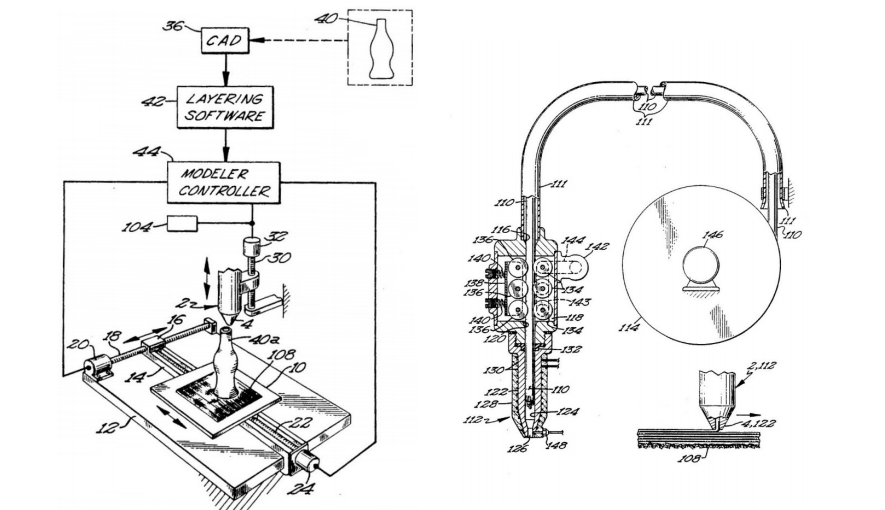
Schematic diagrams of fused deposition modeling (FDM) of thermoplastics from the patent “Apparatus and method for creating three-dimensional objects” by S. Crump including an FDM i) 3D printer and ii) extrusion head [8]
Nanocrystalline cellulose (NCC) is a derivative of wood pulp and has demonstrated potential for use as an additive for polymer composites—and specifically for this study, to accompany polycarbonate (PC)—a material offering a wide range of benefits, to include:
- Heat resistance
- Impact strength
- Rigidity
- Toughness
“The typical NCC whisker is on the order of 10 nm by 200 nm comprised of many cellulose β-glucan chains tightly bound together to form a very strong crystalline material,” explained Finkle. “The theoretical strength of NCC is on the order 9 of stainless steel and carbon nanotubes but unlike these inorganic reinforcements, is made from renewable and biocompatible sources.”
Clinical Applications and Case Studies
“The high strength makes this nanoparticle a great candidate for incorporation into composites and more specifically electrospun nanofibers.”
Electrospun mat morphology was based on the following:
- Fiber diameter
- Bead diameter
- Bead density
Regulatory Considerations and Safety
Schematic diagram of a typical vertical electrospinning apparatus.
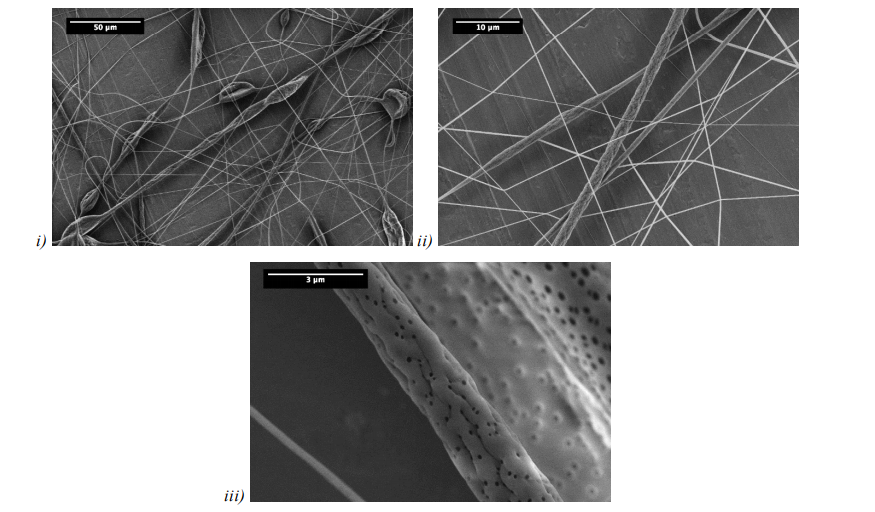
SEM micrographs of 15 wt-% PC nanofibers electrospun using chloroform. Fibers i) and ii) were electrospun using Vapp = 20 kV and iii) using Vapp = 15 kV over a gap distance of 15 cm.
“The formulation parameters chosen to explore within the DOEs are the polymer concentration in the solution, the concentration of additives (NCC). The processing parameters chosen to explore within each DOE included the applied voltage, Voltage, and gap distance, Gap Distance. Between the DOEs two other formulation parameters were explored,” explained Finkle.
Research Breakthroughs and Innovations
“This included the solvent the polycarbonate solution was made in either a 60/40 (w/w) THF/DMF mixture or chloroform, both good solvents for PC. The second variable introduced between DOEs with the same solvent was 2-wt.-% of NCC (or DDSA-modified NCC, cNCC) in the solid mass (not including solvent).”
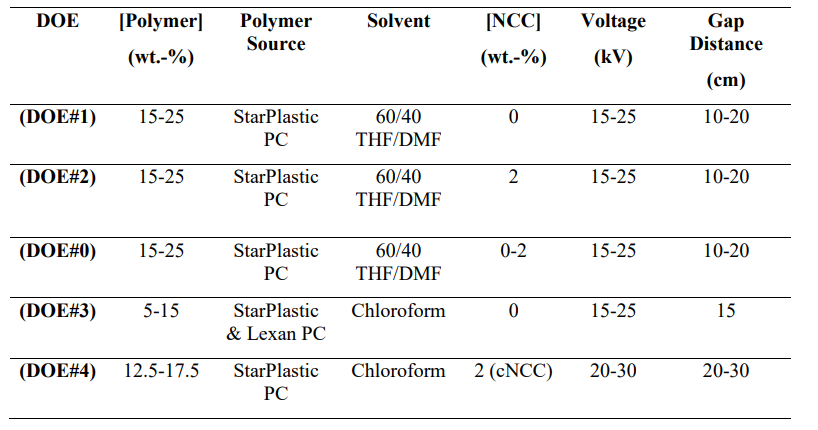
Summary of factors, levels, and formulation parameters for each DOE#0 through DOE#5
The Future of Bioprinting and Medical AM
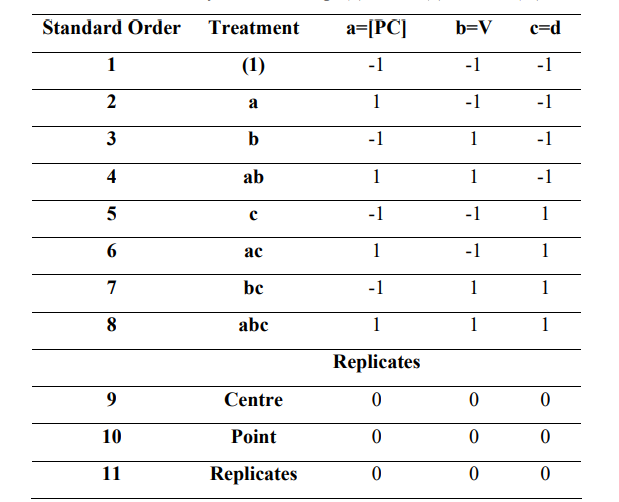
Standard order of experiments for a 23 full factorial DOE including the treatment shorthand notation and coded factor levels; high (1), center (0), and low (-1)
Design of experiments (DOEs) were investigated in terms of response to model fiber diameters in terms of:
- Function of the PC concentration
- NCC concentration
- Applied voltage
- Gap distance
Center-point measurements evaluated curvatures in the model, and solution properties were noted.
The Role of 3D Printing in Medicine
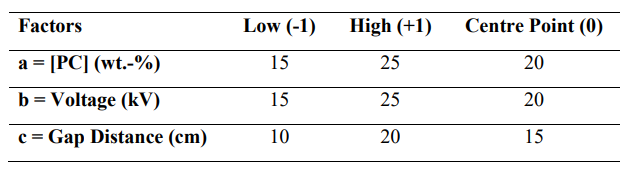
full factorial DOE#1, including the three different factors tested (coded a, b, and c) with their low (-1), high (+1), and center point (0) values
“For most of the experimentation, this involved: following a schedule, often electrospinning as soon as possible following sample preparation; minimizing any error in formulation and mixing of solutions; repeatable collection of nanofiber mats, as well as sample collection, preparation, and imaging of experimental specimens,” concluded Finkle.
“Although controlled as best as possible, some anomalies have still appeared. In particular, the center point replicates of DOE#4 – DDSA-modified Nanocrystalline Cellulose (cNCC) + Chloroform observed in Figure 4.30 show significant variance even though the experimental conditions were identical. This demonstrates that not only that electrospinning in volatile solvents like chloroform at room temperature is difficult to control, but that all possible variables for electrospinning must be considered carefully to achieve desired results.”
What do you think of this news? Let us know your thoughts! Join the discussion of this and other 3D printing topics at 3DPrintBoard.com.
Biocompatible Materials and Processes
[Source / Images: ‘Cellulosic Nanocomposites for Advanced Manufacturing: An Exploration of Advanced Materials in Electrospinning and Additive Manufacturing’]
The post University of Waterloo: Cellulosic Nanocomposites in Additive Manufacturing & Electrospinning appeared first on 3DPrint.com | The Voice of 3D Printing / Additive Manufacturing.
Related Articles
Frequently Asked Questions
How is 3D printing used in medicine?
3D printing is used in medicine for surgical planning models, custom implants, bioprinting tissue scaffolds, drug delivery systems, dental aligners, and prosthetics. It enables patient-specific solutions that improve outcomes and reduce surgery time.
What materials are biocompatible for 3D printing?
Common biocompatible materials include PEEK, titanium alloys (Ti6Al4V), bio-ceramics (hydroxyapatite), medical-grade resins, PLA for temporary implants, and hydrogels for bioprinting. Material choice depends on the application and required mechanical properties.
Is 3D printed medical equipment FDA approved?
Yes, several 3D printed medical devices have FDA clearance, including orthopedic implants, dental restorations, and surgical guides. Each device must go through the appropriate regulatory pathway based on its risk classification.
📌 Related Articles
- Best Budget 3D Printer Upgrades That Actually Improve Print Quality: Belts, Springs, Hotends & More
- Best 3D Printer Upgrades That Actually Improve Print Quality: Complete 2026 Guide
- ABS 3D Printing Settings Guide: Temperature, Enclosure, and Cooling for Strong Parts
- Prusa Research Mini+ vs Prusa MK4: Full Specs Comparison & Buyer’s Guide
- Bambu Lab P1S vs Bambu Lab P2S: Full Specs Comparison & Buyer’s Guide