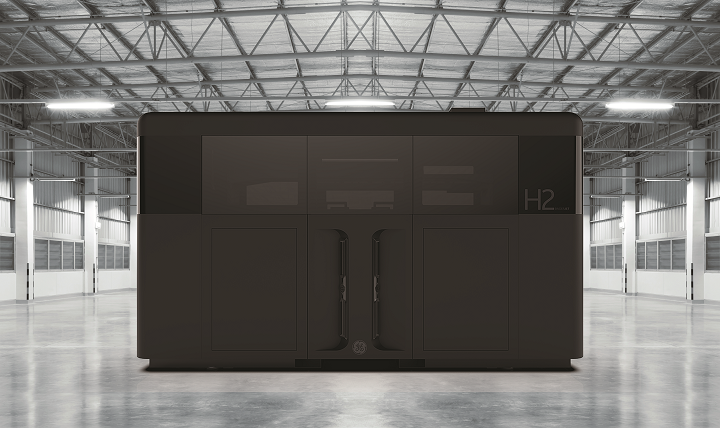
A few years back, GE Additive introduced a scalable metal binder jet 3D printing system at its Additive Technology Center (ATC) in Cincinnati, Ohio, which joined the existing metal AM technologies, laser powder bed fusion (PBF) and electron beam PBF, that the company offers. PBF technologies are expensive and complex, but once learned, offer reliability and repeatability in 3D printing, which is why some were surprised that GE Additive was swerving away to a different method of metal additive manufacturing. Binder jetting requires lower investments and sees quicker adoption, but the sintering step can get tricky. However, the high manufacturing speeds it offers makes it worth the trouble: it’s able to print parts 60 to 100 times faster than laser-based technologies.
GE Additive has been working hard to scale its binder jetting, and launched a beta testing and partner program in 2019. Indiana diesel engine maker Cummins was one of the first customers to invest in GE Additive’s binder jet technology, in order to focus on its high-volume production strategy, and now GE Additive is welcoming a new strategic partner to the beta program: Sandvik Additive Manufacturing, which markets its gas atomized metal AM powder alloys under the Osprey brand.
The State of Metal 3D Printing
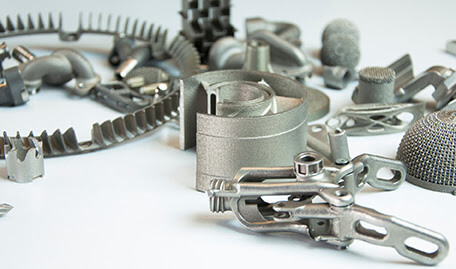
(Image courtesy of Sandvik)
“Sandvik is a leading expert in gas-atomized additive manufacturing powders, as well as in optimizing the materials to customers’ specific print processes and applications. The materials collaboration with GE Additive offers great opportunities to qualify our wide range of Osprey® metal powders for their new Binder Jet platform, to enhance end customer productivity and product performance,” stated Kristian Egeberg, the President of Sandvik Additive Manufacturing, in a press release.
Part of Sweden’s global engineering group Sandvik AB, Sandvik Additive Manufacturing has been investing in a variety of 3D printing methods for years, and acquired a substantial stake in European AM service bureau BEAMIT last year. Now, as GE Additive’s newest binder jet beta partner, Sandvik AM will work to become a certified supplier of Osprey powder alloys that will complement the material portfolio of GE Additive and AP&C. Additionally, Sandvik AM will put GE Additive’s H2 binder jet beta 3D printer to work supporting both its internal and its external customers.
“Our approach to Binder Jet is making additive mass production a reality in every industry,” explained GE Additive’s Binder Jet product line leader Jacob Brunsberg. “And while it would be relatively easier to launch individual machines, we continue to hear from customers, especially in the automotive industry, that they need a complete solution that can scale.
Technical Challenges and Solutions
“Attracting partners like Sandvik – with know-how in industrializing innovation, deep materials knowledge, and a shared vision for the potential for additive technology – remains a cornerstone of our Binder Jet commercialization strategy.”
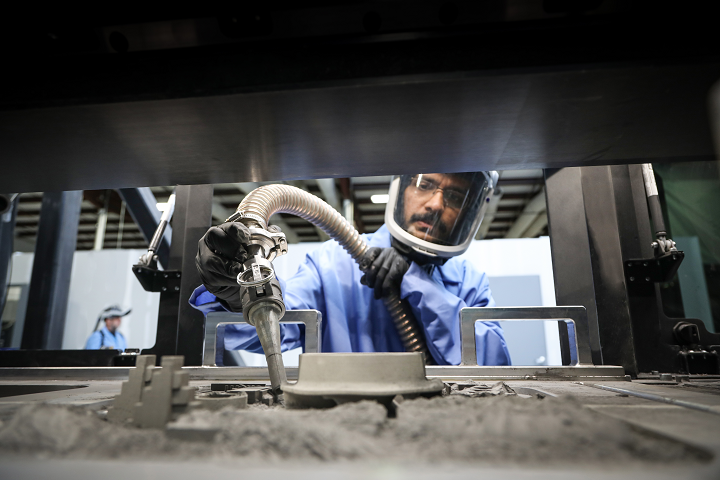
In binder jet 3D printing, the print head is moved across a bed of powder, while also selectively depositing a liquid agent in the desired shape into the powder. This binds the two areas together to form a solid part by layers, and depending on how complex the final component is, the technology is able to print parts 60 to 100 times faster than laser-based technologies.
Last year, Brunsberg said that the company was looking to “partner with companies whose businesses and customers will benefit tremendously from binder jet technologies.” In order to continue scaling its technology, GE Additive’s metal binder jet 3D printing beta program will pair its expertise in industrializing additive manufacturing with strong partners like Cummins, and now Sandvik. The first part of this scale-up will be to develop the company’s H2 binder jet beta system into pilot lines, and the complete, industrialized factory solution should be available commercially by 2021.
Material Properties and Performance
(Images courtesy of GE Additive unless otherwise noted)
The post Sandvik Latest Partner in GE Additive’s Binder Jet Metal 3D Printing Beta appeared first on 3DPrint.com | The Voice of 3D Printing / Additive Manufacturing.
from 3DPrint.com | The Voice of 3D Printing / Additive Manufacturing https://bit.ly/2H8tQS3
Related Articles: Making Magnetic Materials at University of Pittsburgh: Binder Jet 3D Printing vs Laser Metal Deposition · Ansys and EOS Partner for Metal 3D Printing Simulation · ExOne to Partner with Xometry to Offer Metal Binder Jetting
Frequently Asked Questions
What is metal 3D printing?
Metal 3D printing (additive manufacturing) builds metal parts layer by layer using techniques like laser powder bed fusion, directed energy deposition, and binder jetting. It enables complex geometries impossible with traditional manufacturing while reducing material waste significantly.
How strong are 3D printed metal parts?
3D printed metal parts can achieve mechanical properties comparable to traditionally manufactured metals. Tensile strength and fatigue resistance depend on the process and post-processing, but many meet or exceed ASTM standards for wrought materials.
What are the main metal 3D printing technologies?
The primary technologies include Laser Powder Bed Fusion (LPBF), Electron Beam Melting (EBM), Directed Energy Deposition (DED), Binder Jetting, and Metal FDM (with bound filaments). Each has different strengths in terms of resolution, speed, and material options.
📌 Related Articles
- The Current State of Metal 3D Printing in 2020
- 3D Printing Tungsten Carbide: How Hot-Wire Laser Technology Creates Metal Harder Than Steel
- ABS 3D Printing Settings Guide: Temperature, Enclosure, and Cooling for Strong Parts
- Best 3D Printer Upgrades That Actually Improve Print Quality: Complete 2026 Guide
- 3D Printing News: Multi-Material Breakthrough and Aerospace Market Boom