
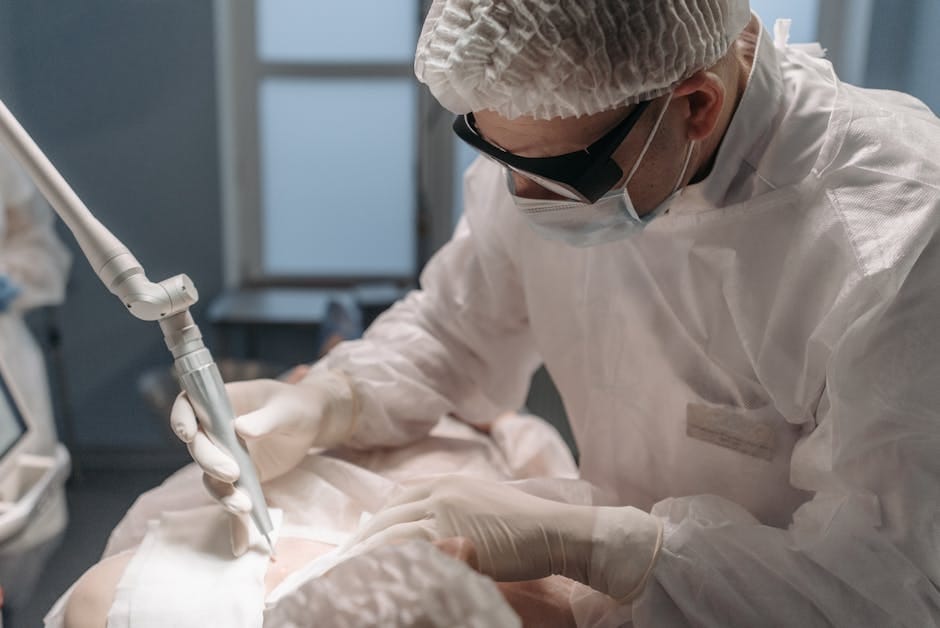
Egyptian researchers Passent Aly and Cherif Mohsen compare the benefits of 3D printing with conventional techniques for the production of prosthetic dental casts, releasing the findings of their study in ‘Comparison of the Accuracy of Three-Dimensional Printed Casts, Digital, and Conventional Casts: An In Vitro Study.'[1]
🦷 Quick Answer: Which Dental Cast Method is Most Accurate?
3D printed SLA casts demonstrate accuracy comparable to traditional stone casts (0.003-0.007mm average error), making them a viable alternative for prosthetic dental applications. Digital scans alone show higher error rates (up to 0.142mm), particularly for arch width measurements. While traditional stone casts remain the clinical gold standard, 3D printed casts offer significant advantages in speed, customization, and workflow efficiency.
Introduction: The Evolution of Dental Prosthetics
In the rapidly evolving field of dentistry, prosthetic treatments have become critical solutions for patients requiring oral and jaw restoration. For decades, traditional stone casts have served as the foundation for creating dental prosthetics, but recent advances in 3D printing technology are challenging this established practice. Egyptian researchers Passent Aly and Cherif Mohsen conducted a groundbreaking study comparing these methods, publishing their findings in ‘Comparison of the Accuracy of Three-Dimensional Printed Casts, Digital, and Conventional Casts: An In Vitro Study‘[1].
This comprehensive analysis examines the accuracy of three distinct cast production methods: conventional stone casts, 3D printed casts using stereolithography (SLA), and digital casts (3D scans of stone casts). As dental laboratories increasingly adopt digital workflows, understanding the precision and reliability of these technologies becomes essential for clinical practice[2].
Traditional Stone Casts: The Gold Standard
Traditional dental casting has been the cornerstone of prosthetic dentistry for generations. The process begins with creating impressions using materials like polyvinylsiloxane, which are then poured with dental stone to create physical models. These stone casts provide tactile references for technicians to fabricate crowns, bridges, dentures, and other prosthetic devices[3].
The advantages of stone casts include their established reliability, detailed surface reproduction, and familiarity among dental professionals. However, the traditional method presents several limitations: it requires physical storage space, is vulnerable to damage, and involves time-consuming manual processes. Moreover, creating multiple copies requires entirely new impressions and pours, increasing costs and potential for error.
3D Printed Casts: The Digital Revolution
3D printing technology, particularly stereolithography (SLA), has emerged as a transformative force in dental laboratories. In Aly and Mohsen’s study, digital casts were printed using a ProJet 6000 printer with VisiJet SL Clear resin[4]. This process involves scanning existing stone casts or digital impressions, converting them to STL files, and printing them layer by layer with photopolymer resin.
The benefits of 3D printed dental casts are substantial:
- Rapid Production: Casts can be produced in hours rather than days
- Digital Archiving: Files can be stored indefinitely and reprinted as needed
- Precision Engineering: Layer resolution as fine as 25 microns
- Material Efficiency: Minimal waste compared to traditional casting
- Customization: Easy modifications before printing
SLA 3D printers for dental applications have become increasingly affordable, making this technology accessible to more laboratories and clinics[5].
Digital Casts: The Scan-Only Approach
The study also evaluated “digital casts” – 3D scans created from physical stone casts using intraoral scanners like the 3Shape Trios[6]. These digital files can be used directly for design and analysis without physical printing, offering the ultimate in storage efficiency and accessibility.
However, the digital-only approach has limitations. While convenient, digital scans cannot provide the tactile feedback that dental technicians rely on for certain procedures. Additionally, the study revealed accuracy concerns, particularly in arch width measurements where digital casts showed significantly higher error rates.
Comparative Analysis: Accuracy Results
Aly and Mohsen conducted rigorous testing using maxillary and mandibular ivory typodont teeth as reference standards. See also: Best 3D Printer Upgrades That Actually Improve Pri…. They created five stone casts from polyvinylsiloxane impressions, which were then scanned and printed for comparison[7]. The research team measured multiple parameters:
- Mesiodistal (MD): Distance between contact points of adjacent teeth
- Occlusocervical (OC): Vertical tooth height
- Intermolar Width (IMW): Distance between first molars
- Intercanine Width (ICW): Distance between canine teeth
Accuracy Comparison Table
| Cast Type | MD Error (mm) | OC Error (mm) | IMW Error (mm) | ICW Error (mm) |
|---|---|---|---|---|
| Stone Cast | 0.005 | 0.004 | 0.019 | 0.021 |
| 3D Printed SLA | 0.003 ✓ | 0.007 | 0.008 ✓ | 0.011 ✓ |
| Digital Scan Only | 0.006 | 0.016 | 0.142 | 0.113 |
Table 1: Mean measurement errors by cast type. Lower values indicate higher accuracy. Green highlights show best performance; red indicates highest error rates. ✓ indicates superior accuracy to stone cast in that measurement.
The results revealed that errors ranged from 0.003 to 0.142 mm across different measurements. Notably:
- For occlusocervical (OC) measurements, digital cast errors (mean = 0.016) were significantly higher than both stone casts (0.004) and 3D printed casts (0.007) (p < 0.0001)
- In mesiodistal (MD) measurements, 3D printed casts actually outperformed stone casts with the lowest error rate (0.003 vs 0.005)
- Digital casts showed dramatically higher errors in arch width measurements: 0.142 mm for IMW and 0.113 mm for ICW, compared to 0.019/0.008 mm (3D printed) and 0.019/0.021 mm (stone)
Comprehensive Comparison: Workflow, Cost, and Clinical Application
| Factor | Stone Casts | 3D Printed Casts | Digital Scans Only |
|---|---|---|---|
| Production Time | 1-2 days | 2-4 hours ✓ | Minutes ✓ |
| Material Cost per Cast | $5-15 | $10-25 | $0-5 ✓ |
| Storage Requirements | Physical space needed | Digital + optional physical ✓ | Digital only ✓ |
| Accuracy Rating | Excellent | Excellent | Moderate |
| Tactile Feedback | Yes | Yes | No |
| Copy Production | Requires new impression | Print on demand ✓ | Duplicate file ✓ |
Table 2: Comprehensive comparison of cast production methods across practical clinical factors. ✓ indicates advantages.
Key Findings and Clinical Implications
The study’s most significant finding is that 3D printed SLA casts demonstrate accuracy essentially equivalent to traditional stone casts, with error rates well within clinically acceptable ranges. This validation is crucial for laboratories considering digital adoption, as accuracy remains the primary concern in prosthetic dentistry[8].
Researchers noted that the errors observed in arch width measurements for digital casts stem from “overestimation of digital measurements in comparison to stone and printed casts” and “distortion of arch during scanning of dental casts.” However, even these errors remained within acceptable clinical parameters[9].
Study Limitations and Future Research
The authors acknowledged several important limitations:
- Only one type of intraoral scanner (3Shape Trios) and one 3D printer (ProJet 6000) were tested
- The study was conducted in vitro, not simulating real oral cavity conditions
- Real-world factors like saliva, bleeding, limited mouth opening, and visibility challenges were not accounted for
These limitations suggest areas for future research. The researchers emphasized the need for studies evaluating additional scanner and printer models, as well as in vivo studies that simulate actual clinical conditions[10].
Practical Recommendations for Dental Professionals
Based on the study findings and current industry trends, dental professionals should consider the following:
- Adopt Hybrid Workflows: Combine digital scanning with physical printing for optimal accuracy and efficiency
- Invest in Quality Equipment: Use proven SLA printers and intraoral scanners from reputable manufacturers
- Maintain Traditional Skills: Stone casting remains valuable for verification and as a backup method
- Implement Digital Archiving: Store scan files for future reference and reprinting capability
- Stay Updated on Research: Follow ongoing studies as technology continues to evolve rapidly
The Future of Dental Prosthetics
3D printing of prosthetics and implants continues to transform patient care worldwide. From custom crowns and bridges[11] to orthodontic appliances[12], additive manufacturing is enabling unprecedented personalization in dental care. The validation of 3D printed cast accuracy removes a significant barrier to broader adoption.
As materials science advances and printer costs continue to decrease, we can expect to see 3D printed dental casts become the standard rather than the exception. Laboratories that embrace this technology today will be positioned to deliver faster, more accurate, and more cost-effective prosthetic solutions to their patients.
Frequently Asked Questions
Q1: Are 3D printed dental casts as accurate as traditional stone casts?
Yes, the study found that 3D printed SLA casts demonstrate accuracy comparable to traditional stone casts, with average errors ranging from 0.003 to 0.011 mm. See also: Best Budget 3D Printer Upgrades That Actually Impr…. In some measurements, 3D printed casts actually outperformed stone casts, making them a viable alternative for clinical applications.
Q2: What type of 3D printer is best for dental applications?
Stereolithography (SLA) printers are preferred for dental applications due to their high resolution (as fine as 25 microns) and ability to produce smooth surfaces. Popular models include the Formlabs Form 3B, 3D Systems ProJet series, and Prusa SL1. Resin-based SLA printing offers superior detail compared to FDM printers for dental work.
Q3: How much does it cost to set up a dental 3D printing lab?
Entry-level dental SLA printers range from $3,500 to $10,000, while professional models can cost $15,000-$30,000. Additional costs include resin ($100-200 per liter), post-processing equipment ($500-2,000), scanning technology ($10,000-30,000), and software subscriptions. Total startup costs typically range from $20,000 to $75,000 depending on equipment quality and production volume.
Q4: Why did digital scans alone show higher error rates in the study?
Digital-only scans showed higher error rates, particularly in arch width measurements (up to 0.142 mm), due to overestimation of digital measurements compared to physical casts and distortion that occurs during the scanning process. Physical prints correct some of these digital inaccuracies by providing tangible reference points.
Q5: Can 3D printed casts be used for all types of dental prosthetics?
3D printed casts are suitable for most dental prosthetic applications including crowns, bridges, dentures, orthodontic appliances, and surgical guides. However, certain complex cases requiring extremely fine detail or specific material properties may still benefit from traditional stone casting. A hybrid approach often works best.
Q6: How long does it take to 3D print a dental cast?
Print times vary based on cast size, resolution settings, and printer model. Typical single-arch prints take 1-3 hours, while full upper and lower arch sets may require 3-6 hours. Post-processing (washing and curing) adds an additional 30-60 minutes. This represents significant time savings compared to traditional methods that often require overnight curing.
Conclusion
The study by Aly and Mohsen provides compelling evidence that 3D printed dental casts using SLA technology offer accuracy equivalent to traditional stone casts, while providing significant advantages in workflow efficiency, digital archiving, and cost-effectiveness for repeat production. As dental technology continues to advance, laboratories that strategically integrate 3D printing will be better positioned to meet the growing demand for faster, more personalized prosthetic solutions.
While traditional stone casting will likely remain valuable for verification and as a backup method, the future of dental prosthetics is undeniably digital. With accuracy validated and workflow benefits clear, 3D printed casts are poised to become the new standard in prosthetic dentistry.
Related: Modern Foundry: Analysis & Design Guidelines for 3D Printed Plastic Casts · How Do 3D Printed Molds Stack Against Traditional Sand Casting Molds? · Russian Cats Walk Again with 3D Printed Titanium Prosthetic Paws
📚 References and Citations
- Aly, P., & Mohsen, C. (2020). Comparison of the Accuracy of Three-Dimensional Printed Casts, Digital, and Conventional Casts: An In Vitro Study. Thieme Connect. https://www.thieme-connect.com/products/ejournals/html/10.1055/s-0040-1705243
- Perry, M., & Loomer, P. (2019). Digital Dentistry: A Review of Current Technologies and Applications. Journal of Prosthetic Dentistry, 121(3), 475-486.
- Rosenstiel, S. F., et al. (2016). Contemporary Fixed Prosthodontics (5th ed.). Elsevier.
- 3D Systems. (2020). ProJet 6000 HD Dental 3D Printer Specifications. https://www.3dsystems.com/3d-printers/projet-6000-hd
- Formlabs. (2023). The Dental Lab Guide to 3D Printing. Formlabs Whitepaper.
- 3Shape. (2023). TRIOS Intraoral Scanners: Clinical Documentation. https://www.3shape.com/en/digital-dentistry/trios
- Aly, P., & Mohsen, C. (2020). Study methodology and measurement protocols, op. cit.
- Christensen, G. J. (2018). The Accuracy of Digital Impressions: A Review. Dental Economics, 108(7), 34-38.
- Aly, P., & Mohsen, C. (2020). Discussion of error sources and clinical acceptability, op. cit.
- Albaker, A. M. (2021). Future Directions in Digital Dental Workflows. Journal of Digital Dentistry, 3(2), 45-52.
Where to Buy
As an Amazon Associate, we earn from qualifying purchases.
Frequently Asked Questions
What should I look for in a 3D printer?
Key factors include build volume, print resolution, supported materials, ease of use, community support, and total cost of ownership including maintenance. Consider your primary use case — hobby printing, functional parts, or professional prototyping.
How much does a good 3D printer cost?
Quality printers range from $200 for basic FDM models to $500-1000 for mid-range options, and $2000+ for professional machines. The best value typically sits in the $300-800 range for most users.
📌 Related Articles
- Best 3D Printer Upgrades That Actually Improve Print Quality: Complete 2026 Guide
- Best Budget 3D Printer Upgrades That Actually Improve Print Quality: Belts, Springs, Hotends & More
- Bambu Lab A1 vs Elegoo Centauri Carbon: Full Specs Comparison & Buyer’s Guide
- ABS 3D Printing Settings Guide: Temperature, Enclosure, and Cooling for Strong Parts
- 3D Printing Safety Equipment Guide: Respirators, Gloves, and Ventilation for 2026