
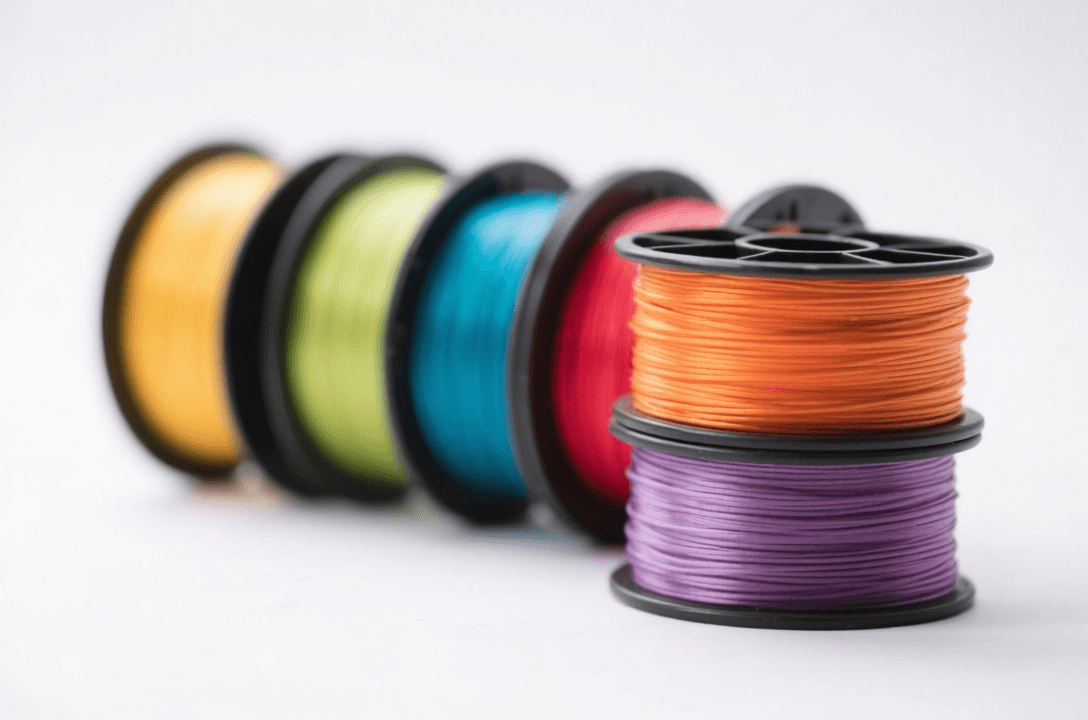
Discover which filament material is perfect for your next 3D printing project
This article contains affiliate links. If you purchase through these links, we may earn a small commission at no extra cost to you. This helps support our site and allows us to continue creating valuable content for 3D printing enthusiasts.
Choosing the right 3D printer filament can make or break your project. PLA, PETG, and ABS are the three most popular filament materials, each with unique characteristics that make them better suited for specific applications. Whether you’re a beginner looking for an easy-to-print material or an experienced user creating functional parts, understanding the differences between these materials is essential.
In this comprehensive guide, we’ll compare PLA, PETG, and ABS across multiple factors including strength, temperature resistance, ease of use, price, and best use cases. We’ll also recommend top-quality products from trusted brands to help you make an informed decision.
Quick Comparison Table
| Feature | PLA | PETG | ABS |
|---|---|---|---|
| Print Temperature | 190-220°C | 230-250°C | 230-260°C |
| Bed Temperature | 0-60°C | 70-80°C | 100-110°C |
| Strength | Moderate | High | High |
| Heat Resistance | Low (~55°C) | Medium (~70°C) | High (~100°C) |
| Ease of Printing | ★★★★★ | ★★★★☆ | ★★★☆☆ |
| Warping | Minimal | Low | High |
| Odor | None | Low | Strong |
| Price per kg | $15-25 | $20-30 | $20-35 |
| Best For | Decorative, prototypes, beginners | Functional parts, mechanical components | High-temp applications, automotive |
PLA (Polylactic Acid)
PLA is the most popular filament for beginners and hobbyists, and for good reason. Made from renewable resources like corn starch or sugarcane, PLA is biodegradable and environmentally friendly. It prints at lower temperatures, doesn’t require a heated bed, and produces virtually no odor during printing.
Pros
- Easiest filament to print with
- No heated bed required
- No unpleasant odors
- Environmentally friendly
- Excellent for detailed prints
- Wide color variety available
- Inexpensive
Cons
- Low heat resistance
- Can become brittle over time
- Not suitable for outdoor use
- Lower impact strength
- Degrades in direct sunlight
Best Use Cases for PLA:
- Decorative items and figurines
- Prototypes and concept models
- Beginner projects and learning
- Artistic and architectural models
- Educational projects
- Low-stress functional parts
Top PLA Filaments
HATCHBOX PLA 3D Printer Filament
$17-21
Best-selling PLA with consistent quality. Available in 40+ colors. ±0.03mm dimensional accuracy. Perfect for beginners and experts alike.
PETG (Polyethylene Terephthalate Glycol)
PETG is often called the “best of both worlds” filament, combining the ease of printing of PLA with the strength and durability of ABS. It’s becoming increasingly popular for functional parts and mechanical components. PETG is food-safe, resistant to chemicals, and maintains its properties in humid environments.
Pros
- Excellent strength and durability
- Good layer adhesion
- Moisture resistant
- Food-safe when printed correctly
- Chemical resistant
- Good temperature resistance
- Flexible but not too bendy
Cons
- Requires heated bed
- Can string during printing
- More difficult to post-process
- Slightly more expensive than PLA
- Requires proper tuning
Best Use Cases for PETG:
- Functional mechanical parts
- Gears and brackets
- Protective cases and enclosures
- Food containers and utensils
- Outdoor applications
- Durable toys and game pieces
Top PETG Filaments
HATCHBOX PETG 3D Printer Filament
$22-27
Tough and durable PETG with ±0.03mm accuracy. Great for functional prints requiring strength. Minimal stringing with proper settings.
ABS (Acrylonitrile Butadiene Styrene)
ABS is the workhorse filament for industrial and engineering applications. Known for its high temperature resistance and excellent mechanical properties, ABS is used in everything from automotive parts to consumer electronics. It’s the same material used to make LEGO bricks, which speaks to its durability and versatility.
Pros
- Highest temperature resistance
- Excellent impact strength
- Durable and long-lasting
- Can be acetone-smoothed
- Good for post-processing
- Used in automotive and aerospace
Cons
- Most difficult to print
- Requires enclosed printer
- Strong fumes during printing
- Prone to warping
- Requires high bed temperature
- Not environmentally friendly
Best Use Cases for ABS:
- High-temperature applications
- Automotive components
- Functional prototypes
- Enclosures for electronics
- Parts exposed to sunlight
- Durable tools and fixtures
Top ABS Filaments
MatterHackers PRO Series ABS
$28-35
Professional-grade ABS with sharp coloring and high opacity. See also: Creality Creality Ender 3 V3 Plus vs Creality Ende…. Made in USA for consistent quality. Excellent for engineering applications.
Technical Specifications
| Specification | PLA | PETG | ABS |
|---|---|---|---|
| Tensile Strength | 50-70 MPa | 50-70 MPa | 40-50 MPa |
| Flexural Strength | 80-100 MPa | 70-90 MPa | 65-80 MPa |
| Impact Strength | 2-5 kJ/m² | 3-5 kJ/m² | 10-20 kJ/m² |
| Glass Transition | 55-60°C | 80-85°C | 105-110°C |
| Density | 1.24 g/cm³ | 1.27 g/cm³ | 1.04 g/cm³ |
| Print Speed | 40-80 mm/s | 30-60 mm/s | 30-50 mm/s |
| Fan Speed | 100% | 30-50% | 0-20% |
| Enclosure | Optional | Optional | Required |
Which Filament Should You Choose?
Choose PLA if: You’re new to 3D printing, want to create decorative items, need quick prototypes, or don’t want to deal with complex printer settings. PLA is the most forgiving material and perfect for beginners.
Choose PETG if: You need a balance of strength and ease of printing, want to create functional parts, need something durable but don’t have an enclosed printer, or require food-safe components. PETG is the versatile middle ground.
Choose ABS if: You need parts that can withstand high temperatures, require maximum durability, have an enclosed printer with good ventilation, or are printing engineering components for real-world applications. ABS is for serious functional printing.
Choosing the Right Filament for Your Project
When selecting a filament material, consider your specific needs and constraints. Think about the environment where the printed part will be used, the mechanical stresses it will face, and your experience level with 3D printing. Don’t be afraid to experiment with different materials to find what works best for your particular application.
Temperature is a crucial factor. If your part will be exposed to high temperatures, such as in a car dashboard or near electronics, ABS is your best bet. For outdoor use where UV resistance matters, PETG performs better than PLA, which can become brittle in sunlight. For indoor decorative items or prototypes that won’t face harsh conditions, PLA is the most cost-effective and easiest to work with.
Consider post-processing requirements as well. PLA can be sanded and painted easily, while ABS responds well to acetone vapor smoothing for a glass-like finish. PETG is more challenging to post-process but can be painted with proper surface preparation.
Final Thoughts
Each filament material has its strengths and weaknesses. PLA is perfect for beginners and decorative prints, PETG offers the best balance for functional parts, and ABS provides the durability needed for engineering applications. Start with PLA to learn the basics, then experiment with PETG for stronger parts, and tackle ABS once you’re comfortable with your printer’s capabilities.
Remember that quality matters more than price when it comes to filament. The recommended products from HATCHBOX and MatterHackers offer consistent quality and reliability that will save you time and frustration in the long run. Always store your filament properly in dry, dark conditions to maintain its quality over time.
Happy printing!
Frequently Asked Questions
What is the best 3D printing filament for beginners?
PLA is the best starting filament — it prints easily at 190-220°C without an enclosure and produces good results. Once comfortable, PETG offers better strength and temperature resistance for functional parts.
How do I choose the right filament?
Consider the application: PLA for display models, PETG for functional parts, ABS/ASA for heat/sunlight exposure, TPU for flexible parts, and specialty filaments for engineering applications. Each has specific printer requirements.
What temperature should I print different filaments at?
PLA: 190-220°C nozzle / 50-60°C bed. PETG: 220-250°C / 70-80°C. ABS: 230-260°C / 100-110°C (enclosure needed). Nylon: 240-270°C / 70-90°C. Always check manufacturer recommendations for specific brands.
📌 Related Articles
- ABS 3D Printing Settings Guide: Temperature, Enclosure, and Cooling for Strong Parts
- Creality Creality Ender 3 V3 Plus vs Creality Ender 3 Pro: Full Specs Comparison & Buyer’s Guide
- Best 3D Printer Upgrades That Actually Improve Print Quality: Complete 2026 Guide
- Best Budget 3D Printer Upgrades That Actually Improve Print Quality: Belts, Springs, Hotends & More
- Bambu Lab A1 vs Elegoo Centauri Carbon: Full Specs Comparison & Buyer’s Guide