
Andy Wen Loong Liew has submitted a thesis, ‘Laser-based 3D printing using bessel beams for tissue engineering applications’ to Nanyang Technological University. Exploring a new technique for bioprinting, Liew studies the use of Bessel beams in connection with regenerative medicine techniques, and he also compares the benefits of traditional techniques.
Liew cites the benefits of Bessel beams (BB) in connection with 3D printing and customizing hydrogels, considering the following:
- Easy customization of construct architecture
- Reduced fabrication time
- High print resolution
- Ability to fabricate high aspect ratio tubular structures with anatomic relevance (and no supports)
This study also involves the use of collagen gel for improved success in sustaining cells and inducing endothelial sprouting.
The Role of 3D Printing in Medicine
Liew reminds us that the ultimate goal in tissue engineering is to begin 3D printing organs that are viable for transplant into humans; on the way, however, engineers have used a wide range of materials with customized hardware and software to begin engineering skin, cartilage, bone, and far more.
“The aforementioned tissues which have successfully made the transition are avascular which makes them easier to engineer compared to vascular tissues such as heart and kidney tissue which are more complex,” states Liew.
Biocompatible Materials and Processes
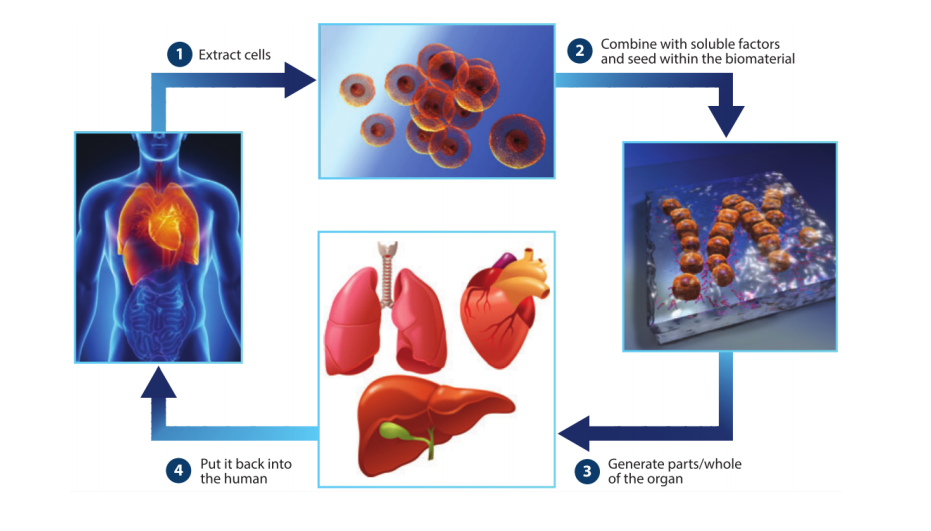
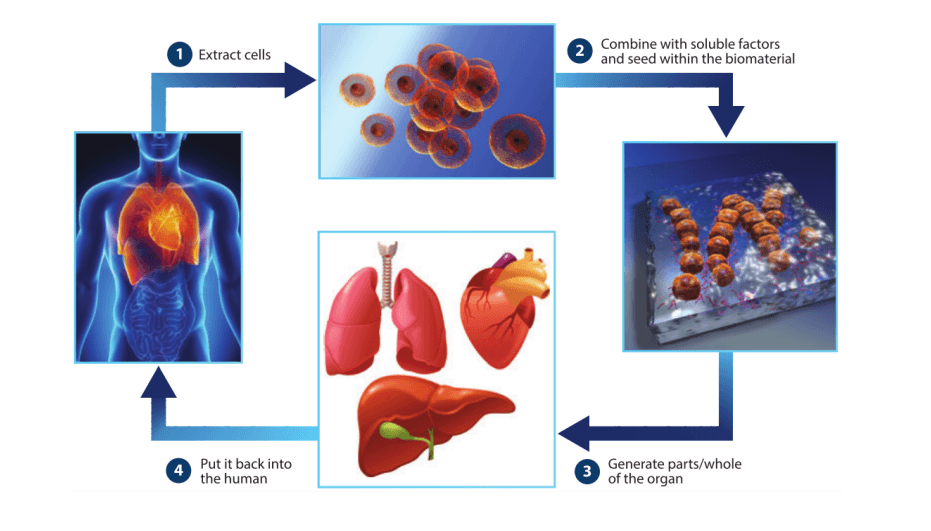
Principles of tissue engineering. (Adopted from ref.[12]).
Liew asserts that so far there have been no studies of BB printing techniques published. Advantages and challenges are discussed regarding the new technique. Much of the work presented in the chapter 2 literary review is based on the following publication: Liew, Andy Wen Loong, and Yilei Zhang. ‘In vitro pre-vascularization strategies for tissue-engineered constructs – Bioprinting and others.’ International Journal of Bioprinting (2017) 3 3-17. There, Liew describes vascularization, the use of in vitro models, and current in vitro vascularization approaches like bioprinting, microfluidics (lithography), micropatterning, wire molding, and cell sheet engineering.
Clinical Applications and Case Studies
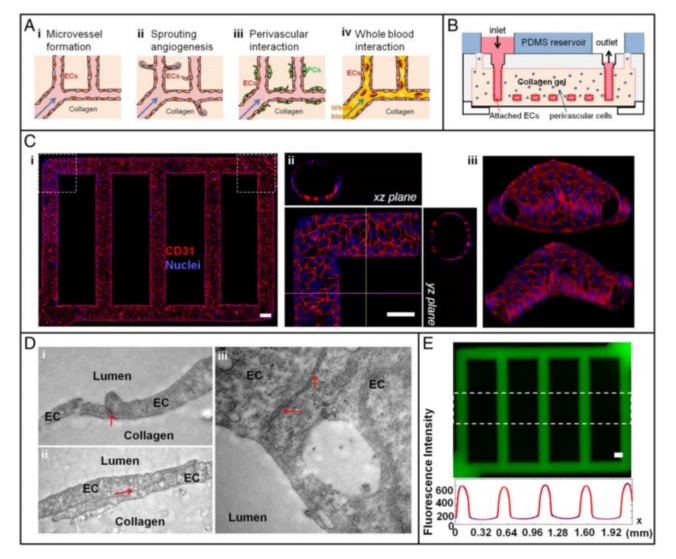
Microfluidic technology used to engineer microvascular networks within 3D tissue scaffolds for applications in vascular tissue modeling. Scale bars: 100μm. (Adopted from ref.[91]).
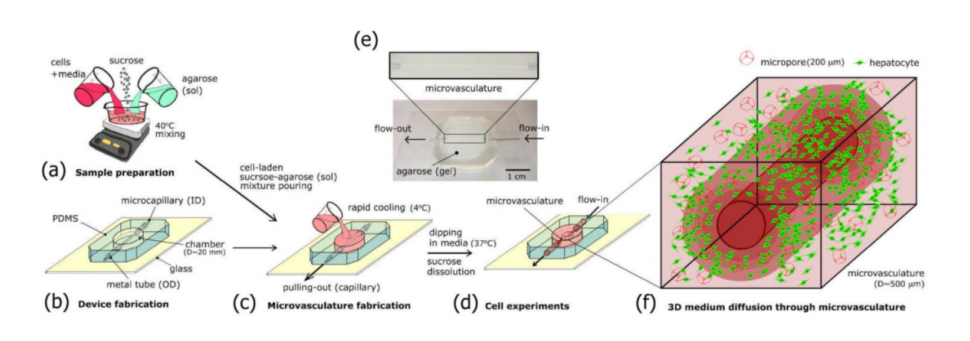
Wire molding technique employed to fabricate perfusable 3D microvascular tubes within microporous cell-laden hydrogels to produce biomimetic tissue constructs. (Adopted from ref.[110]).
Regulatory Considerations and Safety
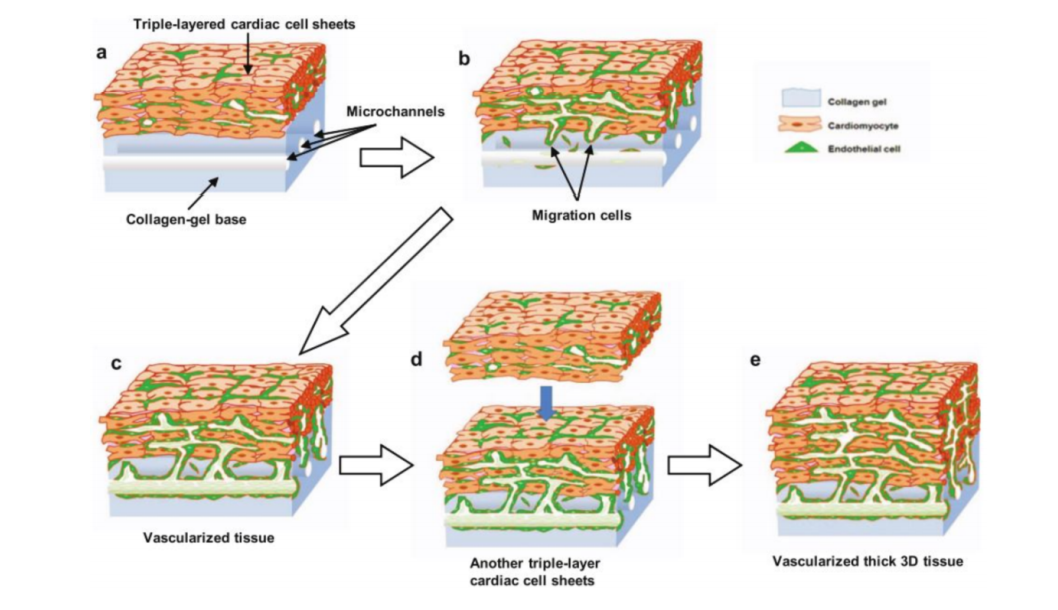
Cell sheet technology combined with a collagen based perfusion bioreactor for the preservation of cell viability by the vascularization of 3D tissues. (Adopted from ref.[122] URL: https://go.nature.com/2QwGnAz).
For the purposes of experimenting within this study, Liew makes it clear that while very little attention may have been paid to BBs in additive manufacturing processes, they are attractive due to a non-diffracting core that is not only highly localized but also offers high intensity.
“This high intensity BB core is the result of constructive interference of the beam after exiting the axicon. Unlike focused Gaussian beams, the high intensity BB core extends throughout the length of the non-diffracting zone while retaining its highly localized profile,” states Liew. “Thus by exposing a pre-polymer solution to the BB core, a long fiber-like structure can be produced through a single exposure as the high intensity BB core propagates through the entire height of the solution.”
Research Breakthroughs and Innovations
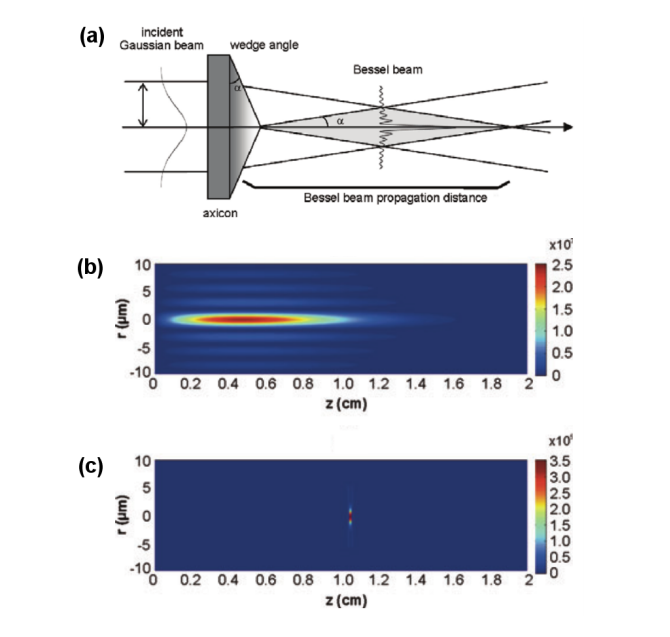
(a) Using an Axicon lens to produce a BB from an incident Gaussian Beam. (b) BB profile with extended depth of field, showcasing high intensity, non-diffracting core. (c) Focussed Gaussian Beam profile showing small voxel of high intensity, as compared to BB profile. (Adopted from ref.[130]).
Much of the discussion regarding the use of BBs also stems from Liew’s previous research, drawn from Liew, Wen Loong Andy, and Yilei Zhang. ‘Laser-based fabrication of 3D hydrogel constructs using Bessel beams.’ Bioprinting (2018) 9 44-51.
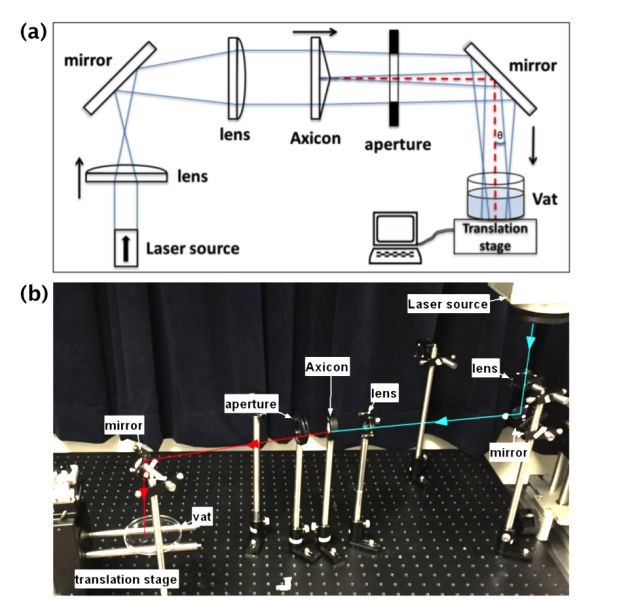
The researchers 3D printed at room temperature, relying on a vat filled with pre-polymer solution, ‘placed on the translation stage,’ and centered on the BB propagation axis. Print settings were optimized as follows for all samples fabricated in the study: Laser power = 120µW, Magnification (M) = 1 (refer to Section 5.2.2), translational speed of stage = 1mm/s.
The Future of Bioprinting and Medical AM
(a) Schematic diagram of optical set-up, laser propagation, and manipulation. Dotted red line indicates the BB. (b) Actual experimental set-up. Cyan arrows indicate the Gaussian beam while red arrows indicate the BB.

Mechanism for the fabrication of hydrogel constructs. See also: ABS 3D Printing Settings Guide: Temperature, Enclo…. Exposure of the pre-polymer solution to the BB results in localized crosslinking. Translational stage motion coupled with BB exposure results in the crosslinking of customizable hydrogel constructs
The researchers noted that 3D printing time of samples was ‘significantly reduced’ as they compared results with conventional methods; in fact, with BB, the average printing time was decreased to an impressive 20 seconds—reflecting a savings of more than 50 percent.
“Encapsulation of fluorescent beads (simulating cells) within the tube walls was also successfully demonstrated with this technique as a proof-of-concept for subsequent chapters where the printing technique will be used for direct cell encapsulation,” stated Liew.
The Role of 3D Printing in Medicine
“Finally, 3D hydrogel scaffolds with controlled microscale features and in-built microchannels were fabricated with both naturally-derived and synthetic polymers using the BB technique, showcasing its superior print resolution compared to conventional printing techniques and flexibility. Overall, the technique displayed strong potential to be applied in the field of TE in future.”
In using BBs for tissue engineering, the following properties should continue to be evaluated:
- Limitations in design complexity
- Multi-material, multi-cellular construct printing
- Variances in printing time for construct designs
- Long term effects on cell phenotype/genotype from UV exposure
- Flexibility of systems in ‘tuning’ resolution
- Structural non-conformity to original design
“ … there are several drawbacks to using the BB technique for bioprinting applications including wall thinning and limited design complexity,” concluded Liew. “Future work should include a balanced evaluation of how the proposed 111 BB printing technique compares to established, commercially available bioprinting systems in order to establish it as a viable alternative to current technology.”
Biocompatible Materials and Processes
3D printing has had an enormous impact on tissue engineering in recent years, as researchers create new materials and structures like scaffolds, improve hydrogel microenvironments, refine bioprinting for bone regeneration, and much more.
What do you think of this news? Let us know your thoughts! Join the discussion of this and other 3D printing topics at 3DPrintBoard.com.
[Source / Images: ‘Laser-based 3D printing using bessel beams for tissue engineering applications’]
The post Nanyang Technological University: Thesis Validates Use of Bessel Beams in Laser-Based 3D Printing appeared first on 3DPrint.com | The Voice of 3D Printing / Additive Manufacturing.
Related Articles
Frequently Asked Questions
How is 3D printing used in medicine?
3D printing is used in medicine for surgical planning models, custom implants, bioprinting tissue scaffolds, drug delivery systems, dental aligners, and prosthetics. It enables patient-specific solutions that improve outcomes and reduce surgery time.
What materials are biocompatible for 3D printing?
Common biocompatible materials include PEEK, titanium alloys (Ti6Al4V), bio-ceramics (hydroxyapatite), medical-grade resins, PLA for temporary implants, and hydrogels for bioprinting. Material choice depends on the application and required mechanical properties.
Is 3D printed medical equipment FDA approved?
Yes, several 3D printed medical devices have FDA clearance, including orthopedic implants, dental restorations, and surgical guides. Each device must go through the appropriate regulatory pathway based on its risk classification.
📌 Related Articles
- The Current State of Metal 3D Printing in 2020
- ABS 3D Printing Settings Guide: Temperature, Enclosure, and Cooling for Strong Parts
- 3D Printing Tungsten Carbide: How Hot-Wire Laser Technology Creates Metal Harder Than Steel
- Best Budget 3D Printer Upgrades That Actually Improve Print Quality: Belts, Springs, Hotends & More
- 3D Printing News: Multi-Material Breakthrough and Aerospace Market Boom