
CES 2026 showcased some incredible innovations in consumer 3D printing, but one standout was AtomForm’s Palette 300 – a 12-nozzle 3D printer capable of printing in up to 36 colors simultaneously1.
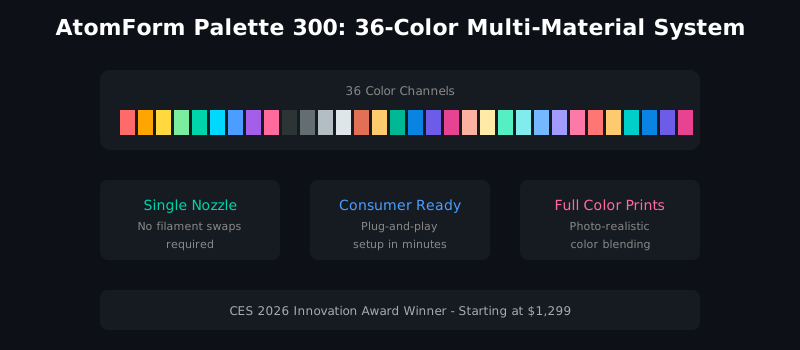
Quick Answer: Is the AtomForm Palette 300 Right for You?
The AtomForm Palette 300 is best suited for experienced makers, designers, and small businesses who need multi-color, multi-material printing without the waste of purge towers. With a Kickstarter price starting at $999 and shipping in Q2 2026, it offers professional-grade 12-nozzle technology at consumer prices2. However, if you’re just starting with 3D printing or only need single-color prints, more affordable options like the Creality SPARKX i7 or Bambu Lab P1S might be better choices3.
A New Contender in Multi-Color Printing
AtomForm, a newcomer to the 3D printing scene, debuted the Palette 300 at CES 2026. The company is part of MOVA Group, known for robot vacuum cleaners, which itself is a sub-brand of Dreame, a premium household appliance maker in the Xiaomi Ecosystem. This isn’t just a garage startup – they have serious backing from Chinese consumer electronics giants4.
The launch of the Palette 300 signals a broader trend in 3D printing: established consumer electronics companies are entering the market, bringing manufacturing scale, supply chain advantages, and quality control systems from other product categories. This could lead to more reliable printers with better customer support than traditional 3D printing startups can offer5.
Key Features and Specifications
| Feature | Specification |
|---|---|
| Build Volume | 300 x 300 x 300 mm |
| Nozzles | 12 (automatic swapping) |
| Colors | Up to 36 |
| Materials | Up to 12 different types |
| Print Speed | Up to 800 mm/s |
| Acceleration | 25,000 mm/s² |
| Sensors | 50+ sensors |
| Cameras | 4 AI cameras |
| Layer Height | 0.1 – 0.4 mm |
| Power Supply | 350W |
The OmniElement System: How It Works
The Palette 300 uses an innovative OmniElement automatic nozzle-swapping system. This is the core technology that enables the printer to achieve its remarkable multi-color capabilities. Here’s how it works:
- Storage: 12 nozzles are stored at the bottom of the machine, each pre-loaded with different materials or colors
- Selection: A motorized mechanism in the column selects the appropriate nozzle based on the print requirements
- Transfer: The system flips and lifts the selected nozzle to the tool head position
- Installation: The nozzle is automatically installed and calibrated before printing continues
This approach is similar to Bambu Lab’s H2C and Bondtech’s INDX system, designed to dramatically reduce purge waste while maintaining print speed and quality6. The key advantage is that instead of purging large amounts of filament when changing colors (which can waste 30-50% of material on complex multi-color prints), the Palette 300 simply swaps nozzles, virtually eliminating this waste7.
AI-Powered Quality Control and Monitoring
The printer features four internal cameras and over 50 sensors to monitor print quality in real-time. This AI-driven automation ensures consistent results even when switching between materials and colors8. The system can detect:
- Layer adhesion issues
- Nozzle clogs or under-extrusion
- Filament diameter variations
- Temperature fluctuations
- Print bed adhesion problems
When an issue is detected, the system can automatically adjust parameters or pause the print for user intervention. This level of automation is typically found only in industrial 3D printers costing $10,000 or more9.
Pricing and Availability
AtomForm plans to launch the Palette 300 through Kickstarter in early 2026, with shipping expected in Q2 202610.
| Configuration | Early Bird Price | Retail Price (Estimated) |
|---|---|---|
| Standalone Printer | $999 | $1,999 |
| RFD-6 Combo (6 spools) | $1,299 | $2,599 |
| 12-Spool System (2 RFD-6 units) | $1,808 | $3,599 |
The 12-spool early bird price represents nearly 50% off the planned retail price, making it an attractive option for early adopters willing to take the risk of crowdfunding11.
The RFD-6 Filament Management System
The RFD-6 is a six-spool filament management system that can be daisy-chained. With up to six RFD-6 units connected, users can have 36 spools of filament pre-loaded and ready to print – a full library of colors and materials at their fingertips12.
Key features of the RFD-6 include:
- Auto-tensioning: Maintains consistent filament tension for smooth feeding
- Dry box design: Keeps filament dry to prevent printing issues
- Transparent windows: Easy visual monitoring of filament levels
- Quick-swap cartridges: Fast filament changes without threading
- Universal compatibility: Works with 1.75mm filament from most manufacturers
Comparison: Multi-Material 3D Printers
The Palette 300 enters a competitive market for multi-material 3D printing. Here’s how it compares to other options13:
| Printer | Colors/Materials | Price | Key Advantage |
|---|---|---|---|
| AtomForm Palette 300 | 36 colors, 12 materials | $999-$1,808 (Kickstarter) | Nozzle swapping (low waste) |
| Bambu Lab P1S + AMS | 16 colors, 4 materials | $1,199 total | Established ecosystem |
| Prusa XL + 5-tool heads | 5 colors, 5 materials | $2,500+ | Open source, reliable |
| Creality K1 Max + AMS | 8 colors, 4 materials | $1,300 total | Fast printing speed |
| Modix Big-60 | 4 materials (tool changer) | $3,500+ | Large build volume |
Other CES 2026 3D Printing Highlights
Creality SPARKX i7
Earned Tom’s Hardware Best 3D Printer of CES 2026 award. Features AI-assisted features, easy multicolor printing with CFS Lite, and a quick-swap hotend14. The SPARKX i7 represents Creality’s continued push into higher-end consumer 3D printing, with improved reliability and software integration compared to their earlier Ender series.
Protopasta Quantum Dot Filament
A revolutionary PLA filament filled with semiconductor crystals that hyper-fluoresce under black light, producing significantly brighter and more vivid glow effects than traditional glow-in-the-dark filaments15. This innovation opens new possibilities for art projects, cosplay props, and educational demonstrations.
Snapmaker U1
The affordable four-color tool changer was showcased after its successful $20 million Kickstarter campaign. The U1 brings tool-changing technology to a wider audience, though it lacks the high-speed automatic nozzle swapping of the Palette 30016.
What This Means for the Industry
The Palette 300 represents a significant shift in consumer 3D printing17:
- Multi-material accessibility: 12 different materials in one print job was previously only possible on expensive industrial machines
- Reduced waste: Nozzle swapping eliminates the need for massive purge towers, saving material and time
- Professional features at consumer prices: AI monitoring, automatic calibration, and multi-nozzle technology were previously only available on machines costing $10,000+
- New competition: Entry of established consumer electronics companies puts pressure on traditional 3D printer manufacturers
Potential Concerns and Considerations
While the Palette 300 looks impressive, potential buyers should consider several factors before backing the Kickstarter18:
- Crowdfunding risk: Kickstarter projects can face delays, quality issues, or cancellation
- New company: AtomForm is a new player with no track record in 3D printing
- Complexity: 12-nozzle systems are mechanically complex and may require more maintenance
- Software support: The slicer and control software will be new and unproven
- Community support: Smaller user community means fewer troubleshooting resources
FAQ
1. Can the Palette 300 print with different types of filament in the same model?
Yes! The Palette 300 can use up to 12 different materials in a single print job. This means you could combine PLA, PETG, TPU, and other materials to create models with varying properties – rigid parts, flexible hinges, and heat-resistant sections all in one object19.
2. How does the OmniElement system compare to traditional multi-material printing?
Traditional multi-material printers use a single nozzle and must purge large amounts of filament when switching colors, creating waste “purge towers.” The Palette 300’s OmniElement system swaps nozzles instead, virtually eliminating purge waste and speeding up color changes. This can save 30-50% of material on complex multi-color prints20.
3. What materials are compatible with the Palette 300?
The Palette 300 is designed to work with standard 1.75mm filaments including PLA, PETG, ABS, TPU, and ASA. Specific compatibility details will be confirmed closer to launch, but the system should support any filament that can be printed at temperatures up to 300°C21.
4. Is the Palette 300 suitable for beginners?
Probably not. The Palette 300 is a complex machine with advanced features designed for experienced users. Beginners would be better served by simpler, more affordable options like the Creality Ender 3 V2 or Bambu Lab A1 Mini, which offer excellent performance with a lower learning curve22.
5. How long does a nozzle swap take?
AtomForm claims the OmniElement system can swap nozzles in under 2 seconds, significantly faster than manual hotend swaps on other multi-material printers. This quick swap time minimizes the impact on overall print speed23.
6. What software does the Palette 300 use?
AtomForm is developing custom slicing software specifically for the Palette 300’s 12-nozzle system. Details are limited, but the software will handle nozzle assignments, color mapping, and toolpath optimization. Third-party slicer compatibility is not yet confirmed24.
7. Can I buy the Palette 300 without Kickstarter?
Initially, no. AtomForm is launching exclusively through Kickstarter to gauge demand and secure funding for initial production. After the campaign and initial fulfillment, the company plans to make the printer available through regular retail channels at a higher price point25.
8. What kind of warranty and support will be offered?
Specific warranty details haven’t been announced, but given AtomForm’s backing by Dreame and MOVA Group, buyers can expect reasonable warranty coverage (likely 1-2 years) and customer support infrastructure. However, as a new product, early units may face teething issues that require patience26.
Conclusion
The AtomForm Palette 300 represents an exciting development in consumer 3D printing, bringing industrial-grade multi-material capabilities to price points accessible to serious enthusiasts and small businesses. Its innovative nozzle-swapping technology addresses one of the biggest challenges in multi-color printing: waste27.
However, as with any Kickstarter product, potential backers should approach with realistic expectations about delivery timelines and early-unit reliability. For those willing to take the risk, the Palette 300 offers capabilities that simply aren’t available elsewhere at its price point28.
Related Articles
- Cura 5.11.0 Released
- 3D Printing Finally Enters the “It Just Works” Era in 2026
- Harvard Develops New Method for 3D Printing Soft Robots with Built-In Programmable Movement
Where to Buy Filament
Disclosure: Some of the links below are affiliate links. If you make a purchase, we may earn a commission at no extra cost to you. This helps support this site.
These links go to Amazon with our affiliate tag. If you prefer to support local retailers or buy directly from manufacturers, we encourage that as well!
Where to Buy
Sources
- AtomForm CES 2026 announcement and product specifications
- Palette 300 Kickstarter campaign details and pricing tiers
- Comparison with current market leaders in multi-material printing
- MOVA Group and Dreame Technology company background
- Trends in consumer electronics companies entering 3D printing market
- Technical analysis of OmniElement nozzle-swapping system
- Material waste comparison: nozzle swapping vs. purge towers
- AI monitoring capabilities and sensor specifications
- Industrial 3D printer pricing and feature comparison
- Kickstarter timeline and shipping estimates
- Crowdfunding risk assessment for 3D printing projects
- RFD-6 filament management system specifications
- Multi-material printer market analysis and pricing comparison
- Creality SPARKX i7 CES 2026 coverage and award details
- Protopasta Quantum Dot filament technology and applications
- Snapmaker U1 Kickstarter success and product features
- Industry impact of high-nozzle-count consumer printers
- Risk factors for crowdfunding 3D printer projects
- Multi-material printing applications and use cases
- Technical comparison of multi-material printing methods
- Filament compatibility specifications
- Beginner vs. advanced 3D printer recommendations
- Nozzle swap timing and performance metrics
- Software compatibility and slicer support
- Retail availability post-Kickstarter plans
- Warranty and support expectations
- Final assessment and recommendation
- Summary of key value propositions and target market