
3D printing in construction is very straightforward in some applications, whether builders are experimenting with reinforcing mortar, 3D modeling and prototyping in architecture, or exploring the use of robotics. In sifting through all-too-common exaggerations regarding rapid-speed printing of homes and entire communities, however, most of us are learning to take such promises with a grain of salt. The conversation continues to evolve as 3D printed structures of all types emerge.
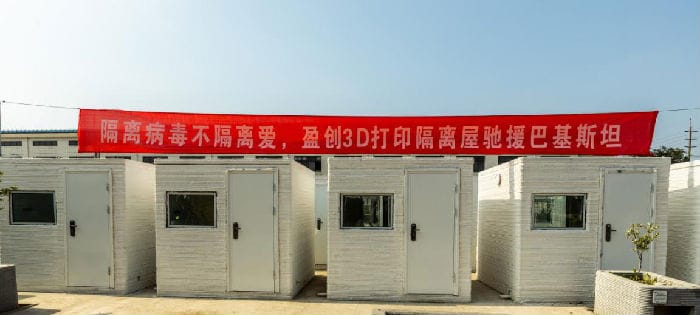
Recent progress in China regarding 3D printed homes takes a new and very interesting direction now though with the fabrication of isolation homes, meant to ward off COVID-19. In an attempt to help Pakistanis fight off potentially deadly germs, 15 isolation structures were shipped from Yingchuang Construction Technology‘s Shanghai Qingpu Plant, and the Suzhou Plant—to Islamabad.
How 3D Printing Responded to COVID-19
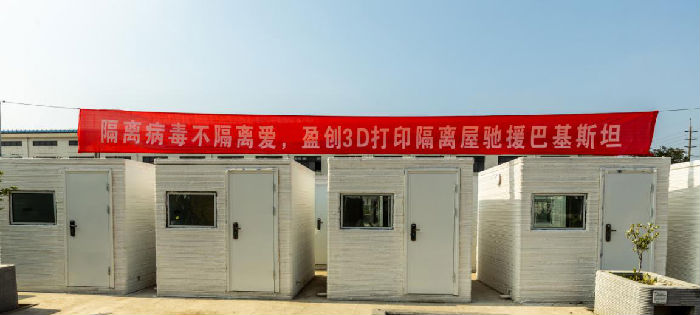
Image Courtesy of WinSun3D
Because the climate of Pakistan is humid and subtropical, the team at Yingchuang Construction Technology—also known as Winsun—contacted Pakistan officials through the Consulate General in Shanghai to come up with a specific airtight and thermally insulated design. Employing some of the most impressive benefits of 3D printing in this project, the Yingchuang team stated that rapid prototyping offered advantages, resulting in customized designs and high-performance 3D printing.
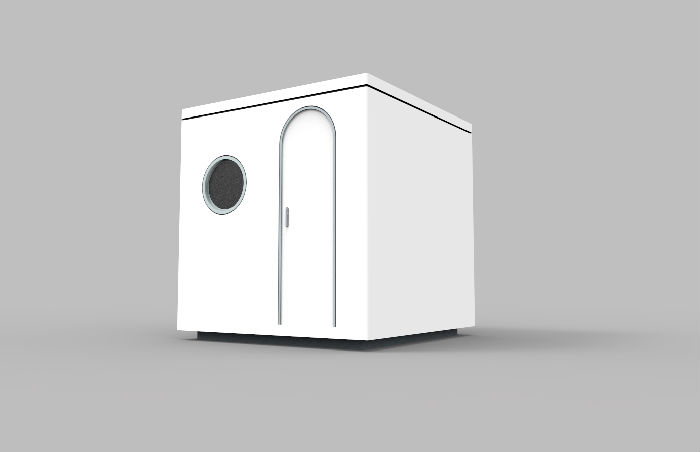
Not only that, Yingchaung claims to have the capability for printing 100 sets of isolation houses a day, with the interior fabricated in one piece. Water, electricity, doors, and windows had to be installed, and then each house could be inhabited. These micro-residences could be extremely effective in allowing for single-person dwellings—rather than allowing entire families to self-isolate together and in some cases, die together too as home transmission continues to pose a significant threat.
HP and the Pandemic Manufacturing Shift
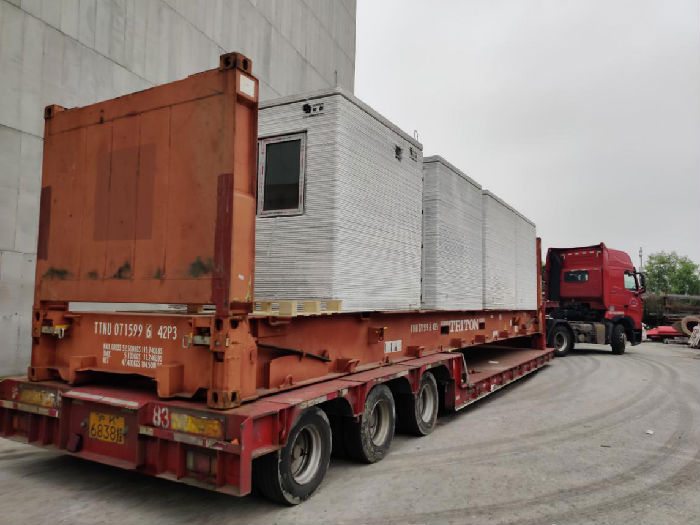
Transportation of 3D printed isolation house (Image courtesy of WinSun3D)
Several of these units were 3D printed in China—originally to be used for tourists; however, at the height of the pandemic, they were also used in an effort to ease the burden from hospitals as their workers required quarantine, along with others.
Also interesting are the plans that the designers have outlined for these 3D printed isolation homes after they have outlived their use, or after the fear of pandemic has passed. Suggestions include conversion into the following:
- Park restrooms
- Small cafes
- Security guard structures
- Disaster relief emergency rooms
- Tiny homes
- Tiny hotel rooms
Recycling is a possibility too, as the structures can actually be returned all the way to Shanghai for “crushing, sorting, grinding, and high-temperature treatment.” Afterward, the materials can be shredded and made into more 3D printing filament for further construction of homes.
Supply Chain Disruptions and Digital Solutions
Image Courtesy of WinSun3D

(Image courtesy of WinSun3D)
3D printing has been at the forefront during the COVID-19 pandemic as the maker community, researchers, and medical professionals worked together to fabricate items like face shields and masks, ventilators, and more.
Medical PPE and Equipment Production
[Source / Images: China News Network]
The post WinSun Sends 3D Printed Isolation Pods to Islamabad appeared first on 3DPrint.com | The Voice of 3D Printing / Additive Manufacturing.
from Your daily news from 3DPrint.com https://bit.ly/39kkAo3
Related Articles
Frequently Asked Questions
How did 3D printing help during COVID-19?
During the COVID-19 pandemic, 3D printing enabled rapid production of critical medical supplies including face shields, ventilator components, nasal swabs, and PPE. Distributed manufacturing allowed makers worldwide to produce items locally without waiting for traditional supply chains.
What was the pandemic digital manufacturing shift?
The pandemic accelerated adoption of digital manufacturing including 3D printing, as companies sought more resilient supply chains. Organizations shifted from centralized to distributed production, using digital files to produce parts locally on demand.
Can 3D printing supply chains be resilient in emergencies?
Yes, 3D printing provides supply chain resilience through distributed manufacturing — designs can be shared digitally and produced anywhere with compatible equipment, eliminating the need for physical inventory and shipping of parts.
📌 Related Articles
- Best 3D Printer Upgrades That Actually Improve Print Quality: Complete 2026 Guide
- Best Budget 3D Printer Upgrades That Actually Improve Print Quality: Belts, Springs, Hotends & More
- The Current State of Metal 3D Printing in 2020
- The Complete 3D Printing Filament Guide: Types, Properties & When to Use Each
- Original Prusa CORE One Kit Review (2026) – Is This CoreXY Printer Worth the Price?