
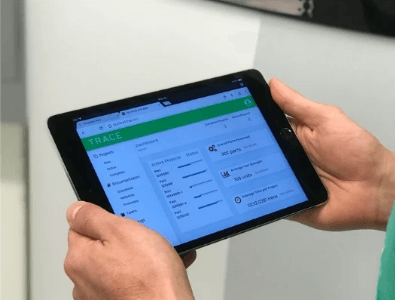
Known for their strength in helping other companies manage their 3D processes, TRACEam is a software development firm headquartered in Chicago, IL. Founded in 2018 by Dr. Mike Vasquez, TRACEam is backed up by a team with extensive experience in material design, testing of parts, training, safety, and strategizing for the long-term in manufacturing.
As a member of America Makes, Vasquez continues to speak on additive manufacturing topics, also partnering with 3Degrees—a consulting firm with offices in the US and London too.
The State of Metal 3D Printing
(Image: TRACEam)
Now, Vasquez and his team are partnering with Renishaw Inc. Solutions Center USA to establish a comprehensive quality management tool for the Renishaw InfiniAM API ecosystem. The goal is to track the lifecycles of parts being manufactured via AM, improving management for Renishaw 3D printing users in tracking, storing, assessing, and testing data.
Founded in 1973 and centered around engineering and scientific technology, Renishaw is well-known for its metrology products which continue to help industrial businesses expand production.
The Renishaw team also offers guidance in finishing 3D printed parts, some of which may be comprised of complex geometries not previously possible via conventional techniques. So many other benefits are available due to additive manufacturing also—to include savings on the bottom line in production, faster turnaround for clients, decreased requirements for labor in many cases, and less waste in materials.

Technical Challenges and Solutions
Renishaw additive manufacturing systems use metal powder bed fusion technology to build complex components direct from digital CAD files (Images: Renishaw)
The solutions centers are meant to assist clientele in solidifying AM processes further, as well as increasing knowledge and confidence regarding the technology and subsequent production.
Renishaw customers must track post-processing for each part, but with the addition of 24 different sensors integrated into the Renishaw metal AM platform, they can now add critical machine data through the TRACE platform. Overall, these new functions should also for better documentation, critical analysis, and improved capability for meeting Food and Drug Administration (FDA) and Federal Aviation Administration (FAA) requirements.
Material Properties and Performance
Refining of these processes reflects an industry-wide need on the part of many companies for tracking part lifecycles, and TRACEam has now made their software commercially available.
“TRACEam is more than just a series of data streams,” said Dr. Mike Vasquez, founder of TRACEam and consulting firm 3Degrees. “We have worked with dozens of manufacturers to build actionable analytic tools that give users great visibility into their entire 3D Printing process.”
Industrial Applications and Use Cases
Webinars and tutorials are also available online. See also: The Current State of Metal 3D Printing in 2020. Find out more at TRACEam.
Renishaw has continued to maintain an active and impressive presence within the additive manufacturing space, from expanding facilities over the years to engaging in partnerships with a range of other industry leaders, creating new measurement tools, and assisting their customers in dynamic projects like assisting in 3D printing parts for world-class sailboats.
Comparing Metal AM to Traditional Manufacturing
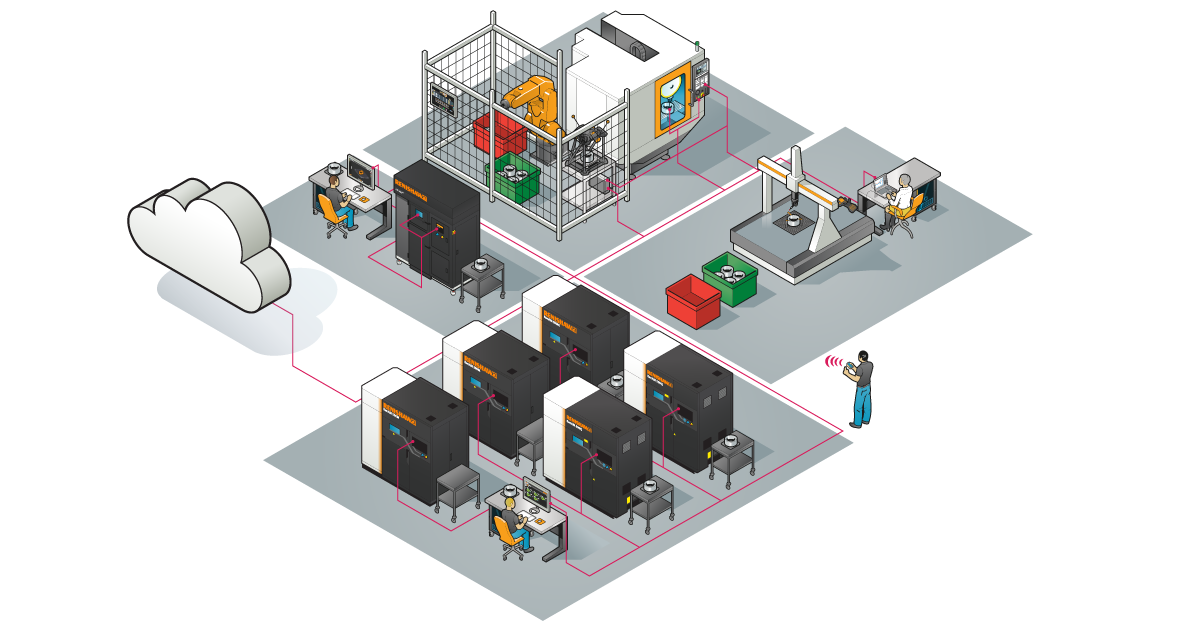
Renishaw AM Solutions Centres offer a multitude of resources for industrial customers (Image: Renishaw).
[Source / Images: America Makes]
The post TRACEam Partners with Renishaw to Improve Management of Metal 3D Printing appeared first on 3DPrint.com | The Voice of 3D Printing / Additive Manufacturing.
from Your daily news from 3DPrint.com https://bit.ly/3fBs8VV
Related Articles
Frequently Asked Questions
What is metal 3D printing?
Metal 3D printing (additive manufacturing) builds metal parts layer by layer using techniques like laser powder bed fusion, directed energy deposition, and binder jetting. It enables complex geometries impossible with traditional manufacturing while reducing material waste significantly.
How strong are 3D printed metal parts?
3D printed metal parts can achieve mechanical properties comparable to traditionally manufactured metals. Tensile strength and fatigue resistance depend on the process and post-processing, but many meet or exceed ASTM standards for wrought materials.
What are the main metal 3D printing technologies?
The primary technologies include Laser Powder Bed Fusion (LPBF), Electron Beam Melting (EBM), Directed Energy Deposition (DED), Binder Jetting, and Metal FDM (with bound filaments). Each has different strengths in terms of resolution, speed, and material options.
📌 Related Articles
- 3D Printing Tungsten Carbide: How Hot-Wire Laser Technology Creates Metal Harder Than Steel
- The Current State of Metal 3D Printing in 2020
- Best Budget 3D Printer Upgrades That Actually Improve Print Quality: Belts, Springs, Hotends & More
- Best 3D Printer Upgrades That Actually Improve Print Quality: Complete 2026 Guide
- ABS 3D Printing Settings Guide: Temperature, Enclosure, and Cooling for Strong Parts