
It’s 2020, and additive manufacturing has finally emerged as a mature technology for production in a growing number of sectors. In the last decade, it made a full run of the technological Hype Cycle but has finally arrived at the Plateau of Productivity.
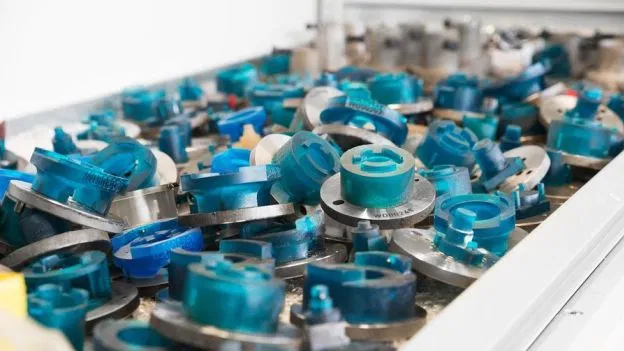
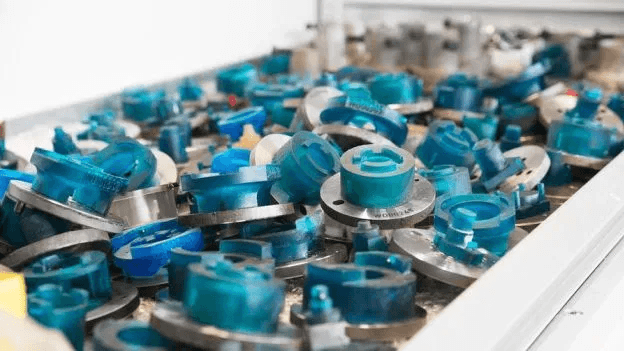
Pankl Racing Systems showcases a replicable custom fixturing system with Formlabs technology
Despite recent technical progress, many industrial 3D printing programs are still not making the financial returns that business owners expect. Often one of the biggest reasons is under-utilization: groups simply not using additive capital equipment often enough to justify the expense. Under-utilization can be caused by a lack of applications or technological inadequacy, but usually it’s the symptom of a much deeper problem that leaders need to address: a severe lack of design for additive manufacturing (DFAM) skills within their engineering organization. When designers and engineers don’t know how or when to design for additive, they create bad, expensive parts or just avoid using it altogether.
The Role of 3D Printing in Medicine
Here are three ways that bad DFAM is holding up the profitability of many additive manufacturing programs:
1. Additive processes are still misunderstood.
While 3D printing OEMs race to make the fastest, most efficient industrial additive equipment, the excitement for advancement is not reciprocated by most engineering groups. 3D printing technology can keep getting better and better, but if users don’t familiarize themselves with the basics of additive processes, part designs will never be truly optimized for 3D printing.
All the CAD skills in the world can’t substitute for understanding additive constraints and benefits.
Biocompatible Materials and Processes
For example, both DLP and FDM 3D printing gets faster and better materials ever year. But neither technology will ever overcome the need for support material. By redesigning this military vehicle equipment bin (below) with the goal of eliminating support material, Blueprint engineers produced it for 33% of the cost of the original design. The design is no better or worse in performance, but it is much faster to produce due to some simple knowledge of DFAM.
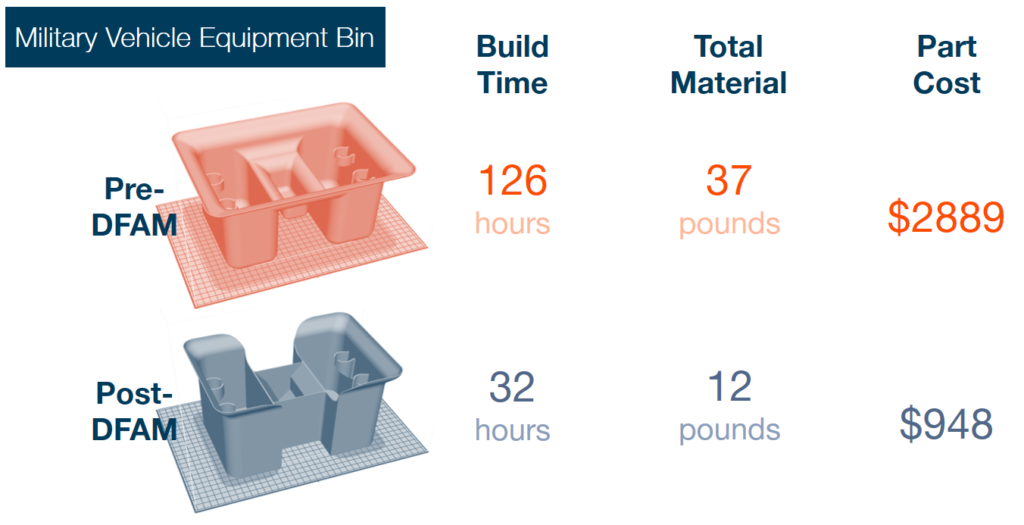
Designing with knowledge of self-supporting structures is just one of the ways that build time and material consumption can be reduced on many technologies including DLP, FDM, DMLS, stereolithography, etc.
What should you do? How do you know if your group needs upskilling? You’ll start to see low machine ROIs, frequent failed prints, and difficulty removing support material or excess powder. It’s also to hear frequent complaints of the inadequacy of the technology, which while sometimes valid can also point to a limit of users’ knowledge or skills. These symptoms are demoralizing and are bad for business… but fortunately they’re caused by a very solvable problem. There are good guidebooks and DFAM courses that teach the technical side of additive manufacturing. But nothing can replace trial and error with the equipment and proactively developing your internal additive language.
Clinical Applications and Case Studies
2. See also: Best 3D Printer Upgrades That Actually Improve Pri…. Additive design software is lacking in usability.
The birthplace of organic, geometrically complex designs was the world of digital art: concept design, video game design, and illustrations. The software used to make these designs have absolutely nothing in common with the engineering CAD packages engineers use to make parts manufacturable. Additive manufacturing introduces a new paradigm of design, one that introduces manufacturability to optimal, organic designs that break the mold of traditional manufacturing design processes.

A new generation design software is needed to make value-optimized designs, like this topology-optimized brake caliper by Bugatti.
Regulatory Considerations and Safety
To fill this gap, a host of software companies have risen to the challenge of designing geometrically organic manufacturable parts. Below are a couple examples of these offerings and some of their current limitations.
- Autodesk Generative Design is a simple tool that generates geometry connect anchor features in an organic way. Today it still doesn’t yield a 100% manufacturable design, and the outputs require either tweaking or a full redesign based on the generated result.
- Materialise 3-Matic offers a variety of DFAM modules from part lightweighting to digital texturing. Procedures can be convoluted and because it outputs mesh files manufacturability and file integrity are still concerns.
- nTop by nTopology is a promising new software that combines the organic shapes of generative design with well-understood geometric patterns. It’s a fairly new software that has yet to pass through the test of widespread adoption.
What should you do? Additive users are between a rock and a hard place. They’re forced to choose between spending expensive engineering time on powerful, yet new software and under-designed parts that are material-intensive or prone to failure. The bottom line? Expensive. But user organizations must embrace the fact that no design software is perfect yet and focus their energy on discerning the type and depth of software needed to create value. Future-ready engineering organizations should engage subject matter experts to assess whether investment in additive-specific design tools is on the critical path to success.
Research Breakthroughs and Innovations
3. Additive is too often an afterthought
Unless additive is brought in at the very beginnings of a product’s lifecycle, it will simply not yield much value. An organization must do more than try to implement additive at a few stages in product development. Its people must “think additively”, considering and applying this new manufacturing methodology across the organization. Without embedding additive thinking from the beginning of a project with the support of all departments, the necessary CAD data, requirements analysis, or design resources won’t be available, resulting in failure and wasted effort.
What should you do? Start to Think Additively by considering additive before every step in the product development process.
Think Additively for Prototyping – In all stages of product development, designers should embrace the “agile” nature of additive manufacturing, assuming every part will need to be printed twice – once for testing and once for use. Additive manufacturing is the right technology for the old innovation adage: “Fail fast, and fail often”
The Future of Bioprinting and Medical AM
Think Additively for Fixturing and Tooling – When it comes to fixturing and tooling, additive manufacturing is often disregarded as too expensive or too weak. Adding bushings to for strength or reducing material around the cradle geometry are ways to improve the design for performance and economics.
Think Additively for Production – There are two things that must drive design for production AM parts: the firm requirements (including surface quality, mechanical loads, and economics) and the goal (reduce weight, reduce cost, improve function). Designers should throw out the traditional manufacturing assumptions and start from the ground up with these two considerations.
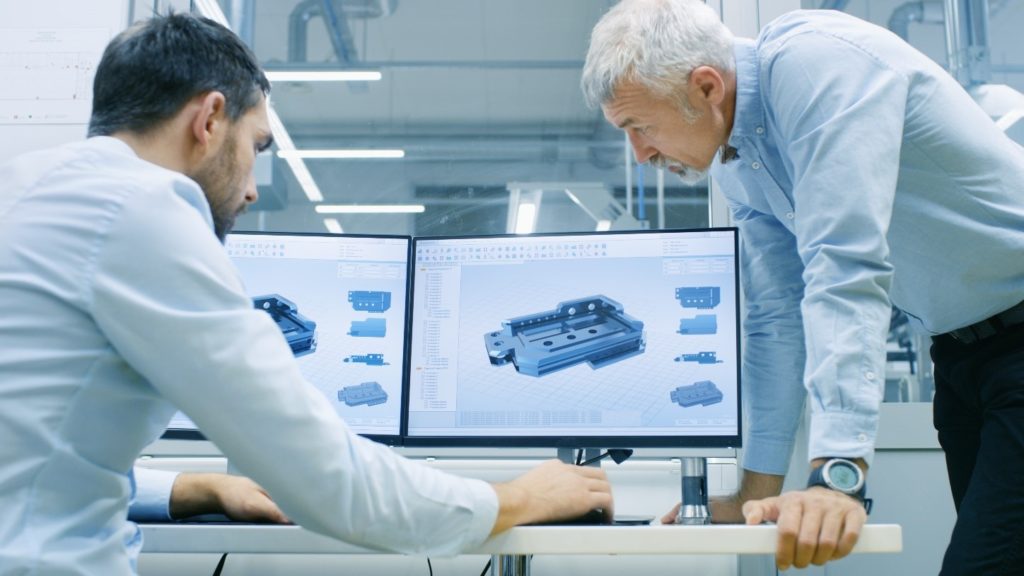
3D printing requires a new thought process and the cooperation of multiple departments
The Role of 3D Printing in Medicine
Overcoming these three barriers to good design are crucial to creating an efficient, profitable additive operation.
Why? Because while traditional methods of manufacturing tie designers’ hands with manufacturability constraints, the flexibility of additive manufacturing frees the designer in an unprecedented way. And while 3D printing shifts control from the manufacturing process to the engineer, it also puts inadequate designs painfully on display through waste, whether it’s wasted time, material, or iterations. Waste and expense ultimately eclipse the expected business benefit of this disruptive technology.
This is why DFAM skills are so important to realizing intended business benefits.
David Busacker is a Senior Engineering Consultant for Blueprint. He is an experienced additive manufacturing designer and has developed multiple additive manufacturing design courses.
Biocompatible Materials and Processes
Blueprint is an additive manufacturing consultancy, bringing together more than 16 years of knowledge and experience across the industry. As the world’s leading additive manufacturing consultancy, Blueprint regularly assists future-ready companies achieve additive success. Based in Eden Prairie, Minn., and Milford, U.K, the firm offers a unique, technology-agnostic perspective on all things additive, from strategic advice to design optimization services. More information is available online at www.additiveblueprint.com.
The post The 3 Reasons Your 3D Printed Parts are so Expensive appeared first on 3DPrint.com | The Voice of 3D Printing / Additive Manufacturing.
from Your daily news from 3DPrint.com http://bit.ly/38ktfVi
Related Articles
Where to Buy
Looking for The Role of 3D Printing in Medicine
Here are three ways that bad DFAM is holding up the profitability of many additive manufacturing programs:
1. Additive processes are still misunderstood.
While 3D printing OEMs race to make the fastest, most efficient industrial additive equipment, the excitement for advancement is not reciprocated by most engineering groups. 3D printing technology can keep getting better and better, but if users don’t familiarize themselves with the basics of additive processes, part designs will never be truly optimized for 3D printing.
All the CAD skills in the world can’t substitute for understanding additive constraints and benefits.
Biocompatible Materials and Processes? Check the best deals on Amazon:
As an Amazon Associate, we earn from qualifying purchases.
Frequently Asked Questions
How is 3D printing used in medicine?
3D printing is used in medicine for surgical planning models, custom implants, bioprinting tissue scaffolds, drug delivery systems, dental aligners, and prosthetics. It enables patient-specific solutions that improve outcomes and reduce surgery time.
What materials are biocompatible for 3D printing?
Common biocompatible materials include PEEK, titanium alloys (Ti6Al4V), bio-ceramics (hydroxyapatite), medical-grade resins, PLA for temporary implants, and hydrogels for bioprinting. Material choice depends on the application and required mechanical properties.
Is 3D printed medical equipment FDA approved?
Yes, several 3D printed medical devices have FDA clearance, including orthopedic implants, dental restorations, and surgical guides. Each device must go through the appropriate regulatory pathway based on its risk classification.
📌 Related Articles
- Best 3D Printer Upgrades That Actually Improve Print Quality: Complete 2026 Guide
- Best Budget 3D Printer Upgrades That Actually Improve Print Quality: Belts, Springs, Hotends & More
- ABS 3D Printing Settings Guide: Temperature, Enclosure, and Cooling for Strong Parts
- 3D Printing Safety Equipment Guide: Respirators, Gloves, and Ventilation for 2026
- Bambu Lab P1S vs Bambu Lab P2S: Full Specs Comparison & Buyer’s Guide