
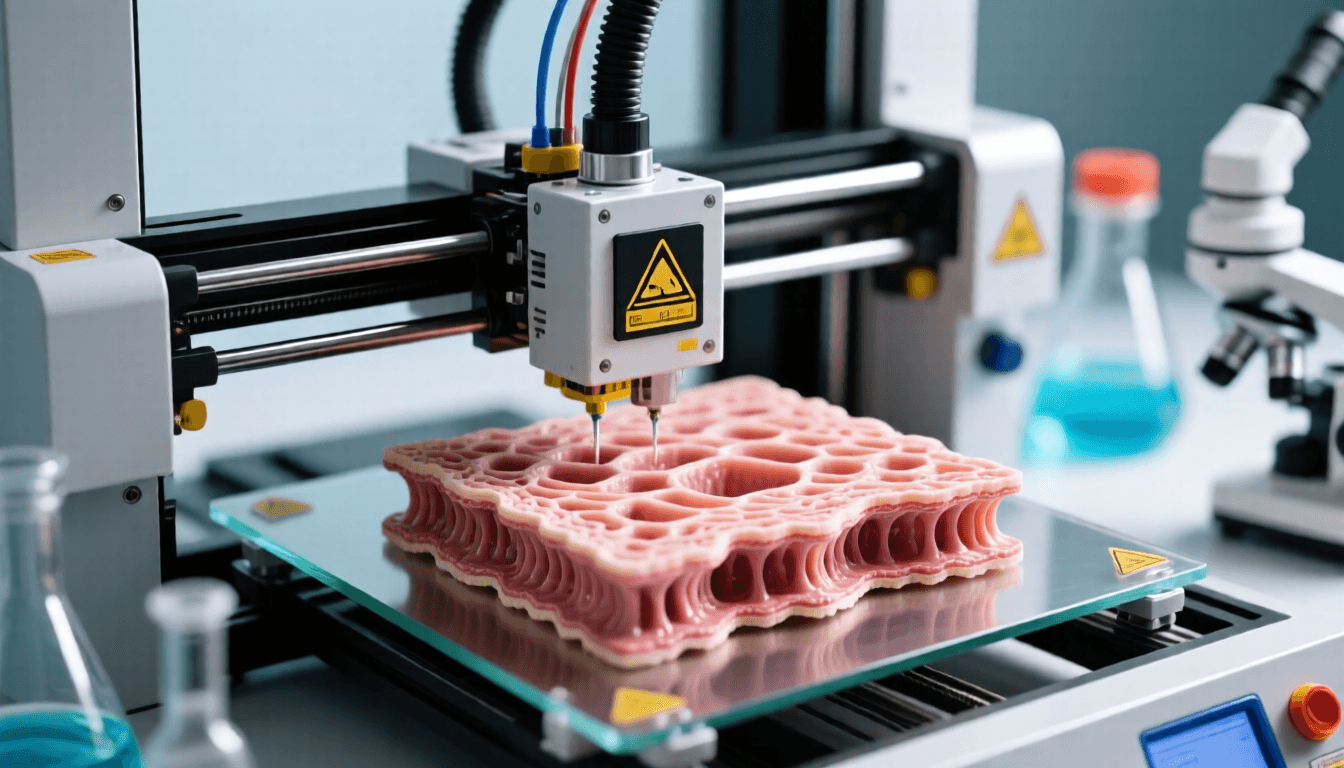
Tissue engineering or regeneration is the process of improving upon or replacing biological tissues by combining cells and other materials with the optimal chemical and physiological conditions in order to build scaffolds upon which new viable tissue can form. We’ve seen many examples of 3D printing being used to accomplish this task. The potential to engineer new tissues this way provides an answer to organ transplant shortages and applications in drug discovery.
However, to become viable tissues, these cells need oxygen delivered to them via blood vessels, which, in transplanted tissue, can take several days to grow. But a collaborative group of researchers is working on a solution: an oxygen-releasing bioink that can deliver this all-important element to the cells in 3D bioprinted tissues. This allows the cells to survive while they’re waiting for blood vessels to finish growing.

The Role of 3D Printing in Medicine
Heart cells in a bioink (L) without oxygen support and (R) with oxygen-releasing capabilities. Live cells are stained green, dead cells red. (Image: Khademhosseini Lab)
The team of researchers—from UCLA, Kocaeli University in Turkey, the Terasaki Institute for Biomedical Innovation (TIBI) in California, Sharif University of Technology in Iran, Erciyes University in Turkey, Université de Lorraine in France, and the University of Iowa—recently published a paper, “3D Bioprinting of Oxygenated Cell-Laden Gelatin Methacryloyl Constructs,” in Advanced Healthcare Materials about their work.
The abstract states, “Cell survival during the early stages of transplantation and before new blood vessels formation is a major challenge in translational applications of 3D bioprinted tissues. See also: Diagram Generation Pipeline Explained. Supplementing oxygen (O2) to transplanted cells via an O2 generating source such as calcium peroxide (CPO) is an attractive approach to ensure cell viability. Calcium peroxide also produces calcium hydroxide that reduces the viscosity of bioinks, which is a limiting factor for bioprinting. Therefore, adapting this solution into 3D bioprinting is of significant importance. In this study, a gelatin methacryloyl (GelMA) bioink that is optimized in terms of pH and viscosity is developed. The improved rheological properties lead to the production of a robust bioink suitable for 3D bioprinting and controlled O2 release. In addition, O2 release, bioprinting conditions, and mechanical performance of hydrogels having different CPO concentrations are characterized. As a proof of concept study, fibroblasts and cardiomyocytes are bioprinted using CPO containing GelMA bioink. Viability and metabolic activity of printed cells are checked after 7 days of culture under hypoxic condition. The results show that the addition of CPO improves the metabolic activity and viability of cells in bioprinted constructs under hypoxic condition.”
Biocompatible Materials and Processes
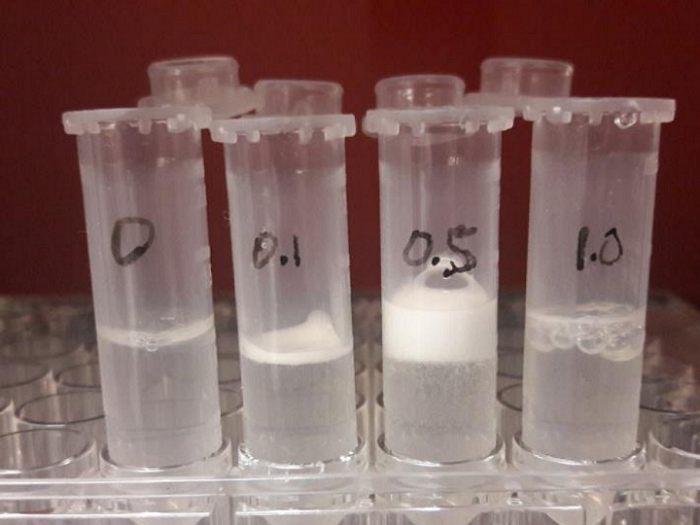
In order to enhance the physical and chemical properties of their oxygen-generating gelatin methacryloyl (GelMA) bioink, the team performed extensive testing, and found that enough oxygen was delivered to the cells to tide the developing tissue structures over until the blood vessels were finished developing. Once that happened, the vessels could take over the delivery of oxygen. Even then, the bioink can still help by providing extra support in order to enhance the growth and regeneration of more new tissue.
“By delivering oxygen to the implanted cells, we would be able to improve the tissue functionality and integration to the host tissue,” explained Samad Ahadian, PhD, the lead investigator for the TIBI team. “A similar approach can be used to make functional tissues with improved survival for drug screening applications and pathophysiological studies within a long period of time.”
Clinical Applications and Case Studies
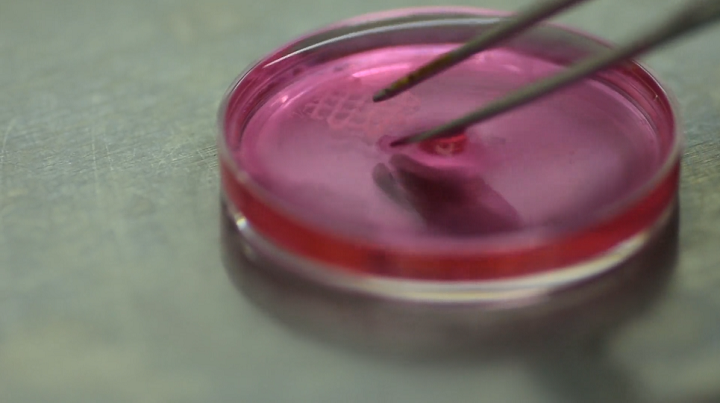
Additionally, the researchers conducted experiments on tissue constructs that had two types of cells, including muscle cells and cardiac cells, and reported that using the new bioink resulted in some “positive effects.”
(Source: Nanowerk News)
The post Researchers Create Bioink that Delivers Oxygen to 3D Printed Tissue Cells appeared first on 3DPrint.com | The Voice of 3D Printing / Additive Manufacturing.
Regulatory Considerations and Safety
from 3DPrint.com | The Voice of 3D Printing / Additive Manufacturing https://bit.ly/32uAkDg
Related Articles: US Army Researchers Create Self-Healing 3D Printing Materials · Researchers Create hChaMP, a Beating Bioprinted Heart Pump · Rice University Researchers Develop a New 4D Printing Method to Create Shapeshifting Materials
Frequently Asked Questions
How is 3D printing used in medicine?
3D printing is used in medicine for surgical planning models, custom implants, bioprinting tissue scaffolds, drug delivery systems, dental aligners, and prosthetics. It enables patient-specific solutions that improve outcomes and reduce surgery time.
What materials are biocompatible for 3D printing?
Common biocompatible materials include PEEK, titanium alloys (Ti6Al4V), bio-ceramics (hydroxyapatite), medical-grade resins, PLA for temporary implants, and hydrogels for bioprinting. Material choice depends on the application and required mechanical properties.
Is 3D printed medical equipment FDA approved?
Yes, several 3D printed medical devices have FDA clearance, including orthopedic implants, dental restorations, and surgical guides. Each device must go through the appropriate regulatory pathway based on its risk classification.
📌 Related Articles
- Diagram Generation Pipeline Explained
- The Current State of Metal 3D Printing in 2020
- Best Budget 3D Printer Upgrades That Actually Improve Print Quality: Belts, Springs, Hotends & More
- Best 3D Printer Upgrades That Actually Improve Print Quality: Complete 2026 Guide
- The Complete 3D Printing Filament Guide: Types, Properties & When to Use Each