
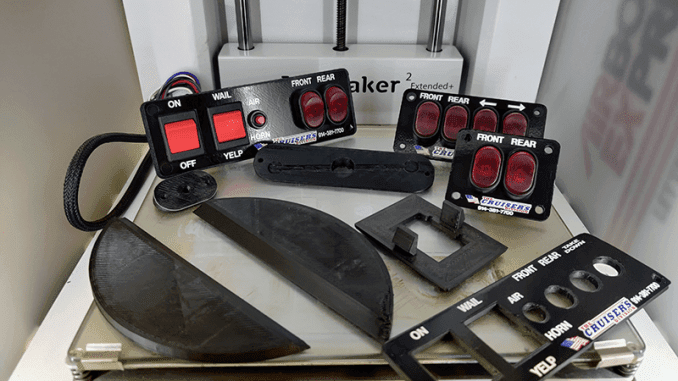
3D printing has proven itself as a useful technology in critical applications for organizations like NASA producing rocket engines—and the military, 3D printing parts for aircraft. Now, law enforcement and emergency vehicles are gaining a technological boost, too, thanks to designs from Ian Gerstein. As an R&D engineer and an emergency and police vehicles upfitter, Gernstein has been using an Ultimaker 2 Extended+ to create 3D printed mounts for light heads, and customized control panels for running both lights and sirens.
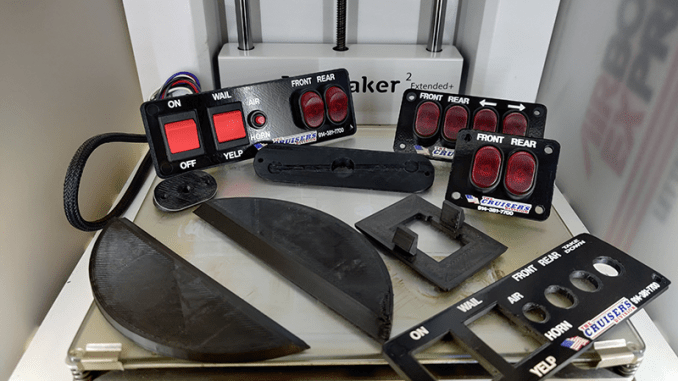
One of the greatest benefits of 3D printing is the ability to innovate like never before, making parts and components that may not have been an option previously with conventional technology—as well as placing them in areas that may not have been the original intention; in fact, most of the new parts that Gerstein creates are mounted in areas that were not specified by the automobile manufacturer. Other modified parts too are made up of caps and switchplates used by police officers in unmarked vehicles.
“As vehicle manufacturers and product manufacturers constantly evolve their products, our 3D printer has proven itself useful in keeping our company current and competitive,” said Gernstein.
The Role of 3D Printing in Medicine
Evolving along with car and equipment companies is critical as they continue to refine products for improved performance. For Gernstein, the key is to keep up with such changes, collaborating—rather than competing. He has also taken advantage of the ability to create parts much more quickly, pointing out that previously he and his team were spending far more time making simple products:
“The original process was to take a sheet of ABS plastic, Dremel it into the dimensions required, cut out the switch holes, check, refit, check, refit, and after all was said and done you’d end up with a crude part you called “custom,” said Gernstein. “Since that time, we’ve been able to design a product once, press print, and walk away; the result is a professional-looking product with repeatable results and significant labor savings.”
Biocompatible Materials and Processes
Although some parts may have decoration or labels added later, Gernstein is able to use parts as soon as they are printed, using ABS mainly due to its temperature resistance qualities as parts may be subjected to warm interiors (and exteriors) and must be able to maintain levels below the glass transition temperature.
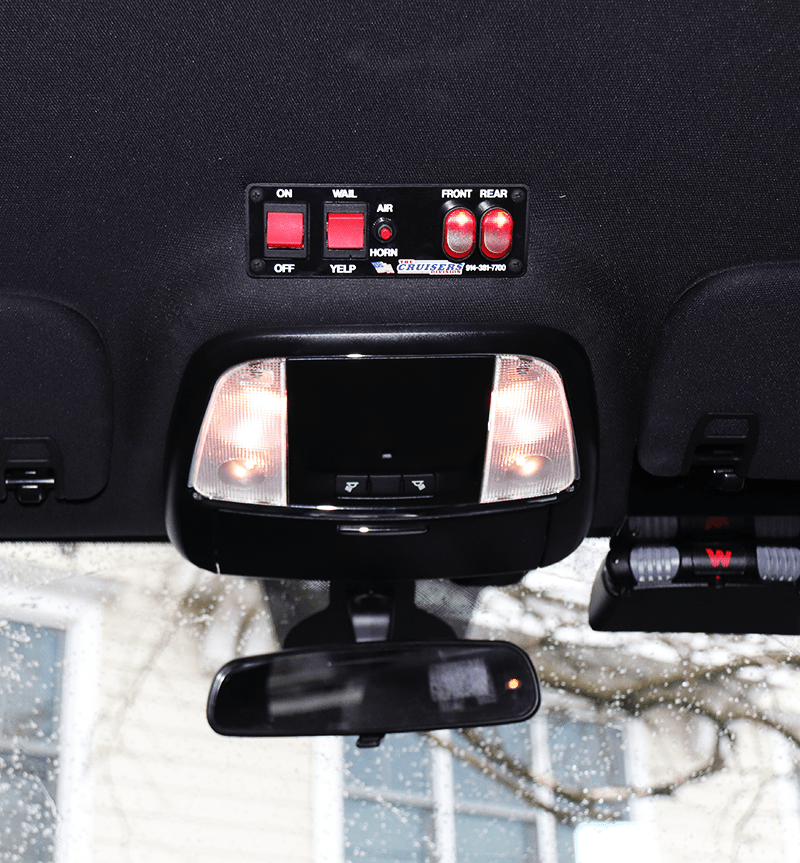
“As an added benefit, ABS is very cost-efficient and does not put any excessive wear on our printer,” said Gernstein.
Clinical Applications and Case Studies
The engineer and his team are able to create parts in just a few hours, cutting out design and waiting time traditionally expected when working with a middleman in typical manufacturing. See also: The Current State of Metal 3D Printing in 2020. They are also able to consider complexities for the past, present, and future in designing parts, thinking ahead regarding compatibility between vehicles—avoiding potential restrictions or problems.

[Source / Images: 3D Universe]
The post R&D Engineer 3D Prints Car Parts for Emergency & Police Vehicles appeared first on 3DPrint.com | The Voice of 3D Printing / Additive Manufacturing.
Regulatory Considerations and Safety
from Your daily news from 3DPrint.com https://bit.ly/31MAPqC
Frequently Asked Questions
How is 3D printing used in medicine?
3D printing is used in medicine for surgical planning models, custom implants, bioprinting tissue scaffolds, drug delivery systems, dental aligners, and prosthetics. It enables patient-specific solutions that improve outcomes and reduce surgery time.
What materials are biocompatible for 3D printing?
Common biocompatible materials include PEEK, titanium alloys (Ti6Al4V), bio-ceramics (hydroxyapatite), medical-grade resins, PLA for temporary implants, and hydrogels for bioprinting. Material choice depends on the application and required mechanical properties.
Is 3D printed medical equipment FDA approved?
Yes, several 3D printed medical devices have FDA clearance, including orthopedic implants, dental restorations, and surgical guides. Each device must go through the appropriate regulatory pathway based on its risk classification.
📌 Related Articles
- Best Budget 3D Printer Upgrades That Actually Improve Print Quality: Belts, Springs, Hotends & More
- The Current State of Metal 3D Printing in 2020
- Best 3D Printer Upgrades That Actually Improve Print Quality: Complete 2026 Guide
- 3D Printing Tungsten Carbide: How Hot-Wire Laser Technology Creates Metal Harder Than Steel
- ABS 3D Printing Settings Guide: Temperature, Enclosure, and Cooling for Strong Parts