
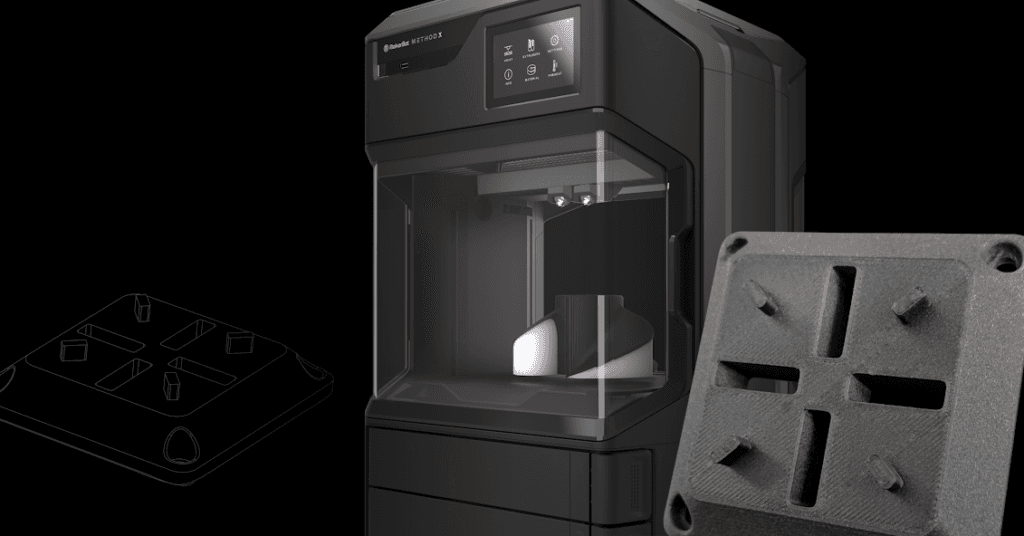
With MakerBot’s most recent makeover, the Stratasys subsidiary promised new quality with its desktop 3D printers through the introduction of the METHOD and, later, METHOD X 3D printers. The company has gradually broadened the material possibilities of these machines with the release of specialty extruders, including the LABS Experimental Extruder that opened up the system to the use of third-party filaments.
The latest releases from the company are the METHOD and METHOD X Carbon Fiber Editions, which are capable of printing with nylon reinforced with chopped carbon fiber. This is made possible by the use of a new extruder meant for abrasive materials. The extruder features hardened metal drive gears, a metal filament switch, and an interchangeable hardened steel nozzle. This extruder is available as an upgrade to existing METHOD and METHOD X 3D printers.
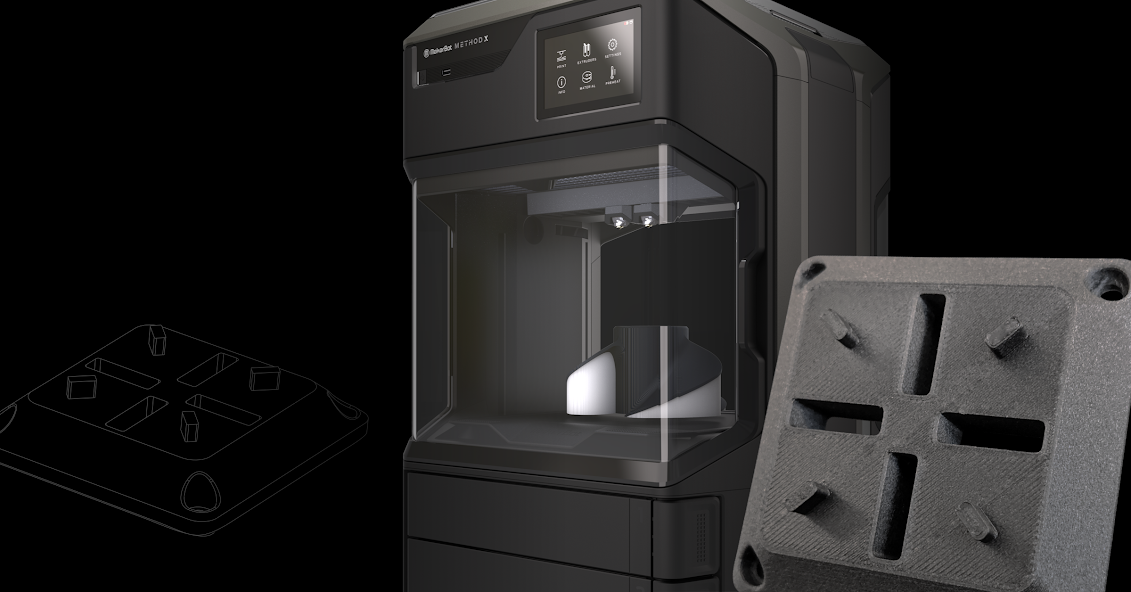
The MakerBot METHOD 3D printer. Image courtesy of MakerBot.
The ability to 3D print with thermoplastic filaments filled with chopped carbon fiber is not exactly new, as these materials have been available on the market for some time. However, not every extruder is capable of printing them effectively without issue. Given MakerBot’s more measured approach to materials in the past few years, it would make sense for them to ensure that the product is well-suited for the task it is set out to accomplish. After all, these are closed systems marketed as easy-to-use and aren’t meant for tinkering.
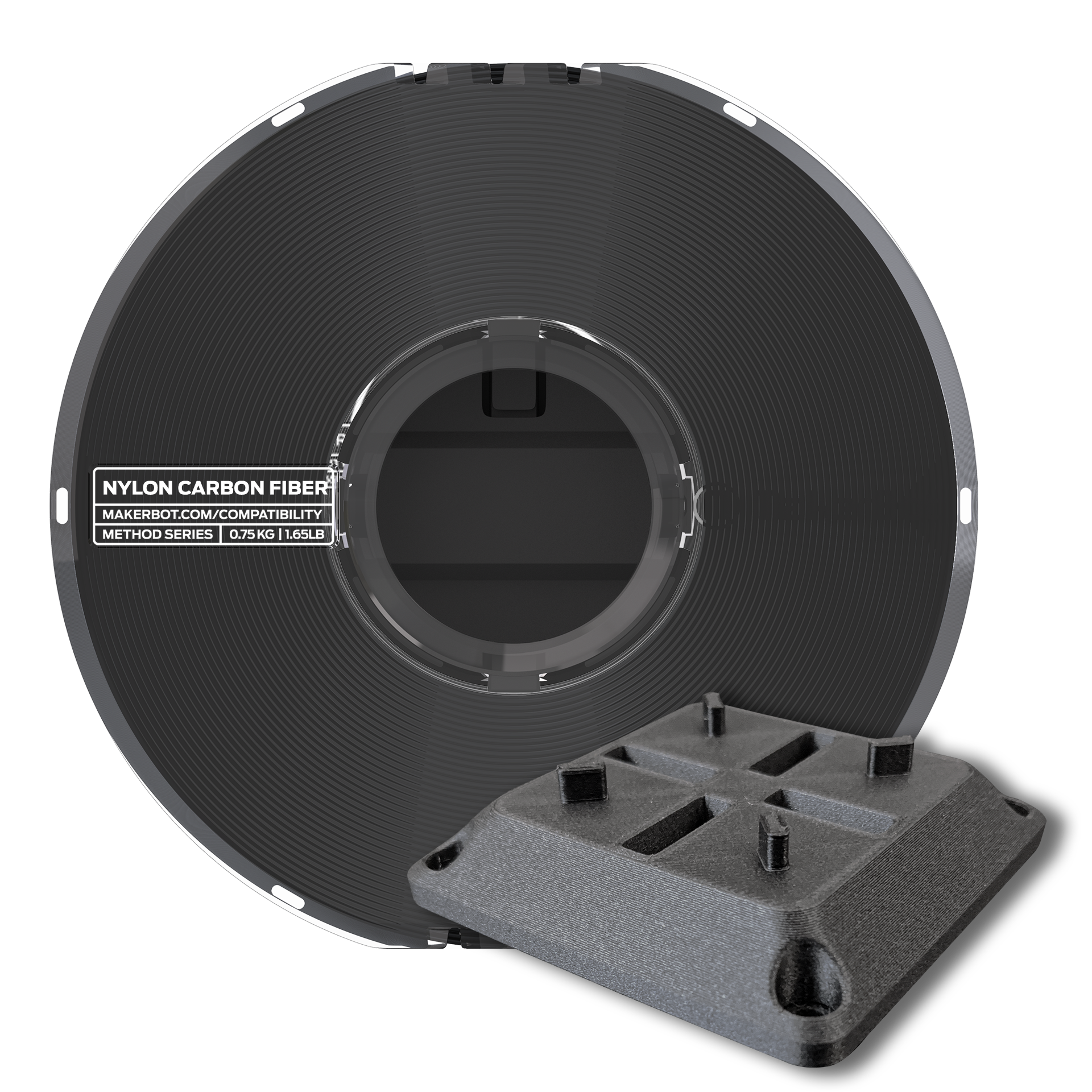
MakerBot’s nylon-carbon fiber 3D printing filament. Image courtesy of MakerBot.
The company suggests that nylon-carbon fiber parts printed on these systems can be used for manufacturing tools, jigs and fixtures, as well as end parts, including metal replacement parts, depending on the application. Specifically, MakerBot lists such use cases as vehicular brackets, inspection gauges, robotic end effectors, and other tools and under-hood applications.
The new extruder may not give it quite the same capabilities as printers dedicated to fiber reinforcement, such as products from Markforged, Anisoprint, Desktop Metal or 9T Labs. These technologies are able to incorporate strands of continuous carbon fiber into parts in order to provide anisotropic strength throughout the part. However, it is an upgrade for the METHOD line. This allows it to compete more closely with a brand like Ultimaker, which offers a PETG filament reinforced with chopped carbon fiber.

Parts printed using MakerBot’s nylon-carbon fiber filament. Image courtesy of MakerBot.
The METHOD line has its own unique features that distinguish it from other systems. Specifically, a circulating heated chamber controls the printing temperature throughout the build process in order to maintain accurate dimensionality. Combined with soluble supports printed using Stratasys SR-30 filament, it’s possible to create complex geometries, often not possible with continuous carbon fiber systems.
The company plans to add more composite materials to its lineup, with the METHOD X capable of handling a wider range due to the fact that its build platform can reach 110°C. The new Carbon Fiber Editions, along with the extruder and materials, are expected to begin shipping June 2020.
The post MakerBot Adds Carbon Fiber Filled Filaments to METHOD Series appeared first on 3DPrint.com | The Voice of 3D Printing / Additive Manufacturing.
Where to Buy
Where to Buy Filament
Disclosure: Some of the links below are affiliate links. If you make a purchase, we may earn a commission at no extra cost to you. This helps support this site.
These links go to Amazon with our affiliate tag. If you prefer to support local retailers or buy directly from manufacturers, we encourage that as well!
Frequently Asked Questions
What is metal 3D printing?
Metal 3D printing (additive manufacturing) builds metal parts layer by layer using techniques like laser powder bed fusion, directed energy deposition, and binder jetting. It enables complex geometries impossible with traditional manufacturing while reducing material waste significantly.
How strong are 3D printed metal parts?
3D printed metal parts can achieve mechanical properties comparable to traditionally manufactured metals. Tensile strength and fatigue resistance depend on the process and post-processing, but many meet or exceed ASTM standards for wrought materials.
What are the main metal 3D printing technologies?
The primary technologies include Laser Powder Bed Fusion (LPBF), Electron Beam Melting (EBM), Directed Energy Deposition (DED), Binder Jetting, and Metal FDM (with bound filaments). Each has different strengths in terms of resolution, speed, and material options.
📌 Related Articles
- The Current State of Metal 3D Printing in 2020
- Best Budget 3D Printer Upgrades That Actually Improve Print Quality: Belts, Springs, Hotends & More
- 3D Printing News: Multi-Material Breakthrough and Aerospace Market Boom
- Best 3D Printer Upgrades That Actually Improve Print Quality: Complete 2026 Guide
- 3D Printing Tungsten Carbide: How Hot-Wire Laser Technology Creates Metal Harder Than Steel