

 Huntsville, Alabama, is now home to Blue Origin‘s brand new rocket engine production facility, the latest addition to Huntsville’s Cummings Research Park (CRP), the second-largest research park in the United States and the fourth largest in the world. The 46-acre plant in The Rocket City will strengthen the production of Blue Origin’s BE-4 and BE-3U engines, which will power both Blue Origin’s own orbital launch vehicle, the New Glenn rocket, and United Launch Alliance’s next-generation Vulcan Centaur launch system for national security, civil, human and commercial missions.
Understanding Filament Properties
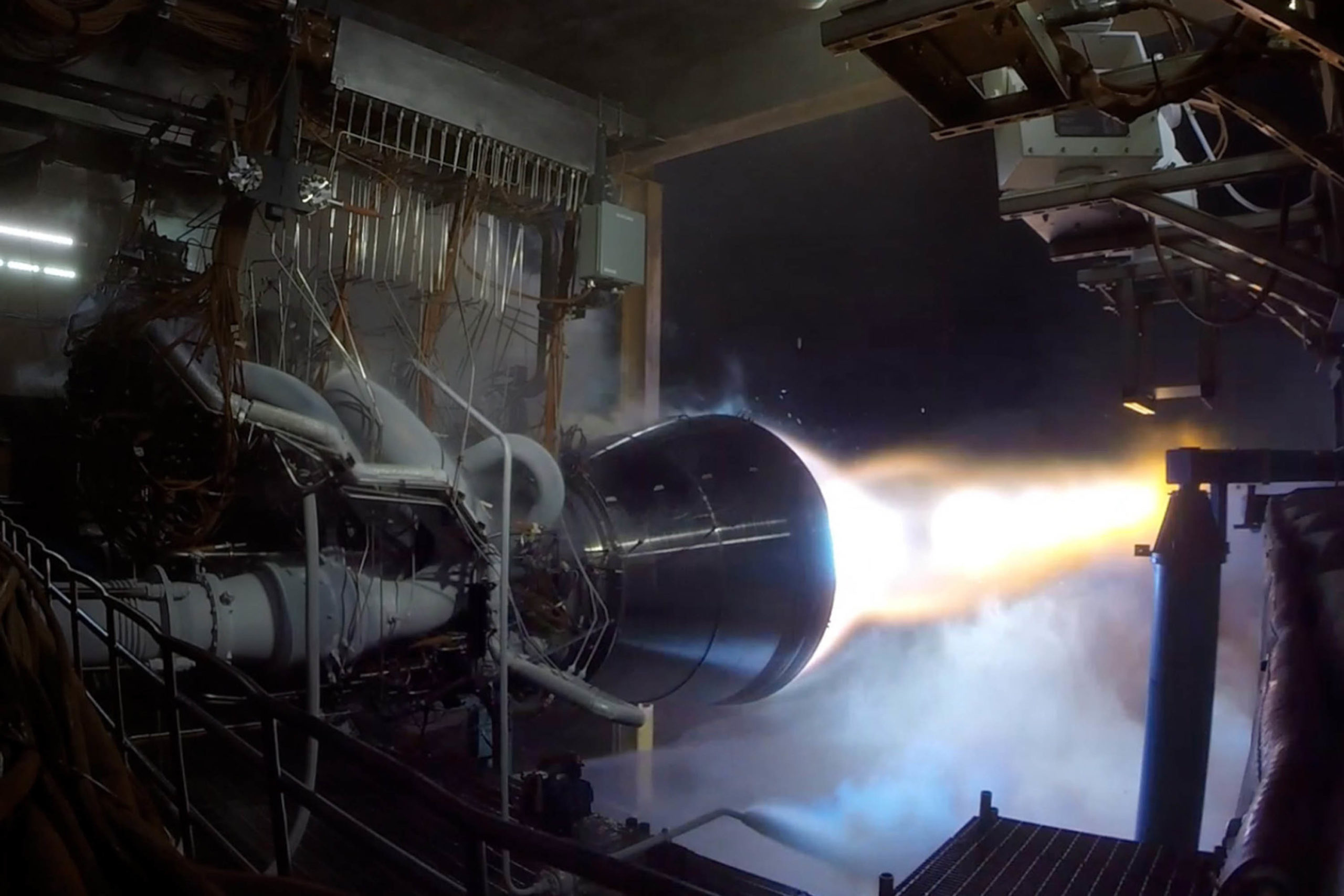
The BE-4 Engine (Credit: Blue Origin)
In development since 2011, the BE-4 is a liquefied natural gas (LNG) fueled rocket engine. Using an oxygen-rich staged combustion cycle, BE-4 is capable of delivering 2,400 kN of thrust at sea level. The engine uses additive manufacturing as part of its critical manufacturing processes for the thrust chamber and nozzle. And according to this article on Institute of Electrical and Electronics Engineers (IEEE) Spectrum, “the BE-4 uses 3D printing to accelerate the design process, replacing cast or forged parts that used to take a year or more to source with parts made in-house in just a couple of months; the technology also allowed intricately shaped components to be made from fewer pieces.”
No surprise there, additive manufacturing is powering rocket engine production and improving the time to delivery. Like its competitors, Blue Origin is expanding the use of the technology to improve the quality and efficiency of its rocket engines, offering simpler, safer and cheaper reusable products, in line with company founder Jeff Bezos founding principle, of creating low cost, reusable and highly operable rocket engines.
Blue Origin CEO, Bob Smith, said during the inauguration that “at the core of every successful launch vehicle program are the engines that power those vehicles to space. Early on in Blue Origin’s history, we made a crucial decision to invest in developing the next generation of reusable rocket engines. And now, it’s an exciting time for Blue, our partners and this country – we are on the path to deliver on our promise to end the reliance on Russian made engines – and it’s all happening right here, right now, in the great state of Alabama. We couldn’t be prouder to call this our home for engine production.”
Material Comparison and Selection
Huntsville has a very rich legacy in liquid rocket engines. See also: The Current State of Metal 3D Printing in 2020. Nearly every major US aerospace corporation is represented in CRP and the community, and even NASA operates the Marshall Space Flight Center in Huntsville, which for the past 60 years has been leading on space propulsion, designing the rockets that put man on the moon, and is currently designing the propulsion system for NASA’s Space Launch System. The new $200 million rocket-engine facility in Huntsville will expand the state’s already robust capabilities in space flight as well as add more than 300 jobs to the local economy.
The new facility demonstrates part of a bigger plan for Blue Origin, as the company is also working on two other engines, including the BE-7 destined for the company’s Blue Moon lunar lander. Although their BE-4 is the largest of the three and will undergo testing at NASA Marshall Space Flight Center on the historic Test Stand 4670.

Print Settings and Optimization
U.S. Congressman Robert Aderholt speaking at the inauguration of the Huntsville facility (Credit: Robert Aderholt)
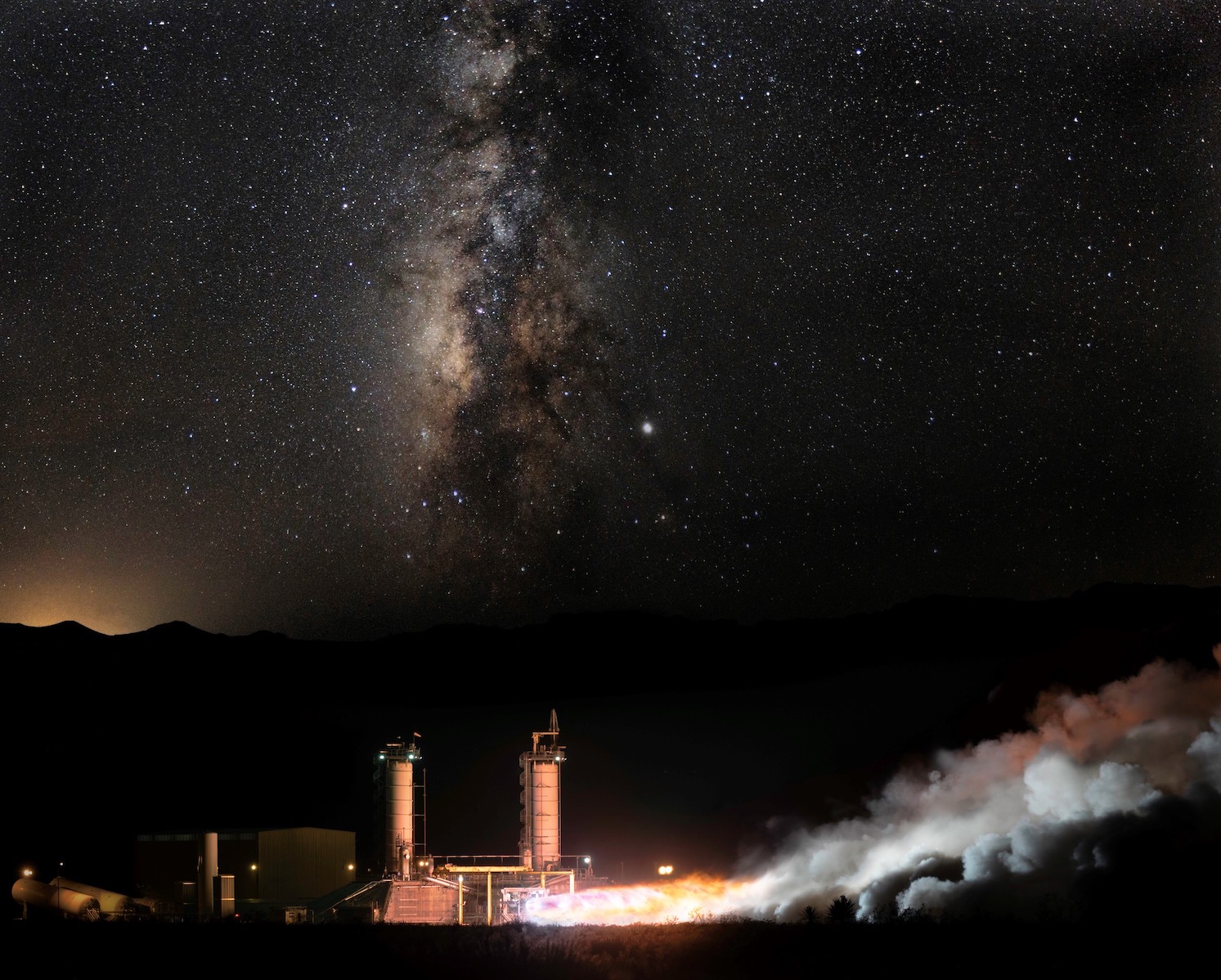
Although all early BE-4 components and full engines to support the test program were built at Blue Origin’s headquarters location in Kent, Washington, and the BE-4 is currently undergoing full-scale engine development testing at Blue Origin’s facilities in Van Horn, Texas, full-rate production of the engine will occur in Huntsville.
Moreover, seven BE-4 engines are expected to power New Glenn’s reusable booster, and two BE-4 engines will drive the first stage of United Launch Alliance’s Vulcan launch vehicle. Blue Origin is hoping to move for the development of new spacecraft, and they have already flown commercial payloads aboard New Shepard nine times. The suborbital space-tourist vehicle which should make its first crewed flight later this year is being launched to carry experimental payloads that will be used for research, including materials used in student studies.
The massive rocket called New Glenn could enable more lunar missions and make Bezo’s dream of “building a road to space” a reality. See also: Best Budget 3D Printer Upgrades That Actually Impr…. A big part of commercializing space entails being able to innovate, develop and manufacture new products that astronauts and space tourists can use in orbit. 2019 was a big year for space agencies and companies looking to get a place in the next big space race, and 2020 seems to be starting out with big news, let’s hope some of the deadlines for many of the space ventures hold up. One thing is for sure, 3D printing will continue to play an important role in the development of the rockets that will launch the next generation of space explorers.
Strength and Durability Testing
The BE-4 engine (Credit: Blue Origin)
The post Blue Origin Opens Its New Rocket Engine Facility in Alabama appeared first on 3DPrint.com | The Voice of 3D Printing / Additive Manufacturing.
from Your daily news from 3DPrint.com http://bit.ly/2uPC24d
Related Articles
Frequently Asked Questions
What is the best 3D printing filament for beginners?
PLA is the best starting filament — it prints easily at 190-220°C without an enclosure and produces good results. Once comfortable, PETG offers better strength and temperature resistance for functional parts.
How do I choose the right filament?
Consider the application: PLA for display models, PETG for functional parts, ABS/ASA for heat/sunlight exposure, TPU for flexible parts, and specialty filaments for engineering applications. Each has specific printer requirements.
What temperature should I print different filaments at?
PLA: 190-220°C nozzle / 50-60°C bed. PETG: 220-250°C / 70-80°C. ABS: 230-260°C / 100-110°C (enclosure needed). Nylon: 240-270°C / 70-90°C. Always check manufacturer recommendations for specific brands.
📌 Related Articles
- The Current State of Metal 3D Printing in 2020
- Best Budget 3D Printer Upgrades That Actually Improve Print Quality: Belts, Springs, Hotends & More
- 3D Printing News: Multi-Material Breakthrough and Aerospace Market Boom
- Best 3D Printer Upgrades That Actually Improve Print Quality: Complete 2026 Guide
- 3D Printing Tungsten Carbide: How Hot-Wire Laser Technology Creates Metal Harder Than Steel