
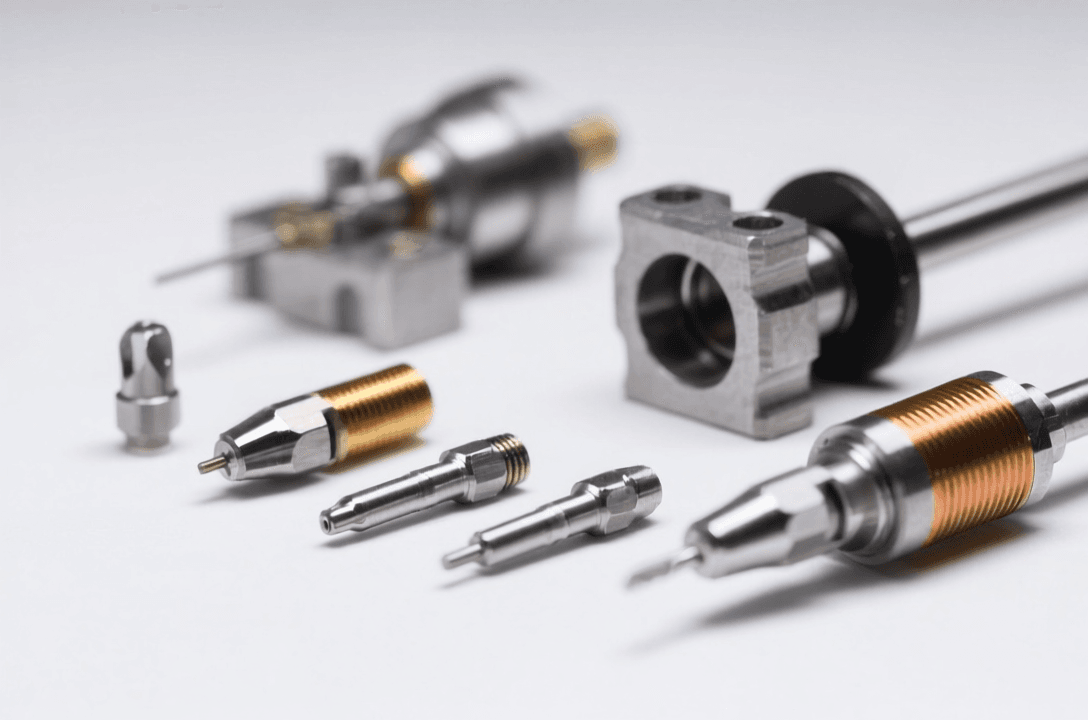
Best 3D Printer Nozzles and Hotends for 2026: Brass, Hardened Steel, and More
If you are choosing a 3D printer nozzle or hotend upgrade, the best option depends on the filaments you print, the detail level you need, and how often you work with abrasive materials. Brass nozzles work well for standard PLA, PETG, and ABS, while hardened steel and ruby-tipped nozzles are essential for carbon fiber, glow-in-the-dark, and wood-filled filaments.
In this guide, we compare the best 3D printer nozzles and hotends by material durability, temperature range, filament compatibility, and overall value.
Affiliate Disclosure: As an Amazon Associate, 3dput.com earns from qualifying purchases at no extra cost to you. We only recommend products we have researched thoroughly.
Quick Picks
- Best Overall Hotend Upgrade: E3D V6 All-Metal Hotend Kit
- Best Budget Nozzle Pack: Brass Nozzles M6 Thread 0.4mm 10-Pack
- Best for Abrasive Filaments: Hardened Steel Nozzle Set 5-Pack
- Best for Heavy Duty Use: Olsson Ruby Nozzle
- Best Value Upgrade: Micro Swiss All Metal Hotend Upgrade Kit
Comparison Table
| Product | Type | Temperature Range | Best For | Price Range |
|---|---|---|---|---|
| E3D V6 All-Metal Hotend Kit | All-Metal Hotend | Up to 300°C | High-temp filaments | $$ |
| Micro Swiss All Metal Hotend | All-Metal Hotend | Up to 285°C | Direct replacement | $$ |
| Brass Nozzles 10-Pack | Brass Nozzles | Up to 250°C | Standard PLA/PETG/ABS | $ |
| Hardened Steel Nozzles 5-Pack | Hardened Steel | Up to 250°C | Abrasive filaments | $$ |
| Olsson Ruby Nozzle | Premium Ruby | Up to 300°C | Long-term abrasive printing | $$$$ |
| Brass Nozzle Assortment Kit | Multiple Sizes | Up to 250°C | Versatile printing needs | $ |
Best 3D Printer Nozzles and Hotends
E3D V6 All-Metal Hotend Kit
Best for: Users needing reliable high-temperature performance and proven design.
The E3D V6 is the industry standard for aftermarket hotends. Its all-metal design supports temperatures up to 300°C, making it suitable for filaments like ABS, PETG, nylon, and even some polycarbonate blends. The thermal break design minimizes heat creep, and the modular construction makes maintenance straightforward.
- Temperature range: Up to 300°C
- Nozzle compatibility: E3D standard nozzles (brass, hardened steel, ruby)
- Type: All-Metal hotend with proven reliability
Pros: Industry standard, excellent thermal performance, wide nozzle ecosystem, strong community support.
Cons: More expensive than budget options, requires cable management and mounting adaptation.
Micro Swiss All Metal Hotend Upgrade Kit
Best for: Ender 3 and CR-10 owners wanting a direct drop-in upgrade.
The Micro Swiss all-metal hotend is designed as a direct replacement for Creality hotends. Installation is straightforward, and the all-metal path allows printing at temperatures up to 285°C without PTFE degradation issues. The thermal design is robust, and the kit typically includes all mounting hardware needed for most popular Creality printers.
- Temperature range: Up to 285°C
- Nozzle compatibility: MK8 style nozzles
- Type: Direct drop-in all-metal upgrade
Pros: Easy installation, good thermal performance, reasonably priced, compatible with popular printers.
Cons: Lower max temp than E3D V6, nozzle selection slightly less versatile.
Brass Nozzles M6 Thread 0.4mm 10-Pack Universal
Best for: Standard PLA, PETG, and ABS printing on a budget.
Brass nozzles are the default for a reason: they offer excellent thermal conductivity, are inexpensive, and work well with non-abrasive filaments. A 10-pack gives you plenty of spares for easy nozzle changes or backups. The M6 thread size is compatible with most common hotends including Creality and E3D-style setups.
- Temperature range: Up to 250°C
- Nozzle size: 0.4mm (standard)
- Type: Brass, universal M6 thread
Pros: Very affordable, excellent thermal conductivity, widely compatible, good for standard filaments.
Cons: Wears quickly with abrasive filaments, not suitable for carbon fiber or glow-in-the-dark.
Hardened Steel Nozzle Set 0.4mm 5-Pack Abrasion Resistant
Best for: Printing carbon fiber, wood-filled, and glow-in-the-dark filaments.
Hardened steel nozzles resist wear from abrasive filaments that would quickly destroy brass. While they have slightly worse thermal conductivity than brass, the tradeoff in durability is worth it for abrasive materials. This 5-pack gives you enough nozzles for dedicated abrasive printing setups.
- Temperature range: Up to 250°C
- Material: Hardened steel
- Nozzle size: 0.4mm
Pros: Excellent abrasion resistance, essential for carbon fiber and wood-filled filaments, reasonable cost.
Cons: Slightly worse thermal conductivity than brass, may need slightly higher temperatures for the same filament.
Olsson Ruby Nozzle – Premium Abrasion Resistant
Best for: Serious makers who print with abrasive filaments regularly and want maximum durability.
The Olsson Ruby is considered the gold standard for abrasive filament printing. Its ruby tip insert is precision-engineered, and the build quality is exceptional. While more expensive, the nozzle can last through kilograms of abrasive filament that would destroy brass or wear down hardened steel.
- Temperature range: Up to 300°C
- Material: Premium ruby-tipped design
- Nozzle size: 0.4mm
Pros: Best-in-class abrasion resistance, exceptional build quality, long lifespan, excellent thermal performance.
Cons: Most expensive option, overkill for occasional abrasive printing, requires careful handling.
MK8 Nozzle Assortment Kit Multiple Sizes 0.2mm-0.8mm
Best for: Printers needing versatility in nozzle sizes for different projects.
This assortment kit includes multiple nozzle sizes, typically from 0.2mm for fine detail work to 0.8mm for fast drafts and strong functional parts. Having multiple sizes available lets you match the nozzle to the project: smaller nozzles for miniatures and fine detail, larger nozzles for speed and layer height flexibility.
- Nozzle sizes: Usually 0.2mm, 0.3mm, 0.4mm, 0.5mm, 0.6mm, 0.8mm
- Material: Brass
- Type: MK8 style, compatible with Creality and many others
Pros: Versatile, multiple sizes in one kit, good for different print types, reasonably priced.
Cons: Brass only, not suitable for abrasive filaments, smaller nozzles require more tuning.
How We Chose These Products
We focused on products that cover different printing needs, from standard PLA and PETG to abrasive carbon fiber and high-temperature materials. Selection criteria included material durability, temperature range, filament compatibility, installation complexity, and overall value for the intended use case.
Buying Guide
Nozzle Materials
Brass: Best for PLA, PETG, and ABS. Excellent thermal conductivity and inexpensive, but wears quickly with abrasive filaments.
Hardened Steel: Essential for carbon fiber, wood-filled, and glow-in-the-dark filaments. More durable than brass but slightly worse thermal conductivity.
Ruby-Tipped: Premium option for heavy abrasive printing. Exceptional durability with good thermal performance, but more expensive.
Nozzle Sizes
0.2mm-0.3mm: Ultra-fine detail. Best for miniatures, small parts, and when detail matters more than speed. Requires slower printing and careful tuning.
0.4mm: Standard size. Good balance of speed, detail, and reliability. Works for most general printing needs.
0.5mm-0.6mm: Faster printing with slightly less fine detail. Good for functional parts where strength and speed are priorities.
0.8mm: Fast drafts and strong, thick-walled parts. Less fine detail but excellent for large prototypes and rapid iteration.
Hotend Types
PTFE-Lined: Standard on budget printers. Good for PLA and PETG up to around 250°C. PTFE can degrade at higher temperatures.
All-Metal: Required for temperatures above 250°C and for materials like ABS, nylon, and polycarbonate. No PTFE means better high-temp performance but may require slightly more tuning.
Installation Considerations
Before upgrading your hotend, check that the nozzle thread matches your current setup. E3D and Creality use different thread styles, though adapters exist. Consider whether your printer can handle the increased temperature of all-metal hotends, as some budget printers have heater or power limitations.
Which Option Is Best for You?
Standard PLA/PETG printing: Start with a brass nozzle 10-pack. The thermal performance is excellent for non-abrasive filaments, and having multiple nozzles makes it easy to swap or replace worn ones.
Abrasive filament printing: Invest in hardened steel or ruby-tipped nozzles. The extra cost is worth avoiding frequent nozzle replacement from wear.
High-temperature filaments: Upgrade to an all-metal hotend like the E3D V6 or Micro Swiss all-metal kit. The absence of PTFE allows safe printing at temperatures above 250°C.
Complete replacement for Creality printers: The Creality hotend kit provides an affordable drop-in solution without the complexity of full hotend swaps.
FAQ
How often should I replace my nozzle?
Brass nozzles typically last 500 to 1,000 hours of standard PLA or PETG printing before showing visible wear. Hardened steel and ruby nozzles last much longer with abrasive filaments. Replace your nozzle if you notice decreased print quality, inconsistent extrusion, or visible wear patterns inside the nozzle opening.
Can I use abrasive filaments with a brass nozzle?
You can, but it is not recommended. Carbon fiber, wood-filled, and glow-in-the-dark filaments will wear brass quickly, potentially in as little as a few hundred grams of filament. The wear can lead to under-extrusion and poor print quality. Use hardened steel or ruby-tipped nozzles for abrasive materials.
Do I need an all-metal hotend for ABS?
Strictly speaking, you can print ABS with a PTFE-lined hotend if you stay below 250°C. However, for reliable ABS printing and to avoid PTFE degradation over time, an all-metal hotend is recommended. It provides better thermal performance and removes the temperature limit of PTFE.
What nozzle size is best for beginners?
The 0.4mm nozzle is the standard recommendation. It offers a good balance of detail, speed, and reliability. It is forgiving of minor calibration issues and works well with most filaments. Once comfortable with your printer, you can experiment with smaller or larger sizes.
Related Reading
- 3D Printer Filament Settings Guide
- Best 3D Printer Bed Adhesion Products
- Best 3D Printer Tools and Accessories
Where to Buy
As an Amazon Associate, we earn from qualifying purchases.
As an Amazon Associate, we earn from qualifying purchases.