
Italian company BEAMIT SpA, called the biggest machine park in Europe, has nearly 25 years of experience in the metal additive manufacturing industry, and is a trusted supplier of advanced metal 3D printed components for applications in many demanding fields, such as racing, energy, automotive, and aerospace. With its more than 30 metal 3D printing systems, featuring DMLS, EBM technologies (it has polymer SLS systems as well), the company has a pretty large footprint in the global AM industry.
“BEAMIT acts as a specialized technology center in order to support its high end customers development and be part of their growth,” the company’s website states.
The State of Metal 3D Printing
The company offers metal 3D printing services in a variety of materials, including titanium, aluminum, steel, Inconel, and copper. The company was one of the first worldwide to print copper on EBM systems.
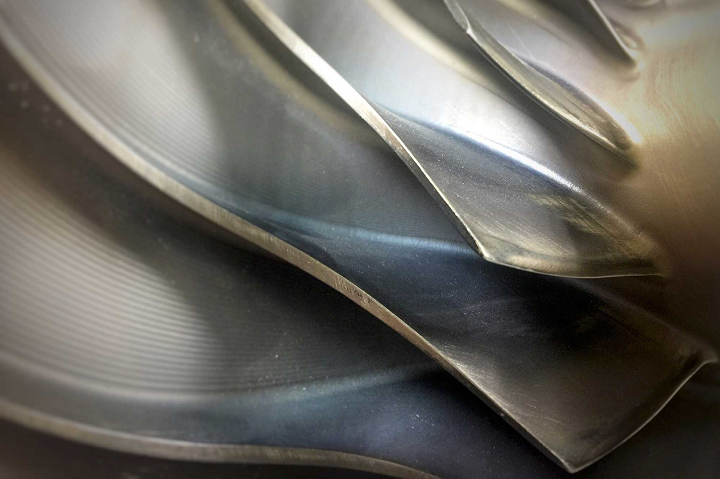
In addition to designing lightweight racing parts and printing heat exchangers, one of BEAMIT’s specialties is 3D printing components for industrial gas turbines. Using additive technology to manufacture these complex components can help keep costs down, in addition to help them better withstand the high temperatures to which they’re subjected.
Now, BEAMIT has just announced a collaboration with fellow Italian company Tema Energy – together, the two will make 3D printed gas turbine components in order to better serve the aviation, power generation, and oil and gas industries.
“After several years of cooperation in a wide range of applications, it became natural to join our forces with TEMA Energy where we found an excellent partner capable to provide leading expertise and competences in machining and post processing on key components. Our partnership will definitely benefit both current and future OEM’s customers going forward in these sectors,” Gabriele Rizzi, BEAMIT Chief Commercial Officer, said in a press release.
Technical Challenges and Solutions
(Image: BEAMIT)
Industrial group Tema, founded in 1985, provides its customers with a range of advanced, high-quality solutions and technologies to produce combustors and burners for gas turbines, in addition to specialized equipment and material that helps these components achieve extended life and improved performance.
“The cooperation with BEAMIT represents a step forward in the expansion of our business to cover new applications and markets. See also: 3D Printing Tungsten Carbide: How Hot-Wire Laser T…. In BEAMIT we have found competences and skills resulting in a high level of quality and reliability of the parts produced by additive manufacturing,” said Paolo Zani, Tema Energy’s Chief Executive Officer. “Customers can rely on TEMA Energy and BEAMIT as unique solution providers of a wider range of products and services.”
Material Properties and Performance
This new AM partnership will allow customers to access just one point of contact when they’re in need of complex solutions. By working together to provide additive manufacturing, Tema Energy and BEAMIT can offer companies in the oil and gas, power generation, and aviation fields a better range of services, all the way from the smallest blade to full gas turbine setups.
What do you think? Discuss this story and other 3D printing topics at 3DPrintBoard.com or share your thoughts in the Facebook comments below.
The post BEAMIT and Tema Energy Collaborating to Make 3D Printed Gas Turbine Components appeared first on 3DPrint.com | The Voice of 3D Printing / Additive Manufacturing.
Related Articles
Frequently Asked Questions
What is metal 3D printing?
Metal 3D printing (additive manufacturing) builds metal parts layer by layer using techniques like laser powder bed fusion, directed energy deposition, and binder jetting. It enables complex geometries impossible with traditional manufacturing while reducing material waste significantly.
How strong are 3D printed metal parts?
3D printed metal parts can achieve mechanical properties comparable to traditionally manufactured metals. Tensile strength and fatigue resistance depend on the process and post-processing, but many meet or exceed ASTM standards for wrought materials.
What are the main metal 3D printing technologies?
The primary technologies include Laser Powder Bed Fusion (LPBF), Electron Beam Melting (EBM), Directed Energy Deposition (DED), Binder Jetting, and Metal FDM (with bound filaments). Each has different strengths in terms of resolution, speed, and material options.
📌 Related Articles
- The Current State of Metal 3D Printing in 2020
- 3D Printing Tungsten Carbide: How Hot-Wire Laser Technology Creates Metal Harder Than Steel
- Best 3D Printer Upgrades That Actually Improve Print Quality: Complete 2026 Guide
- Best Budget 3D Printer Upgrades That Actually Improve Print Quality: Belts, Springs, Hotends & More
- ABS 3D Printing Settings Guide: Temperature, Enclosure, and Cooling for Strong Parts