
Oxford Performance Materials (OPM) presented new findings on 3D printing with biocompatible materials at the AM Medical Virtual Summit. Focused on the fabrication of medical implants for bone regeneration, the Windsor, Connecticut-headquartered company attended the conference with James Porteus, Director of Engineering, Oxford Performance Materials, Inc., Israr Kabir, Business Development Manager, ASME, and Thomas Webster, Art Zafiropoulo Chair and Professor at Northeastern University leading the presentation on ‘3D Printed PEKK Polymer: Enabling a Family of Medical Devices that Inhibit Bacterial Growth without the Use of Antibiotics.’
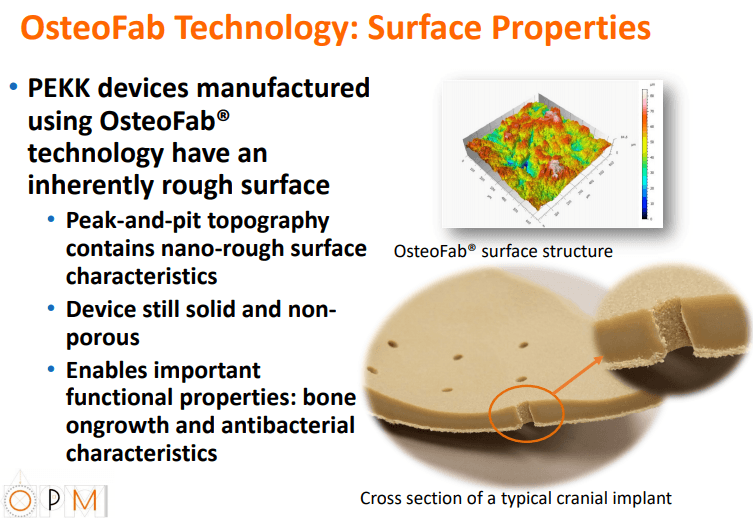
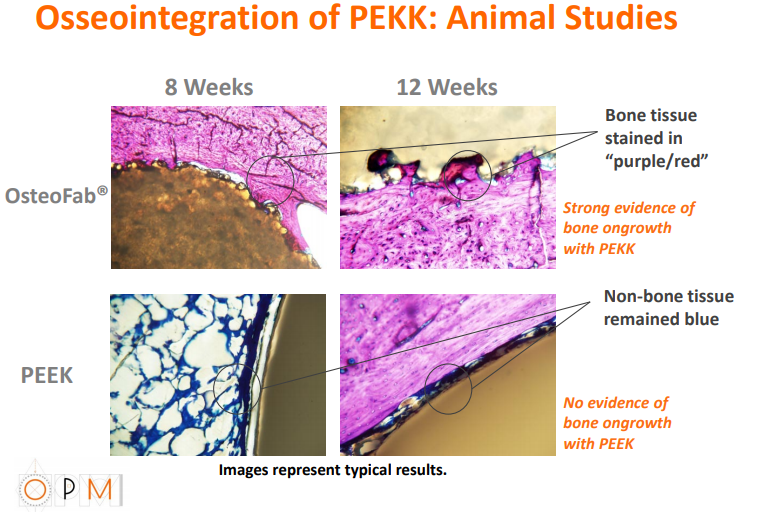
PEKK (poly-ether-ketone-ketone) was at the center of the presentation. Porteus began by explaining that as a 3D-printed material, PEKK has been found to be amenable to bone integration, ongrowth, and ingrowth—while also presenting antibacterial qualities.

Quality of bone and integration are critical also, and both aspects were examined comprehensively during research with an ovine model—again showing ‘notable’ ingrowth when compared to other popular AM materials such as titanium and PEEK.
The Role of 3D Printing in Medicine
As Thomas Webster explained, biocompatibility and bone growth is one major advantage with PEKK; however, just as important is the collaborative research between Northeastern University and OPM in bacteria inhibition studies. Sharing CDC data, Webster states that it is expected that more people will die from antibacterial-resistant bacteria than all cancers combined by the year 2050.
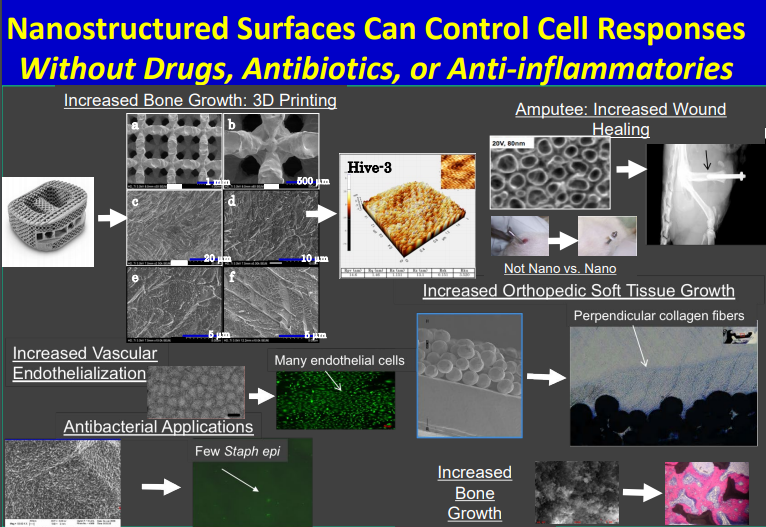
Properties such as those found in PEKK assist in wound-healing applications, devices created for amputees, and medical equipment like catheters. Webster went on to explain that nanofeatures, found all over nature—from the wings of a cicada to a locust—provide antibacterial properties as surface energy is manipulated in a streamlined manner. The researchers noted that PEKK not only allows greater adsorption of antibacterial proteins like casein—but also mucin and lubricin.
“We are seeing great ability to control cell function, whether it’s decreasing bacteria, decreasing inflammation, or promoting tissue growth just using nanotextures without drugs,” said Webster. “What we are finding is nanotextures are a great thing. If you can create them appropriately, if you have a process that can create them and a material that can have nanostructure features, we are seeing properties with increased bone growth on 3D printed metals.”
Biocompatible Materials and Processes
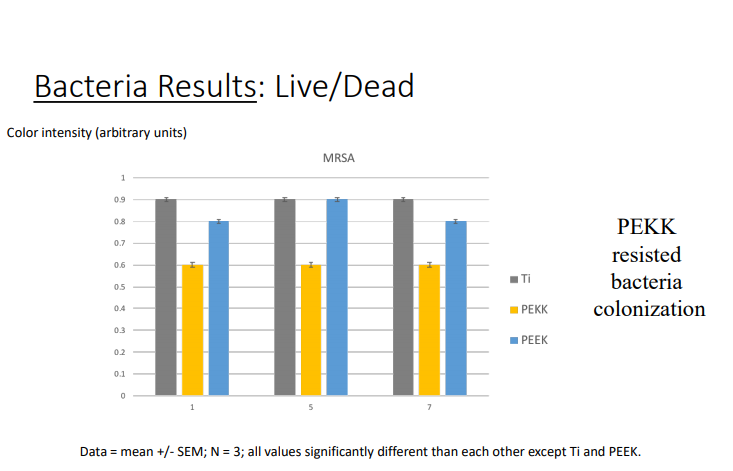
Numerous in vitro responses to PEKK showed that without antibiotics, PEKK inhibited bacteria colonization—compared with other materials like titanium and PEEK in the presence of staphylococcus, pseudomonas aeruginosa, and methicillin-resistant staphylococcus aureus (MRSA); it was noted also that for MRSA, the great decrease was noted with PEKK samples. Taking the COVID-19 pandemic into consideration also, the researchers are now becoming more curious about exploring the effects of materials like PEKK on viruses.



“Of those cells, a significantly lower number are alive,” states Webster, further discussing the advantages of PEKK in comparison to titanium and PEEK.
Clinical Applications and Case Studies
In closing, Webster stated that one of the major results of the study was in understanding the ‘mechanism of action’ for PEKK as it allows for better adsorption of antibacterial proteins.
We have followed the research of OPM for years, as well as Northeastern’s advances in 3D printing. See also: Best Budget 3D Printer Upgrades That Actually Impr…. What do you think of this news? Let us know your thoughts! Join the discussion of this and other 3D printing topics at 3DPrintBoard.com.
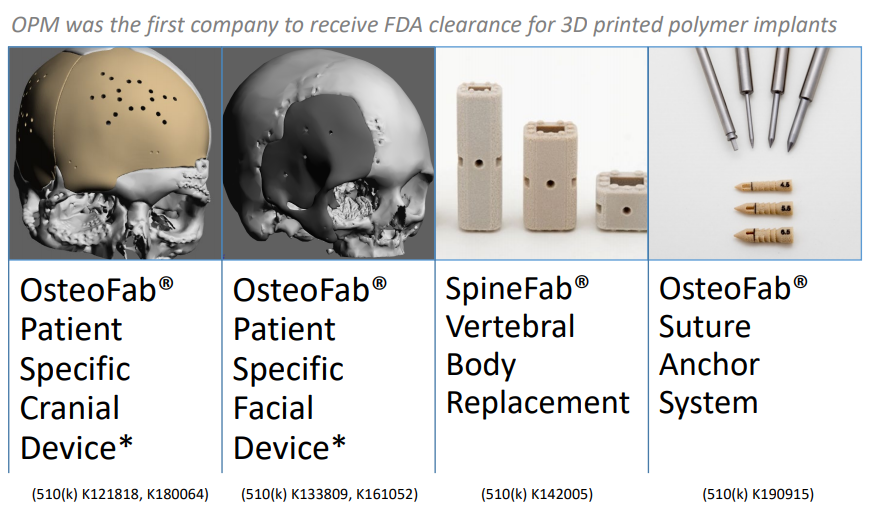
Regulatory Considerations and Safety
[Source / Images: ‘3D Printed PEKK Polymer: Enabling a Family of Medical Devices that Inhibit Bacterial Growth without the Use of Antibiotics’ – as presented on May 27th, 2020 at the AM Medical Virtual Summit]
The post AM Medical Virtual Summit: Northeastern University & OPM Discuss Bacterial Inhibition via 3D-Printed PEKK appeared first on 3DPrint.com | The Voice of 3D Printing / Additive Manufacturing.
Research Breakthroughs and Innovations
from Your daily news from 3DPrint.com https://bit.ly/2yOXEQ8
Related Articles
Frequently Asked Questions
How is 3D printing used in medicine?
3D printing is used in medicine for surgical planning models, custom implants, bioprinting tissue scaffolds, drug delivery systems, dental aligners, and prosthetics. It enables patient-specific solutions that improve outcomes and reduce surgery time.
What materials are biocompatible for 3D printing?
Common biocompatible materials include PEEK, titanium alloys (Ti6Al4V), bio-ceramics (hydroxyapatite), medical-grade resins, PLA for temporary implants, and hydrogels for bioprinting. Material choice depends on the application and required mechanical properties.
Is 3D printed medical equipment FDA approved?
Yes, several 3D printed medical devices have FDA clearance, including orthopedic implants, dental restorations, and surgical guides. Each device must go through the appropriate regulatory pathway based on its risk classification.
📌 Related Articles
- The Current State of Metal 3D Printing in 2020
- Best Budget 3D Printer Upgrades That Actually Improve Print Quality: Belts, Springs, Hotends & More
- Prusa Research Mini+ vs Prusa MK4: Full Specs Comparison & Buyer’s Guide
- 3D Printing Safety Equipment Guide: Respirators, Gloves, and Ventilation for 2026
- Bambu Lab P1S vs Bambu Lab P2S: Full Specs Comparison & Buyer’s Guide