
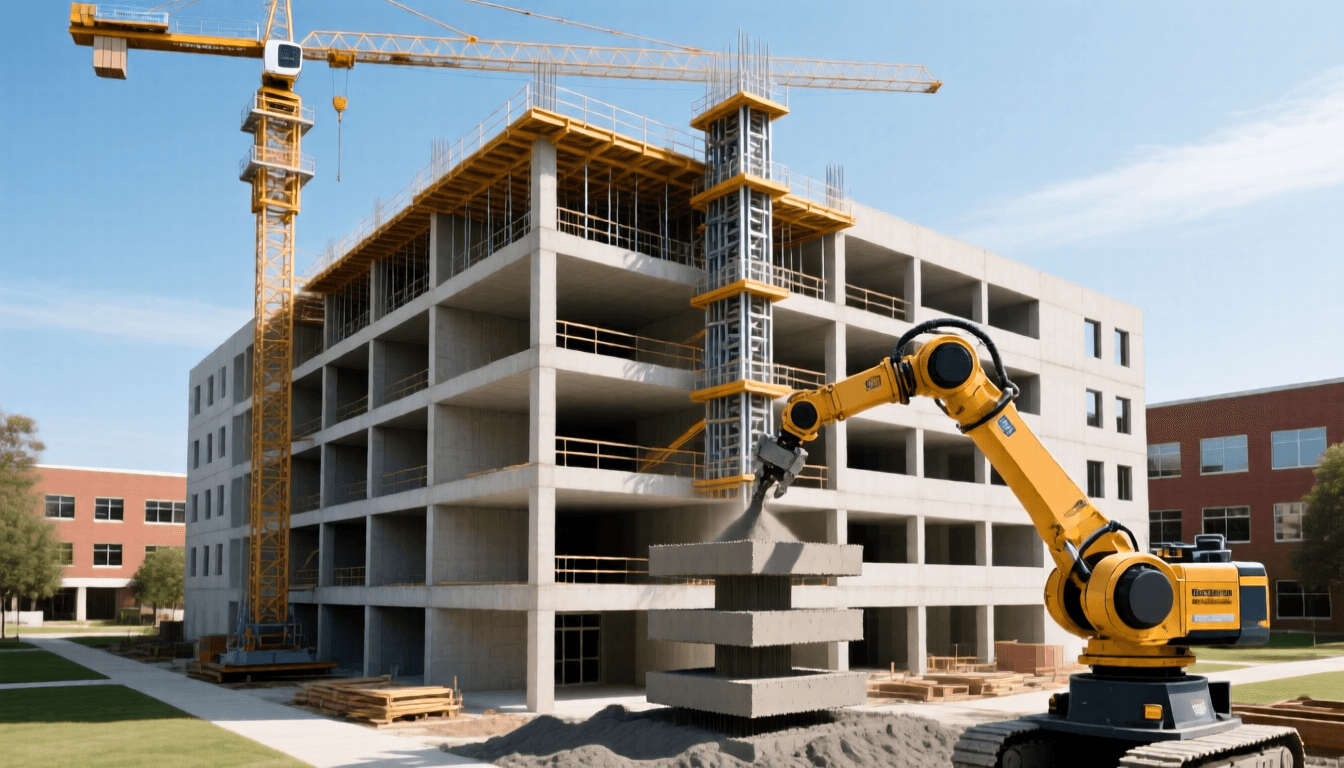
Canada’s first 3D-printed multi-storey building is under construction at the University of Windsor in Ontario. Located at 1025 California Avenue, the project demonstrates how 3D printing technology could address housing affordability, construction speed, and sustainability — all critical challenges facing Canadian communities.
The Project
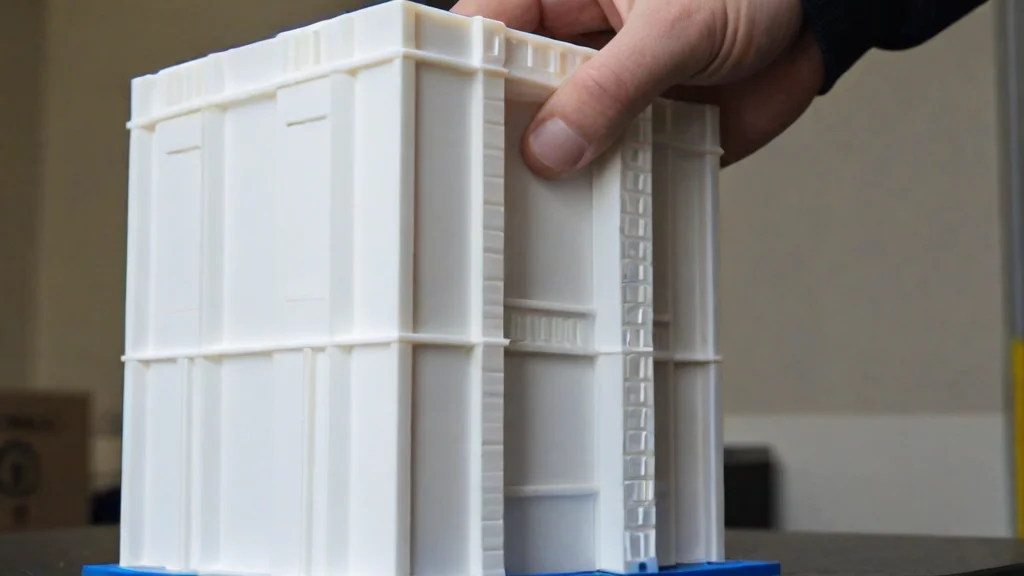
The building is a net-zero student residence — meaning it produces as much energy as it consumes — constructed using large-format concrete 3D printing technology. The printer deposits precision-formed concrete layer by layer, building walls and structural elements directly from a digital model.
The project represents a collaboration between the University of Windsor’s engineering program, construction technology partners, and government supporters who see 3D-printed construction as a potential solution to Canada’s housing crisis.
How 3D Concrete Printing Works
Construction-scale 3D printing (also called additive construction) uses large robotic systems to deposit concrete or other building materials in precise patterns:
- Digital model — the building design is converted into toolpaths for the printer
- Material mixing — specialized concrete mix is prepared with additives for rapid setting and printability
- Layer deposition — the print head extrudes concrete in precise patterns, building walls layer by layer
- Structural integration — reinforcement, plumbing, and electrical conduits can be integrated during printing
- Finishing — windows, doors, roofing, and interior finishes are added after the printed structure cures
Why Multi-Storey Matters
Most 3D-printed buildings to date have been single-storey structures — proof-of-concept projects demonstrating that concrete can be printed into walls. Multi-storey construction is fundamentally more challenging because:
- Structural loads increase exponentially — upper floors must support their own weight plus everything above
- Lateral forces — wind and seismic loads become critical for taller structures
- Building codes — multi-storey buildings must meet stricter fire, egress, and structural standards
- Construction sequencing — floors must be printed and cured before the next level can begin
Successfully printing a multi-storey building demonstrates that the technology has matured beyond experimental single-level structures toward practical, code-compliant housing.
The Housing Affordability Angle
Canada faces a severe housing shortage, with prices in major cities among the highest in the world relative to income. 3D-printed construction could help by:
- Reducing labor costs — the printer does the work of several masons and concrete workers
- Faster construction — printed structures can be completed in days rather than weeks
- Less material waste — concrete is deposited only where needed
- Design flexibility — curved walls, integrated features, and optimized geometries at no extra cost
- Net-zero performance — printed concrete walls have excellent thermal mass for energy efficiency
Global Context
3D-printed construction is advancing rapidly worldwide. ICON has printed communities of homes in Texas, COBOD printers have been used in Europe and Africa, and China has produced numerous printed structures. The University of Windsor project is notable for being Canada’s first multi-storey example and for its net-zero energy design.
Frequently Asked Questions
Where is Canada’s first 3D-printed building?
Canada’s first 3D-printed multi-storey building is being constructed at the University of Windsor in Ontario, at 1025 California Avenue.
How does 3D concrete printing work?
A large robotic system extrudes specialized concrete mix in precise patterns, building walls and structural elements layer by layer from a digital model. The concrete sets quickly enough to support subsequent layers.
Can 3D-printed buildings be multi-storey?
Yes. See also: 3D Printing News: Multi-Material Breakthrough and …. The University of Windsor project is Canada’s first multi-storey 3D-printed building. Multi-storey printing is more challenging due to structural loads, building codes, and construction sequencing, but the technology has matured to handle it.
Is 3D-printed construction cheaper than traditional building?
3D-printed construction can reduce labor costs significantly and produce less material waste. While the technology is still maturing, studies suggest potential cost savings of 20-40% for suitable projects, particularly in labor-intensive wall construction.
What is a net-zero building?
A net-zero building produces as much energy as it consumes over the course of a year, typically through a combination of energy-efficient design, high-performance insulation, and on-site renewable energy generation.
📌 Related Articles
Sources: ConstructConnect, 3D Printing Industry, Education News Canada, University of Windsor