
/
Results and Key Findings
/
/
Technology and Innovation
/
Results and Key Findings
/
/
/
Results and Key Findings
/
/
Research and Development
/
Results and Key Findings
/
/
Technology and Innovation
/
Results and Key Findings
/
/
/
Results and Key Findings
/
/
/
Results and Key Findings
/
/
Technology and Innovation
/
Results and Key Findings
/
/
/
Results and Key Findings
/
In an effort to address, among other things, the need to sterilize 3D-printed personal protection equipment made to fight COVID-19, the lab of Michigan Technological University’s Professor Joshua Pearce has developed an open source 3D printer capable of printing with high-temperature plastics, such as polyetherketoneketone (PEKK) and polyetherimide (PEI, ULTEM). Not only is the resulting fused filament fabrication (FFF) 3D printer able to print with these materials, necessary for 3D printing of high-performance parts, but the system cost less than $1,000 in parts. The results of the project were published in HardwareX.
/
Technology and Innovation
/
/
Research and Development
/
Technology and Innovation
/
/
/
Technology and Innovation
/
/
Technology and Innovation
/
/
Research and Development
/
Technology and Innovation
/
/
/
Technology and Innovation
/
Key Highlights and Main Points
/
Technology and Innovation
/
/
Research and Development
/
Technology and Innovation
/
/
/
Technology and Innovation
/
PEKK and PEI are well-known in the AM industry for their high strength and temperature resistance, among other qualities. This, and the fact that 3D-printed PEI has been certified for use in aircrafts, has made these materials ideal for 3D printing engineering-grade parts for such demanding industries as aerospace, automotive and medical.
/
Technology and Innovation
/
/
Research and Development
/
Technology and Innovation
/
/
/
Technology and Innovation
/
Up until the past several years, the only 3D printers capable of printing with such polymers were manufactured by Stratasys with price tags of over $100,000. More recently, a new wave of machines has hit the market from the likes of 3DGence, Roboze, 3ntr and, while they significantly undercut the name brand competitor, they can cost anywhere between $5,000 and $100,000. The FUNMAT HT from INTAMSYS may be the least expensive, in the $6,000 range. (We recently published a buying guide to industrial-grade polymer 3D printers.)
/
Technology and Innovation
/
/
Research and Development
/
Technology and Innovation
/
/
/
Technology and Innovation
/
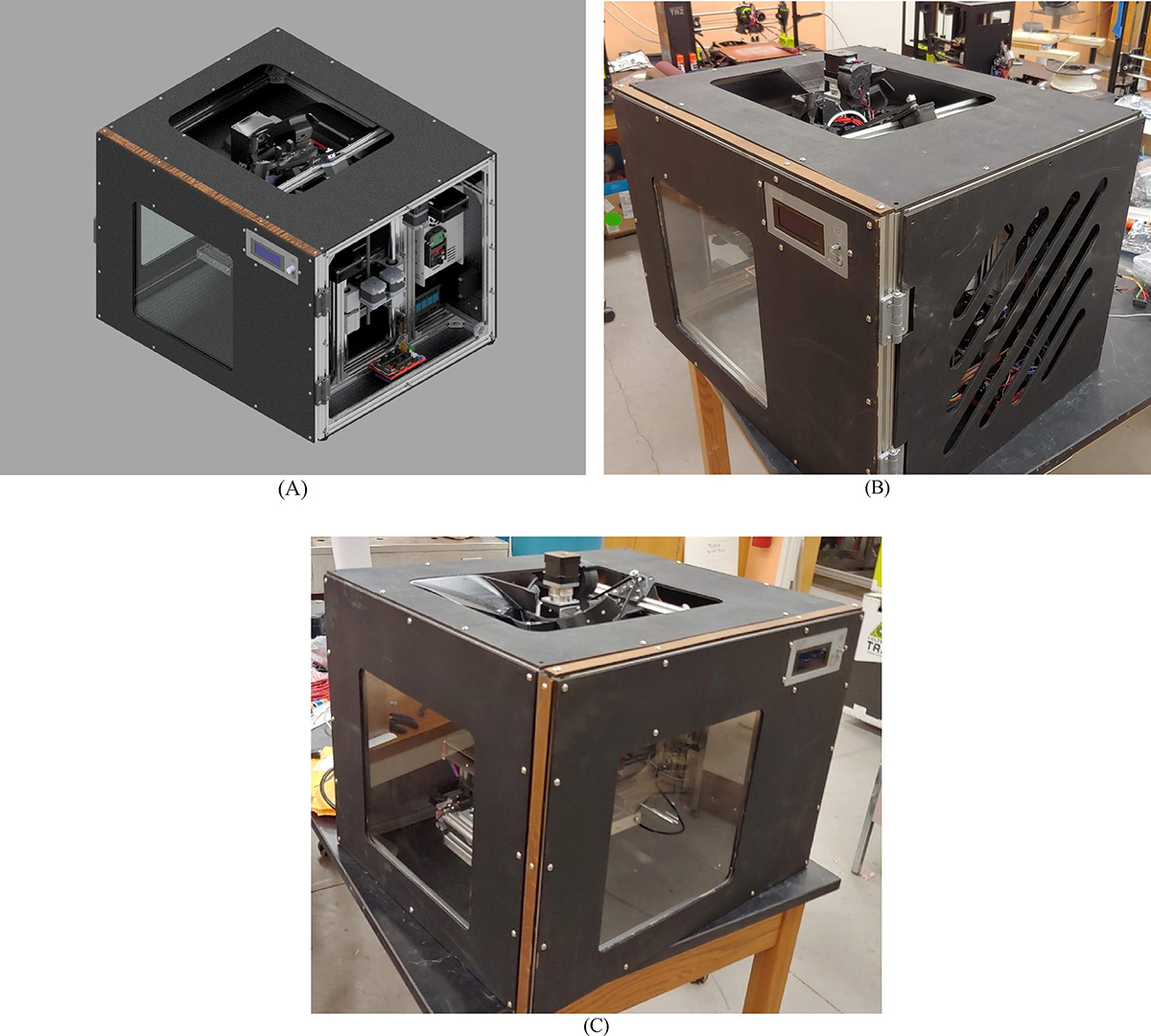
Clearly, such a high price point is beyond the reach of many hobbyists, let alone engineers and smaller firms in third world countries. Therefore, if suitable parts are needed in an emergency situation, such as the ongoing COVID-19 pandemic, a more affordable solution is needed. Enter the Michigan Tech Open Sustainability Technology (MOST) Lab of Prof. Pearce. The lab designed its Cerebus printer to have all the capabilities to fabricate parts made from PEKK, PEI and other high-temperature plastics.
/
Technology and Innovation
/
/
Research and Development
/
Technology and Innovation
/
/
/
Technology and Innovation
/
/
Technology and Innovation
/
/
Research and Development
/
Technology and Innovation
/
/
/
Technology and Innovation
/
The Cerebus 3D printer. Image courtesy of HardwareX.
/
Technology and Innovation
/
/
Research and Development
/
Technology and Innovation
/
/
/
Technology and Innovation
/
/
Technology and Innovation
/
/
Research and Development
/
Technology and Innovation
/
/
/
Technology and Innovation
/
The Cerebus features three E3D hot ends capable of reaching 500°C, as well as a 200 °C-capable heated bed (also from E3D), an isolated heated chamber with 1 kW space heater core, as well as a mains voltage chamber and bed heating for quick-start 3D printing. All of these features make the device capable of printing PEKK and PEI with respective strengths of 77.5 and 80.5 MPa.
/
Technology and Innovation
/
/
Research and Development
/
Technology and Innovation
/
/
/
Technology and Innovation
/
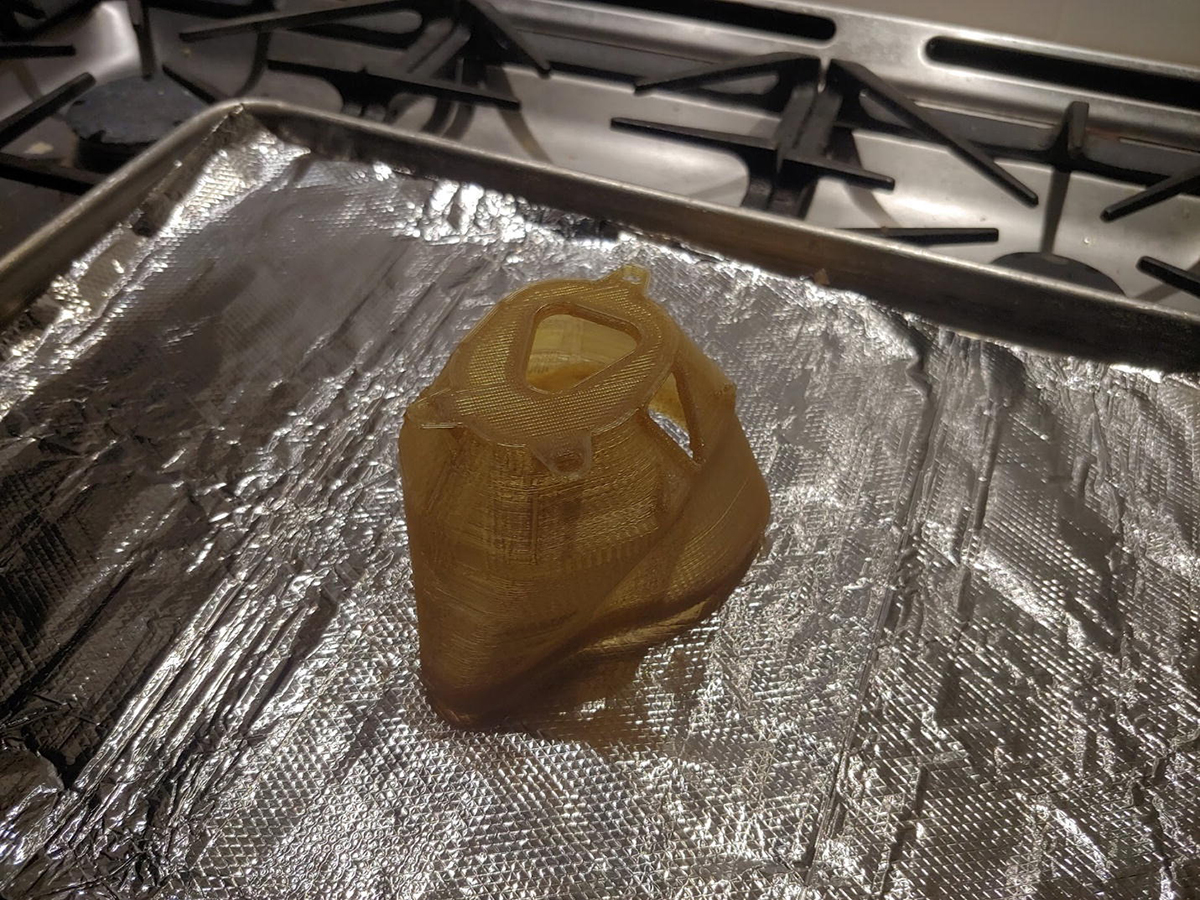
To demonstrate the possibilities, the lab 3D printed open source face masks made from PEKK. The mask was then placed into an oven at 120°C for 30 minutes to test sterilization. The mask did not warp, and the authors pointed out that the mask could be annealed to improve its ductility and reduce its hardness.
/
Technology and Innovation
/
/
Research and Development
/
Technology and Innovation
/
/
/
Technology and Innovation
/
/
Technology and Innovation
/
/
Research and Development
/
Technology and Innovation
/
/
/
Technology and Innovation
/
A PEKK face mask 3D printed on the Cerebus. Image courtesy of HardwareX.
/
Technology and Innovation
/
/
Research and Development
/
Technology and Innovation
/
/
/
Technology and Innovation
/
/
Technology and Innovation
/
/
Research and Development
/
Technology and Innovation
/
/
/
Technology and Innovation
/
Further improvements could be made to the Cerebus, according to the study’s authors. They point out that the tools in the machine are difficult to remove or change and a shorter extrusion path is necessary for some materials, including carbon fiber filled filaments. They also advocate for the use of dual drive extruder gears for the aforementioned materials. Finally, they point out that, had the printer been designed to use pellets instead of filament, feedstock costs could be reduced. This would also enable printing with recycled materials more easily, as shreds of recycled plastic would not need to be melted and formed into a filament before use.
/
Technology and Innovation
/
As always, Prof. Pearce and his lab deserve a round of applause for their work to continually lower the cost and increase the accessibility of various technologies. Just as Pearce urged a new intellectual property (IP) paradigm to make it easier for people to manufacture essential medical devices during the pandemic, his lab has made it possible for anyone with access to the necessary supplies to build system capable of 3D printing sterilizable PPE.
/
Technology and Innovation
/
With the Cerebus now out in the world, we may even see some companies attempt to sell even more affordable PEKK printing machines. Though we have yet to see a wave of low-cost wire arc metal 3D printers after Pearce’s lab created an open source system for less than $2,000.
/
Technology and Innovation
/
The post Pearce’s Latest Open Source 3D Printer Handles PEKK, PEI for Less than $1,000 appeared first on 3DPrint.com | The Voice of 3D Printing / Additive Manufacturing.
/
Technology and Innovation
/
from 3DPrint.com | The Voice of 3D Printing / Additive Manufacturing https://bit.ly/2TgqHmb
/
Technology and Innovation
/
Related Articles: Ireland: Researchers Create Open-Source 3D Printer for Neurophysiology · ⭐️ 3D Printer Kit,with Magnetic Build Surface Plate And Fully Open Source with Resume Print Functio · MELD Introduces Latest Solid-State Metal 3D Printer, the L3