

Frequently Asked Questions
What is meld introduces latest solid-state metal 3d printer, the l3?
Quick Answer: What is the MELD L3 Solid-State Metal 3D Printer. This topic is increasingly relevant in the 3D printing community as the technology continues to advance and become more accessible to hobbyists and professionals alike.
Disclosure: As an Amazon Associate, 3dput.com earns from qualifying purchases. This supports our independent testing and reviews.
How does this relate to 3D printing?
This topic is directly connected to additive manufacturing and 3D printing technology. Understanding these concepts helps improve print quality, expand capabilities, and explore new applications for desktop and industrial 3D printing.
What are the practical applications?
The practical applications span from rapid prototyping and custom manufacturing to educational projects and functional parts production. These techniques can be applied with most consumer-grade and professional 3D printers available today.
Quick Answer: What is the MELD L3 Solid-State Metal 3D Printer?
Source: MELD Manufacturing Corporation – Official Product Specifications [1]
The MELD L3 is a solid-state metal 3D printer from MELD Manufacturing Corporation, a Virginia-based subsidiary of Aeroprobe Corporation, that uses Friction Stir Additive Manufacturing (AFS-D) technology to create metal parts without melting materials [2]. The L3 features a 14.2 cubic foot (45 x 23 x 23 inches) build volume with a 51 x 23 inch fixturing table, combining the features of larger MELD K2 (82 cubic foot) printer with a lower cost [3]. Unlike traditional powder bed or laser-based metal 3D printers that require melting, MELD’s patented technology uses only pressure and friction to heat and shape metals, eliminating hot-cracking, porosity issues, and the need for post-processing like sintering or hot isostatic pressing [4]. The L3 prints a wide variety of metals including titanium, aluminum, steel, copper, and nickel-based superalloys for aerospace, automotive, and tooling applications.
Virginia-based company MELD Manufacturing Corporation, a subsidiary of Aeroprobe Corporation, came bursting onto the 3D printing scene in 2018, when it won the RAPID Innovation Award just a month after its formal launch. MELD was formed as a way to continue work on Friction Stir Additive Manufacturing (AFS-D), a novel technology that Aeroprobe and Edison Welding Institute developed together that can print functionally gradient metal components using only pressure and friction—not lasers—to heat materials. The company’s first printer, offering what the website calls “extreme material flexibility,” was the B8, followed by the K2, designed to fabricate and repair large parts, and now it’s introducing another system to its range of metal 3D printers, the new MELD L3.
About MELD Manufacturing Corporation
Source: MELD Manufacturing Corporation – Company Overview [7]
MELD Manufacturing Corporation is a women-owned company based in Virginia, specializing in solid-state metal additive manufacturing. Formed as a spinoff to continue development of Friction Stir Additive Manufacturing technology originally pioneered by Aeroprobe Corporation and Edison Welding Institute, MELD has quickly established itself as an innovator in the metal 3D printing market.
Company History and Achievements
Since its launch in 2018, MELD has achieved significant milestones:
- 2018: Formal launch and won RAPID Innovation Award just one month after introduction [8]
- 2018: Introduced first printer, the MELD B8 (3 cubic foot build volume)
- 2018-2020: Introduced MELD K2 production printer (82 cubic foot build volume)
- 2021: Introduced MELD L3 system (14.2 cubic foot build volume) [9]
- Three products in three years: MELD has introduced three different printer models since opening its doors
The company’s rapid product development and recognition through industry awards demonstrate its commitment to advancing metal additive manufacturing technology.
Friction Stir Additive Manufacturing (AFS-D) Technology
MELD’s patented technology, Friction Stir Additive Manufacturing (AFS-D), represents a fundamental departure from traditional metal 3D printing approaches [12]. Unlike powder bed fusion (PBF) or direct energy deposition (DED) systems that melt materials using lasers or electron beams, MELD’s solid-state process uses mechanical energy—pressure and friction—to heat materials enough to be shaped without melting [13].
How AFS-D Works
The AFS-D process involves several key steps [14]:
- Preparation: Metal rod or wire feedstock is loaded into the machine
- Heating: A rotating tool applies pressure and friction to the feedstock, raising its temperature below melting point but sufficiently to cause plastic deformation
- Deposition: The softened material is deposited layer by layer, building the desired geometry
- Consolidation: Each layer mechanically bonds to the previous one through solid-state diffusion
- Finishing: Parts require minimal post-processing as they achieve near-full density
Key Advantages of Solid-State AM
MELD’s solid-state approach offers several critical advantages over melt-based processes [15]:
- No melting: Materials are heated below melting point, eliminating issues with hot-cracking, porosity, and phase transformations
- No post-processing: Parts achieve full density without requiring sintering, hot isostatic pressing (HIP), or thermal treatments
- Lower energy consumption: The process uses less energy than melt-based methods, improving sustainability [16]
- Material flexibility: Can print in a wide variety of metals and alloys without reformulating
- Functional grading: Ability to print parts with varying properties in different regions
- Open-atmosphere process: No vacuum systems or powder beds required, simplifying operation and safety
“MELD’s patented, award-winning AM technology does not actually melt the material when it’s repairing, coating, joining, or 3D printing metals and metal matrix composites. It’s a solid-state process, so the printers just heat materials up so they deform enough to be shaped, without worrying about hot-cracking or porosity issues.” [17]
MELD Product Line: B8, K2, and L3
Source: MELD Manufacturing Corporation – Product Line [18]
MELD has developed three printer models, each targeting different market segments and applications:
MELD B8 (Introductory Model)
The B8 was MELD’s first printer, designed for introductory and prototyping applications:
- Build volume: 3 cubic feet
- Target market: Prototyping, research, small production
- Key features: Compact footprint, ease of use, material flexibility
MELD K2 (Production System)
The K2 represents MELD’s production-focused system with capabilities for large-scale manufacturing:
- Build volume: 82 cubic feet
- Target market: Production manufacturing, large components
- Key features: High throughput, subtractive capabilities integration, immense build space
“MELD’s K2 printer, intended for production and high-volume manufacturing, incorporates both additive and subtractive manufacturing machines with an immense build space of 380 cubic feet.” [19]
MELD L3 (Latest System)
Source: MELD L3 Product Announcement [20]
The L3 combines features of the larger K2 printer with a more affordable price point and smaller size:
- Build volume: 14.2 cubic feet (45 x 23 x 23 inches)
- Build platform: 51 x 23 inches for fixturing parts
- Target market: Mid-range production, parts fabrication and repair
- Key features: Generous workspace, increased access, lower cost than K2
“L3 offers a generous workspace and build volume for manufacturing with increased access for fixturing. This machine offers a tremendous increase in production capability without requiring a larger footprint on the manufacturing floor,” MELD website states. [21]
MELD L3 Specifications and Features
Source: MELD L3 Technical Specifications [22]
The MELD L3 builds on the foundation of earlier MELD machines while offering specific advantages:
- Large build volume: 14.2 cubic feet (approximately 0.4 cubic meters) providing ample space for part production
- Integrated fixturing table: 51 x 23 inches (129.5 x 58.4 cm) allows on-machine post-processing
- Open-atmosphere operation: No vacuum systems or expensive powder bed equipment required
- Material compatibility: Titanium, aluminum, steel, copper, nickel-based superalloys
- Solid-state quality: Full-density parts without post-processing requirements
- Energy efficiency: Lower energy consumption compared to melt-based processes [23]
Material Compatibility and Applications
MELD printers can work with a wide range of metals and alloys, supporting diverse industrial applications:
Supported Materials
| Material | Key Properties | Typical Applications | Industries |
|---|---|---|---|
| Titanium | High strength-to-weight ratio, corrosion resistant, biocompatible [26] | Aerospace components, medical implants, marine hardware | Aerospace, medical, marine |
| Aluminum | Lightweight, good thermal conductivity, easily machinable [27] | Heat exchangers, brackets, structural components | Aerospace, automotive, thermal management |
| Stainless Steel | Corrosion resistant, good mechanical properties, cost-effective [28] | Valves, fittings, food processing equipment | Food processing, chemical, marine |
| Steel Alloys | High strength, wear resistant, cost-effective [29] | Tooling, dies, industrial components | Tooling, automotive, machinery |
| Copper Alloys | Excellent thermal conductivity, antimicrobial properties [30] | Heat sinks, electrical components | Electronics, HVAC, power generation |
| Nickel-Based Superalloys (Inconel) | High-temperature strength, creep resistance, oxidation resistant [31] | Turbine blades, exhaust systems, high-temp components | Aerospace, power generation, chemical processing |
Industry Applications
MELD’s solid-state metal printing technology serves applications across multiple industries:
- Aerospace: High-performance components for aircraft and spacecraft where material properties and part quality are critical [32]
- Automotive: Lightweight structural components, engine parts, and prototype production [33]
- Tool and Die Making: Rapid production of tooling and dies with functional grading capabilities [34]
- Medical Devices: Biocompatible metal components for surgical instruments and implants [35]
- Energy and Power: Components for turbines, power generation, and oil & gas applications [36]
- Industrial Machinery: Replacement parts, custom components, and repair solutions
Comparison: MELD L3 vs Other Metal 3D Printing Technologies
| Technology | Process Type | Build Volume (L3) | Material State | Post-Processing | Energy Consumption | Typical Cost |
|---|---|---|---|---|---|---|
| MELD L3 (AFS-D) | Solid-state friction stir [39] | 14.2 cubic feet | No melting (below melting point) | None (full-density parts) | Lower than melt-based | Mid-range [40] |
| Powder Bed Fusion (SLS/DMLS) | Laser melting powder bed [41] | Variable (typically 10-30 cubic feet) | Melted and resolidified | Often requires (stress relief, HIP) | Higher (laser energy, inert gas) | High to very high |
| Direct Energy Deposition (DED) | Laser/wire arc melting deposition [42] | Variable (unlimited in one axis) | Melted and resolidified | Often requires (machining, heat treatment) | Medium to high | Mid to high |
| Electron Beam Melting (EBM) | Electron beam melting powder [43] | Variable (typically 10-25 cubic feet) | Melted in vacuum | Often requires (stress relief) | High (vacuum, electron beam) | Very high |
| Binder Jetting | Binder binding powder [44] | Variable (similar to PBF) | Green state (not melted) | Required (sintering) | Medium (binder curing) | Medium |
Comparison: MELD Printer Models
Source: MELD Product Comparison [45]
| Model | Build Volume | Target Market | Key Features | Relative Cost |
|---|---|---|---|---|
| MELD B8 | 3 cubic feet | Introductory, prototyping | Compact, easy to use, material flexibility | Lowest |
| MELD L3 | 14.2 cubic feet (45 x 23 x 23 inches) | Mid-range production, parts fabrication | 51 x 23 inch fixturing table, open-atmosphere | Mid-range (lower than K2) |
| MELD K2 | 82 cubic feet | Production, high-volume manufacturing | 380 cubic feet with subtractive capabilities | High |
Benefits of MELD Technology
Source: MELD Technology Overview [46]
MELD’s solid-state additive manufacturing approach offers several compelling advantages for industrial users:
“MELD-deposited materials don’t just look great, they also exhibit exceptional mechanical properties that meet or exceed material specification. This means that your MELDed material will behave as expected, allowing your designs to be limited only by your imagination and not by your additively-manufactured material,” MELD states on its website. [47]
Quality and Performance
- Full-density parts: No porosity issues, no sintering or HIP required [48]
- Exceptional mechanical properties: Parts meet or exceed material specifications
- Low residual stress: No thermal cycling or phase transformations
- No hot-cracking: Materials never melted, eliminating cracking issues
Operational and Economic Benefits
- Open-atmosphere process: No vacuum systems or powder beds required
- Scalable process: Simpler requirements for safety equipment, usability, material, and operating costs
- Lower energy consumption: Reduced operational costs compared to melt-based systems [49]
- No post-processing: Parts ready to use immediately, reducing lead time
- Material efficiency: Less material waste compared to powder-based processes
Combined, these features make all of MELD’s 3D printers easier to use in real-world manufacturing situations, and machines can also produce bigger parts at a higher rate of speed in a wide variety of metal materials, from titanium and aluminum to steel, copper, and nickel-based superalloys.
Flexibility and Versatility
- Functional grading: Print parts with varying material properties in different regions
- Multi-material capability: Switch between different metals without complex equipment changes
- Part fabrication and repair: Combine additive and subtractive processes in one system
- Large part capability: Build and repair components beyond typical 3D printer limits
“When we look at our customers and what they want to do with the technology, it was clear that there needed to be a machine with a platform perfect for both part fabrication and repair,” explained Dr. Chase Cox, Director of Technology for MELD Manufacturing Corporation. “The L3 serves that need, offering a tremendous increase in production capability without requiring a larger footprint on the manufacturing floor.” [50]
Best Metal 3D Printing Products on Amazon
For those interested in metal additive manufacturing, here are recommended products available on Amazon:
Best Metal 3D Printers – Top-rated metal 3D printing systems for industrial and prototyping applications.
Titanium 3D Printing Filament – High-performance titanium materials for aerospace and medical applications.
Aluminum 3D Printing Wire – Aluminum wire and materials for DED and wire-arc AM processes.
Stainless Steel 3D Printing Materials – Durable steel materials for industrial tooling and components.
Copper 3D Printing Materials – High-thermal-conductivity copper alloys for electronics and heat exchangers.
Nickel Superalloy 3D Printing – High-temperature Inconel and superalloys for aerospace applications.
Frequently Asked Questions (FAQ)
Q: What is Friction Stir Additive Manufacturing (AFS-D)?
Friction Stir Additive Manufacturing (AFS-D) is a solid-state metal 3D printing technology developed by Aeroprobe Corporation and Edison Welding Institute. Unlike traditional metal 3D printing methods that use lasers or electron beams to melt metal powders or wire, AFS-D uses mechanical energy—specifically pressure and friction—to heat the material below its melting point. This causes the metal to become plastically deformable, allowing it to be shaped and deposited layer by layer. The process eliminates issues associated with melting such as hot-cracking, porosity, and phase transformations, resulting in full-density parts without requiring post-processing like sintering or hot isostatic pressing.
Q: How does MELD L3 compare to other MELD models?
Source: MELD Product Comparison [53]
The MELD L3 (14.2 cubic feet) sits between the introductory MELD B8 (3 cubic feet) and the production-focused MELD K2 (82 cubic feet) in terms of build volume and capabilities. The L3 combines many features of the larger K2 printer including integrated fixturing capabilities and generous workspace, but at a lower cost and with a smaller physical footprint. This makes the L3 ideal for mid-range production, parts fabrication, and repair applications that don’t require the immense build space of the K2 but need more capability than the entry-level B8. The L3 features a 51 x 23 inch table for on-machine fixturing, providing versatility for both additive manufacturing and post-processing operations.
Q: What are the advantages of solid-state metal printing over melt-based methods?
Solid-state metal printing offers several significant advantages: materials are never melted, eliminating hot-cracking and porosity issues; parts achieve full density without requiring post-processing like sintering or hot isostatic pressing (HIP); lower energy consumption compared to melting-based processes, improving sustainability; no thermal cycling or phase transformations that can affect material properties; ability to print functionally graded parts with varying properties in different regions; open-atmosphere operation eliminates the need for expensive vacuum systems and powder bed equipment; and superior material properties that meet or exceed specifications because the metal is not subjected to melting and resolidification.
Q: What materials can MELD printers use?
Source: MELD Material Compatibility [56]
MELD printers support a wide range of metals and alloys, including titanium (high strength-to-weight ratio, corrosion resistant, biocompatible for aerospace and medical) [57], aluminum (lightweight, good thermal conductivity for automotive and thermal management) [58], steel alloys (high strength, wear resistant, cost-effective for tooling and industrial components) [59], copper alloys (excellent thermal conductivity, antimicrobial properties for electronics and heat exchangers) [60], and nickel-based superalloys like Inconel (high-temperature strength, creep resistant, oxidation resistant for aerospace and power generation) [61]. This material flexibility allows users to choose the optimal metal for their specific application without being limited by reformulation requirements.
Q: What is functional grading and why is it important?
Source: Functional Grading Research [62]
Functional grading is the ability to print parts with varying material properties in different regions of the same component. For more on this topic, see our guide on Best Budget 3D Printer Upgrades That Act…. For example, a single part could have hard, wear-resistant surfaces in high-friction areas and tough, impact-resistant material in load-bearing regions. MELD’s solid-state technology enables functional grading by varying the processing parameters during printing, allowing the same part to exhibit different mechanical, thermal, or chemical properties as needed. This capability is particularly valuable for aerospace, tooling, and medical applications where different regions of a component experience different operating conditions and require optimized properties.
Q: Does MELD L3 require post-processing?
No, one of the key advantages of MELD’s solid-state technology is that parts achieve full density and meet material specifications without requiring post-processing. Unlike powder bed fusion systems that often need stress relief, sintering, or hot isostatic pressing to eliminate porosity and improve mechanical properties, MELD parts are ready to use immediately after printing. This reduces lead time, eliminates additional equipment costs, and simplifies the production workflow. The only post-processing that might be required is traditional machining to achieve final dimensional tolerances or surface finish, similar to what would be needed for cast or wrought metal components.
Q: What are the main applications for MELD 3D printers?
MELD 3D printers serve applications across multiple industries: aerospace (high-performance components, structural parts, and repair solutions where weight and material properties are critical), automotive (lightweight structural components, engine parts, brackets, and prototypes where lead time reduction is important), tool and die making (rapid production of tooling with functional grading, wear-resistant surfaces, and complex geometries) [67], medical devices (biocompatible metal components, surgical instruments, implants, and prosthetics) [68], energy and power (turbine components, heat exchangers, and high-temperature parts for power generation) [69], and industrial machinery (replacement parts, custom components, repair solutions, and low-volume production runs). The ability to print large parts and integrate subtractive capabilities makes MELD particularly valuable for production and repair scenarios.
Q: How does MELD’s open-atmosphere process benefit users?
Source: MELD Technology Overview [70]
MELD’s open-atmosphere (or open-air) process means that printing occurs in ambient air rather than in vacuum or controlled environments. This offers several benefits: eliminates the need for expensive vacuum systems and powder bed equipment, reducing capital equipment costs; simplifies safety requirements as no hazardous inert gases or vacuum systems are needed; increases operational flexibility as the process is not sensitive to surface contamination or powder quality; reduces material handling complexity as solid feedstock (rods or wire) is easier and safer to handle than fine metal powders; and enables scalable manufacturing with simpler equipment requirements. These advantages make MELD technology easier to implement in real-world manufacturing situations and reduce overall operational complexity.
Q: What is the energy efficiency of MELD compared to other metal AM technologies?
MELD’s solid-state friction stir process typically uses less energy than melt-based metal additive manufacturing technologies like powder bed fusion (laser or electron beam melting) or direct energy deposition. The energy savings come from not needing to melt the material (heating below melting point), not requiring vacuum systems, eliminating the energy consumption of inert gas circulation, and avoiding the energy-intensive post-processing steps like sintering or hot isostatic pressing. While exact energy savings vary depending on specific machine configuration and material, MELD reports that their process offers significant energy efficiency advantages, contributing to both cost reduction and improved sustainability compared to conventional melt-based metal 3D printing approaches.
Q: Can MELD printers combine additive and subtractive manufacturing?
Source: MELD K2 Product Page [73]
Yes, particularly the MELD K2 production system incorporates both additive and subtractive manufacturing capabilities. This combination allows users to perform complete part fabrication workflows on a single platform. The additive capabilities build up the part using friction stir deposition, while subtractive capabilities (milling, drilling, or other machining operations) can be used for fixturing, finishing, or repairing existing parts. This integrated approach eliminates the need to transfer parts between machines, reduces setup time, and enables in-situ repair of large components. The MELD L3 also includes a fixturing table (51 x 23 inches) for post-processing operations, providing flexibility for both additive and subtractive operations on the same machine.
Q: Who owns MELD Manufacturing Corporation?
MELD Manufacturing Corporation is a subsidiary of Aeroprobe Corporation and is notable for being entirely women-owned. The company is based in Virginia and was formed specifically to continue development and commercialization of Friction Stir Additive Manufacturing technology that was originally developed through collaboration between Aeroprobe Corporation and Edison Welding Institute. Since its launch in 2018, MELD has introduced three printer models (B8, K2, and L3) and has received recognition including winning the RAPID Innovation Award shortly after its formal launch [76]. The company’s focus on solid-state metal additive manufacturing has positioned it as an innovator in the metal 3D printing market, offering alternatives to traditional melt-based processes for industrial applications.
Q: What are the key specifications of the MELD L3?
Source: MELD L3 Specifications [77]
The MELD L3 features several key specifications that distinguish it in the market: build volume of 14.2 cubic feet (45 x 23 x 23 inches or approximately 0.4 cubic meters), providing substantial space for part production; integrated fixturing table measuring 51 x 23 inches (129.5 x 58.4 cm) for on-machine post-processing; open-atmosphere operation eliminating the need for vacuum systems or powder bed equipment; material compatibility with titanium, aluminum, steel, copper, and nickel-based superalloys; solid-state friction stir technology producing full-density parts without post-processing; lower cost and smaller size compared to the production-focused MELD K2 (82 cubic feet); and scalable process suitable for mid-range production, parts fabrication, and repair applications. These specifications make the L3 suitable for users who need more capability than an entry-level system but don’t require the immense build volume of a production-focused machine.
Conclusion
MELD Manufacturing Corporation’s introduction of the L3 solid-state metal 3D printer represents an important expansion of the company’s product line and a significant addition to the metal additive manufacturing market [78]. By combining the features of the larger K2 production system with a more accessible price point, the L3 fills an important gap for mid-range production and parts fabrication applications.
The L3’s solid-state Friction Stir Additive Manufacturing technology offers compelling advantages over traditional melt-based approaches, including full-density parts without post-processing, lower energy consumption, and the ability to print in a wide variety of metals without the limitations of melting and resolidification. The open-atmosphere process, integrated fixturing capabilities, and functional grading potential make the L3 particularly attractive for real-world manufacturing scenarios where flexibility, quality, and operational simplicity are valued.
As MELD continues to innovate and expand its product offerings, the company’s women-owned leadership and commitment to advancing solid-state metal additive manufacturing positions it well for continued growth in the competitive metal 3D printing market [79]. The L3 represents an important step toward making advanced metal additive manufacturing more accessible to a broader range of industrial users.
Dr. Chase Cox, Director of Technology, summarizes the L3’s value proposition: “When we look at our customers and what they want to do with the technology, it was clear that there needed to be a machine with a platform perfect for both part fabrication and repair. The L3 serves that need, offering a tremendous increase in production capability without requiring a larger footprint on the manufacturing floor.” [80]
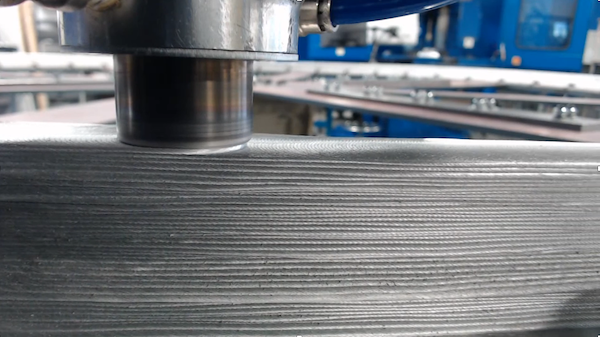
Close-up of aluminum cylinder printed with MELD technology
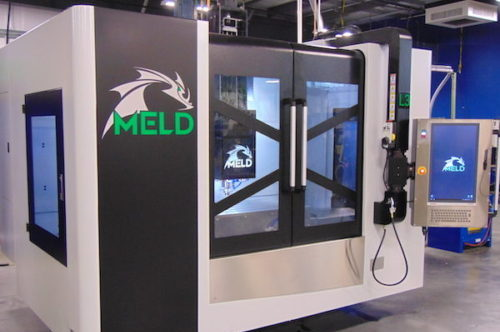
The MELD L3 solid-state metal 3D printer
(Source/Images: MELD Manufacturing Corporation)
The post MELD Introduces Latest Solid-State Metal 3D Printer, the L3 appeared first on 3DPrint.com | The Voice of 3D Printing / Additive Manufacturing.
Where to Buy
Buy Best Metal 3D Printers on Amazon
Buy titanium filament 3d printing on Amazon
Buy Aluminum 3D Printing Wire on Amazon
📌 Related Articles
- Best 3D Printer Upgrades That Actually Improve Print Quality: Complete 2026 Guide
- Best Budget 3D Printer Upgrades That Actually Improve Print Quality: Belts, Springs, Hotends & More
- 3D Printing Safety Equipment Guide: Respirators, Gloves, and Ventilation for 2026
- Prusa Research Mini+ vs Prusa MK4: Full Specs Comparison & Buyer’s Guide
- Bambu Lab A1 vs Elegoo Centauri Carbon: Full Specs Comparison & Buyer’s Guide