
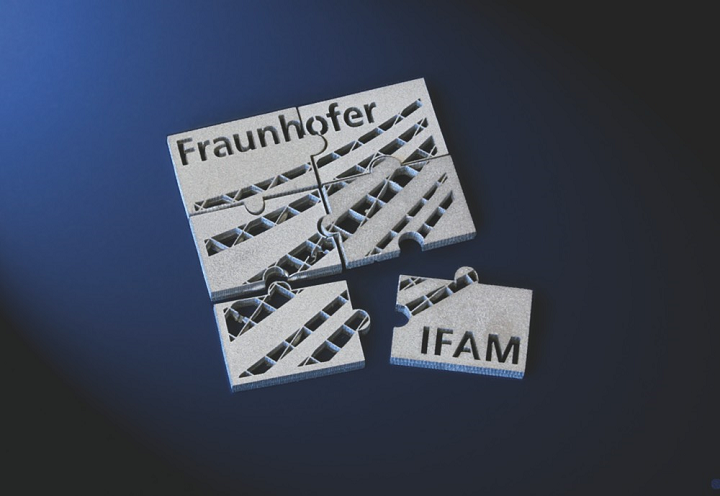
The Fraunhofer Institute for Manufacturing Technology and Advanced Materials (Franhofer IFAM) has been part of the Fraunhofer-Gesellschaft applied research organization since 1974, and according to its website, is one of Europe’s most important research institutions for adhesive bonding technology, surfaces, and shaping and functional materials. Fraunhofer IFAM’s Dresden location, a leader in powder metallurgy, inaugurated its Innovation Center Additive Manufacturing (ICAM) last spring, and has just introduced a new 3D printing system at the new facility.
The Role of 3D Printing in Medicine
3D screen printed prototype
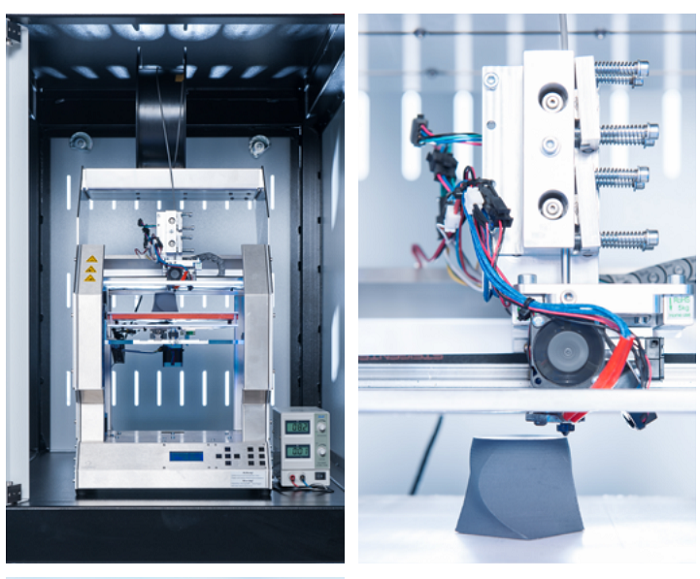
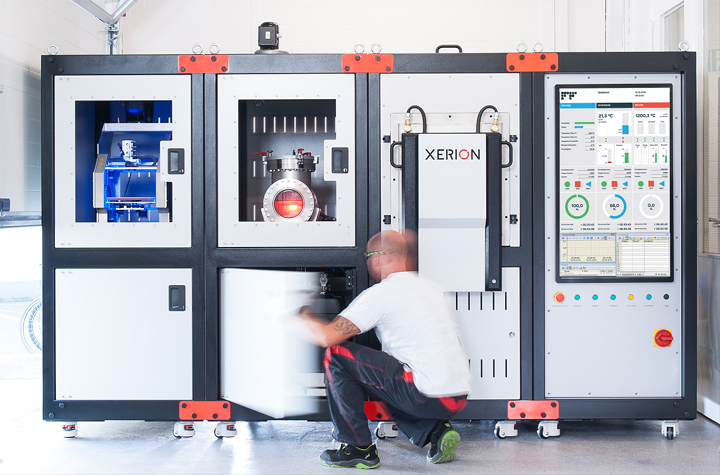
The Fusion Factory, developed by XERION BERLIN LABORATORIES with added support from Fraunhofer IFAM, is a compact additive manufacturing production line that uses fused filament fabrication (FFF) technology to produce ceramic and metallic components. By bringing it to the new ICAM, Fraunhofer IFAM Dresden will be able to, according to a press release, “strengthen its competence as a partner for additive manufacturing.”
Fraunhofer IFAM offers 3D screen printing, FFF technology, and 3D stencil printing at its Dresden location, along with melt spinning, spark plasma sintering, and melt extraction. At the ICAM facility, several selective electron beam melting (SEBM) systems are also available for use. Now it’s adding XERION’s resource-efficient metallic FFF process to its offerings, which can fabricate metal parts without any loose powder left over.
Biocompatible Materials and Processes
The Fusion Factory features three main modules, which together combine the 3D printing, debinding, and densification (final heat treatment) steps in order to fabricate a completely dense ceramic or metallic component. You can also add on extra modules to the Fusion Factory so the system can be expanded and used in industrial series production.
“The base of the development is XERION´s experience for more than 20 years design and production of furnaces for research and industry and the confidence of our customers in four continents,” the site states. “The idea of modules extend the possibilities of the system. Modules can be substituted or added. Taking inspiration from Metal Injection Moulding (MIM) and the already vast experience gathered over the years in the field, the Fusion Factory aims to further ameliorate the MIM technique through the application of the ever-evolving AM technology to produce parts which are technologically or economically (or both) not feasible with the current state-of-the-art.
Clinical Applications and Case Studies
The modular Fusion Factory enables users to achieve both open and closed porosity of 3D printed parts, thanks to the extensive design freedom the system offers, and also create multimaterial components, which, as XERION states, “makes the creation of composites with complex geometries possible.”
Regulatory Considerations and Safety
The newly installed “Fusion Factory“ at Fraunhofer IFAM Dresden (Image courtesy of XERION BERLIN LABORATORIES)
Fraunhofer IFAM will definitely be using the Fusion Factory to its advantage, as it plans to continue developing the system’s technology and its use in future optimized industrial production. Additionally, as the Fusion Factory is an open material system, the institute will also be adding new filaments to its range in the future. But for now, I think the materials they’re already working with will be a good choice. According to SmarTech Analysis, ceramics AM is still on the rise, and the market for metal AM is also strong, especially if the saturated market can bounce back after COVID-19.
“For many metal AM stakeholders, the challenge at hand is significant, meaning that these next several quarters and years may be the difference between life and death for the crowded metal additive market,” another SmarTech report states.
Research Breakthroughs and Innovations

The Fusion Factory can be used in industry and economic component studies, as well as to help integrate the AM process chain into existing production workflows and support project partners as they adopt the technology. Interested users, both beginners and experienced, can also use the system for training. January 21st, 2021, the industrial “Additive metallic filament printing for practical use” workshop will be held at Fraunhofer IFAM Dresden, where you can take a look at the modular system for yourself.
(Source: Fraunhofer IFAM)
The post Fraunhofer IFAM Adopts Modular Fusion Factory Metal Filament 3D Printer appeared first on 3DPrint.com | The Voice of 3D Printing / Additive Manufacturing.
The Future of Bioprinting and Medical AM
from Your daily news from 3DPrint.com https://bit.ly/3bEKX9v
Related Articles: Microwave Electronic Circuits Made via Low-Cost 3D Printer & Plastic Filament · Velo3D Launches New 8-Laser Sapphire XC Metal 3D Printer · MELD Introduces Latest Solid-State Metal 3D Printer, the L3
Frequently Asked Questions
How is 3D printing used in medicine?
3D printing is used in medicine for surgical planning models, custom implants, bioprinting tissue scaffolds, drug delivery systems, dental aligners, and prosthetics. It enables patient-specific solutions that improve outcomes and reduce surgery time.
What materials are biocompatible for 3D printing?
Common biocompatible materials include PEEK, titanium alloys (Ti6Al4V), bio-ceramics (hydroxyapatite), medical-grade resins, PLA for temporary implants, and hydrogels for bioprinting. Material choice depends on the application and required mechanical properties.
Is 3D printed medical equipment FDA approved?
Yes, several 3D printed medical devices have FDA clearance, including orthopedic implants, dental restorations, and surgical guides. Each device must go through the appropriate regulatory pathway based on its risk classification.
📌 Related Articles
- The Current State of Metal 3D Printing in 2020
- 3D Printing Tungsten Carbide: How Hot-Wire Laser Technology Creates Metal Harder Than Steel
- ABS 3D Printing Settings Guide: Temperature, Enclosure, and Cooling for Strong Parts
- Best 3D Printer Upgrades That Actually Improve Print Quality: Complete 2026 Guide
- Best Budget 3D Printer Upgrades That Actually Improve Print Quality: Belts, Springs, Hotends & More