
While additive manufacturing processes have made huge strides in applications like automotive and aerospace, allowing for functional, lightweight parts to be made for cars and even rockets, and bioprinting in medicine has allowed for enormous strides in tissue engineering, applications in construction may be taking more time than consumers might imagine—and more than some companies may want you to believe also. For instance, the idea of an affordable, stylish-looking home that can be easily customized and quickly made is extremely appealing. These types of stories get a lot of attention and innovative companies may be showstoppers at tradeshows, but the reality is that 3D-printed subdivisions and office buildings are not a reality yet for consumers.
The Role of 3D Printing in Medicine
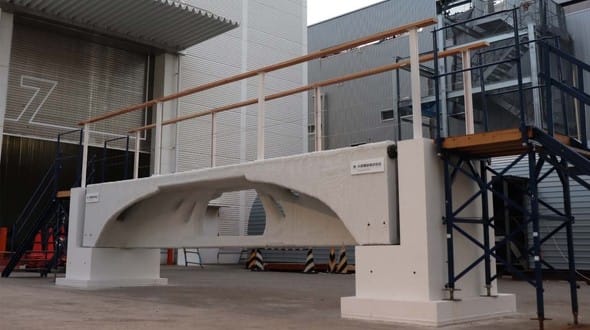
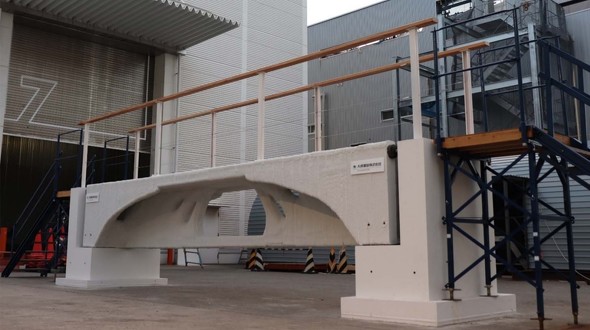
Walkable bridge – length: 6 meters (Image: Taiheiyo Cement)
As Japanese companies like Taisei and Taiheiyo Cement continue to evolve further with progressive technology, much greater credence is being given to serious construction projects centered around 3D printing, as well as continuing popular trends in modular and prefabricated homes. The two companies are now working together, along with Actio and Ariake National College of Technology (ANCT) in developing premixed cement material for complex, “highly accurate”, 3D-printed structures that are stable, despite a range of outdoor temperatures.
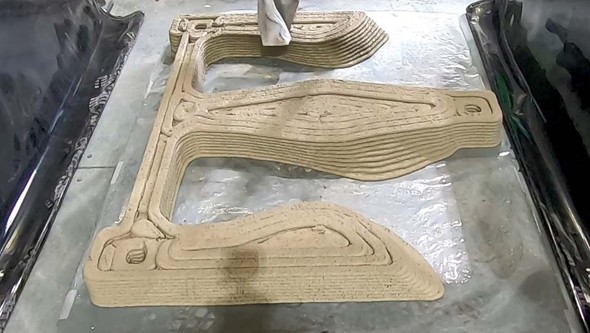
Advancing on the already developed Digimix cement pre-mix, Taiheiyo is now using a process for creating stable molds meant to withstand the elements. Such hardiness is due to fast-hardening additives, optimized for strength and security in construction. With the resulting T-3DP (Taisei-3D Printing) material, the collaborative group was able to 3D print a bridge that measured 1.2 meters wide, 1 meter high and 6 meters long. The process involved incorporating prestressed concrete steel into 44 concrete 3D-printed components that were then assembled into place. Next, Taisei aims to deploy the technology for the 3D printing of beams and pillars.
Biocompatible Materials and Processes
Modeling by T-3DP (Image: Taiheiyo Cement)
The news is particularly important for cementing the viability of additive construction, given the size of the relative partners involved. The Taisei Corporation was founded in 1873 and, with a market cap of roughly $41 billion, it is considered one of the five Japanese “super general contractors”. Though smaller, Taiheiyo is still an $8 billion cement company which boasts 35 percent of the cement market in Japan. Their investment into additive construction suggests that the industry, while it may be in its early stages, is not all hype.
Clinical Applications and Case Studies
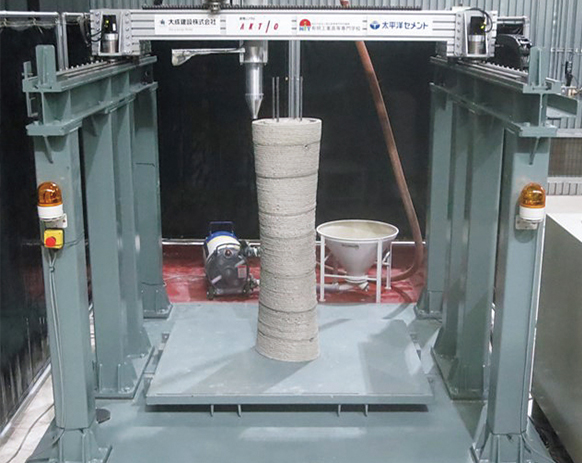
A hollow, 3D-printed beam from Taisei. See also: 3D Printing News: Multi-Material Breakthrough and …. Image courtesy of Taisei.
While we may see a number of exciting projects with a great deal of media appeal around the world—the first office in Dubai, the self-sufficient Shamballa village in Italy, homes built quickly via robotics in France—this partnership indicates that additive construction may serve a real purpose beyond flashy media images. In this case, additive construction of cement components is being explored as a possible replacement or supplement for precast concrete structures, of which Taisei is already considered a leader. Due to a well-known history of cost and schedule overruns in the building industry, prefabricated components and modular construction are on the rise as a means of introducing quality control and predictability to the industry. 3D printing’s ability to digitally produce one-off parts would naturally fit into this development.
[Source: Built]
The post New 3D Printing Cement Developed by Japanese Leaders Taisei & Taiheiyo appeared first on 3DPrint.com | The Voice of 3D Printing / Additive Manufacturing.
Regulatory Considerations and Safety
from Your daily news from 3DPrint.com https://bit.ly/38feW6f
Related Articles
Frequently Asked Questions
How is 3D printing used in medicine?
3D printing is used in medicine for surgical planning models, custom implants, bioprinting tissue scaffolds, drug delivery systems, dental aligners, and prosthetics. It enables patient-specific solutions that improve outcomes and reduce surgery time.
What materials are biocompatible for 3D printing?
Common biocompatible materials include PEEK, titanium alloys (Ti6Al4V), bio-ceramics (hydroxyapatite), medical-grade resins, PLA for temporary implants, and hydrogels for bioprinting. Material choice depends on the application and required mechanical properties.
Is 3D printed medical equipment FDA approved?
Yes, several 3D printed medical devices have FDA clearance, including orthopedic implants, dental restorations, and surgical guides. Each device must go through the appropriate regulatory pathway based on its risk classification.
📌 Related Articles
- 3D Printing Tungsten Carbide: How Hot-Wire Laser Technology Creates Metal Harder Than Steel
- 3D Printing News: Multi-Material Breakthrough and Aerospace Market Boom
- The Current State of Metal 3D Printing in 2020
- Best Budget 3D Printer Upgrades That Actually Improve Print Quality: Belts, Springs, Hotends & More
- ABS 3D Printing Settings Guide: Temperature, Enclosure, and Cooling for Strong Parts