
3D printing is often used to study animals and their behavior, and even help fix their various medical issues. Now, the Cincinnati Zoo & Botanical Garden is partnering with GE Additive’s AddWorks consulting team, also in Cincinnati, to enhance the daily lives of the zoo inhabitants. Located an hour south of my Dayton home, the zoo houses 2,000 animals, and its quest to give every single one the best care possible led it to 3D printing.
The State of Metal 3D Printing
(Photo: Cincinnati Zoo)
David Orban, the zoo’s animal excellence manager, is in charge of an important team which observes the animals and documents how they spend their days and interact, both with each other and their environment. Then, they use the collected data to gain a deeper understanding of the animals’ zoo experience, and determine ways to enhance it through habitat design, diet, and enrichment.

Technical Challenges and Solutions
David Orban. (Photo: Cincinnati Zoo)
Orban explained, “Something that we often think about is how to mimic natural feeding behaviors in the animals that we care for. In the wild, animals are adapted to find, acquire, and process food – and it’s not always easy! In human care though, food is always available and of good quality and balance, and in many cases, it’s consumed quite quickly.
“For example, one challenge that we often see when we offer live insects to some of our birds or small mammals is that they are captured and consumed in a matter of five to ten minutes. We’ve had the idea to create a more complex feeder that will extend foraging duration, in turn, extending animals’ physical activity and mental stimulation, leading to more naturally behaving wildlife.”
To help its animals maintain their natural foraging behaviors, the zoo collaborated with AddWorks on this interesting pro bono project.
“To kick things off, the Zoo team showed us around and explained their goal to keep animals engaged and enriched,” stated GE Additive’s lead engineer Shannon Jagodinski.
Material Properties and Performance
AddWorks used the zoo’s collected data to form a plan on how to increase the animals’ foraging experience through the use of metal 3D printing. This wasn’t easy, since zoologists and engineers don’t always speak the same language, but AddWorks has experience with unique projects that take advantage of all additive manufacturing has to offer.
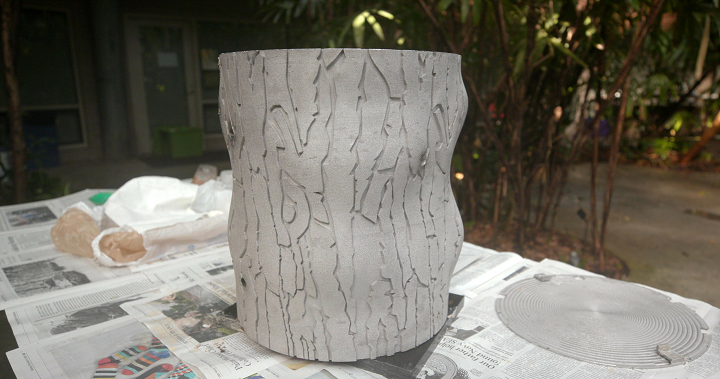
“Additive technology allows a design to incorporate any shape, angle, structure or texture that is needed, with metal or plastic,” said Jagodinski. “The first thing that we considered was safety for the animals, keepers, and visitors and then the Zoo’s request that the animal enrichment device look natural within the environment.”
Industrial Applications and Use Cases
(Photo: GE Additive)
The zoo collected ideas for the feeder from the animal care staff, and the engineers evaluated them to see if the designs were feasible in terms of part orientation, build plate, powder removal, and other parameters. AddWorks came up with two design ideas, and the zoo staff picked the one they thought would, according to a press release, “provide the biggest benefit to the broadest group of animals.”
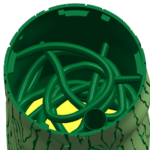
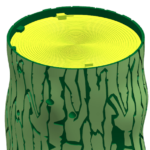
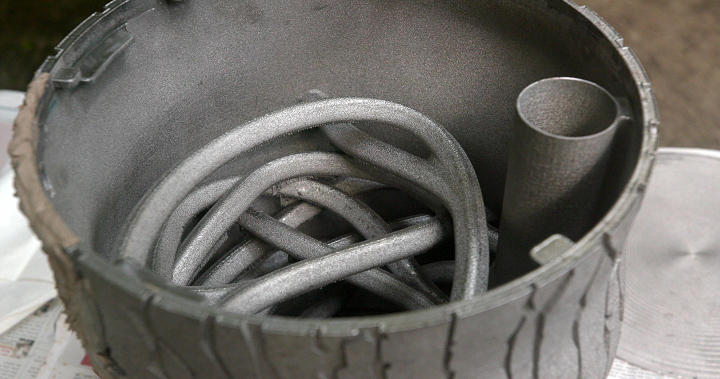
The device’s exterior has a bark-like texture, resembling a tree trunk, and the interior features an enclosure that houses crickets. This is connected to tubes of various lengths, which feed out of the device at different points. Depending on the tube it chooses, the cricket takes a longer or shorter time to leave the feeder – providing tasty insect snacks to zoo animals at random times.

Comparing Metal AM to Traditional Manufacturing
Interior of tree stump device (Photo: GE Additive)
“After this feeder concept was selected, my initial questions were ‘how big is a cricket and what size tube do they need to crawl through?’ We got some feedback from the Zoo’s insect team and tried three different tube sizes,” explained Jagodinski. “We printed prototype tubes with three different diameters and tested them in a cricket enclosure at the zoo to see which size worked best.”
The feeder provides the animals a more lifelike feeding experience by distributing food into their habitats at different times – like they would see in the wild – and removing the keepers from the experience.
Future Developments in Metal Additive Manufacturing
Inside the metal 3D printed cricket feeder, installed at the Discovery Rainforest at Cincinnati Zoo. (Photo: GE Additive)
“I’m excited to be able to go to the zoo with my family and friends and to point into a habitat and say hey I worked on that, that’s a titanium additive part, and that was created using 3D printing technology,” Jagodinski said.
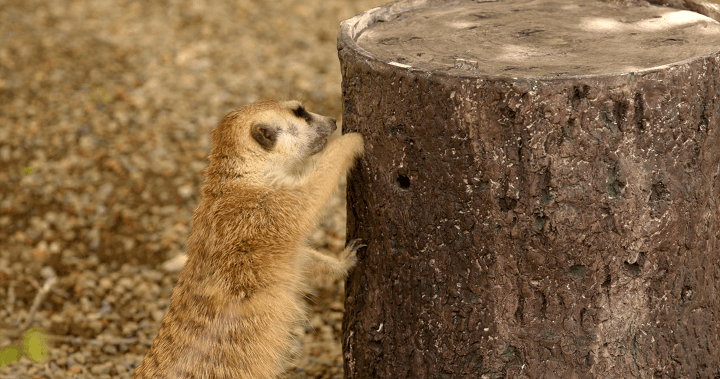
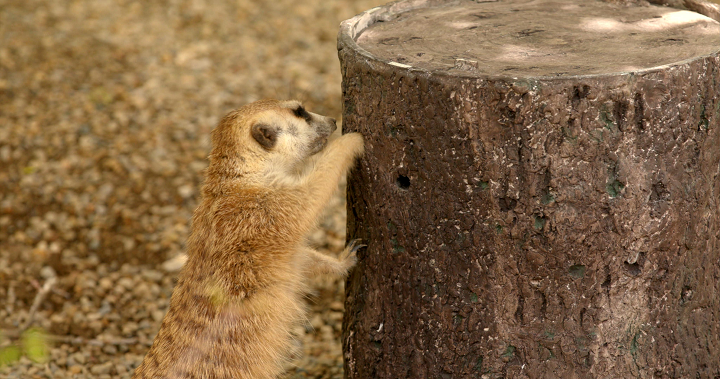
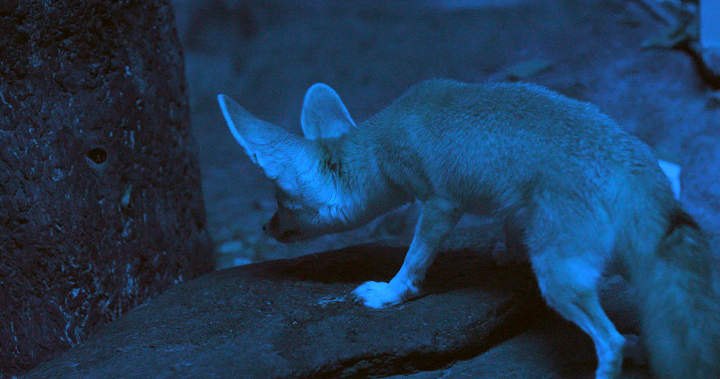
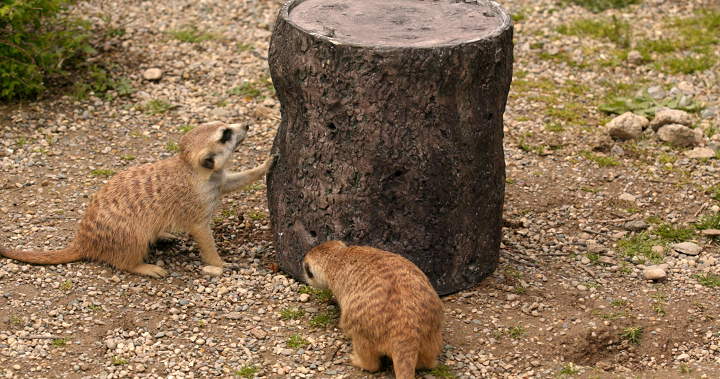
Sadly, that visit will have to wait. AddWorks 3D printed the first part of the device earlier this year out of recycled titanium powder, and delivered a completed version to the zoo in the nick of time, right before the pandemic forced zoos all around the world to temporarily close their gates. But, due to the ongoing COVID-19 crisis, the zookeepers have had plenty of time to test out the 3D printed feeder, first with birds and then with small mammals, like meerkats.
The State of Metal 3D Printing
(Photo: Cincinnati Zoo)
“We have seen that foraging time and the animals’ investigation and interaction last for up to a few hours in our tests compared to a few minutes, which is really exciting for us because that means we can utilize it multiple times a day and in different habitats,” explained Orban. “We have really seen that a lot of animals have been interested in it and continue to stay interested in it, which is exactly what we wanted.”
GE Additive will eventually deliver more of the metal 3D printed devices to the zoo, including a demo piece that will be used to educate visitors about 3D printing and animal enrichment. This device will have part of the exterior removed so that the intricate cricket passageways are visible.
Technical Challenges and Solutions
Animals engaging with the 3D printed cricket feeder. (Photo: Cincinnati Zoo)
“If there’s one thing I continue to learn with additive is that every customer has their own unique challenges,” stated Dave Chapin, leader of the AddWorks consulting team. “It is amazing to see the positive impact that this unique partnership has had for the animals.”
Discuss this and other 3D printing topics at 3DPrintBoard.com or share your thoughts below.
Material Properties and Performance
The post GE Additive Walks on the Wild Side, Creates Metal 3D-Printed Feeder for Zoo Animals appeared first on 3DPrint.com | The Voice of 3D Printing / Additive Manufacturing.
from Your daily news from 3DPrint.com https://bit.ly/2B9ozXr
Related Articles
Frequently Asked Questions
What is metal 3D printing?
Metal 3D printing (additive manufacturing) builds metal parts layer by layer using techniques like laser powder bed fusion, directed energy deposition, and binder jetting. It enables complex geometries impossible with traditional manufacturing while reducing material waste significantly.
How strong are 3D printed metal parts?
3D printed metal parts can achieve mechanical properties comparable to traditionally manufactured metals. Tensile strength and fatigue resistance depend on the process and post-processing, but many meet or exceed ASTM standards for wrought materials.
What are the main metal 3D printing technologies?
The primary technologies include Laser Powder Bed Fusion (LPBF), Electron Beam Melting (EBM), Directed Energy Deposition (DED), Binder Jetting, and Metal FDM (with bound filaments). Each has different strengths in terms of resolution, speed, and material options.
📌 Related Articles
- The Current State of Metal 3D Printing in 2020
- Best 3D Printer Upgrades That Actually Improve Print Quality: Complete 2026 Guide
- 3D Printing Tungsten Carbide: How Hot-Wire Laser Technology Creates Metal Harder Than Steel
- Best Budget 3D Printer Upgrades That Actually Improve Print Quality: Belts, Springs, Hotends & More
- Best 3D Printers Under $500: 2026 Comparison Guide