
Companies, organizations and individuals continue to attempt to lend support to the COVID-19 pandemic supply effort. We will be providing regular updates about these initiatives where necessary in an attempt to ensure that the 3D printing community is aware of what is being done, what can be done and what shouldn’t be done to provide coronavirus aid.
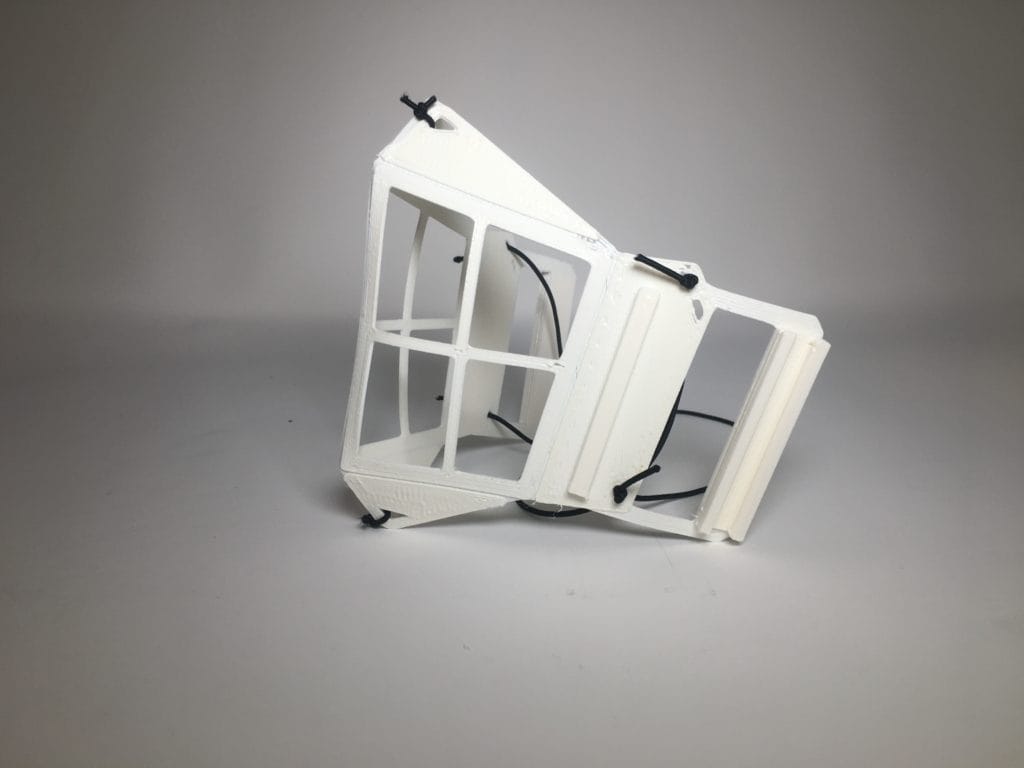
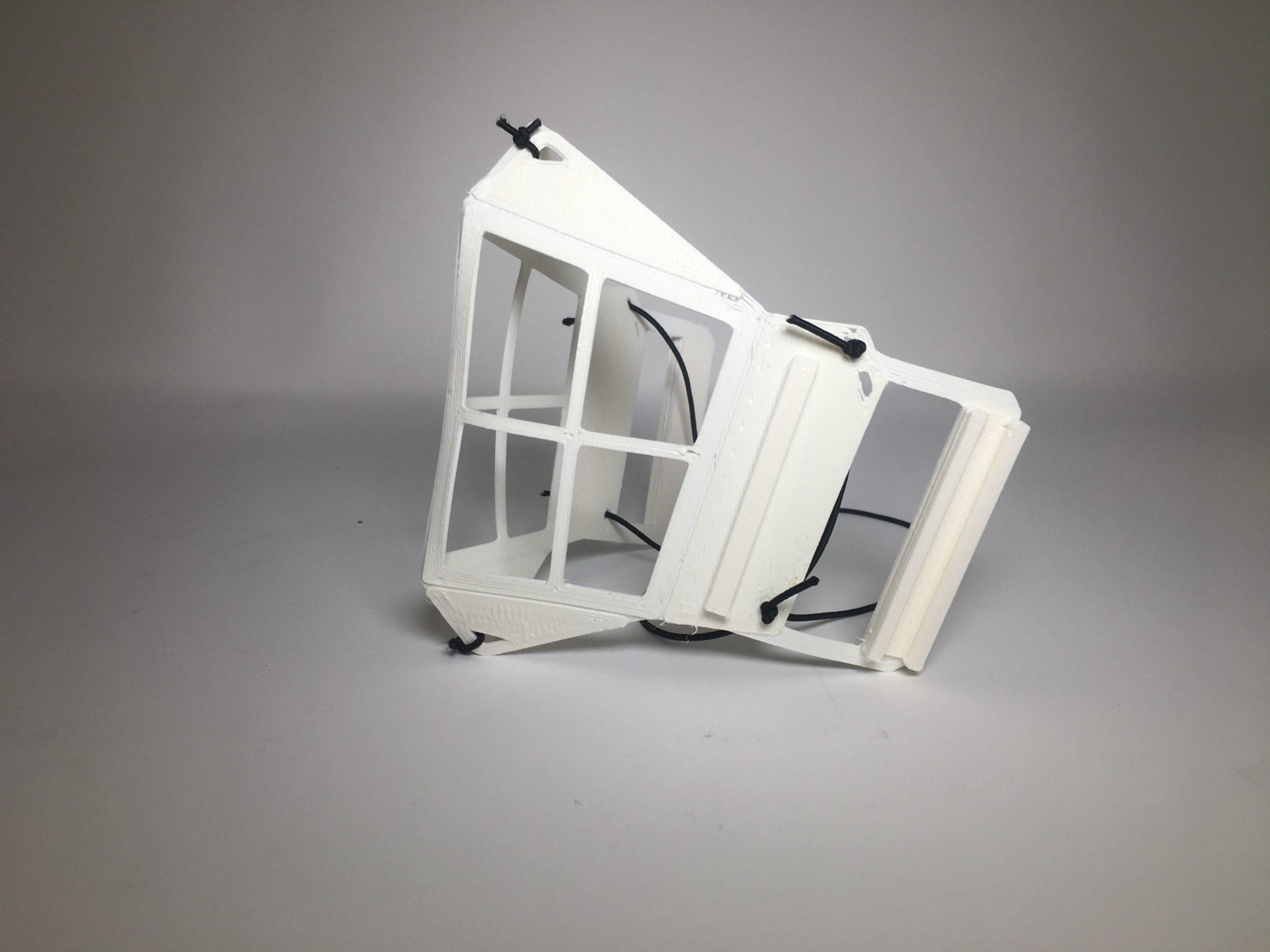
Essentium, Inc. is now using its technology to 3D print reusable protective face masks to fulfill supply needs in its hometown of Pflugerville, Texas. The mask frame is made from thermoplastic urethane branded as Essentium TPU74D and is meant to be easy to clean and used in conjunction with single-use filtration media. It is meant for general, non-medical use during the COVID-19 outbreak based on FDA Emergency Use Authorization and is hosted on the National Institute of Health repository.
The Role of 3D Printing in Medicine
Essentium’s 3D-printed face mask for police and fire department staff. Image courtesy of Essenitum.
In response to an order from the city’s Pflugerville Community Development Corp, the company has so far delivered 30 units for the city’s police and fire department. By next week, it hopes to provide a total of 500 masks and thinks that it can ramp up production to 5,000 pieces weekly.
Meanwhile, Shapeways is producing face fields that are being used by medical crews. So far, the 3D printing bureau has made 1,100 face shields. The company is requesting $20 donations to make the shields, but will contribute its own funds to make every fifth shield produced.
Siemens already announced that it would be opening up its additive manufacturing network at no cost to designers and suppliers to produce supplies for the COVID-19 outbreak. The German giant has now provided a progress report on its efforts, including the fact that it is working with manufacturers to adapt and speed up production of pharmaceuticals and protective gear. In particular, it has ramped up its manufacturing of blood-gas monitoring, portable X-ray, ultrasound and CT systems. It has also increased its deployment of virtual training and remotely managed imaging systems.

Biocompatible Materials and Processes
Protective eyewear designed and printed by BEGO. Image courtesy of BEGO.
Others participating in complementing the supply efforts include BEGO, a digital dentistry specialist that relies on 3D printing and CAD/CAM to produce utensils for the prevention of infection. The company has opened up design files for modular face shield frames, breathing brackets and other parts, while also offering its production services in Bremen, Germany to medical facilities to fabricate any parts that may be necessary. For instance, BEGO Implant Systems has 3D printed protective eyewear and donated it to the Association of Statutory Health Insurance Dentists for distribution among local hospitals and clinics.
Smaller firms are continuing to provide their own services to produce face shields, including Brooklyn-based 3D printing company Makelab. The shield itself is made out of plastic dividers and presentation covers to attach to 3D-printed brackets. On the flipside, Solvay, which has extensive resources as a large chemical company, is working with Boeing to create face shields made from its own transparent thermoplastic films.
The materials from which they are made, Radel PPSU and Udel PSU, can be sterilized for medical use. See also: Best 3D Printer Air Filtration and Enclosure Venti…. Additionally, Solvay is working on 3D printing parts for ventilators, CAPRs, PAPRs, and surgical and N95 mask parts, as well as lubricants for oxygen machines. It is also making sanitizing gels. Boeing is moving some of its manufacturing operations to make face shields at its sites in Missouri, California, Arizona, Alabama and Pennsylvania. It plans to use its cargo aircraft to transport supplies to healthcare facilities.
Clinical Applications and Case Studies
Given all of the efforts by companies large and small, along with helpful Makers and hobbyists, it will be interesting to determine to the extent to which their work has aided in preventing the spread of the virus, if it is finally contained. How this analysis can be achieved is difficult to know, but it is something that we will surely be considering.
The post 3D Printing and COVID-19, April 4, 2020 Update appeared first on 3DPrint.com | The Voice of 3D Printing / Additive Manufacturing.
Related Articles
Frequently Asked Questions
How is 3D printing used in medicine?
3D printing is used in medicine for surgical planning models, custom implants, bioprinting tissue scaffolds, drug delivery systems, dental aligners, and prosthetics. It enables patient-specific solutions that improve outcomes and reduce surgery time.
What materials are biocompatible for 3D printing?
Common biocompatible materials include PEEK, titanium alloys (Ti6Al4V), bio-ceramics (hydroxyapatite), medical-grade resins, PLA for temporary implants, and hydrogels for bioprinting. Material choice depends on the application and required mechanical properties.
Is 3D printed medical equipment FDA approved?
Yes, several 3D printed medical devices have FDA clearance, including orthopedic implants, dental restorations, and surgical guides. Each device must go through the appropriate regulatory pathway based on its risk classification.
📌 Related Articles
- The Current State of Metal 3D Printing in 2020
- Best 3D Printer Air Filtration and Enclosure Ventilation for 2026: Breathe Safe While Printing
- 3D Printing Tungsten Carbide: How Hot-Wire Laser Technology Creates Metal Harder Than Steel
- ABS 3D Printing Settings Guide: Temperature, Enclosure, and Cooling for Strong Parts
- Bambu Lab P1S Review: The Enclosed CoreXY Speed Demon That Just Works