

“Design. Print. Ride.” – the AREVO product development team
Silicon Valley’s AREVO is headed to Paris from March 3-5 to participate in JEC World 2020. As many exhibitors will be unveiling their latest innovations, AREVO will be showing off their e-Moto, which is bound to be a crowd pleaser; in fact, when it comes to 3D printing, items such as cars, boats, planes, and motorcycles are usually a source of fascination due to the popularity of such machinery—but also due to the idea of the industrial disruption taking place in terms of manufacturing, and the incredible potential for customization.

This year though, AREVO will also be announcing 3DPC as their new partner in their composite Manufacturing-as-a-service (“MaaS”) program. MaaS is centered around one of the greatest benefits in 3D printing—the ability to create products on demand—and in this case with ‘ultra-strong, lightweight thermoplastic composite parts.’
Understanding Filament Properties
The e-Moto, a composite e-bike/e-scooter hybrid, will be on exhibit at JEC World as a prime example of AREVO’s capabilities within the 3D printing realm. Made possible due to the progressive AREVO ‘Aqua’ platform, manufacturing of the e-Moto involves a comprehensive, automated robotic system and the AREVO Xplorator software, the futuristic vehicle is the result of ‘the first, fully integrated composite tool chain that accelerates product development from concept to production.’
“At JEC World we look forward to meeting with representatives from the consumer, industrial and aerospace sectors to demonstrate how our MaaS service can produce truly innovative thermoplastic composite parts, as shownby the e-Moto,” said Hemant Bheda, Co-Founder and Chairman of AREVO. “Our easy to use Xplorator
Material Comparison and Selection
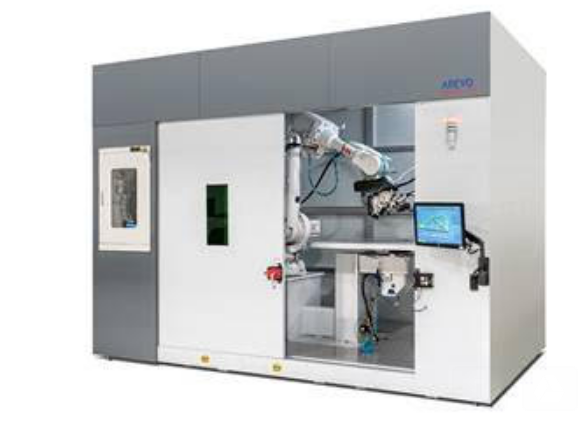
Continually innovating, the AREVO team is known for its ability to:
- Make breakthroughs in digital fabrication software, robotics, and materials science
- Provide composite parts affordably
- Create parts at true production scale
- Reduce design cycles for a variety of different parts
“The e-Moto concept vehicle results from a collaboration between AREVO and StudioWest and represents a novel solution to urban transport problems: an easy to ride, energy-efficient personal mobility vehicle,” explained the AREVO team in their recent press release sent to 3DPrint.com.
Print Settings and Optimization
 AREVO will also be showing off sporting goods, high-performance components for aerospace, and more—many of which are the results of collaborations with other global market leaders. See also: The Current State of Metal 3D Printing in 2020. If you are attending JEC World 2020 this year at Villepinte Nord Center, the AREVO team invites you to stop by Hall 5, booth S-92.
What do you think of this news? Let us know your thoughts; join the discussion of this and other 3D printing topics at 3DPrintBoard.com.
[Source / Images: AREVO]
The post JEC World: AREVO Presents Manufacturing as a Service; Introduces 3D Printed e-Moto appeared first on 3DPrint.com | The Voice of 3D Printing / Additive Manufacturing.
Strength and Durability Testing
from Your daily news from 3DPrint.com http://bit.ly/2ustiAy
Related Articles
Frequently Asked Questions
What is the best 3D printing filament for beginners?
PLA is the best starting filament — it prints easily at 190-220°C without an enclosure and produces good results. Once comfortable, PETG offers better strength and temperature resistance for functional parts.
How do I choose the right filament?
Consider the application: PLA for display models, PETG for functional parts, ABS/ASA for heat/sunlight exposure, TPU for flexible parts, and specialty filaments for engineering applications. Each has specific printer requirements.
What temperature should I print different filaments at?
PLA: 190-220°C nozzle / 50-60°C bed. PETG: 220-250°C / 70-80°C. ABS: 230-260°C / 100-110°C (enclosure needed). Nylon: 240-270°C / 70-90°C. Always check manufacturer recommendations for specific brands.
📌 Related Articles
- 3D Printing News: Multi-Material Breakthrough and Aerospace Market Boom
- The Current State of Metal 3D Printing in 2020
- ABS 3D Printing Settings Guide: Temperature, Enclosure, and Cooling for Strong Parts
- Best Budget 3D Printer Upgrades That Actually Improve Print Quality: Belts, Springs, Hotends & More
- Best 3D Printer Upgrades That Actually Improve Print Quality: Complete 2026 Guide