

In today’s 3D Printing News Briefs, the AM industry is turning to the internet to stay connected during this time of COVID-19. Women in 3D Printing’s inaugural virtual panel series about female leaders enabling additive manufacturing starts tomorrow, and ASTM International’s Center of Excellence is hosting an online workshop about adoption of the technology. Moving on, Additive Industries has some good sales news regarding its MetalFAB1, and Lubrizol’s powder TPU material has passed some important tests.
Women in 3D Printing Virtual Panel Series
 Starting tomorrow, April 16th, Women in 3D Printing (Wi3DP) will be hosting a global digital panel, supported by Link3D and led by AM-Cubed, that meets each month to feature women leaders who are enabling AM. The first session, titled “Leading AM Through Times of Uncertainty,” is Thursday, April 16, 8-10 am PST, and participants are Dara Treseder, CMO of Carbon; Marie Langer, CEO of EOS; Debbra Rogers, CCO of GE Additive; and moderator Kristin Mulherin, the President and Founder of AM-Cubed.
“The first in a series of monthly events, come join leaders from Carbon, EOS and GE Additive to hear about what their companies have been doing to address the current crisis and what leadership means to them in times like these. We’ll have plenty of time for a live Q&A from the attendees and virtual networking for an opportunity to “virtually mingle” with people from your local chapters and afar. As with all Women in 3D Printing events, all are welcome!”
How 3D Printing Responded to COVID-19
Pre-registration and virtual networking will begin at 8 am PDT. You can check out the event site to see the rest of the agenda, and to register.
ASTM International Hosting Virtual Workshop
 ASTM International‘s Additive Manufacturing Center of Excellence (AM CoE) announced that it will be holding a virtual workshop next week, April 22, titled “Accelerating AM Technology Adoption through Standardization and Certification” and presented in partnership with TÜV SÜD. The workshop is open to all AM professionals looking to explore and understand the certification and standardization processes and implement best practices, and will feature panel discussions as well as technical talks. Multiple topics will be discussed, including meeting the requirements for delivering 3D printed parts to regulated industries, briding the gap between standards and certification, and standardization in specific AM processes, such as polymer-specific processes, multi-laser technology, and digital workflow.
“In regulated industries such as aerospace, medical, and automotive, certification is essential to gain market access. See also: The Current State of Metal 3D Printing in 2020. Certification scheme development is quickly advancing but it depends on specific standards to cover the entire value chain. Therefore, globally accepted market-relevant standards are required to meet the growing demand in the application of AM technology,” stated Dr. Khalid Rafi, ASTM International’s senior lead for additive manufacturing program development.
HP and the Pandemic Manufacturing Shift
Register for the virtual workshop here.
Additive Industries Announces More MetalFAB1 Sales
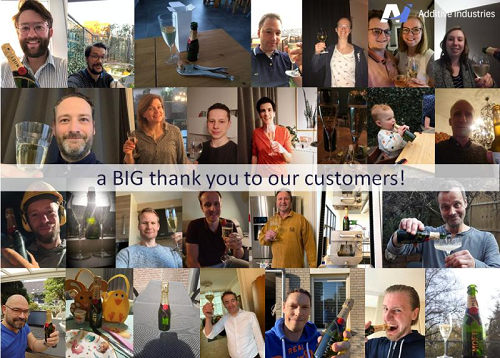 Dutch company Additive Industries first released its industrial MetalFAB1 3D printing system back in 2015, and it’s seen continuing success with the machine ever since. Last week, we reported that steel and mining company Arcelor Mittal was partnering with Additive Industries to investigate the use of metal 3D printing, and specifically the MetalFAB1, for making large spare parts for the steel industry. Now, the company has announced that a top aerospace company in Southern California – possibly this customer – has ordered three more MetalFAB1 systems, with the option to purchase five additional printers before the year ends. Additive Industries also received an order from “a market-leading turbocharger manufacturer in Europe” for its first MetalFAB1. The company followed safe social distancing practices to celebrate these new orders.
“Amidst this extraordinary time where our thoughts first and foremost are with the people directly or indirectly affected by the Covid-19 virus, we want to thank all our customers for their trust and continued support,” Additive Industries CEO Daan Kersten wrote in a LinkedIn post.
Supply Chain Disruptions and Digital Solutions
“As you might know, the global Additive Industries team normally would celebrate together when we received these orders. This time we observed our social distancing policy and organized a distributed celebration. Cheers to the team and a BIG thank you to our customers for the confidence and continued expansion of the MetalFAB1 installed base for industrial production of high-quality metal parts.”
Lubrizol’s Powder TPU Material Passes Important Tests
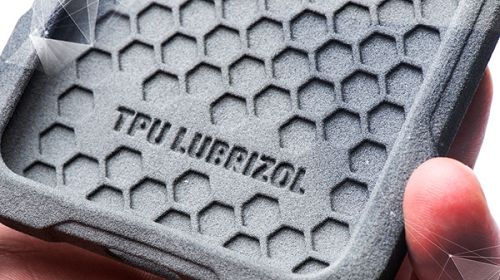 This week, Lubrizol Engineered Polymers, part of the Ohio-based Lubrizol Corporation, announced that its ESTANE 3D TPU M95A powder TPU material had passed cytotoxicity and skin sensitization tests, in accordance with both ISO 10993-5 and 10993-10. See also: 3D Printing Tungsten Carbide: How Hot-Wire Laser T…. Skin contact clearance is a great feature for applications in electronic device wearables, footwear, and prosthetic and orthotic devices, and is just one more on the list of ESTANE 3D TPU M95A benefits, which includes durability, energy rebound, flexibility, and chemical and impact resistance. Passing these tests means that the material is well-suited for AM end-use applications that need skin contact. ESTANE 3D TPU M95A, which is the only TPU certified to use with the HP Jet Fusion 4200 series, can now be used to help create important Personal Protection Equipment (PPE) for those on the front lines of the COVID-19 crisis.
“After first developing a new innovative powder TPU for use with the market leading HP 3D printing platform, it is a great step forward for this material to pass this skin sensitivity testing protocol,” said David Pascual, Lubrizol’s global commercial 3D Printing lead.
Medical PPE and Equipment Production
“This will benefit product designers who are developing applications that require skin contact including personal protection devices so urgently needed right now to protect responders and caregivers fighting the COVID-19 battle. TPU’s versatility, durability and barrier properties bring value in these vital applications.”
Discuss these stories and other 3D printing topics at 3DPrintBoard.com or share your thoughts in the Facebook comments below.
The post 3D Printing News Briefs: April 15, 2020 appeared first on 3DPrint.com | The Voice of 3D Printing / Additive Manufacturing.
Related Articles
Frequently Asked Questions
How did 3D printing help during COVID-19?
During the COVID-19 pandemic, 3D printing enabled rapid production of critical medical supplies including face shields, ventilator components, nasal swabs, and PPE. Distributed manufacturing allowed makers worldwide to produce items locally without waiting for traditional supply chains.
What was the pandemic digital manufacturing shift?
The pandemic accelerated adoption of digital manufacturing including 3D printing, as companies sought more resilient supply chains. Organizations shifted from centralized to distributed production, using digital files to produce parts locally on demand.
Can 3D printing supply chains be resilient in emergencies?
Yes, 3D printing provides supply chain resilience through distributed manufacturing — designs can be shared digitally and produced anywhere with compatible equipment, eliminating the need for physical inventory and shipping of parts.
📌 Related Articles
- The Current State of Metal 3D Printing in 2020
- 3D Printing Tungsten Carbide: How Hot-Wire Laser Technology Creates Metal Harder Than Steel
- Best 3D Printer Upgrades That Actually Improve Print Quality: Complete 2026 Guide
- Best Budget 3D Printer Upgrades That Actually Improve Print Quality: Belts, Springs, Hotends & More
- ABS 3D Printing Settings Guide: Temperature, Enclosure, and Cooling for Strong Parts