

Although introduced in the 80s, most famously by legendary Chuck Hull, 3D printing has been a well-kept secret by organizations like NASA and numerous automotive companies who have been enjoying the magic of digital fabrication for decades. General Motors qualifies as one, using the technology since the late 80s and continuing to do so today. The proof lies in its latest, spectacular prototype of a Chevrolet Corvette—almost completely 3D-printed.
And while the public loves to hear about affordable and snazzy 3D-printed cars, modern buses, or even bikes—here, GM is going back to the roots of rapid prototyping—and using all the classic benefits of 3D printing for research, design, and complex engineering. With an advanced prototype of the 2020 Stingray, comprised 75 percent of 3D-printed parts, automotive engineers have the incredible luxury of designing lightweight, durable parts for rigorous testing.

The Role of 3D Printing in Medicine


And if the components don’t fit or work properly? The days of yore and going back to the drawing board are just an old-fashioned concept as the C8 team can simply refigure a 3D design, 3D print the part again quickly and affordably, and go back to the assessment of performance.
According to Kevin Quinn, GM director of additive design and manufacturing, their team is able to “quickly get a prototype part. We can iterate that part maybe five times in a week, so you make sure you get the right design.”
Biocompatible Materials and Processes

Such latitude in design and further development must feel like a huge luxury to engineers in many different industries—in comparison to how the process used to work with considerable waiting time required in between iterations. Additive manufacturing processes have also evolved substantially in recent years in terms of hardware, software, and a wide range of materials, to include major strides with metal. For this project, it means that any design discrepancies are fixed quickly and on-site, and the C8 team is also able to make sure that necessary areas can be accessed by engineers and mechanics during production.
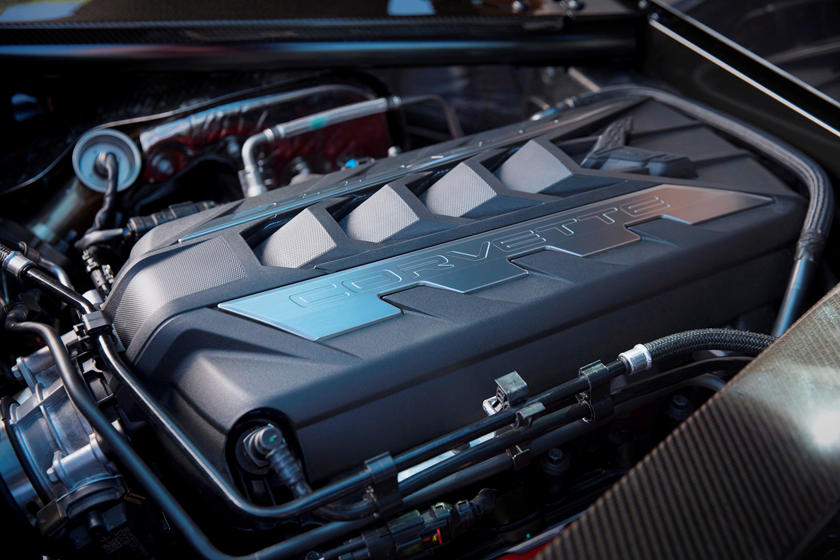
3D-printed parts have also been used to assess the opening/closing mechanisms of the retractable folding hardtop, and right-hand drive mechanisms for models being sold in the UK and Australia. See also: Best 3D Printer Upgrades That Actually Improve Pri…. 3D printing allows for the evaluation of important sensing devices for vehicles with driver assistance features. These sensors can also be used in the actual training of robots that are involved in the manufacturing of functional parts later.
“You can print a couple of parts and that’s good enough for robots to be able to assess access points and buildability,” said Ron Daul, GM director of additive manufacturing.
Clinical Applications and Case Studies

[Source / Images: CarBuzz]
The post 2020 Chevy Stingray Prototype is 75 Percent 3D Printed appeared first on 3DPrint.com | The Voice of 3D Printing / Additive Manufacturing.
from Your daily news from 3DPrint.com https://bit.ly/3gaWj5W
Frequently Asked Questions
How is 3D printing used in medicine?
3D printing is used in medicine for surgical planning models, custom implants, bioprinting tissue scaffolds, drug delivery systems, dental aligners, and prosthetics. It enables patient-specific solutions that improve outcomes and reduce surgery time.
What materials are biocompatible for 3D printing?
Common biocompatible materials include PEEK, titanium alloys (Ti6Al4V), bio-ceramics (hydroxyapatite), medical-grade resins, PLA for temporary implants, and hydrogels for bioprinting. Material choice depends on the application and required mechanical properties.
Is 3D printed medical equipment FDA approved?
Yes, several 3D printed medical devices have FDA clearance, including orthopedic implants, dental restorations, and surgical guides. Each device must go through the appropriate regulatory pathway based on its risk classification.
📌 Related Articles
- The Current State of Metal 3D Printing in 2020
- Best 3D Printer Upgrades That Actually Improve Print Quality: Complete 2026 Guide
- 3D Printing Tungsten Carbide: How Hot-Wire Laser Technology Creates Metal Harder Than Steel
- ABS 3D Printing Settings Guide: Temperature, Enclosure, and Cooling for Strong Parts
- The Complete 3D Printing Filament Guide: Types, Properties & When to Use Each