
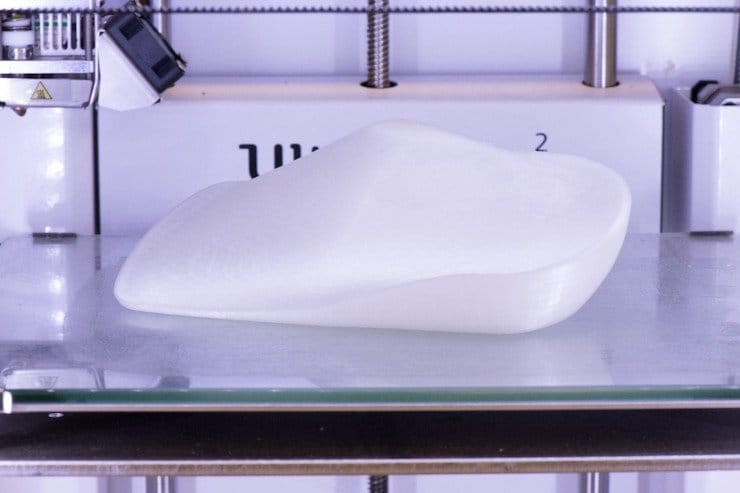
FDM 3D printing users may be pleased to know that the Ultimaker Marketplace has just made three new Lubrizol materials available. These thermoplastic polyurethanes (TPUs) are meant to offer added versatility for consumers, as well as allow them to take on more challenging projects due to new strength and durability. If you are interested in trying out some new filaments, check out the following:
- ESTANE 3D TPU F94A-055 OR HH PL – an aromatic polycarbonate-based TPU, this durable-grade Lubrizol material offers high heat performance, flexibility, and is suitable for use in the production of prototypes and final parts.
- ESTANE 3DP TPU 98A – a polycaprolactone TPU, this Lubrizol material offers high accuracy in printing, excellent mechanical properties, high clarity, as well as low warpage and shrinkage. This material is meant for more specific applications like orthopedic insoles, but also other general parts too.
- ESTANE 3DP TPU F70D-065 – a polyether TPU, this Lubrizol material offers UV stability, flexibility regarding low temperatures, and high transparency – suitable for applications including parts that may be outdoors such as industrial jigs and fixtures.
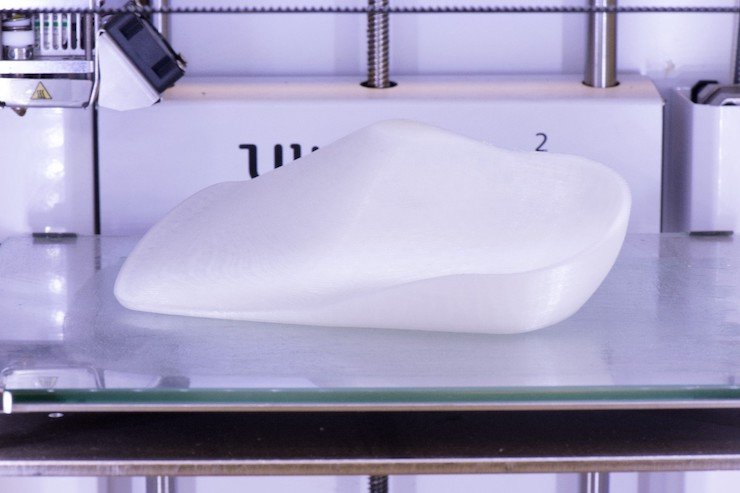
These TPUs now being offered through Ultimaker Marketplace are manufactured by Lubrizol, which notably is a subsidiary of Warren Buffet’s Berkshire Hathaway, and entered into a partnership with Ultimaker last year.
Founded in 1928, Lubrizol owns over 100 facilities and employs 8,800 globally. The company is divided into two segments: Lubrizol Additives and Lubrizol Advanced Materials. Claiming that that “half of the vehicles on the planet rely on Lubrizol science,” the Wickliffe, Ohio-headquartered corporation is a market leader in the production of chemicals and other material innovations driving new types of manufacturing such as 3D printing—joining other companies like DuPont and Dow, BASF, Mitsubishi, Covestro (Bayer) and more.
An increasing number of these historic companies, equipped with massive resources for research and development, are involved in partnerships with other manufacturers interested in taking advantage of the clear benefits of additive manufacturing. Joris Peels breaks down the growing list of chemical giants now battling it out in the AM materials space. As more oil and gas corporations expand their petrochemical portfolios, this space will only become more contested.
In partnering with over 80 companies around the world to develop material print profiles, Dutch company Ultimaker has aligned with other partners such as BASF, DSM, Solvay, Clariant, and more—all functioning as part of the Ultimaker Material Alliance Program.
Ultimaker often delivers exciting new products and programs to users, allowing them to look forward to updates and innovations like new management systems and printers, streamlined ecosystems, and an ongoing flow of projects being reported from enthusiasts around the globe—whether they might be engaged in urban farming, manufacturing, or a variety of recycling efforts.
What do you think of this news? Let us know your thoughts! Join the discussion of this and other 3D printing topics at 3DPrintBoard.com.
[Source / Images: Ultimaker]
The post Ultimaker Marketplace Offers Three New Lubrizol TPU Materials for 3D Printing appeared first on 3DPrint.com | The Voice of 3D Printing / Additive Manufacturing.
from Your daily news from 3DPrint.com https://bit.ly/3dzb9kZ
Where to Buy Filament
Disclosure: Some of the links below are affiliate links. If you make a purchase, we may earn a commission at no extra cost to you. This helps support this site.
- TPU: Hatchbox
Looking for Filament? Check the best deals on Amazon:
These links go to Amazon with our affiliate tag. If you prefer to support local retailers or buy directly from manufacturers, we encourage that as well!
Frequently Asked Questions
What is the best 3D printing filament for beginners?
PLA is the best starting filament — it prints easily at 190-220°C without an enclosure and produces good results. Once comfortable, PETG offers better strength and temperature resistance for functional parts.
How do I choose the right filament?
Consider the application: PLA for display models, PETG for functional parts, ABS/ASA for heat/sunlight exposure, TPU for flexible parts, and specialty filaments for engineering applications. Each has specific printer requirements.
What temperature should I print different filaments at?
PLA: 190-220°C nozzle / 50-60°C bed. PETG: 220-250°C / 70-80°C. ABS: 230-260°C / 100-110°C (enclosure needed). Nylon: 240-270°C / 70-90°C. Always check manufacturer recommendations for specific brands.
📌 Related Articles
- The Complete 3D Printing Filament Guide: Types, Properties & When to Use Each
- Best Budget 3D Printer Upgrades That Actually Improve Print Quality: Belts, Springs, Hotends & More
- 3D Printing News: Multi-Material Breakthrough and Aerospace Market Boom
- Best 3D Printer Upgrades That Actually Improve Print Quality: Complete 2026 Guide
- ABS 3D Printing Settings Guide: Temperature, Enclosure, and Cooling for Strong Parts