

Researchers from Singapore are working to decrease noise pollution with the help of 3D printing, outlining their findings in the recently published ‘3D Printing of Polymeric Multi-Layer Micro-Perforated Panels for Tunable Wideband Sound Absorption.’ Attempting to overcome the limits of conventional manufacturing, the authors 3D print innovative multi-layer micro-perforated panels (MPPs) with tunable wideband absorption.
Due to so many busy and highly populated areas in the world, finding new ways to deal with noise pollution is a major concern. MPPs—comprised of perforations, a back wall, and an air gap, serve many purposes today, to include improving:
- Room acoustic conditions
- Ducts
- Acoustic window systems
- Noise barriers
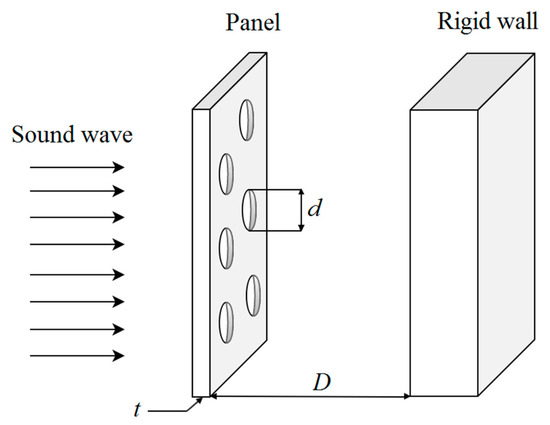
The perforations, patterned in a lattice, allow for the desired acoustic resistance. A rigid wall is parallel to the panel, with an air gap in between creating a separate ‘acoustic stiffness.’
“The entire MPP system provides resonant absorption of sound,” stated the researchers. “It should be noted that the absorption effect is independent of the manufacturing materials of the panel.”
Understanding Filament Properties
Metal and steel have been used in previous research to create MPP panels; however, conventional techniques tend to be expensive, whether industrial users employ laser cutting, etching, or micro punching.
Material Comparison and Selection
The schematic diagram of an MPP, which consists of a thin panel, an air gap, and a rigid wall.
For this study, the researchers designed and produced MPPS using SLS technology—a first in this type of manufacturing. Samples were designed for damping ‘major traffic noises,’ and optimizing ‘the area under the sound absorption curve at the target frequency range was introduced to design the structural parameters of the effective, acoustic absorption devices.’

Print Settings and Optimization
The schematic demonstration of the single-layer, double-layer, and triple-layer MPPs.
Experimental results agreed with both theoretical and numerical results, with double- and triple-layer structures tuning the peaks of the absorption curves, allowing for broadened frequency bandwidths.
Strength and Durability Testing
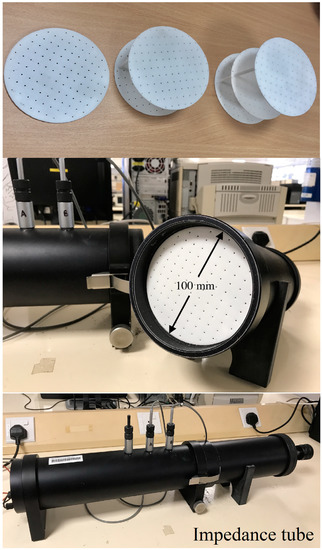
3D printed samples of MPPs and the setup of the acoustic absorption test.
“The absorption curves of the double-layer MPP and the triple-layer MPP observe two and three peaks, respectively, for the given geometric parameters,” stated the researchers.
The research team noted that results with unpredicted noises and side peaks reflected wider frequency bandwidths and higher peak values of the MPPs. Also noted were more obvious discrepancies at the second peak.
Cost and Availability Considerations
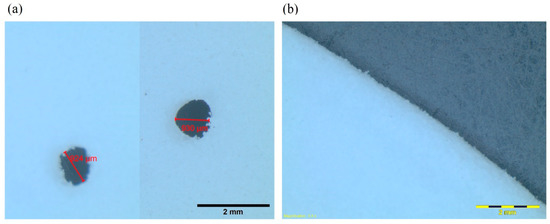
The microscope images of a printed panel: (a) two perforations in imperfect circular shapes and (b) a part of the unsmooth rim with grains.
“The performances of the multi-layer acoustic structures were evaluated by Maa’s theory, FE simulations, and experiments in a wide frequency range. The frequency ranges were tuneable by adjusting the structural parameters such as the number of layers, the air gap distance, and the inter-layer distance,” concluded the researchers.
“The developed FE model was proved to be feasible for the numerical simulation of the multi-layer acoustic structures. An optimization method that maximizes the area under the sound absorption curve was introduced for the acoustic structures with the most effective sound absorption in target frequency ranges.”
3D printing is used more commonly today in sound absorption applications as researchers innovate with new products like metasurface-based absorbers, customized absorbers based on passive destructive interference, and more. What do you think of this news? Let us know your thoughts! Join the discussion of this and other 3D printing topics at 3DPrintBoard.com.
Advanced and Specialty Filaments
[Source / Images: ‘3D Printing of Polymeric Multi-Layer Micro-Perforated Panels for Tunable Wideband Sound Absorption’]
The post Singapore: 3D Printing Helps Reduce Noise Pollution with MMP Panels appeared first on 3DPrint.com | The Voice of 3D Printing / Additive Manufacturing.
Frequently Asked Questions
What is the best 3D printing filament for beginners?
PLA is the best starting filament — it prints easily at 190-220°C without an enclosure and produces good results. Once comfortable, PETG offers better strength and temperature resistance for functional parts.
How do I choose the right filament?
Consider the application: PLA for display models, PETG for functional parts, ABS/ASA for heat/sunlight exposure, TPU for flexible parts, and specialty filaments for engineering applications. Each has specific printer requirements.
What temperature should I print different filaments at?
PLA: 190-220°C nozzle / 50-60°C bed. PETG: 220-250°C / 70-80°C. ABS: 230-260°C / 100-110°C (enclosure needed). Nylon: 240-270°C / 70-90°C. Always check manufacturer recommendations for specific brands.
📌 Related Articles
- The Current State of Metal 3D Printing in 2020
- 3D Printing Tungsten Carbide: How Hot-Wire Laser Technology Creates Metal Harder Than Steel
- Best 3D Printer Bed Leveling Tools for Perfect First Layers in 2026
- Bambu Lab P1S Review: The Enclosed CoreXY Speed Demon That Just Works
- Creality K2 Plus Combo Review: Multi-Color Mastery with Room to Spare