

Janne Kyttanen is truly a 3D printing pioneer having spearheaded product design and consumer, industrial design, furniture, clothing, and other products with 3D printing. Roles at Materialise and 3D Systems as well as his own startups have prepared him to become the world’s unlikeliest VC. We spoke to him previously on investing in 3D printing, creativity in 3D Printing and interviewed him during an entertaining podcast. With a designer heart and mind, he is now trying to design 3D printing businesses and beyond that create new markets. What’s next for Janne and how does he view the next few years shaping up?
What do you think will happen in 3D printing over the course of the next year?
I see a lot of consolidation in the horizon. A lot of companies and startups have stepped forward with an incrementally different or better product, but I don’t see the market being big enough for this yet.
How 3D Printing Responded to COVID-19
Is desktop 3D printing dead or will we see a resurgence there?
No idea. I didn’t see it happening during the first round and I totally didn’t see the hype on that brewing, so I am not the right guy to ask.
HP and the Pandemic Manufacturing Shift
We saw a lot of projects and efforts aimed at industrializing 3D printing over the past 12 months, will this continue?
Yes. I don’t see this stopping any time soon.
Supply Chain Disruptions and Digital Solutions
What are the key challenges for 3D printing for the next year?
The biggest challenge I see is people having the ability to step back and look at this with a broader lens. Aka, lack of imagination and creativity. When one is so close to the grinder, you can only focus on what you are gringing vs asking yourself this one critical question: What I am working on, is that a bold and audacious idea, which can have exponential scale. If the answer is no, then stop what you are doing and go back to the drawing board.
Medical PPE and Equipment Production
Will the “revolution” broaden or will a small group of industries and firms use the technology more intensely?
Like in all other industries before us, the true innovation and biggest ideas will come from the outside of the industry. History will repeat itself and the bold new ideas are hiding in plain sight.
Is there are particular technology you’re watching more closely?
I am always looking at the triangulation of various technologies, mapping the timing of their developments and trying to be in the right place when the time is right. So in other words, the answer is not in 3D printing itself. It will be part of success, but will only play perhaps a 5-10% part in the bigger picture
Lessons Learned for Future Emergencies
Are there investment areas that you’re increasingly more excited about?
After looking around the investment space for a few years, we have moved our focus more into incubating our own ideas and bringing others into that mix rather than investing into external entities.
How 3D Printing Responded to COVID-19
What is changing in your opinion?
Its not what is changing, but in order for things to scale, you need to change and adapt.
HP and the Pandemic Manufacturing Shift
Why does this matter?
Open innovation has proven to be far more effective than big companies developing something behind closed doors, so one can pretty much take that for granted. However, if innovation is open, all parties who contribute, also need to have an upside to the output based on their contribution. Hence why creating value networks around ideas is absolutely critical for the sake of transparency and the best business models, which will benefit everybody
Supply Chain Disruptions and Digital Solutions
Isn’t a value network just the same razor and blades people but with different slogans to get everyone to cooperate with them?
I am not going to generalize, but what we are about to do with our value networks is geared towards breaking the barriers from everybody only being able to look at their own slice first. Whilst when you are open about creating a big pie first together, everybody will go home in the end with a far bigger slice altogether.
Medical PPE and Equipment Production
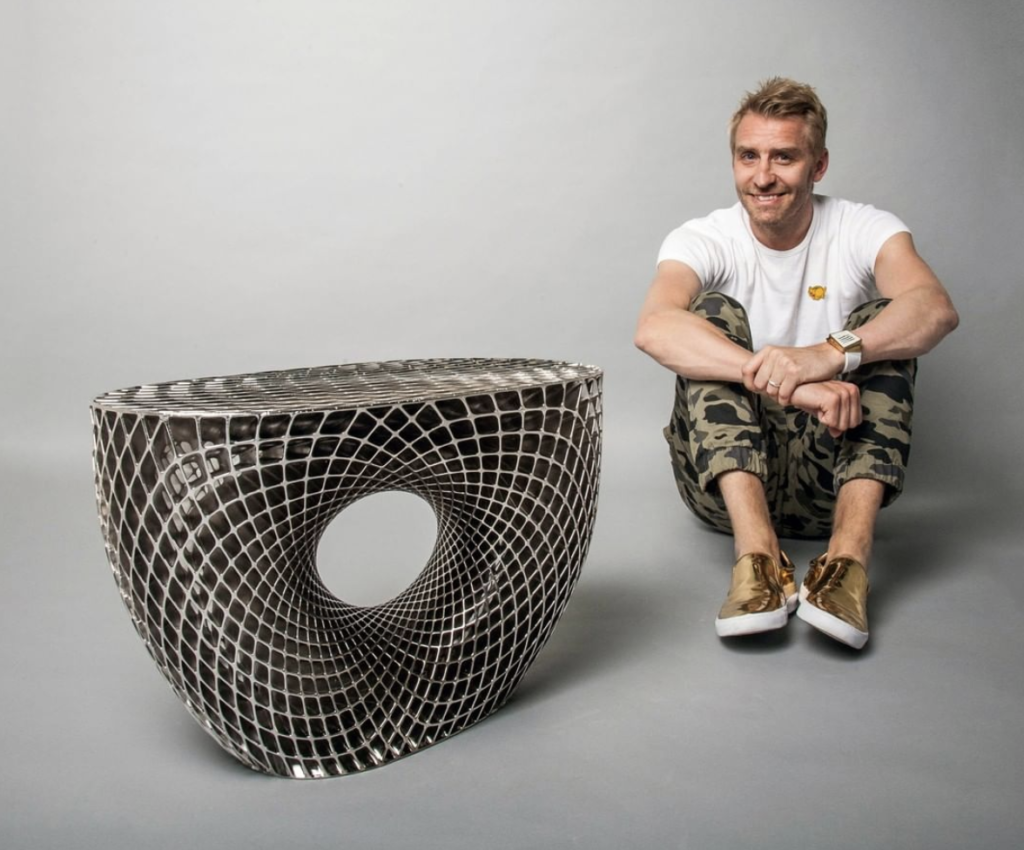
Do you really think that we’ll see open sharing of information in your value networks?
let’s run an experiment and see. I will give the industry an open source application for free, which will create an opportunity for selling 30bln kilos of material during the next 10 years. Even if I wanted to own this opportunity by myself, there is no way I would be able to pull it together under one entity. I am much more in favor for owning 1% of something very large rather than owning 100% of nothing. The application is for one of the biggest challenges humanity is facing today and if we as people don’t collectively come together on these issues, we will not prevail as a species.
Lessons Learned for Future Emergencies
Traditionally the magic sauce whether it be application engineering, machine settings or additives were closely held secrets?
yes of course. When people are working on an incrementally “different” solution to their neighbor and are worried, that somebody is going to steal their toy, yes that is the crocs of the biggest challenges the industry is having. Imagination, creativity and being able to think bigger than themselves.
Isn’t it a bit naive to be a market participant with a lot of knowledge and to then just give it away?
On the contrary. First grow the pie. Give your basics away for free and when the pie is big enough, far bigger challenges will emerge, which will get solved by the experts. The bread crumbs always lead to the thought leaders who are already one step ahead of you. In other words, if that one thing you discovered, is the best you can do and you hold onto it, you are not thinking big enough.
How 3D Printing Responded to COVID-19
Will we see competing networks divide our industry?
I truly hope so. A lot of the chemical companies have realized that building ecosystems is the only way for them to innovate. They call them ecosystems, I just like to call ours value networks.
HP and the Pandemic Manufacturing Shift
The post Janne Kyttanen on 3D Printing in 2020 appeared first on 3DPrint.com | The Voice of 3D Printing / Additive Manufacturing.
from Your daily news from 3DPrint.com http://bit.ly/2VIxeIy
Frequently Asked Questions
How did 3D printing help during COVID-19?
During the COVID-19 pandemic, 3D printing enabled rapid production of critical medical supplies including face shields, ventilator components, nasal swabs, and PPE. Distributed manufacturing allowed makers worldwide to produce items locally without waiting for traditional supply chains.
What was the pandemic digital manufacturing shift?
The pandemic accelerated adoption of digital manufacturing including 3D printing, as companies sought more resilient supply chains. Organizations shifted from centralized to distributed production, using digital files to produce parts locally on demand.
Can 3D printing supply chains be resilient in emergencies?
Yes, 3D printing provides supply chain resilience through distributed manufacturing — designs can be shared digitally and produced anywhere with compatible equipment, eliminating the need for physical inventory and shipping of parts.
📌 Related Articles
- The Current State of Metal 3D Printing in 2020
- Best Budget 3D Printer Upgrades That Actually Improve Print Quality: Belts, Springs, Hotends & More
- 3D Printing News: Multi-Material Breakthrough and Aerospace Market Boom
- Best 3D Printer Upgrades That Actually Improve Print Quality: Complete 2026 Guide
- 3D Printing Tungsten Carbide: How Hot-Wire Laser Technology Creates Metal Harder Than Steel