
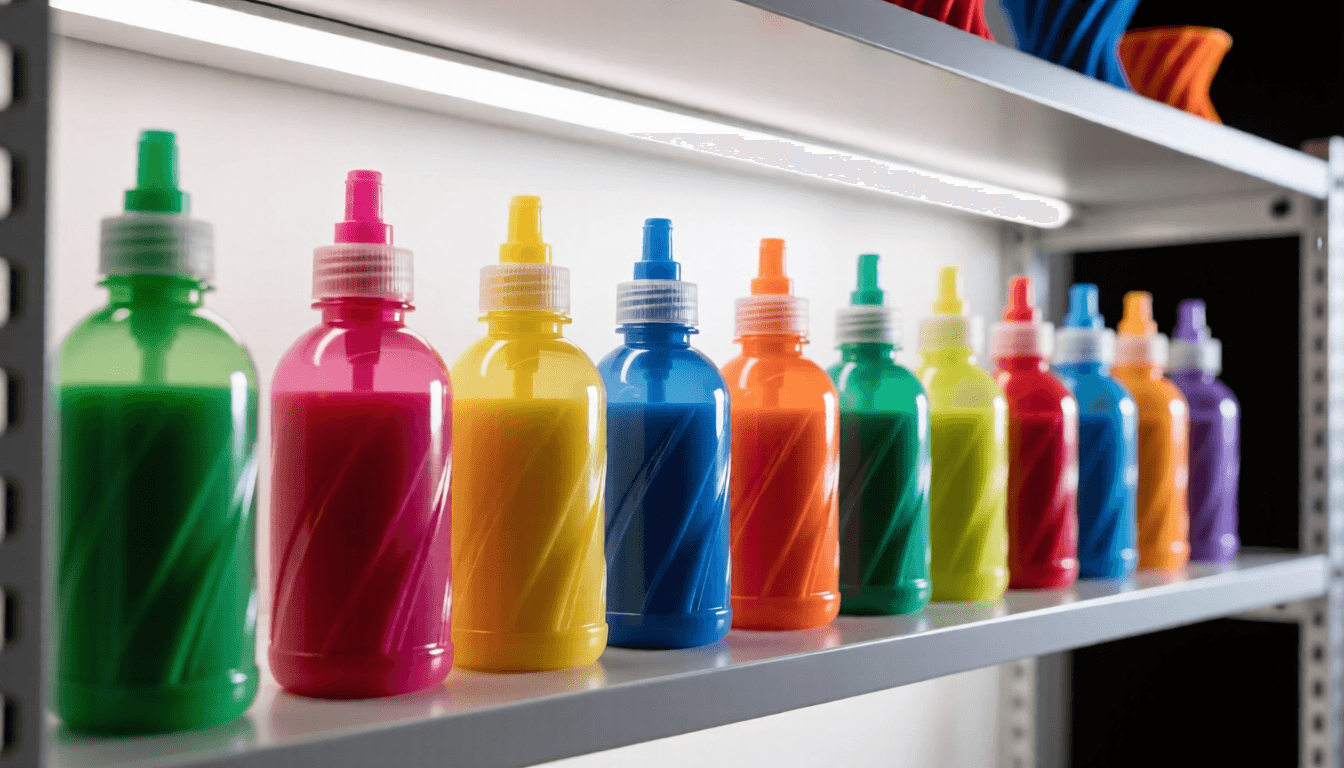
What to Look for in Resins for schools
Resin printing in education is more complex than FDM due to chemical handling requirements. However, for advanced STEM, art, and engineering courses, resin provides unmatched capabilities.
Age requirement: 16+ with demonstrated safety compliance. Younger students can observe demonstrations and handle fully cured prints.
Dedicated ventilated space is non-negotiable. Fume hood or vented enclosure, chemical-resistant surfaces, proximity to hand-washing facilities.
Water-washable resins are recommended for schools — they eliminate IPA from the washing step, significantly improving safety and reducing costs while still requiring proper PPE.
Resin Types and Properties
Standard resin — Hard, slightly brittle, excellent detail. Many colors. $25-40/liter. Good for display models and learning.
Water-washable resin — Cleans with water instead of IPA. Still toxic before curing — “water-washable” refers to cleanup, not safety. $30-45/liter.
ABS-like resin — Less brittle, some flex before breaking. Better for handled, dropped, or stressed parts. $30-50/liter.
High-temp resin — HDT above 200°C for under-hood prototypes and metal casting patterns. Requires specific printer configurations.
Safety and Best Practices
Set up your resin station before the printer arrives: ventilated area, silicone mat, nitrile gloves (100+ box), safety glasses, wash station (two containers), paper towels, and UV curing station.
Always wear nitrile gloves when handling anything touching uncured resin. Latex doesn’t provide adequate chemical resistance. If resin contacts skin, wash immediately with soap and water — never use solvents on skin.
Cure all waste before disposal. Uncured resin is hazardous waste; cured resin is inert solid. Pour leftovers into a clear container and UV-expose for a few hours.
Hollow large prints (1.5-2mm walls with drain holes) to save 40-60% resin and reduce suction-related failures.
Frequently Asked Questions
Is resin printing safe at home?
Safe with precautions: ventilated area, nitrile gloves always, safety glasses, dedicated wash/cure station. Never touch uncured resin with bare skin.
How long do resin prints last?
Properly cured: years. UV exposure is the main degradation factor. Use UV-resistant clear coat for display pieces or choose UV-stable formulations.
Real cost of resin printing?
Printer: $200-500. Resin: $30-100/liter. IPA: $15/gallon. Gloves: $10/box. Wash/cure station: $50-100. Per-print: $0.50-5 depending on size and resin.
How long does a resin print take?
Depends on layer count, not complexity. A 30mm miniature at 0.05mm layers: ~1.5-3 hours. Full build plate takes the same time as one part.
FEP film lifespan?
3-6 months regular use or ~20-30 daily prints. Replace when cloudy, scratched, or when specific areas consistently fail. Premium nFEP lasts longer.
How to Choose the Right Option
For educational settings, prioritize safety (enclosed build chamber), ease of use (auto-leveling), and low maintenance. PLA-only printers are ideal — no toxic fumes, no heated bed required. Budget for 2-3 printers per classroom and assign students in pairs.
Decision tip: The Bambu Lab A1 Mini or Flashforge Finder 3 are excellent classroom choices: enclosed, easy to use, and safe. Budget $300-500 per unit plus $200/year in filament per printer.
- Standard Resin — Choose if: best detail resolution available. Skip if: very brittle — snaps easily.
- ABS-like Resin — Choose if: stronger than standard resin. Skip if: more expensive than standard.
- Tough Resin — Choose if: highest mechanical strength. Skip if: most expensive resin type.
- Water-Washable Resin — Choose if: no ipa needed for cleaning. Skip if: weaker than standard resin.
- Flexible Resin — Choose if: rubber-like flexibility. Skip if: very expensive.
Pros and Cons by Product
Standard Resin
- Best detail resolution available
- Wide color selection
- Affordable for resin printing
- Easy to work with
- Great for miniatures and jewelry
- Very brittle — snaps easily
- Requires IPA for cleaning
- Toxic fumes during printing
- UV-sensitive — yellows over time
- Needs post-curing for full strength
ABS-like Resin
- Stronger than standard resin
- Better impact resistance
- Less brittle after curing
- Good for functional prototypes
- Easier to sand and post-process
- More expensive than standard
- Limited color options
- Still requires IPA cleaning
- Odor during printing
- Needs proper ventilation
Tough Resin
- Highest mechanical strength
- Withstands functional loads
- Good for engineering prototypes
- Resistant to deformation
- Professional-grade results
- Most expensive resin type
- Very viscous — harder to pour
- Limited color options
- Requires longer curing times
- Can be difficult to remove supports
Water-Washable Resin
- No IPA needed for cleaning
- Easier and safer cleanup
- Good detail quality
- Less odor than standard resin
- Beginner-friendly
- Weaker than standard resin
- Absorbs moisture over time
- Limited shelf life once opened
- Can leave residue in water
- Still requires UV post-curing
Flexible Resin
- Rubber-like flexibility
- Great for gaskets and seals
- Impact-absorbing properties
- Unique applications not possible with rigid resins
- Good for wearables and grips
- Very expensive
- Difficult to print consistently
- Limited color options
- Longer cure times
- Not compatible with all printers
Related Comparisons
- Best resins for beginners
- Best resins for hobbyists
- Best resins for professionals
- Best resins for small business
- Best printers for schools
- Best filaments for schools
Product Comparison
Where to Buy
Find Standard Resin on Amazon
Find Water Washable Resin on Amazon
Find Biocompatible Resin on Amazon
Resin 3D Printing in Education
While FDM printers dominate educational settings, resin printing has a growing role in advanced curricula — especially for engineering, art, dental, and jewelry programs where fine detail is essential. However, the safety requirements mean resin printers need dedicated, well-ventilated spaces with proper PPE protocols.
For schools considering resin printing: budget for the complete ecosystem (printer + wash station + cure station + ventilation + PPE), not just the printer itself. Water-washable resins reduce (but don’t eliminate) the handling risks. Start with one printer for advanced students before scaling up.
Final Recommendations
Your choice should be based on: (1) Your specific use case and requirements, (2) Your budget and willingness to invest, (3) Your technical skill level.
Disclosure: As an Amazon Associate, 3dput.com earns from qualifying purchases. This supports our independent testing and helps us provide free, detailed reviews.
Related Articles: Best filaments for schools 2026: Detailed Comparison Guide · Best resins for beginners 2026: Detailed Comparison Guide · Best resins for hobbyists 2026: Detailed Comparison Guide
Frequently Asked Questions
How did 3D printing help during COVID-19?
During the COVID-19 pandemic, 3D printing enabled rapid production of critical medical supplies including face shields, ventilator components, nasal swabs, and PPE. Distributed manufacturing allowed makers worldwide to produce items locally without waiting for traditional supply chains.
What was the pandemic digital manufacturing shift?
The pandemic accelerated adoption of digital manufacturing including 3D printing, as companies sought more resilient supply chains. Organizations shifted from centralized to distributed production, using digital files to produce parts locally on demand.
Can 3D printing supply chains be resilient in emergencies?
Yes, 3D printing provides supply chain resilience through distributed manufacturing — designs can be shared digitally and produced anywhere with compatible equipment, eliminating the need for physical inventory and shipping of parts.
📌 Related Articles
- ABS 3D Printing Settings Guide: Temperature, Enclosure, and Cooling for Strong Parts
- 3D Printing Safety Equipment Guide: Respirators, Gloves, and Ventilation for 2026
- Best 3D Printer Upgrades That Actually Improve Print Quality: Complete 2026 Guide
- Bambu Lab A1 vs Elegoo Centauri Carbon: Full Specs Comparison & Buyer’s Guide
- Best Budget 3D Printer Upgrades That Actually Improve Print Quality: Belts, Springs, Hotends & More