
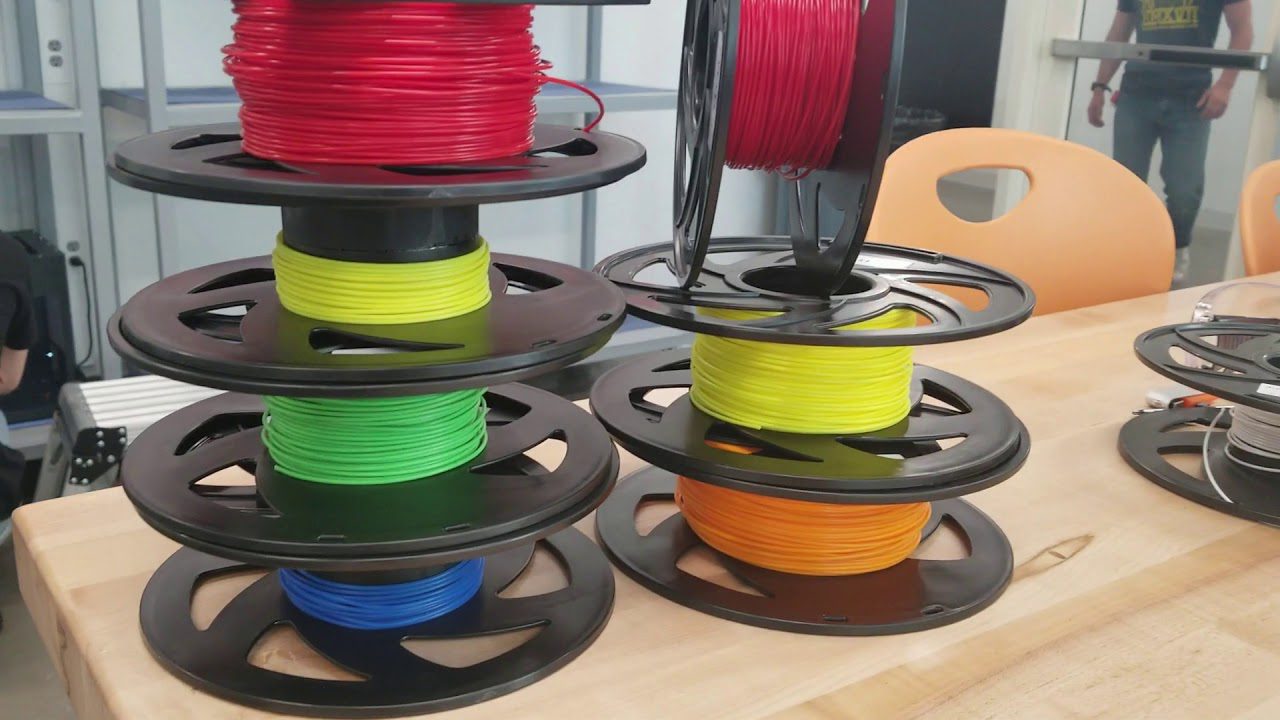
Understanding 3D Printing Filament Types
Choosing the right filament is as important as choosing the right printer. Each material has unique properties — strength, flexibility, temperature resistance, printability, and cost — that make it suitable for specific applications. This guide covers every major filament type available in 2026, with practical recommendations for when to use each one.
PLA: The Universal Starting Point
PLA (Polylactic Acid) is made from renewable resources (corn starch, sugarcane) and prints at 190-220°C. It’s the most forgiving filament: minimal warping, excellent bed adhesion, low odor, and consistent results on any printer. Available in hundreds of colors and finishes (matte, silk, transparent, carbon-fiber-filled).
Best for: Display models, prototyping, learning to print, decorative objects. Limitations: Low heat resistance (softens at 55°C), brittle, degrades outdoors. Cost: $15-25/kg.
PETG: The Step Up
PETG combines PLA’s ease of printing with better strength, heat resistance (up to 80°C), and chemical resistance. It’s slightly stringier than PLA (needs retraction tuning) but produces functional parts that survive real-world use. The go-to material for anything that needs to be stronger than PLA.
Best for: Functional parts, outdoor items, mechanical components, food-contact applications (with food-safe filament). Cost: $18-28/kg.
TPU: Flexible Printing
TPU (Thermoplastic Polyurethane) produces flexible, rubber-like parts. Phone cases, drone bumpers, gaskets, wearable items, and vibration dampeners all require TPU. Prints at 210-230°C with slow speeds (30-50mm/s). A direct-drive extruder is strongly recommended.
Shore hardness matters: 95A (firm, like a shoe sole), 85A (medium, like a rubber band), 70A (soft, like a gel). Match hardness to your application. Cost: $22-35/kg.
Engineering Materials
ABS (220-250°C, enclosed): Strong, impact-resistant, heat-stable. Emits styrene — ventilate. The standard for automotive and functional parts.
ASA (240-260°C, enclosed): UV-resistant ABS alternative. The choice for outdoor parts that must survive years of sun exposure without yellowing.
Nylon/PA (240-270°C, dry box): Extremely tough, self-lubricating, wear-resistant. Gears, bearings, living hinges. Must be dried before printing.
Polycarbonate (270-310°C, heated enclosure): Maximum heat resistance (147°C glass transition). The strongest common filament. Requires enclosed, heated chamber.
Carbon-fiber composites: Stiffer versions of PETG, nylon, or polycarbonate. Excellent for structural parts. Requires hardened steel nozzle. Cost: $35-80/kg.
Specialty Filaments
Silk PLA — Shimmering metallic finish without post-processing. Prints like regular PLA. Matte PLA — Hides layer lines beautifully, ideal for miniatures. Wood-fill — Contains wood particles, sandable and stainable. Metal-fill — Metal particles for weight and polishability. Color-changing — Transitions with temperature.
Frequently Asked Questions
What filament should a beginner start with?
PLA. No contest. It’s the most forgiving, cheapest, and widely available. Once you can consistently produce good PLA prints, graduate to PETG, then TPU, then engineering materials. Don’t skip steps — each material teaches you skills needed for the next.
How should I store filament?
In sealed bags with desiccant packets, or in a dry box with humidity indicator. PLA absorbs moisture slowly (weeks), nylon absorbs it in hours. A food dehydrator ($30-50) or dedicated filament dryer restores moist filament. Always dry nylon and PETG before printing.
Does filament brand matter?
Yes, significantly. Quality brands (Polymaker, eSUN, Overture, Hatchbox, MatterHackers) maintain ±0.02mm diameter tolerance and consistent color. No-name brands may vary ±0.05-0.10mm, causing under-extrusion, over-extrusion, and jams. The $3-5/kg premium for quality filament saves hours of troubleshooting.
Choosing the right 3D printing filament is the first—and most critical—decision in any fabrication project. The material you select determines whether your part will be strong enough for its intended use, whether it’ll warp during printing, and how difficult the entire process will be. With dozens of filament types on the market, each with distinct properties and requirements, this guide cuts through the noise to give you clear, actionable information.
Why Filament Selection Matters
Many beginners assume all 3D printing materials behave similarly, but this couldn’t be further from the truth. PLA prints easily but becomes soft in a hot car. PETG offers excellent durability but requires precise temperature control. ABS needs an enclosure but produces parts that can withstand high temperatures.
- Printing temperature – Affects extruder requirements and failure rates
- Bed adhesion behavior – Warping tendencies and surface needs
- Mechanical properties – Tensile strength, flexibility, impact resistance
- Chemical resistance – Exposure to solvents, fuels, or moisture
- Thermal resistance – Maximum operating temperature before deforming
- Environmental impact – UV stability, outdoor weathering, biodegradability
PLA (Polylactic Acid)
Difficulty: Beginner
Print Temperature: 190–220°C
Bed Temperature: 50–60°C (optional)
Enclosure Required: No
Strength: Moderate
Flexibility: Low (brittle)
Heat Resistance: Low (~60°C)
PLA is the most popular filament because it prints easily, bonds well to build surfaces, and produces detailed results with minimal tuning. Made from renewable resources like cornstarch, it is biodegradable under industrial conditions.
When to Use PLA
- Decorative items and art
- Visual prototypes
- Educational models
- Indoor fixtures
- Low-stress mechanical parts
PETG (Polyethylene Terephthalate Glycol-Modified)
Difficulty: Intermediate
Print Temperature: 230–250°C
Bed Temperature: 70–85°C
Enclosure Required: No
Strength: High
Flexibility: Moderate
Heat Resistance: Moderate (70–80°C)
PETG combines ease of printing with excellent durability. It’s less brittle than PLA and far more impact resistant, making it ideal for functional parts.
- Functional prototypes
- Outdoor items
- Watertight containers
- Tool handles
- Protective covers
ABS (Acrylonitrile Butadiene Styrene)
Difficulty: Intermediate to Advanced
Print Temperature: 230–260°C
Bed Temperature: 90–110°C
Enclosure Required: Yes
Heat Resistance: High (~100°C)
ABS is a durable engineering plastic suited for real-world use. It tolerates higher temperatures than PLA or PETG but requires controlled printing conditions.
- Mechanical parts
- Automotive components
- Tool housings
- High-temperature applications
ASA (Acrylonitrile Styrene Acrylate)
ASA offers nearly identical strength to ABS but with excellent UV resistance, making it the best option for outdoor prints.
- Outdoor brackets and fixtures
- Automotive exterior parts
- Garden equipment
- Marine environments
TPU / TPE (Flexible Filaments)
Difficulty: Intermediate
Flexibility: Very High
Best with: Direct-drive extruders
TPU behaves like rubber, making it perfect for parts that need cushioning or vibration dampening.
- Phone cases
- Wearable straps
- Shock mounts
- Gaskets and seals
Nylon (Polyamide)
Nylon is incredibly strong and impact resistant but extremely sensitive to moisture. See also: ABS 3D Printing Settings Guide: Temperature, Enclo…. Always dry it before printing.
- Gears and hinges
- High-stress components
- Jigs and fixtures
- Mechanical assemblies
Polycarbonate (PC)
Polycarbonate is one of the strongest materials available for FDM printing. It requires high temperatures and an enclosed printer.
- High-temperature parts
- Industrial components
- Safety equipment
- Automotive applications
Carbon Fiber-Filled Filaments
These materials blend chopped carbon fibers with a base plastic to dramatically increase stiffness.
- Structural components
- Drone frames
- Vehicle parts
- High-rigidity fixtures
Wood-Filled Filaments
Wood-filled PLA produces prints that look and feel like real wood and can be sanded or stained.
- Decorative pieces
- Architectural models
- Crafts
- Display prototypes
Quick Comparison Table
| Filament | Ease | Strength | Heat Resistance | Best For |
|---|---|---|---|---|
| PLA | ★★★★★ | ★★★ | ★ | Decorative, beginner projects |
| PETG | ★★★★ | ★★★★ | ★★ | Functional parts |
| ABS | ★★★ | ★★★★ | ★★★★ | Mechanical parts |
| ASA | ★★ | ★★★★ | ★★★★ | Outdoor prints |
| TPU | ★★★ | ★★★ | ★★ | Flexible items |
| Nylon | ★★ | ★★★★★ | ★★★★ | Engineering parts |
| Polycarbonate | ★ | ★★★★★ | ★★★★★ | Extreme durability |
Bottom Line Recommendations
If you’re just starting out, begin with PLA. Move to PETG for functional parts, and only attempt ABS, ASA, Nylon, or Polycarbonate once your printer is fully dialed in.
- Decorative: PLA
- Functional: PETG
- Outdoor: ASA
- Maximum strength: Polycarbonate or Carbon Fiber
- Flexible: TPU
- Mechanical: Nylon
Last updated: February 12, 2026
Where to Buy Filament
Disclosure: Some of the links below are affiliate links. If you make a purchase, we may earn a commission at no extra cost to you. This helps support this site.
- ABS: Hatchbox
- ASA: Hatchbox, eSUN, Overture
- Carbon Fiber: Hatchbox, eSUN, Overture
- Nylon: Hatchbox, eSUN, Overture
- PC: Hatchbox, eSUN, Overture
- PETG: Hatchbox
- PLA: Hatchbox
- TPU: Hatchbox
These links go to Amazon with our affiliate tag. If you prefer to support local retailers or buy directly from manufacturers, we encourage that as well!
Frequently Asked Questions
What is the best 3D printing filament for beginners?
PLA is the best starting filament — it prints easily at 190-220°C without an enclosure and produces good results. Once comfortable, PETG offers better strength and temperature resistance for functional parts.
How do I choose the right filament?
Consider the application: PLA for display models, PETG for functional parts, ABS/ASA for heat/sunlight exposure, TPU for flexible parts, and specialty filaments for engineering applications. Each has specific printer requirements.
What temperature should I print different filaments at?
PLA: 190-220°C nozzle / 50-60°C bed. PETG: 220-250°C / 70-80°C. ABS: 230-260°C / 100-110°C (enclosure needed). Nylon: 240-270°C / 70-90°C. Always check manufacturer recommendations for specific brands.
Where to Buy
📌 Related Articles
- Creality Creality Ender 3 V3 Plus vs Creality Ender 3 Pro: Full Specs Comparison & Buyer’s Guide
- ABS 3D Printing Settings Guide: Temperature, Enclosure, and Cooling for Strong Parts
- Best 3D Printer Upgrades That Actually Improve Print Quality: Complete 2026 Guide
- 3D Printing Safety Equipment Guide: Respirators, Gloves, and Ventilation for 2026
- Bambu Lab A1 vs Elegoo Centauri Carbon: Full Specs Comparison & Buyer’s Guide