
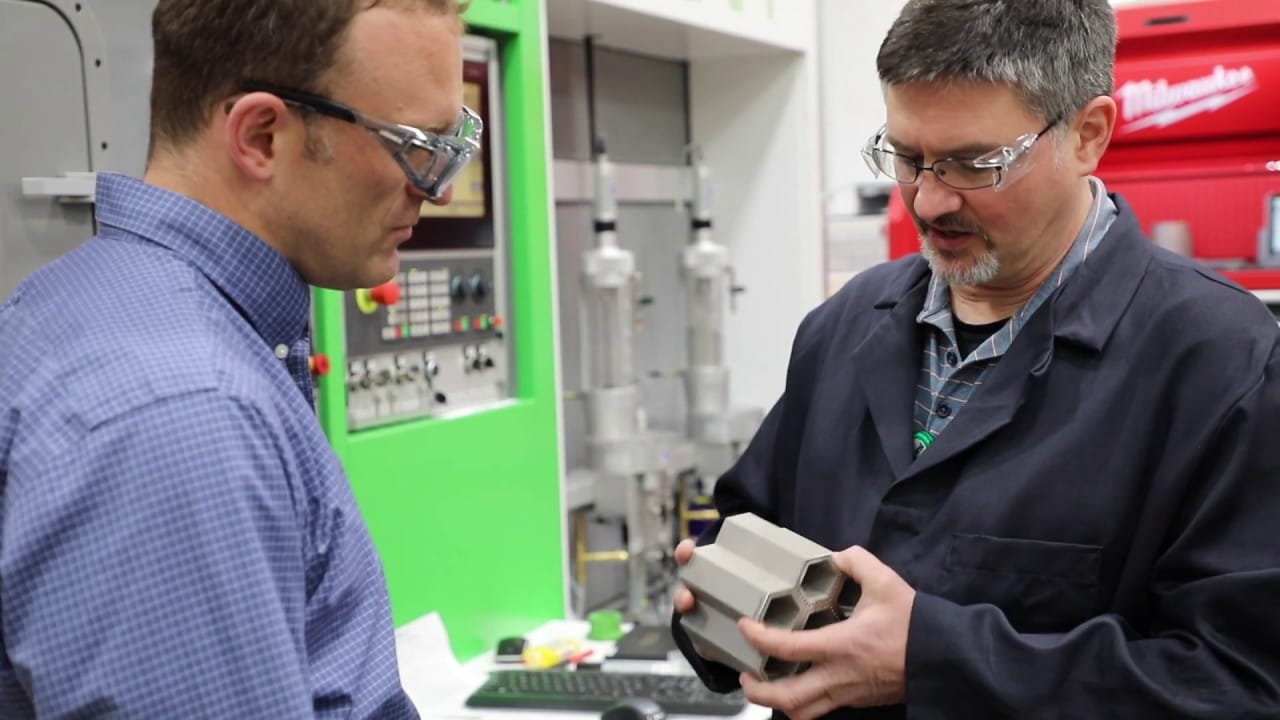
A microreactor is a small container with two important components: a stir bar to mix chemical samples, and a thin needle for spraying and ionizing the samples for analysis with a mass spectrometer. The device is a new, smaller type of nuclear reactor that has the versatility to be used in many energy applications, and we’ve seen plenty of research regarding the 3D printing of microreactors. In fact, Purdue University’s College of Engineering has just been awarded an $800,000 grant from the US Department of Energy (DoE) in order to work on an important project that should speed up introduction of a 3D printed microreactor.
The funding came specifically from the DoE’s Nuclear Energy University Program, or NEUP, which was created more than ten years ago in order to consolidate economic support for universities under the same initiative, as well as to integrate university research within the Office of Nuclear Energy’s technical programs.
Additive Manufacturing in the Automotive Industry
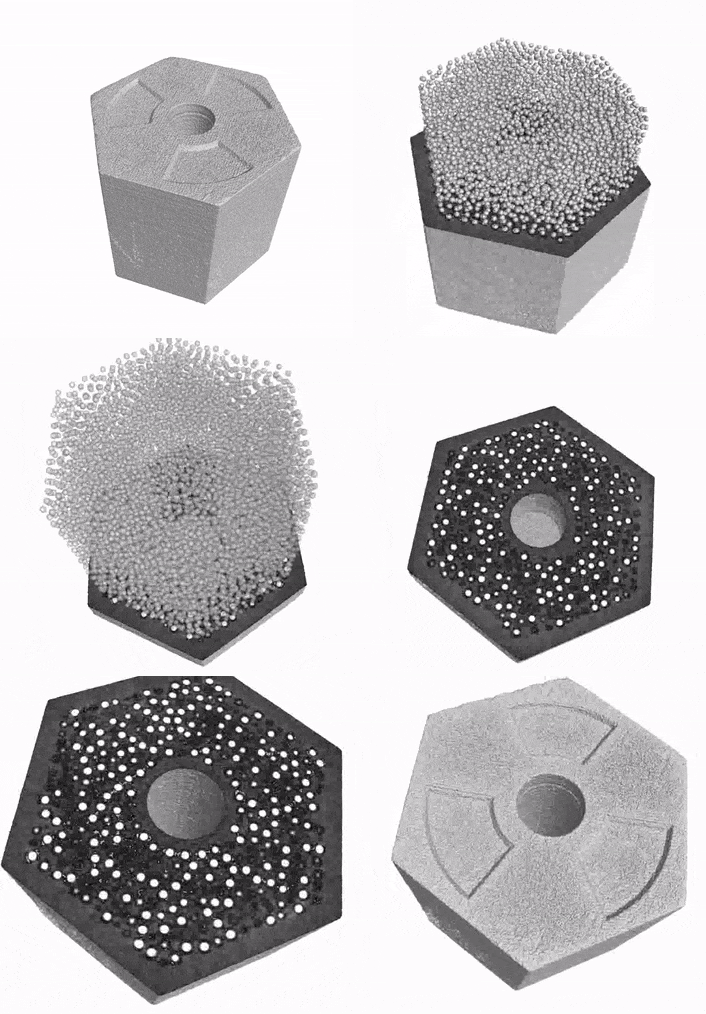
(Image courtesy of NEUP)
Earlier this summer, the DoE announced that it would be awarding more than $65 million in order to advance nuclear energy research at laboratories and universities across the United States. Thanks to this government investment, Purdue will be positioned to contribute to the DoE’s Oak Ridge National Laboratory (ORNL) Transformational Challenge Reactor (TCR) Demonstration Program, which is on a mission to build the first fully 3D printed microreactor by the year 2023. The overall goal is to find helpful solutions for the long timelines and sky-high costs that threaten nuclear energy’s future. This 3D printed microreactor will also be the first advanced reactor in over four decades that will operate on US soil.
“Purdue Engineering has ideal strengths to support the mission of the Department of Energy on the development of additively manufactured microreactors. We bring together deep expertise and collaborative capabilities, encompassing manufacturing, nuclear engineering, materials engineering, environmental engineering, AI and data analytics, nuclear reactors modeling and simulation, and systems engineering,” said project leader John W. Sutherland, the Fehsenfeld Family Head of Environmental and Ecological Engineering. “In this project, we’ll be blending fundamental science and engineering in a very complex and dynamic environment.”
Prototyping and Rapid Iteration
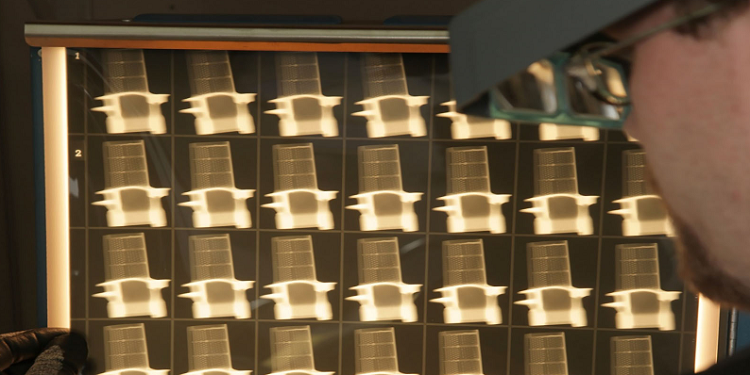
Purdue will help by creating and demonstrating a novel artificial intelligence method that will help ensure that the components for the 3D printed microreactor are of good quality.
Hany Abdel-Khalik, technical lead for the project and associate professor of nuclear engineering, explained, “Microreactors introduce a transformational trend to the nuclear industry – a trend that enables more streamlined construction and deployment processes to address the nation’s energy challenges that cannot be overcome solely with large-scale nuclear reactors.
End-Use Parts and Production Applications
“Purdue will fill a technological gap in the nuclear industry, reflecting a broader trend of applying AI strategies to support additive manufacturing (AM). AM enables designs to be adjusted during manufacturing, greatly decreasing production cost and time. Our work is aimed at driving widespread adoption of additively manufactured reactor components by using an AI-powered software system to ensure safety and reliability.”
Other members on the Purdue team are Steven Shade, the Ball Brothers Director of Advanced Manufacturing Initiatives, who is also affiliated with Environmental and Ecological Engineering, and materials engineering professor Xinghang Zhang, a co-principal investigator with a background in advanced manufacturing.
Material Performance Requirements
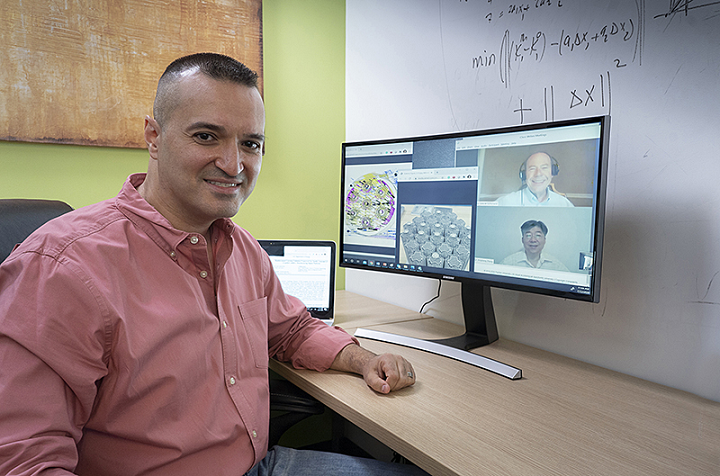
Hany Abdel-Khalik meets virtually with John W. Sutherland (top on screen), and Xinghang Zhang. (Image courtesy of Purdue Engineering)
The project the team is working on is meant to drive adoption of 3D printing, AI concepts, and computation materials modeling in fabricating components for nuclear reactors, in order to lower development time and manufacturing costs, provide convenient and reliable access to nuclear power, and estimate safety risks in a realistic manner. According to Xhang, Purdue’s solution will use an advanced form of machine learning called reinforcement learning, which works to maximize cumulative rewards by looking at how software agents should act in an environment in order to achieve the rewards.
The team will use reinforcement learning to regulate the selection of 3D printing process parameters, like melting temperature and print speed, in order to guide decision making and train the AI models. See also: Prusa Research Mini+ vs Prusa MK4: Full Specs Comp…. So this funding from the DoE will definitely help.
“Synchronized application of additive manufacturing and artificial intelligence techniques are key to providing the most data-rich and cost-effective nuclear component qualification process. This is one of the key goals of DOE-NE’s TCR program: using modern technology to deliver a new and better way to deploy nuclear energy,” stated Kurt Terrani, director of the TCR program at ORNL.
Industry Adoption and Future Trends
“The program is engaging the industry, the regulator and, in this case, universities in order to ensure an optimal approach is developed and adopted in widespread fashion. The technical strength of the Purdue team will shore up our ability to deliver on these goals.”
(Source: Purdue University)
The post DoE Awards $800,000 to 3D Printed Microreactor Project appeared first on 3DPrint.com | The Voice of 3D Printing / Additive Manufacturing.
from 3DPrint.com | The Voice of 3D Printing / Additive Manufacturing https://bit.ly/2ZICGfW
Additive Manufacturing in the Automotive Industry
Related Articles: Project Carpaccio: MeaTech Makes Real 3D Printed Meat · US Air Force 3D Printed Runway Project Receives Phase II SBIR Funding · NASA Awards Contract to Build 3D Printed Batteries in Space
Frequently Asked Questions
How is 3D printing used in the automotive industry?
Automotive manufacturers use AM for prototyping, tooling, jigs and fixtures, and increasingly for end-use parts. Applications include custom brackets, air ducts, interior components, and even structural parts in low-volume production vehicles.
📌 Related Articles
- Best 3D Printer Upgrades That Actually Improve Print Quality: Complete 2026 Guide
- Prusa Research Mini+ vs Prusa MK4: Full Specs Comparison & Buyer’s Guide
- 3D Printing Safety Equipment Guide: Respirators, Gloves, and Ventilation for 2026
- Bambu Lab P1S vs Bambu Lab P2S: Full Specs Comparison & Buyer’s Guide
- Best Budget 3D Printer Upgrades That Actually Improve Print Quality: Belts, Springs, Hotends & More