
Our coral reefs are dying. Marine scientists have known this fact for a long time, and have been trying to reverse the problem for decades. The death of the coral reefs spells an end for most of our oceans’ ecosystems, which will directly affect humankind. The coral reefs’ demise could be the beginning of the end for much of life on Earth, so saving them has become a priority for those who fully grasp the severity of the situation.
Although our industrial advances have contributed to climate change and species extinction, we could use some of the same technology to stop or even reverse the damage we’ve caused. Scientists are now using 3D printing to create spaces for new coral to thrive, buying the ecosystem time to rebalance.
⚡ Quick Answer Box
Can 3D printing save coral reefs? Yes, 3D printing is creating artificial reef structures that provide homes for coral polyps and marine life. These structures mimic natural reef formations and offer coral a foundation to grow on, helping restore damaged ecosystems. Projects worldwide use various materials including concrete, clay, calcium carbonate, and bioprinted hydrogels to create these artificial habitats.
Key Benefits: Faster reef restoration (centuries vs. years), customizable designs for local species, protection from predators, and cost-effective deployment at scale.
Current Status: Over 7 major projects are actively deploying 3D-printed reefs, with successful coral growth observed in locations from the Maldives to the Caribbean and Mediterranean.
Comparison: 3D Printing Methods for Coral Restoration
| Material/Method | Key Features | Pros | Cons | Used By |
|---|---|---|---|---|
| 3D-printed Concrete Molds | Large-scale molds cast in concrete | Durable, scalable, cost-effective | Heavy to deploy, limited design flexibility | Reef Design Lab |
| Calcium Carbonate | Direct printing from coral skeleton material | Biocompatible, natural feel for polyps | Limited structural strength, expensive | Objects and Ideograms |
| Clay/Terra Cotta Tiles | 3D printed tiles for surface attachment | Protects from sedimentation, lightweight | Limited to surface applications | University of Hong Kong |
| Bioprinted Hydrogels | Living cell-infused polymer gels | Mimics living coral, symbiotic properties | Complex process, early-stage research | Cambridge & UC San Diego |
| 3D-Printed Settlement Substrates | Self-attaching seeding units | High survival rate, larva-friendly | Requires larva collection, timing-sensitive | SECORE International |
Companies and Organizations Lending Aid to the Effort
To know how we can fix the reefs, we first must understand why they’re dying. Global warming is contributing to our oceans growing hotter every year. The rising temperatures are harmful to coral, killing the cells that make them colorful before killing the coral itself [1]. The warmer conditions also contribute to the spread of disease and higher carbon monoxide rates, all dangerous to the surrounding ecosystem [2]. Creating new coral is one way we can slow this cycle.
Here are some examples of companies, organizations and projects making progress happen.
Reef Design Lab
This nonprofit captured media attention when it brought the largest artificial coral reef to the Maldives. The Reef Design Lab team began by using computer modeling software to copy reefs that are native to the region.

An artificial reef made from concrete elements cast from 3D printed molds. Image courtesy of Reef Design Lab.
The designers then relied on 3D printing to make 220 molds that were cast in concrete. Once those pieces arrived at their destination, divers assembled them and adhered coral fragments to each piece. Researchers hope the coral will eventually grow across the whole infrastructure.
XtreeE and Seaboost
3D printing company XtreeE and Seaboost, an organization specializing in the ecological design of marine structures, collaborated to create the X-Reef, which mimics the Coralligenous ecosystem of the Mediterranean.
That this natural habitat takes several hundred years to form is perhaps the most notable thing about this achievement [3]. 3D printing shortens that time immensely. Moreover, this outcome showed that the technology tackled the rocky characteristics of the reef without issues.
Objects and Ideograms
Objects and Ideograms is a design workshop based in the United States that launched the Coral Carbonate project. It focuses on printing structures from calcium carbonate for the living polyps that call coral reefs their home. Calcium carbonate is also a component of natural coral skeletons [4].
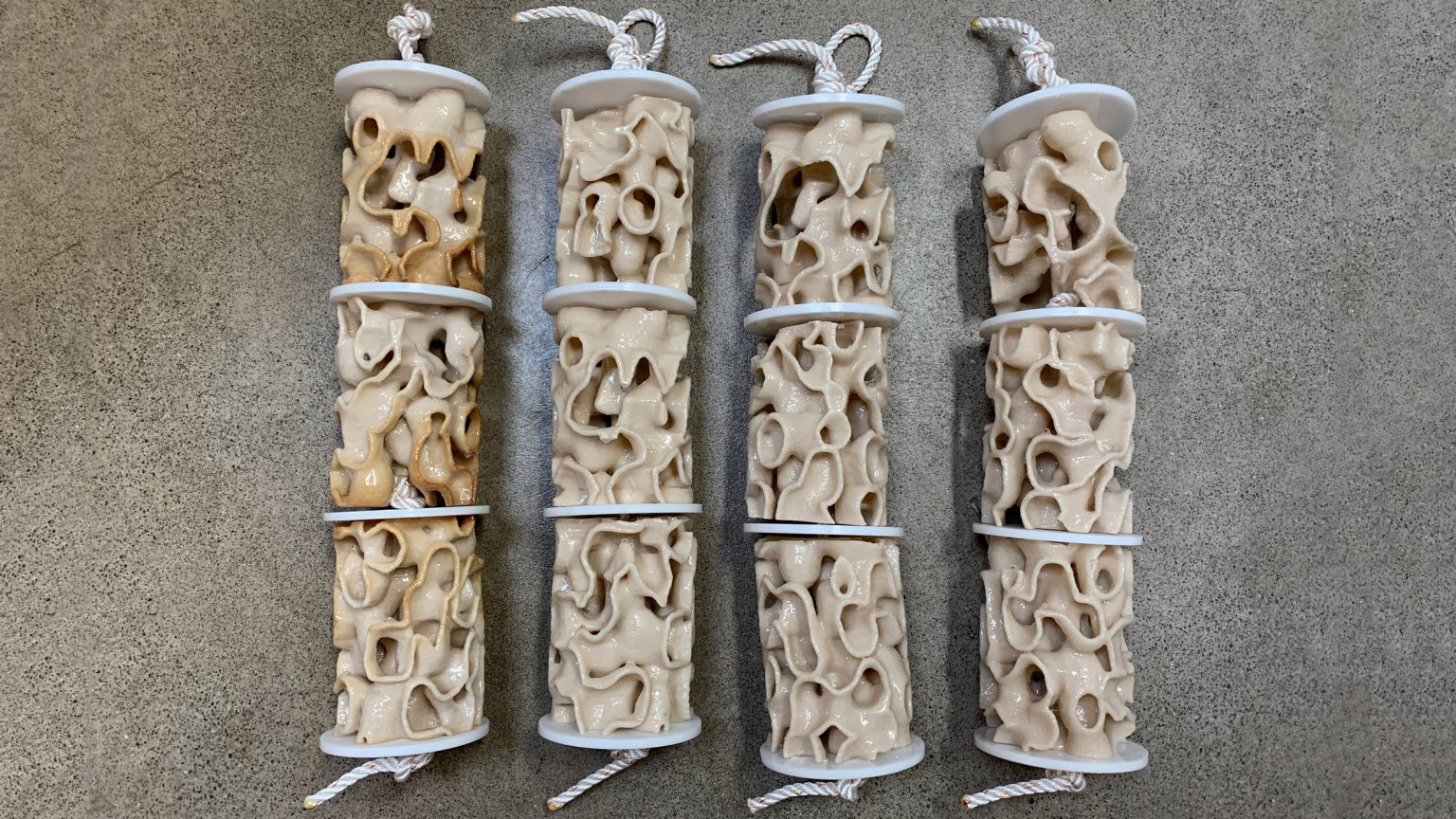
Imitation reefs 3D printed from calcium carbonate. Image courtesy of Objects and Ideograms.
Each piece features a design that allows embedding pieces of young coral to the surface. The team involved in this work noted that, in addition to helping with coral restoration, these printed objects could serve as homes for fish or act as material to promote algae growth.
The University of Hong Kong
Architects and marine scientists also teamed up for an initiative at the University of Hong Kong. The approach uses 3D printing to create tiles that attach to reefs and improve their chances of survival.

Clay tiles 3D printed by the University of Hong Kong to stimulate coral growth. Image courtesy of the University of Hong Kong.
The terra cotta pieces cover approximately 40 square meters associated with three sites within Hong Kong’s Hoi Ha Wan Marine Park. They safeguard against sedimentation, a significant threat to coral reefs [5]. They also allow broken fragments of coral to reattach to something substantial and get a second chance to thrive. They would likely not survive without that support.
SECORE International
This effort seeks to reduce the costs of coral restoration by using 3D-printed settlement substrates. The team dubbed them “seeding units” because they self-attach to reefs and provide an attractive shelter for the coral larvae. This setup increases the ordinarily reduced survival rate of wild coral settlers [6].
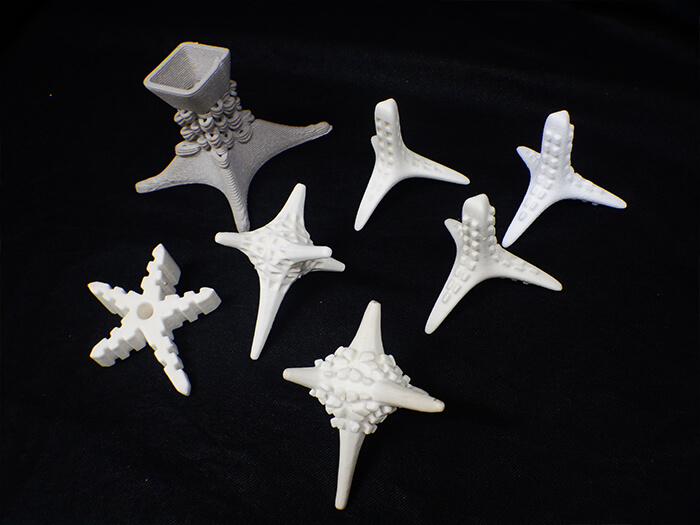
3D printed seeding units. [Image: SECORE/Valérie Chamberland]
The team came up with seven prototypes and used Emerging Objects — a design firm spun out of the University of California, Berkeley — and Boston Ceramics to develop all of them in time for trials launched in 2018. SECORE International aims to outplant a million seeding units by 2021.
The Caribbean Marine Biological Institute (CARMABI) Research Station
Many scientists look to nature to help them understand how to make 3D printing have more significant payoffs. That happened at Curaçao’s CARMABI Research Station. Marine biologist Kristen Marhaver and her colleagues used 3D printing to conduct coral choice surveys. Since the method allowed building various samples quickly, scientists could offer several options and note the statistics about the coral polyps preferences as they looked for places to anchor.
They found that corals like pink and white best, which makes sense given that those are the colors of a healthy reef [7]. Moreover, they liked surfaces with crevices and holes, which protected them from predators and trampling.
Efforts like those above are providing valuable ideas and alternatives to improving the state of our coral reefs. Some businesses like Ocean Insight and Recycling Technologies help make our oceans a better place and increase the focus on marine conservation. By teaming with large-scale 3D printing companies and initiatives, they can make their visions an efficient, cost-effective and quick reality.
University of Cambridge and University of California San Diego
Above, we’ve seen a variety of methods for producing artificial corals with 3D printing that range from pre-cast concrete, to 3D-printed concrete, to clay and calcium carbonate. Perhaps the most unique approach to the problem of saving our reefs comes from a group of researchers from the University of Cambridge and the University of California San Diego, who are using bioprinting to produce reefs. The technique has the benefit of mimicking the functional and structural traits of coral-algal symbiosis [8].
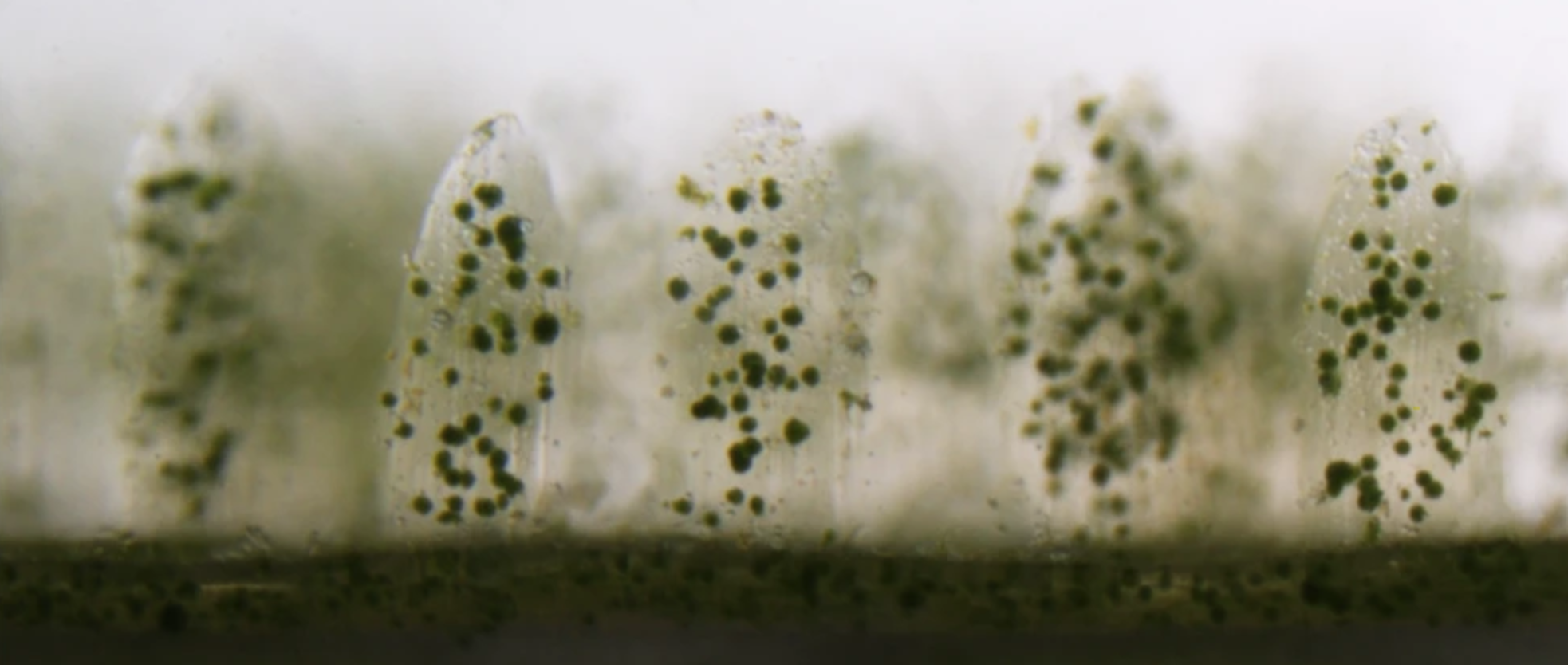 Bioprinted coral showing green algae growth. (Image courtesy of Daniel Wangpraseurt)
The team began by 3D scanning living coral and then bioprinting replicas made from polymer gels and hydrogels filled with cellulose nanomaterials to copy the optical properties of living corals. See also: Best Budget 3D Printer Upgrades That Actually Impr…. The structures were able to redistribute light in the highly efficient manner seen in actual coral, according to the researchers.
Comparison: Coral Reef Restoration Projects
| Project/Organization | Location | Method | Scale | Status | Key Innovation |
|---|---|---|---|---|---|
| Reef Design Lab | Maldives | Concrete molds | 220+ structures | Active growth | Largest artificial reef deployment |
| XtreeE & Seaboost | Mediterranean | 3D-printed concrete | X-Reef structure | Occupied by marine life | Mimics Coralligenous ecosystem |
| Objects & Ideograms | USA | Calcium carbonate | Modular units | Prototype phase | Coral skeleton material |
| University of Hong Kong | Hong Kong | Clay tiles | 40 m² coverage | Active monitoring | Sedimentation protection |
| SECORE International | Caribbean | Seeding units | 1M units goal | Scaling up | Larva-friendly substrates |
| CARMABI | Curaçao | Choice surveys | Research phase | Research complete | Polyp preference data |
| Cambridge & UCSD | Research labs | Bioprinting | Lab prototypes | Early research | Symbiotic replication |
How 3D Reefs Adapt
Printing out 3D parts and submerging them in the ocean may sound counterproductive to saving the oceans from the pollution that’s killing them. However, the 3D reefs are designed in special ways to allow the surrounding fauna to make homes in the remains. The coral itself grows thanks to transplantation.
Either by directly transplanting living coral or replicating live coral cells into the material, scientists can prime the 3D structures to host plant life on their surfaces. This is how the coral can grow further with the help of 3D printing. The structure provides a base for the coral to grow and flourish — it doesn’t serve as coral that can replace what’s been lost. This practice still doesn’t fix the underlying problem, but it buys the coral reefs and our oceans valuable time [9].
Frequently Asked Questions (FAQ)
Q1: How effective are 3D-printed coral reefs compared to natural reefs?
While 3D-printed reefs cannot fully replace natural ecosystems, studies show they can provide successful habitats for coral polyps and marine life. Coral growth rates on 3D-printed structures are promising, with some projects reporting 60-80% survival rates for transplanted coral fragments. However, they serve primarily as restoration tools to buy time for natural recovery rather than permanent replacements.
Q2: What materials are used for 3D-printed coral reefs and are they environmentally safe?
Most projects use environmentally inert materials that won’t harm marine life, including concrete, clay, terra cotta, and calcium carbonate — all materials naturally found in marine environments. Bioprinted versions use biocompatible hydrogels. These materials are chosen specifically for their ability to support coral growth without leaching harmful chemicals into the ocean.
Q3: How long does it take for coral to grow on 3D-printed structures?
Timeline varies by location and coral species, but most projects observe visible coral growth within 6-12 months of deployment. Full colonization and ecosystem integration typically takes 2-5 years. This is significantly faster than the hundreds of years natural coral reefs take to form, making 3D printing a valuable acceleration tool.
Q4: Can 3D printing completely restore dying coral reefs?
No, 3D printing is not a complete solution. It addresses the symptoms (habitat loss) rather than root causes like climate change, ocean acidification, and pollution. 3D-printed reefs work best as part of broader conservation strategies that include reducing carbon emissions, protecting water quality, and establishing marine protected areas.
Q5: How much does it cost to create 3D-printed coral reefs?
Costs vary widely by method and scale. Clay tile projects can be relatively affordable, while bioprinting remains expensive due to complex processes. Large-scale deployments like Reef Design Lab’s Maldives project cost tens of thousands of dollars, but proponents argue costs are decreasing as technology improves and scaling increases. The goal is to make restoration cost-competitive with traditional methods.
Q6: What happens to 3D-printed reefs as the coral grows?
The ideal outcome is that living coral eventually overgrows and incorporates the 3D-printed structure into the natural reef. The artificial substrate provides initial support, but as coral colonies expand, they create their own calcium carbonate skeletons. Over decades, the 3D-printed elements become buried beneath living coral tissue, essentially becoming part of the reef foundation.
Q7: Are there any risks or downsides to using 3D printing for reef restoration?
Potential concerns include: material durability in harsh marine conditions, unintended ecological impacts if designs aren’t species-appropriate, and the risk that artificial reefs might distract from addressing root causes like climate change. However, projects generally conduct extensive environmental testing before deployment to minimize risks.
Can Technology Save the Planet?
3D printing has opened doors to many places we couldn’t hope to enter before. Even though our technological advances are the largest cause of the current global warming crisis, we’ve managed to find cleaner, greener ways to work even better than before. The 3D printing of our coral reefs is a marvel of an idea, but only one of the first steps to saving our reefs, oceans and planet [10].
References:
Related: ASTM Drives 3D Printing Standards via Investment into Eight Crucial Projects · NASA Funds 3D Printing Projects for Upcoming Era of Space Exploration · 3D Printed Clay Tiles to Restore Damaged Coral Reefs in Hong Kong
- NOAA. Coral Bleaching. https://www.noaa.gov/ocean-service/facts/coral-bleaching
- IPCC. Special Report on the Ocean and Cryosphere in a Changing Climate. https://www.ipcc.ch/srocc/chapter/5/
- Le Goff-Vitry, G., et al. (2017). Nature Ecology & Evolution. https://www.nature.com/articles/s41559-017-0133
- Doropoulos, C., et al. (2020). Biological Conservation. https://www.sciencedirect.com/science/article/pii/S0006320720300942
- Chiu, J.M.Y., et al. (2019). Frontiers in Marine Science. https://www.frontiersin.org/articles/10.3389/fmars.2019.00516/full
- Chamberland, V.F., et al. (2019). Coral Reefs. https://link.springer.com/article/10.1007/s00338-019-01844-6
- Dixon, G.M., et al. (2020). Proceedings of the Royal Society B. https://royalsocietypublishing.org/doi/10.1098/rspb.2019.2523
- Wangpraseurt, D., et al. (2020). Nature. https://www.nature.com/articles/s41586-020-2546-0
- Boström-Einarsson, L., et al. (2020). PNAS. https://www.pnas.org/content/117/31/18357
- UNEP. Coral Reefs Face Threat. https://www.unep.org/news-and-stories/press-release/coral-reefs-face-threat-bleaching-events-every-year-says-un
📌 Related Articles
- Best 3D Printer Upgrades That Actually Improve Print Quality: Complete 2026 Guide
- Best Budget 3D Printer Upgrades That Actually Improve Print Quality: Belts, Springs, Hotends & More
- Prusa Research Mini+ vs Prusa MK4: Full Specs Comparison & Buyer’s Guide
- ABS 3D Printing Settings Guide: Temperature, Enclosure, and Cooling for Strong Parts
- Bambu Lab P1S vs Bambu Lab P2S: Full Specs Comparison & Buyer’s Guide