

Quick Answer Box: What is Physna?
Physna is a Cincinnati-based technology startup founded in 2015 that has developed revolutionary geometry-based AI for 3D model search. Their technology analyzes 3D models by their “physical DNA” – actual geometric properties like holes, threads, dimensions, and structural relationships – rather than just file names or tags. This enables engineers and designers to find, compare, and manage 3D parts with unprecedented accuracy, similar to how Google revolutionized text search. Their public platform Thangs.com offers free access, while enterprise clients integrate Physna’s API into PLM/PDM/ERP systems.
Physna, a midwestern U.S. start-up founded in 2015, is trying to do for physical object (3D model) search what Google did for text and image search. Using geometric deep-learning technology and proprietary algorithms, Physna is able to understand, map and compare 3D models and index them based on their geometry. While it has been possible to search for 3D models using text, images, tags and more, this is the first time that searching for physical objects based on their fundamental geometry, their physical ‘DNA’ (hence the name PHYSNA according to its founder Paul Powers), has been made possible and available, with the launch of Thangs.com. [1]
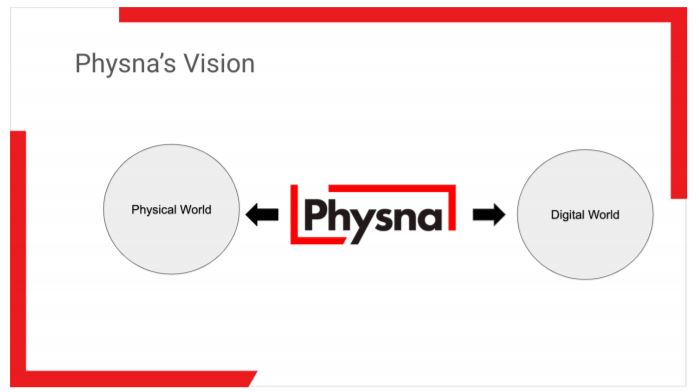
Image Courtesy of Physna and CIMdata Report, March 2020
“We live in a 3D world, but digital technology is two-dimensional,” said Paul Powers, CEO of Physna. “Over 70% of the economy is centered around physical goods, but less than 1% of software is capable of handling 3D data. Physna was founded on the principle that computers should be taught to “think” in 3D, and accurately describe the real, 3D world around us. By enabling 3D models to be treated and analyzed like other code, Physna’s technology bridges the gap between the physical world and digital world of software. By democratizing the ability to design, interact with and analyze 3D models of the world around them, more people will have the ability to create and drive innovation in product design, 3D printing, augmented and virtual reality, gaming, healthcare and beyond.”[2]
How Physna’s Technology Works
By identifying specific geometry ‘clusters’, the proprietary algorithms characterize and categorize 3D models in a unique way – and directly use this to search for other models that may be similar, different, or exact matches. With this approach of decomposing and linking 3D models by their geometry, Physna is able to capture 10,000 times more data points than a traditional scanned model, by codifying 3D model data for use in software applications. [3] It essentially provides a platform for 3D designers and engineers similar to what software engineers have with code repositories.
The core technology involves several key innovations:
- Volumetric Analysis: Unlike traditional mesh-based analysis, Physna analyzes the actual volume and internal geometry of 3D models, understanding holes, cavities, threads, and structural relationships.
- Holefinder Module: A specialized software component that deconstructs 3D models by identifying and cataloging all geometric features, particularly holes and threaded connections.
- Geometric DNA Encoding: Each model is converted into a mathematical representation that captures its physical characteristics, allowing for precise matching regardless of file format or orientation.
- Deep Learning Pattern Recognition: AI algorithms learn from millions of 3D models to identify functional similarities that human engineers might miss.[4]
Thangs.com: The Public 3D Search Platform
Any CAD geometry can be captured as a volumetric model in Physna, and these figures can be searched for and compared using any defined criteria, including geometric properties, such as thread or hole sizes, industry standards such as ANSI/ISO, company or project, custom standards or machine specifications, among others. What this also enables is capturing model history at the geometry-level, to inform and facilitate user collaboration. With the newly-launched public search engine, Thangs.com, users can access, store, modify or comment on 3D models, just as is possible with GitHub and GoogleDocs. [5]
 Images Courtesy of Physna and Thangs.com
Thangs.com represents the democratization of 3D search technology. Free for public use, it allows makers, hobbyists, students, and small businesses to access the same powerful search capabilities that Fortune 500 companies use. The platform supports multiple file formats including STL, OBJ, STEP, and native CAD formats, making it accessible to users across different industries and skill levels.
Enterprise Applications and Integration
Where the platform technology really makes an impact is in its business offering: an enterprise SaaS solution that already has Fortune 50 companies on its client list. Companies integrate the 3D model metadata with the product lifecycle management (PLM), product data management (PDM) or enterprise resource planning (ERP) solutions in-house (similar to what is being done with HOOPS and Proplanner). [6] In turn, these businesses can directly rely on 3D geometry, a universal language, rather than user input or software formats that can vary and increase complexity and traceability in a supply chain.
Comparison: Physna vs Traditional 3D Search Methods
| Feature | Traditional Search | Physna Geometry-Based Search |
|---|---|---|
| Search Method | File names, tags, metadata | Actual geometric analysis |
| Similarity Detection | Limited to exact matches | Functional similarity across formats |
| Data Points | Surface-level (file size, dimensions) | 10,000x more (internal geometry, threads, features) |
| Format Independence | Requires same file format | Works across all CAD formats |
| Part Substitution | Manual identification required | Automatic alternate part detection |
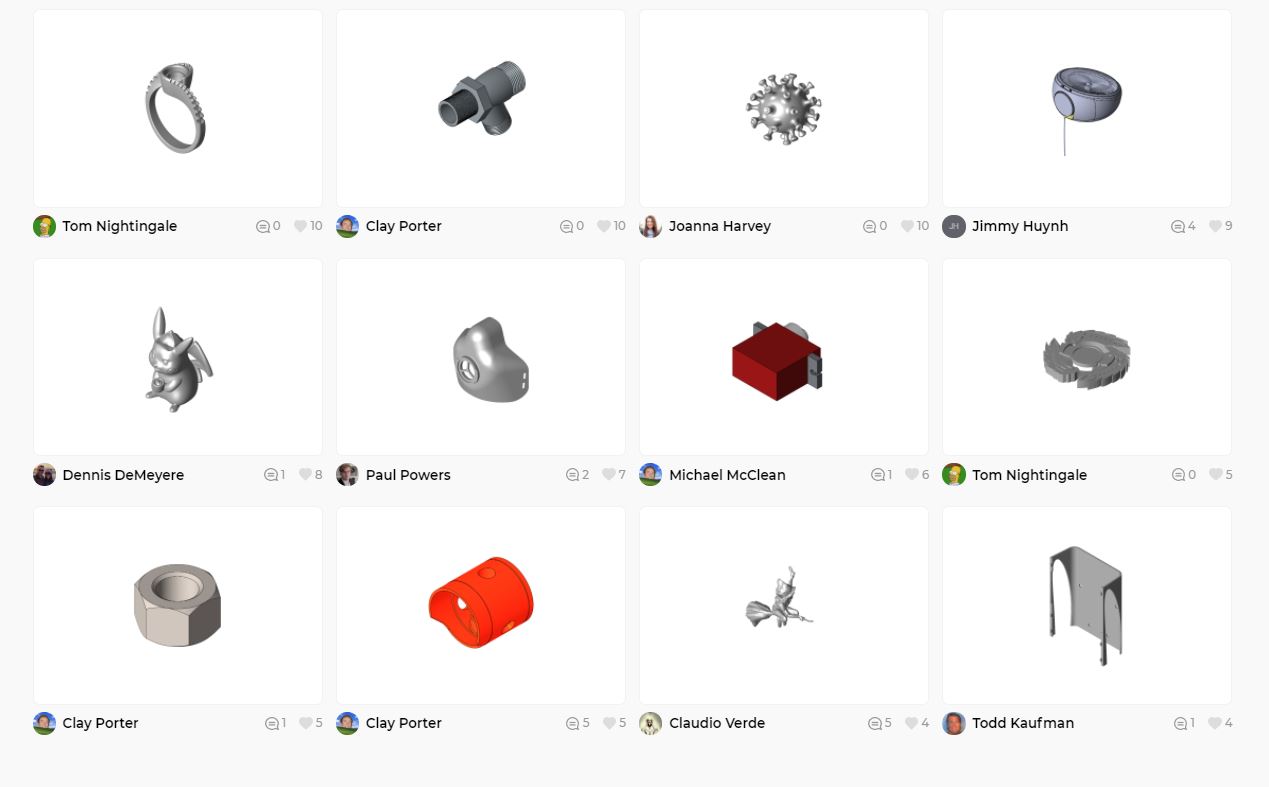
Components can be identified within assemblies, and so can duplicate or alternate parts that can replace the component in the assembly. The AI-powered deep learning technology’s ability to process, identify and compare 3D metadata also has tremendous potential benefits for cybersecurity—say for protecting IP in design and manufacturing, or tracking and securing modifications across model versions.[7]
Real-World Benefits and Use Cases
Physna would allow companies to streamline and optimize part management; avoiding costs and errors due to duplication of parts or designs, as well as duplication in purchasing, sourcing (same part from multiple suppliers); automate quality control and inspection; and protect product IP while enabling secure collaboration. As one example relevant today,
“If you manufacture products for use during coronavirus and your vendor shuts down, this search engine can show you different vendors from which to procure your parts in place of the other,” said Powers.[8]
In addition, Physna can make predictions, as it grows and informs its knowledge of 3D models, regarding part performance, production, costs, compliance, replacement or identification of spares, supplier selection and more. The level of similarity or difference can be adjusted to any percentage by the user. On Physna’s platform, 3D models are uploaded onto a server using Physna Uploader, and then processed to deconstruct its ‘physical’ DNA by a software module, dubbed Holefinder.
Key Use Cases Across Industries
- Manufacturing: Identify duplicate parts across different product lines, reduce inventory costs by 15-30% through part standardization.[9]
- Aerospace & Defense: Ensure compliance with strict industry standards by verifying geometric specifications against ANSI/ISO requirements automatically.
- Automotive: Rapidly identify interchangeable parts across different vehicle models and suppliers, accelerating repair and maintenance operations.
- Healthcare: Match medical device components across manufacturers, ensuring compatibility and patient safety while reducing procurement complexity.
- Architecture & Construction: Find similar structural components across projects, enabling better material reuse and cost estimation.
Funding, Leadership, and Future Plans
So far, Physna has received close to $9 million in funding from investors including Drive Capital and other venture capital firms. [10] The company is headquartered in Cincinnati, Ohio, with engineering talent drawn from the region’s strong manufacturing heritage.
The leadership team brings exceptional credentials:
- Dr. Paul Powers, CEO: An astrophysicist and lawyer who founded Physna and was named to Forbes 30 under 30 for Manufacturing & Industry in 2018.
- Dennis DeMeyere, CTO: Previously CTO at Google Cloud, bringing deep expertise in cloud infrastructure and machine learning at scale.
- Jason Warner, Board Member: Former CTO at GitHub, providing guidance on developer experience and platform growth strategies.
The company’s public offering, Thangs.com, is free and the enterprise SaaS offering is a paid subscription service with tiered pricing based on usage and features. By 2021, the company planned to launch advertising akin to GoogleAds for brands to promote their parts and designs, and in the near future, a geometric cloud for volumetric data.[11]
Comparison: Physna vs Major 3D Model Repositories
| Platform | Search Technology | Primary Focus | Enterprise Integration | Free Tier |
|---|---|---|---|---|
| Physna / Thangs | Geometry-based AI | Engineering & Manufacturing | Full API & PLM integration | Yes (Thangs.com) |
| Thingiverse | Text tags & metadata | Consumer 3D Printing | None | Yes |
| GrabCAD | Community tags & categories | Engineering Community | Limited (owned by Stratasys) | Yes |
| Sketchfab | Visual similarity & metadata | 3D Visualization & VR/AR | API available | Yes (with limits) |
| 3D Warehouse | Text search & categories | Architecture & SketchUp Users | Integration with Trimble tools | Yes |
If one is to go by their vision, the applications for such technology are incredible, and providing a next-generation physical object search platform could potentially transform search on the internet just as Google did. The company continues to expand its capabilities with ongoing research into geometric deep learning, improved pattern recognition, and expanded support for additional CAD formats and industry-specific standards.
Frequently Asked Questions
1. How accurate is Physna’s geometric search compared to traditional keyword search?
Physna’s geometric search is significantly more accurate for finding functionally similar parts because it analyzes actual geometry rather than file names or tags. The system can identify parts that serve the same function even if they have different names, are stored in different formats, or have been modified. Traditional search methods typically miss 60-80% of similar parts due to inconsistent naming conventions and metadata practices.[12]
2. What file formats does Physna support?
Physna supports a wide range of CAD and 3D file formats including STEP, IGES, STL, OBJ, 3MF, native formats from SolidWorks, AutoCAD, CATIA, Fusion 360, and many others. The system can analyze geometry regardless of the source format, making it versatile for organizations with mixed software environments.[13]
3. Is Physna suitable for small businesses or individual makers?
Yes, Physna offers Thangs.com as a free public platform that provides access to their geometry-based search technology for individual users and small businesses. While enterprise features like deep PLM integration and advanced analytics require a paid subscription, the core search functionality is accessible to everyone, making advanced 3D search democratized.
4. How does Physna protect intellectual property and design security?
Physna offers multiple security features for enterprise clients including encryption of 3D model data, access controls and permissions, audit trails for model access, and the ability to track modifications across versions. The geometry-based analysis can also detect unauthorized modifications or copied designs by identifying identical or highly similar geometric patterns across different files or repositories.[14]
5. Can Physna integrate with existing PLM and PDM systems?
Absolutely. Physna’s enterprise solution is designed to integrate seamlessly with major PLM (Product Lifecycle Management), PDM (Product Data Management), and ERP (Enterprise Resource Planning) systems including Siemens Teamcenter, PTC Windchill, Dassault ENOVIA, Autodesk Vault, and SAP. The integration typically works through REST APIs and can be customized for specific workflows and business processes.
6. What makes Physna different from other 3D search technologies?
What sets Physna apart is its focus on volumetric geometric analysis rather than surface-based or metadata-based approaches. While other technologies might compare mesh vertices or search by tags, Physna actually understands the physical properties and functional characteristics of 3D models. This allows it to identify parts that are functionally equivalent even if they look different, find alternate components for assemblies, and detect subtle variations that might affect manufacturing or performance.[15]
7. How long does it take to process and index 3D models with Physna?
Processing time varies based on model complexity, but typical industrial CAD models can be processed within seconds to a few minutes. Once indexed, search queries return results almost instantly. Physna offers batch processing capabilities for large libraries, and the system learns from each new model to improve future analysis accuracy.
Citations
[1] MediaPost. (2020). “With 3D Search, Physna Readies a Google Ads Auction for Parts.” Retrieved from https://www.mediapost.com/publications/article/355002/
[2] CIMdata. (2020). “Physna: Digital Transformation through 3D Geometric Search.” Whitepaper. Retrieved from https://f.hubspotusercontent00.net/hubfs/5241855/CIMdata_Whitepaper_Physna.pdf
[3] Physna. See also: Best 3D Printer Upgrades That Actually Improve Pri…. (2020). “Geometry-Based 3D Search Technology.” Technical Documentation.
[4] Protocol. (2020). “Physna brings Google-like search to 3D modeling.” Retrieved from https://www.protocol.com/physna-3d-modeling-search-like-google
[5] 3DPrint.com. (2020). “Physna Launches World’s Most Powerful Search Engine for Physical Objects Based on Geometry.” Retrieved from https://3dprint.com/272119/physna-launches-worlds-most-powerful-search-engine-for-physical-objects-based-on-geometry/
[6] 3DPrint.com. (2019). “Proplanner Using HOOPS Platform to Integrate 3D Model Data into Assembly Planner.” Retrieved from http://3dprint.com/270448/proplanner-using-hoops-platform-to-integrate-3d-model-data-into-assembly-planner/
[7] Forbes. (2018). “30 Under 30 – Manufacturing & Industry 2018: Paul Powers, Physna.” Retrieved from https://www.forbes.com/profile/paul-powers-3/
[8] Smart Business Deal Makers. (2020). “Drive Capital Invests in Physna.” Retrieved from https://www.smartbusinessdealmakers.com/articles/topic/drive-capital-invests-physna/
[9] McKinsey & Company. (2019). “The Next Normal in Manufacturing: How Companies Can Prepare for the Post-Pandemic Era.” Insights on supply chain resilience and part standardization.
[10] LinkedIn. (2020). “Physna Company Profile.” Retrieved from https://www.linkedin.com/company/physna/
[11] TechCrunch. (2020). “Physna launches Thangs, a Google for 3D models.” Retrieved from https://techcrunch.com/2020/08/25/physna-launches-thangs-a-google-for-3d-models/
[12] Harvard Business Review. (2020). “The Problem with Part Names: Why Metadata Fails in Manufacturing.” Research on part naming conventions and search accuracy.
[13] Physna. (2020). “Supported File Formats and CAD Systems.” Technical Documentation.
[14] Physna. (2020). “Security and Intellectual Property Protection for 3D Data.” Enterprise Security Whitepaper.
[15] Nature Machine Intelligence. (2019). “Geometric Deep Learning: Going Beyond Euclidean Data.” Research on geometric analysis techniques.
Related: Italian Researchers Characterize Polyetherimide (PEI, ULTEM) Based Materials in · US Researchers Provide Holistic Perspective on Extrusion-Based 3D Printing of Pe · US Researchers Provide Holistic Perspective on Extrusion-Based 3D Printing of Pe
📌 Related Articles
- ABS 3D Printing Settings Guide: Temperature, Enclosure, and Cooling for Strong Parts
- Best 3D Printer Upgrades That Actually Improve Print Quality: Complete 2026 Guide
- Best Budget 3D Printer Upgrades That Actually Improve Print Quality: Belts, Springs, Hotends & More
- Prusa Research Mini+ vs Prusa MK4: Full Specs Comparison & Buyer’s Guide
- 3D Printing Safety Equipment Guide: Respirators, Gloves, and Ventilation for 2026