
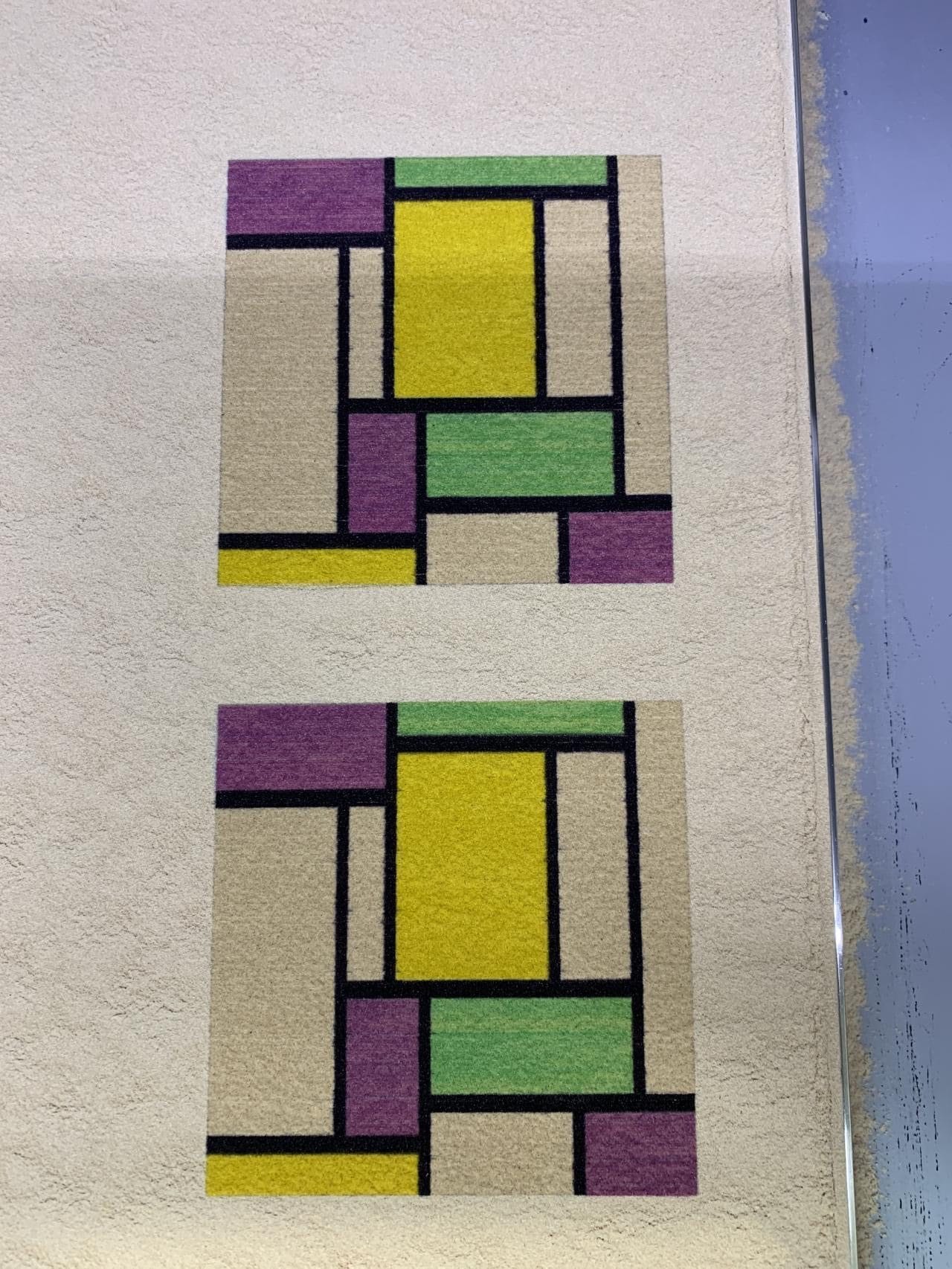
A new wood technology company, FORUST, is pushing the limits even further in materials science, created by 3D printing pioneers Figulo, Boston Ceramics, and Emerging Objects—a company we have followed throughout the years as they have used a variety of experimental materials, including rubber, salt, wood, paper and clay. The mission in creating FORUST was to combine design expertise and progressive manufacturing for “healthy forests and sustainable interiors.”

So far, they have created the following structures with 3D printed wood, including with color (above, featuring a Mondrian-inspired design):
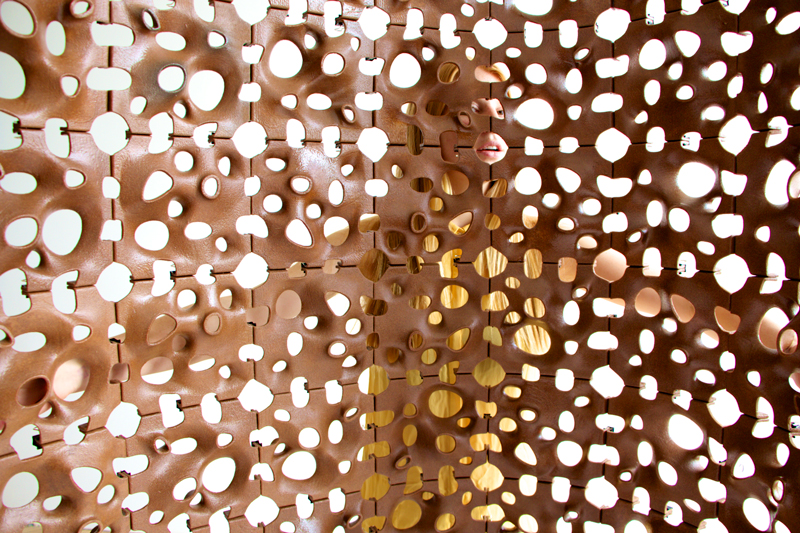
Sawdust Screen – meant to act as ‘visual porosity’ and made with 3D printed walnut, the designers allowed the typical layering to mimic wood grain. In coming up with this structure, the group was thinking of the pores, or vessels, from within the trunk—responsible for the movement of sap.
Understanding 3D Printed Thread Mechanics
The Sawdust Screen
The Wood Block – this is another beautiful piece made from recycled agricultural waste—again with the grain meant to remind the viewer of real wood. Attributed to Anthony Giannini, the design is successful in offering texture and warmth. It could be used as a curtain wall or a masonry unit and is meant to serve as an example of the benefits of recycling wood.

Optimal Print Settings for Functional Threads
The Wood Block
The Burl – mimicking the complex design of tree growth, such a knot is often caused by a trauma or fungus. The designers 3D printed the wood material with a variety of defects, along with visuals like growth rings—again, taking advantage of the natural design offered by 3D printed layers.

Scaling and Tolerance Calibration
The Burl
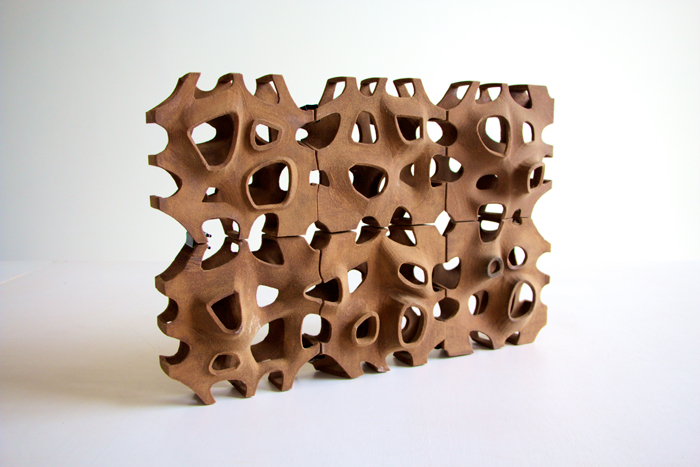
Poroso – fabricated from a wood composite (wood fiber and agricultural waste products) allowing for improved precision and finish, the designers enjoyed using a stronger material that was easier to remove from the print bed. Again, the layering effect was left visible.
Material Selection for Threaded Parts
Poroso. Design: Virginia San Fratello, Ronald Rael, Molly Wagner and Victoria Leroux Material: Wood. Dimensions: 47cmX32cmX10cm
Based on previous work by Emerging Objects, it is not surprising to see inspired elegance prompted by architects Virginia San Fratello and Ronal Rael—acting as President and COO of FORUST, respectively. Andrew Jeffrey, (previous President of the ceramic 3D printing companies Figulo and Boston Ceramics, and before that Director of Ceramic Products at 3D Systems) is the CEO of FORUST.
It is also pretty easy to understand how this trio began working together as San Fratello and Rael have extensive experience in binder jetting technology, and Jeffrey has specialized in ceramics binder jetting—more specifically 3D printing with ceramics.
Wood is undeniably one of the oldest construction materials known to humans, offering some of the most effective shelters and structures for thousands of years. And while its presence in 3D printing has been tentative so far—from laser sintered wood to recycled materials and even composites for 4D digital fabrication, interest continues to grow regarding a wide range of more alternative textures.
Testing and Quality Validation
The post FORUST: Emerging Objects Vets Launch 3D Printed Wood Startup appeared first on 3DPrint.com | The Voice of 3D Printing / Additive Manufacturing.
from Your daily news from 3DPrint.com https://bit.ly/2P3bkew
Related Articles
Frequently Asked Questions
Can you 3D print working threads and screws?
Yes, working threads can be 3D printed with proper settings. Layer height of 0.1mm or finer works best, with slower print speeds improving quality. CAD tools like FreeCAD’s Fasteners workbench help generate accurate thread geometries.
What are the best settings for 3D printing threads?
Use 0.1mm layer height, slow speeds (~10mm/s), and tune thread scaling parameters. Common starting points: screw scaling A0.990/B-0.050, nut scaling A1.030/B0.100. Always test print to calibrate for your printer and filament.
📌 Related Articles
- Best Budget 3D Printer Upgrades That Actually Improve Print Quality: Belts, Springs, Hotends & More
- How Divergent Technologies Is 3D Printing Cruise Missiles for the U.S. Military
- Best 3D Printer Upgrades That Actually Improve Print Quality: Complete 2026 Guide
- 3D Printing Tungsten Carbide: How Hot-Wire Laser Technology Creates Metal Harder Than Steel
- ABS 3D Printing Settings Guide: Temperature, Enclosure, and Cooling for Strong Parts