
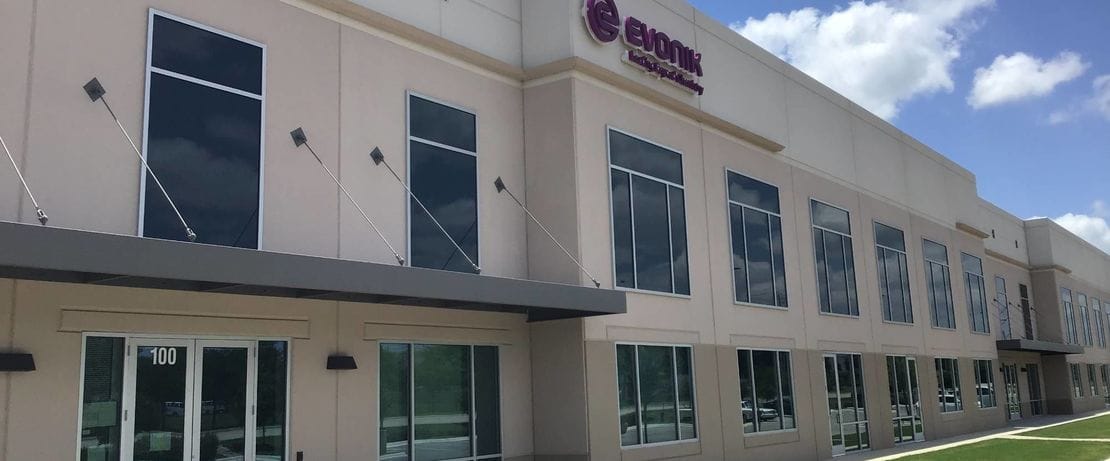
Quick Answer: What is Evonik’s Center for Structured Polymers Technology?
Evonik Industries, a leading German chemical company, has opened a new Center for Structured Polymers Technology in Austin, Texas, focused on powder bed fusion 3D printing materials. The center houses numerous 3D printers, processing areas, R&D laboratories, production rooms, and meeting spaces, serving as Evonik’s North American hub for additive manufacturing innovation. Led by managing director Vikram Devarajan (co-founder of Structured Polymers, acquired by Evonik in 2019), the center specializes in PA12 nylon powders, PEEK filaments, flexible PEBA elastomers, and other specialty polymers. This strategic investment in Austin allows Evonik to better support North American customers with local technological development, powder production, and customized material solutions for industrial 3D printing applications.12
Disclosure: As an Amazon Associate, 3dput.com earns from qualifying purchases. This supports our independent testing and reviews.
Based in Germany, Evonik Industries has been a leader not only in developing specialty chemicals but also in additive manufacturing processes, precipitating need for yet another new facility in US.3

Joining a long list of other production sites and offices in North America, latest Evonik technology center has opened in Austin, Texas, meant to continue paving way for their worldwide network of innovation with powder bed fusion materials made by Structured Polymers.4
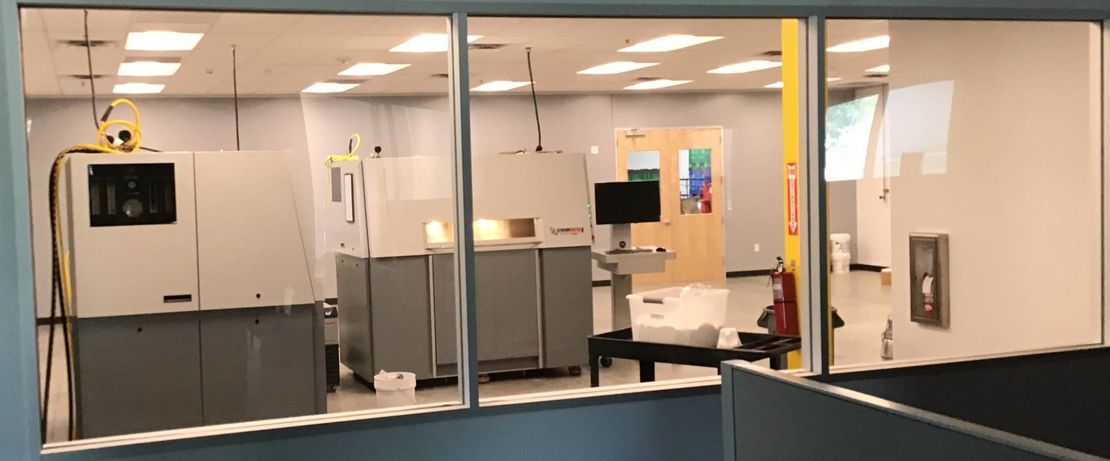
To be known as the Center for Structured Polymers Technology, the new lab houses all of the following:
- Numerous 3D printers
- A 3D printing processing area
- Research and development laboratory
- Production rooms
- Office areas
- Meeting rooms
Made up of a large building complex, the Austin site will also offer the highest levels in meeting safety standards, as well as necessary workplace ergonomics. Working under “the umbrella of Evonik” and supervision of managing director, Vikram Devarajan, plan is for the Texas company to solidify their presence in the market of 3D printable polymers.5
“By expanding our capabilities in North America, we are sending an important signal to our partners in the region that we can now better support them with new technological opportunities in materials development right in their own backyard,” said Vikram Devarajan.6
About Evonik Industries
Evonik Industries AG is a German multinational specialty chemicals company headquartered in Essen, Germany. Founded in 2007 through the merger of Degussa and RAG-Stiftung, Evonik has grown to become one of the world’s leading producers of specialty chemicals. The company operates through three main business lines: Specialty Additives, Nutrition & Care, and Performance Materials.7
In the additive manufacturing space, Evonik operates under their INFINAM® brand, offering a comprehensive portfolio of 3D printing materials including nylon powders (PA12, PA6), TPU elastomers, PEEK filaments, and specialty polymers for powder bed fusion (PBF) and multi-jet fusion (MJF) technologies. The company’s INFINAM® PA12 ready-to-use materials are considered the gold standard in powder bed fusion technologies due to their consistent quality, excellent flow properties, and reliable processing characteristics.8
Evonik has over 32,000 employees working in locations in 100 different countries. Their mission is to “improve life, today and tomorrow.” Last year sales were €13.1 billion with an operating profit (adjusted EBITDA) of €2.15 billion, demonstrating the company’s strong financial performance and global market position.9
Structured Polymers Inc.
The materials startup was founded in 2012 in Austin, Texas, by Dr. Vikram Devarajan, Dr. Jim Mikulak, and Dr. Carl Deckard. Structured Polymers was created to innovate and commercialize new polymer powders for additive manufacturing processes, focusing on multi-jet fusion and selective laser sintering technologies.10
Structured Polymers was acquired by Evonik in 2019—following an investment two years previously via their venture capital division. The strategic merger provided Evonik with access to new patented materials and gave Structured Polymers a better chance for expanding their products within the AM space. Equally important though was the potential for improved diversification overall and better opportunities for their customers.11
Under the leadership of Vikram Devarajan as CEO, Structured Polymers developed a reputation for innovative material solutions and customer-focused service. The company’s technology and expertise were instrumental in establishing Evonik’s position as a leader in powder bed fusion materials for North American markets.
Evonik’s 3D Printing Materials Portfolio
Following the acquisition of Structured Polymers, Evonik expanded their 3D printing materials portfolio significantly. The company now offers a comprehensive range of products for powder bed fusion technologies:
PA12 Nylon Powders
Currently, Evonik leads with the production of their polyamide 12 (PA12) powders. These materials have been used in the AM industry for over two decades and are known for their excellent mechanical properties, chemical resistance, and ease of processing. INFINAM® PA12 powders are considered the gold standard in powder bed fusion technologies.12
In 2023, Evonik introduced the world’s first PA12 powder for 3D printing based on bio-circular raw material, showcasing their commitment to sustainability and circular economy principles in additive manufacturing. This innovation addresses growing demand for environmentally responsible 3D printing materials.13
PA12 powders are ideal for producing functional prototypes, end-use parts, and production components that require toughness, chemical resistance, and good surface finish. Common applications include automotive components, medical devices, consumer goods, and industrial parts.
PEEK Filaments
Evonik also offers PEEK (polyether ether ketone) filaments for fused deposition modeling (FDM/FFF) 3D printing. PEEK is a high-performance polymer known for its exceptional thermal stability, chemical resistance, and mechanical strength. PEEK can withstand continuous use temperatures up to 250°C and is widely used in aerospace, medical, and oil & gas industries.14
Evonik’s PEEK filaments are designed for consistent feeding, dimensional accuracy, and excellent layer adhesion—critical requirements for reliable industrial 3D printing. See also: Best 3D Printer Upgrades That Actually Improve Pri…. These materials enable the production of parts that can replace metal components in demanding applications while offering the design flexibility and weight savings of additive manufacturing.
Flexible PEBA Elastomers
Flexible PEBA (polyether block amide) powders represent Evonik’s offering for flexible, rubber-like 3D printed parts. PEBA combines the flexibility of elastomers with the processing advantages of powder bed fusion, enabling the production of parts that bend, stretch, and return to their original shape.15
Applications for PEBA include wearables, soft-touch grips, seals, gaskets, and components that require shock absorption or flexibility. The material is particularly valuable for creating comfortable consumer products and ergonomic industrial components.
Specialty Materials and Additives
Evonik also offers a range of specialty materials and additives for 3D printing:
- GMP-quality biomaterials: Medical-grade materials manufactured under Good Manufacturing Practice standards for implantable and biocompatible applications16
- Dispersants: Additives that improve flow properties and particle distribution in powder bed systems
- Flow improvers: Agents that enhance powder flowability for consistent, reliable printing
- Reactive modifiers: Materials that enable post-printing modifications or chemical bonding
- Nanocomposites: Advanced materials incorporating nanoparticles for enhanced mechanical or thermal properties
Following the acquisition of Structured Polymers, two companies were able to release their first powders to the 3D printing materials market (end of 2019), in the form of two thermoplastic elastomers made from co-polyesters. The materials are meant to be tough yet flexible, providing high elasticity, resilience, and are available in either white or black.17
Evonik Materials Comparison Table
| Material Type | Technology | Key Properties | Typical Applications | Temperature Range |
|---|---|---|---|---|
| PA12 (INFINAM®) | Powder Bed Fusion (SLS, MJF) | Excellent toughness, chemical resistance, good surface finish | Automotive parts, functional prototypes, consumer goods | -40°C to 120°C |
| PEEK Filament | FDM/FFF | High thermal stability, chemical resistance, mechanical strength | Aerospace, medical devices, oil & gas components | -70°C to 250°C |
| PEBA Elastomers | Powder Bed Fusion (SLS, MJF) | Flexible, elastic, rubber-like properties | Wearables, soft-touch grips, seals, gaskets | -40°C to 80°C |
| Thermoplastic Elastomers | Powder Bed Fusion (SLS, MJF) | Tough yet flexible, high elasticity, resilience | Protective cases, flexible components, sporting goods | -30°C to 100°C |
Powder Bed Fusion Technology Comparison
| Technology | Process Type | Key Features | Typical Materials | Best For |
|---|---|---|---|---|
| Selective Laser Sintering (SLS) | Laser scans powder bed layer by layer | High precision, good surface finish, established technology | PA12, PA11, TPU, PEBA | Functional prototypes, production parts |
| Multi-Jet Fusion (MJF) | Inkjet print fusing agent onto powder | High speed, multi-material capability, detail accuracy | PA12, TPU, elastomers | Complex geometries, multi-color parts |
| High-Speed Sintering (HSS) | Thermal print head sinters powder rapidly | Very fast printing, high throughput | PA12, PA11, specialized blends | Production volume, rapid manufacturing |
Austin Center Capabilities
The new Center for Structured Polymers Technology in Austin represents a significant investment in Evonik’s North American capabilities. The center provides:
Manufacturing Facilities
- Numerous 3D printers: Multiple powder bed fusion systems for prototyping and production runs
- Production rooms: Controlled environments for powder handling and part manufacturing
- A 3D printing processing area: Dedicated space for powder preparation, sieving, and quality control
Research and Development
- Research and development laboratory: State-of-the-art facilities for material innovation and testing
- Material characterization equipment: Instruments for analyzing powder properties, thermal behavior, and mechanical performance
- Application development support: Collaborative work with customers to optimize parts for specific applications
Customer Services
- Office areas: Space for customer meetings, technical consultations, and project reviews
- Meeting rooms: Professional facilities for presentations and training sessions
- Technical support: On-site expertise for process optimization and troubleshooting
Strategic Importance and Market Position
The Austin center strengthens Evonik’s position in the global 3D printing materials market. By having a significant presence in North America, Evonik can:
- Better support North American customers: Provide local technical support, faster delivery, and customized solutions
- Accelerate innovation: Collaborate with regional partners, universities, and research institutions
- Respond to market trends: Adapt quickly to regional requirements and emerging applications
- Reduce logistics costs: Local powder production and distribution for North American markets
Evonik has also invested in and collaborated with other dynamic companies, to include startups overseas, HP, and more. They have also continued to develop new filaments, implants, and software tools for manufacturers.1819
These partnerships and investments demonstrate Evonik’s commitment to advancing the additive manufacturing ecosystem through collaboration, innovation, and strategic expansion.
Best Evonik 3D Printing Products on Amazon
For professionals and makers working with Evonik materials, here are recommended products available on Amazon:
PA12 3D Printing Powder – High-quality nylon powders for powder bed fusion 3D printers.
PEEK 3D Printing Filament – High-performance thermoplastic for industrial and aerospace applications.
eSUN PEEK Filament – Reliable PEEK filament for FDM 3D printing with consistent quality.
Overture PEEK Filament – Premium PEEK materials from a trusted manufacturer.
Powder Bed 3D Printers – SLS and MJF systems for powder-based 3D printing.
3D Printing Material Dryers – Essential equipment for preparing powder materials for optimal printing.
Frequently Asked Questions (FAQ)
Q: What is Evonik’s Center for Structured Polymers Technology?
The Center for Structured Polymers Technology is Evonik’s new facility in Austin, Texas, focused on powder bed fusion 3D printing materials. The center houses numerous 3D printers, processing areas, R&D laboratories, and production rooms, serving as Evonik’s North American hub for additive manufacturing. Led by Vikram Devarajan (co-founder of Structured Polymers), the center develops and produces PA12 powders, PEEK filaments, and specialty polymers for industrial 3D printing applications.20
Q: What materials does Evonik offer for 3D printing?
Evonik offers a comprehensive portfolio of 3D printing materials under the INFINAM® brand, including: PA12 nylon powders (considered gold standard for powder bed fusion), PEEK filaments for high-temperature applications, flexible PEBA elastomers for rubber-like parts, thermoplastic elastomers for tough yet flexible components, and specialty additives like dispersants, flow improvers, and GMP-quality biomaterials for medical applications.21
Q: Who founded Structured Polymers and when was it acquired by Evonik?
Structured Polymers was founded in 2012 in Austin, Texas, by Dr. Vikram Devarajan, Dr. Jim Mikulak, and Dr. Carl Deckard. The company was acquired by Evonik in 2019, following an investment two years earlier through Evonik’s venture capital division. The acquisition gave Evonik access to patented materials and provided Structured Polymers with resources for expanding their additive manufacturing portfolio globally.22
Q: What are the main applications of Evonik’s PA12 powders?
Evonik’s INFINAM® PA12 powders are widely used for producing functional prototypes, end-use parts, and production components requiring toughness, chemical resistance, and good surface finish. See also: Best Budget 3D Printer Upgrades That Actually Impr…. Common applications include automotive components (under-hood parts, connectors, housings), medical devices (surgical instruments, housings), consumer goods (appliance components, electronic enclosures), and industrial parts (gear components, bushings, wear surfaces). PA12 is particularly valued for its ease of processing and consistent quality.23
Q: What makes Evonik’s PEEK filament special?
Evonik’s PEEK filaments are designed for industrial 3D printing with high performance requirements. They offer exceptional thermal stability (continuous use up to 250°C), outstanding chemical resistance to oils, solvents, and high pH environments, and excellent mechanical strength. These properties make PEEK ideal for aerospace, medical implantable devices, oil & gas components, and automotive applications where metal replacement with weight savings is desired. Evonik’s filaments are engineered for consistent feeding, dimensional accuracy, and reliable layer adhesion.24
Q: What is the significance of the Austin center for North American customers?
The Austin center allows Evonik to provide better support to North American customers through local technical assistance, faster delivery times, customized material development, and reduced logistics costs. Having a regional center enables closer collaboration with customers, universities, and research institutions, accelerating innovation and allowing Evonik to respond more quickly to regional market trends and application requirements. This strengthens Evonik’s competitive position in the North American additive manufacturing market.25
Q: What is INFINAM® and why is it important?
INFINAM® is Evonik’s brand for their 3D printing materials portfolio. The name represents “Innovation in Additive Manufacturing” and encompasses their range of high-quality powders and filaments. INFINAM® materials, particularly the PA12 powders, are considered the gold standard in powder bed fusion technologies due to their consistent particle size distribution, excellent flow properties, and reliable processing characteristics. The brand signifies Evonik’s commitment to quality and innovation in additive manufacturing.26
Q: What types of 3D printing technologies use Evonik materials?
Evonik’s materials are primarily designed for powder bed fusion technologies including Selective Laser Sintering (SLS) and Multi-Jet Fusion (MJF). Their PA12 and PEBA powders are optimized for these processes. Additionally, Evonik offers PEEK filaments for Fused Deposition Modeling (FDM/FFF) technology. The company also provides materials compatible with other powder-based processes like Direct Metal Laser Sintering (DMLS) for polymer-bonded metal applications.27
Q: Does Evonik offer sustainable or bio-based 3D printing materials?
Yes, Evonik is committed to sustainability in additive manufacturing. In 2023, the company introduced the world’s first PA12 powder for 3D printing based on bio-circular raw material, demonstrating their focus on circular economy principles. Evonik’s GMP-quality biomaterials are also designed for biocompatible and implantable applications, supporting medical device manufacturing with environmentally responsible materials. The company continues to develop sustainable solutions across their portfolio.28
Q: How can I purchase Evonik 3D printing materials?
Evonik materials are available through authorized distributors globally and can also be purchased through various online retailers. For smaller quantities and individual projects, Amazon offers convenient access to select Evonik-compatible materials from trusted third-party brands. For industrial-scale production and direct technical support, customers should contact Evonik or their authorized distributors for bulk purchasing and application development assistance. The Austin center can also provide local support for North American customers.
Q: What support services does the Austin center provide?
The Center for Structured Polymers Technology in Austin offers comprehensive support services including: material selection assistance for specific applications, process optimization for powder bed fusion printers, technical troubleshooting and problem-solving, customer training on powder handling and 3D printing processes, and collaborative R&D for new material development. The center provides both hands-on laboratory facilities and professional meeting spaces for working with customers on their projects and requirements.
Conclusion
Evonik’s opening of the Center for Structured Polymers Technology in Austin, Texas, represents a significant milestone in the company’s additive manufacturing strategy. By combining Evonik’s global resources and material expertise with Structured Polymers’ innovation and North American presence, the center positions Evonik to better serve customers in the region with local technical support, faster innovation cycles, and customized material solutions.29
The facility houses state-of-the-art equipment for powder bed fusion 3D printing, comprehensive R&D capabilities, and professional customer support spaces. Through this center, Evonik can accelerate development of new materials, collaborate more closely with North American partners, and respond rapidly to market demands for high-quality 3D printing polymers.30
As the additive manufacturing industry continues to grow and evolve, Evonik’s investment in Austin demonstrates their commitment to being at the forefront of innovation. The combination of established PA12 expertise, expanding PEEK filament offerings, and focus on sustainable materials positions Evonik to support the next generation of industrial 3D printing applications—from aerospace components to medical devices, from automotive parts to consumer products.31
Related: Hybrid 3D Printing Technique Creates Plastic-Metal Structures All at Once · 3D Printing Chemistry 101: The Molecular Makeup of PAEK, PEKK and PEEK Plastic · Improving the Circular Economy of 3D Printing with Plastic Recycling
Where to Buy
Buy PA12 3D Printing Powder on Amazon
Buy PEEK 3D Printing Filament on Amazon
Buy eSUN PEEK Filament on Amazon
Sources:
- Evonik Industries. (2020). Evonik opens new technology center for 3D printing in the USA. https://corporate.evonik.com/en/media/evonik-opens-new-technology-center-for-3d-printing-in-the-usa-138007.html
- MarketScreener. (2020). Evonik Industries opens new technology center for 3D printing in the USA. https://www.marketscreener.com/EVONIK-INDUSTRIES-AG-13066670/news/Evonik-Industries-opens-new-technology-center-for-3D-printing-in-the-USA-30937588/
- Evonik Corporate. About Evonik. https://corporate.evonik.com/
- Structured Polymers. About Structured Polymers. https://www.structuredpolymers.com/
- Evonik Industries. (2020). Press release on Austin center opening.
- Devarajan, V. (2020). Statement on North American expansion.
- Evonik Industries. (2023). Annual Report. https://corporate.evonik.com/en/about-us/company-profile
- Evonik Industries. INFINAM® Brand Overview. https://additive.evonik.com/
- Evonik Industries. (2023). Financial Results. https://corporate.evonik.com/en/investors/financials
- Structured Polymers. (2012). Company founding documentation.
- 3DPrint.com. (2019). Evonik acquires Structured Polymers. https://3dprint.com/
- Evonik Industries. (2023). PA12 powders for powder bed fusion. https://additive.evonik.com/
- Evonik Industries. (2023). Bio-circular PA12 announcement. https://additive.evonik.com/
- Evonik Industries. PEEK filament specifications. https://additive.evonik.com/
- Evonik Industries. PEBA elastomer materials. https://additive.evonik.com/
- Evonik Industries. GMP-quality biomaterials. https://additive.evonik.com/
- Evonik Industries. (2019). Thermoplastic elastomer release. https://additive.evonik.com/
- 3DPrint.com. (2020). Meditool investment from Evonik. https://3dprint.com/253442/chinese-startup-meditool-gets-investment-from-evonik/
- 3DPrint.com. HP-Evonik partnership. https://3dprint.com/153176/hp-evonik-3d-printing-materials/
- Evonik Industries. (2020). Austin center capabilities overview.
- Evonik Industries. 3D printing materials portfolio. https://additive.evonik.com/
- 3DPrint.com. (2019). Structured Polymers acquisition details.
- Evonik Industries. PA12 applications guide. https://additive.evonik.com/
- Evonik Industries. PEEK filament specifications. https://additive.evonik.com/
- Evonik Industries. (2020). North American strategy announcement.
- Evonik Industries. INFINAM® brand information. https://additive.evonik.com/
- Evonik Industries. Technology compatibility guide. https://additive.evonik.com/
- Evonik Industries. (2023). Sustainability initiatives. https://additive.evonik.com/
- Evonik Industries. (2020). Austin center opening press release.
- Evonik Industries. Future of additive manufacturing. https://additive.evonik.com/
- Evonik Industries. (2023). Industry outlook. https://additive.evonik.com/
📌 Related Articles
- Best 3D Printer Upgrades That Actually Improve Print Quality: Complete 2026 Guide
- Best Budget 3D Printer Upgrades That Actually Improve Print Quality: Belts, Springs, Hotends & More
- ABS 3D Printing Settings Guide: Temperature, Enclosure, and Cooling for Strong Parts
- 3D Printing Safety Equipment Guide: Respirators, Gloves, and Ventilation for 2026
- Prusa Research Mini+ vs Prusa MK4: Full Specs Comparison & Buyer’s Guide