
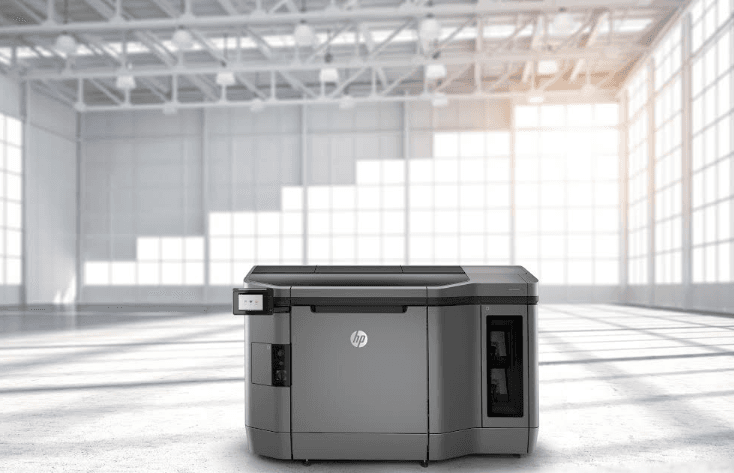
Australia’s EVOK3D has announced that it will be supplying three HP Jet Fusion 3D printing systems to Defence Science and Technology (DST), the country’s lead agency charged with using knowledge in applications like science and technology to protect the land Down Under.
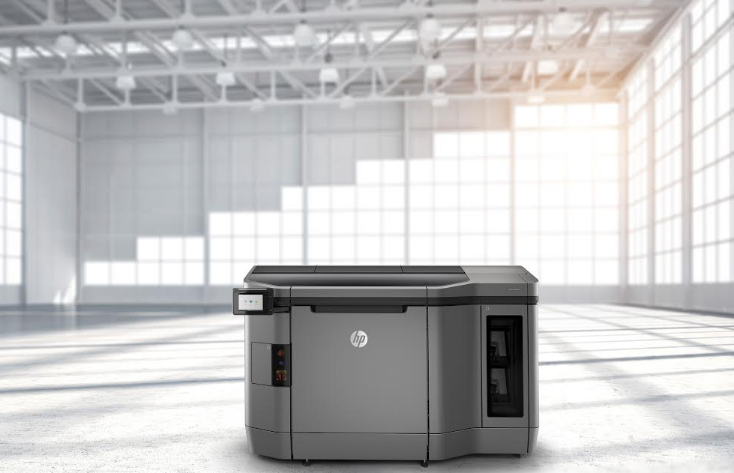
Along with the three industrial-grade HP Jet Fusion 4200 printers, EVOK3D will be delivering automated equipment for post-processing in AM, compatible with the volume of manufacturing expected. DST plans to produce:
- Robust end-use parts
- Tooling and jigs
- Concept models
- Prototypes
Founded in 2012, EVOK3D acts as the HP 3D Printing partner for Australia and New Zealand. Machines like the HP Jet Fusion 4200 are meant for the fabrication of high-performance, functional parts that can be tuned for mechanical properties, speed, and precision.
Understanding Filament Properties
HP MJF 4200 3D Printer
Users are able to make the most of nearly all the classic benefits of 3D printing, beginning with greater affordability in production, faster turnaround times for clients, better quality in parts (and prototypes), and in many cases the ability to innovate in making parts that may have become obsolete—or were never possible before with conventional technology. Parts are often lighter in weight but strong, and relied upon in critical applications like automotive and aerospace.
“3D printing has moved beyond just prototyping and is now a viable and flexible direct manufacturing technology,” said Joe Carmody, EVOK3D Managing Director, convinced that clients within defense, design, education, and healthcare applications will continue to embrace the benefits of the technology—and invest.
Material Comparison and Selection
EVOK3D’s main business is centered around supplying hardware, software, and materials for 3D printing. Currently, they expect 3D printing to transform industry in Australia. And while this is a common theme around the world today, with DST blazing a path ahead of everyone else in Australia, other industrial users (as well as enthusiasts on any level) are encouraged to follow suit.
This is not the first time the EVOK3D team has worked with their Department of Defence; in fact, they have supplied them with 3D printing solutions and accompanying services and support at numerous different sites over the past eight years. Owned by the Currie Group, EVOK3D acts as the HP 3D printing partner not only for Australia, but also New Zealand, and currently they have offices in every capital city across ANZ.
3D printing in Australia has been picking up steam in the last few years especially, with medical 3D printing, manufacturing of bespoke products like bicycle frames, alternative materials in construction, and more.
[Source / Images: EVOK3D]
Print Settings and Optimization
The post EVOK3D Supplies HP 3D Printers to Australian Military Agency appeared first on 3DPrint.com | The Voice of 3D Printing / Additive Manufacturing.
from Your daily news from 3DPrint.com https://bit.ly/2CobnPr
Related Articles
Frequently Asked Questions
What is the best 3D printing filament for beginners?
PLA is the best starting filament — it prints easily at 190-220°C without an enclosure and produces good results. Once comfortable, PETG offers better strength and temperature resistance for functional parts.
How do I choose the right filament?
Consider the application: PLA for display models, PETG for functional parts, ABS/ASA for heat/sunlight exposure, TPU for flexible parts, and specialty filaments for engineering applications. Each has specific printer requirements.
What temperature should I print different filaments at?
PLA: 190-220°C nozzle / 50-60°C bed. PETG: 220-250°C / 70-80°C. ABS: 230-260°C / 100-110°C (enclosure needed). Nylon: 240-270°C / 70-90°C. Always check manufacturer recommendations for specific brands.
📌 Related Articles
- The Current State of Metal 3D Printing in 2020
- ABS 3D Printing Settings Guide: Temperature, Enclosure, and Cooling for Strong Parts
- Best 3D Printer Upgrades That Actually Improve Print Quality: Complete 2026 Guide
- Best Budget 3D Printer Upgrades That Actually Improve Print Quality: Belts, Springs, Hotends & More
- 3D Printing News: Multi-Material Breakthrough and Aerospace Market Boom