
They say that home is where the heart is—and for some, yes that may be in a tiny 3D printed home perched atop a pontoon boat. The 3D printing industry is ripe with alternative design and engineering concepts, and the construction realm is certainly no exception. In fact, while this may be an area that takes a lot of heat and skepticism regarding claims for homes that are built cheap and fast—3D printing for residential properties is also a great source of fascination; after all, most of us like to hope for the option of a stylish home built in a matter of days that we could easily afford and, in the future, call our own.
Many plans in the past have been hazy—or downright shady—so it is refreshing to watch a small project come to fruition on time as promised. With promises for the “first inhabitable house” in the Czech Republic, sculptor Michal Trpak and developers have actually completed their prototype by June as promised. Still meant to float on the water, the PRVOK or protozoon is now complete in České Budějovice, a large city in Czech Republic.
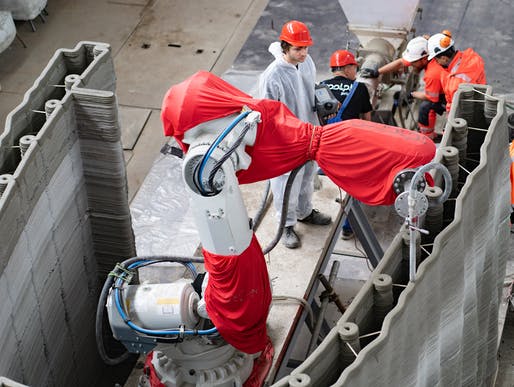
And while the houseboat was technically fabricated in 22 hours, the materials still take longer to set—especially considering that 17 tons of concrete was used. The home is also being evaluated for performance, with properties like static pressure being examined—and results demonstrating that the structure can stand up to a 50-ton load.
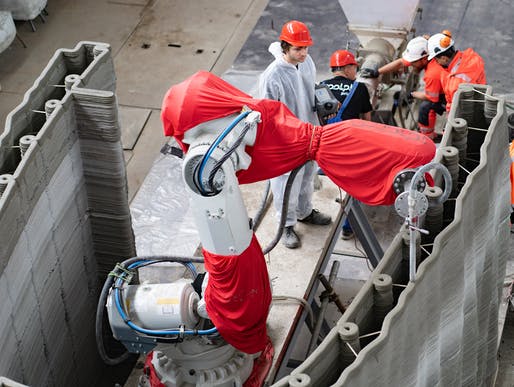
“Despite minor issues caused by the weather, we managed to 3D print the house successfully,” said sculptor and project leader Michal Trpák in a statement. “It took us 22 hours in total and we needed 17 tons of custom-developed mixture. As the concrete will take 28 days to harden, we are completing the house, preparing the green roof, floors, all distributions, doors, windows, etc.”
Understanding Filament Properties
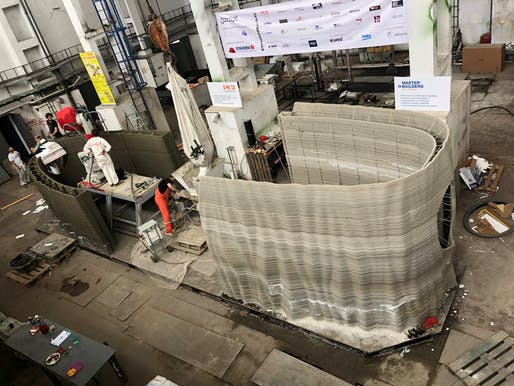
Photo by Kateřina Nováková.
The home features a curved, futuristic style with a pretty charming interior—but overall this type of real estate may not appeal to more conventional consumers, despite its ‘green’ appeal and other eco technologies like a recirculation shower, remote control capabilities, a green roof, and water and utility reservoirs. The concrete composite used in building consists of plasticizers for production of better shapes, along with a setting accelerator.

Material Comparison and Selection
Rendering of bathroom
3D printed buildings and offices have been developed in Dubai, conceptualized as affordable housing for low-income families in New York, and even an entire house-printing factory was opened in Eindhoven, Netherlands. Numerous projects are underway, however, around the world—along with the development of many different types of materials and techniques being used in construction.

Print Settings and Optimization
Renderings courtesy of Buřinka.
[Source / Images: Archinect. Feature image is a rendering created by Buřinka.]
The post Floating 3D Printed House Completed on Schedule appeared first on 3DPrint.com | The Voice of 3D Printing / Additive Manufacturing.
from Your daily news from 3DPrint.com https://bit.ly/2Z3LJrQ
Related Articles
Frequently Asked Questions
What is the best 3D printing filament for beginners?
PLA is the best starting filament — it prints easily at 190-220°C without an enclosure and produces good results. Once comfortable, PETG offers better strength and temperature resistance for functional parts.
How do I choose the right filament?
Consider the application: PLA for display models, PETG for functional parts, ABS/ASA for heat/sunlight exposure, TPU for flexible parts, and specialty filaments for engineering applications. Each has specific printer requirements.
What temperature should I print different filaments at?
PLA: 190-220°C nozzle / 50-60°C bed. PETG: 220-250°C / 70-80°C. ABS: 230-260°C / 100-110°C (enclosure needed). Nylon: 240-270°C / 70-90°C. Always check manufacturer recommendations for specific brands.
📌 Related Articles
- The Current State of Metal 3D Printing in 2020
- Best 3D Printer Upgrades That Actually Improve Print Quality: Complete 2026 Guide
- The Complete 3D Printing Filament Guide: Types, Properties & When to Use Each
- Best Budget 3D Printer Upgrades That Actually Improve Print Quality: Belts, Springs, Hotends & More
- How Divergent Technologies Is 3D Printing Cruise Missiles for the U.S. Military