
The hybrid manufacturing market continues to grow at a steady pace, as an increasing number of machine manufacturers look to combine additive manufacturing and machining capabilities. The latest comes from CNC machine and 3D printer manufacturer DMG Mori.
DMG Mori has announced the release of a new five-axis CNC machine designed specifically for performing laser texturing on 3D freeform surfaces of molds and tools. The LASERTEC 400 Shape is the largest of the company’s four laser ablation machines, capable of working with parts weighing up to 20 tons and measuring up to 3,350 x 1,350 x 1,000 mm. In addition to the large LASERTEC 400 Shape, the machine manufacturer is aiming to release a more mid-range system with a 2,000 mm X-axis, the LASERTEC 200 Shape.
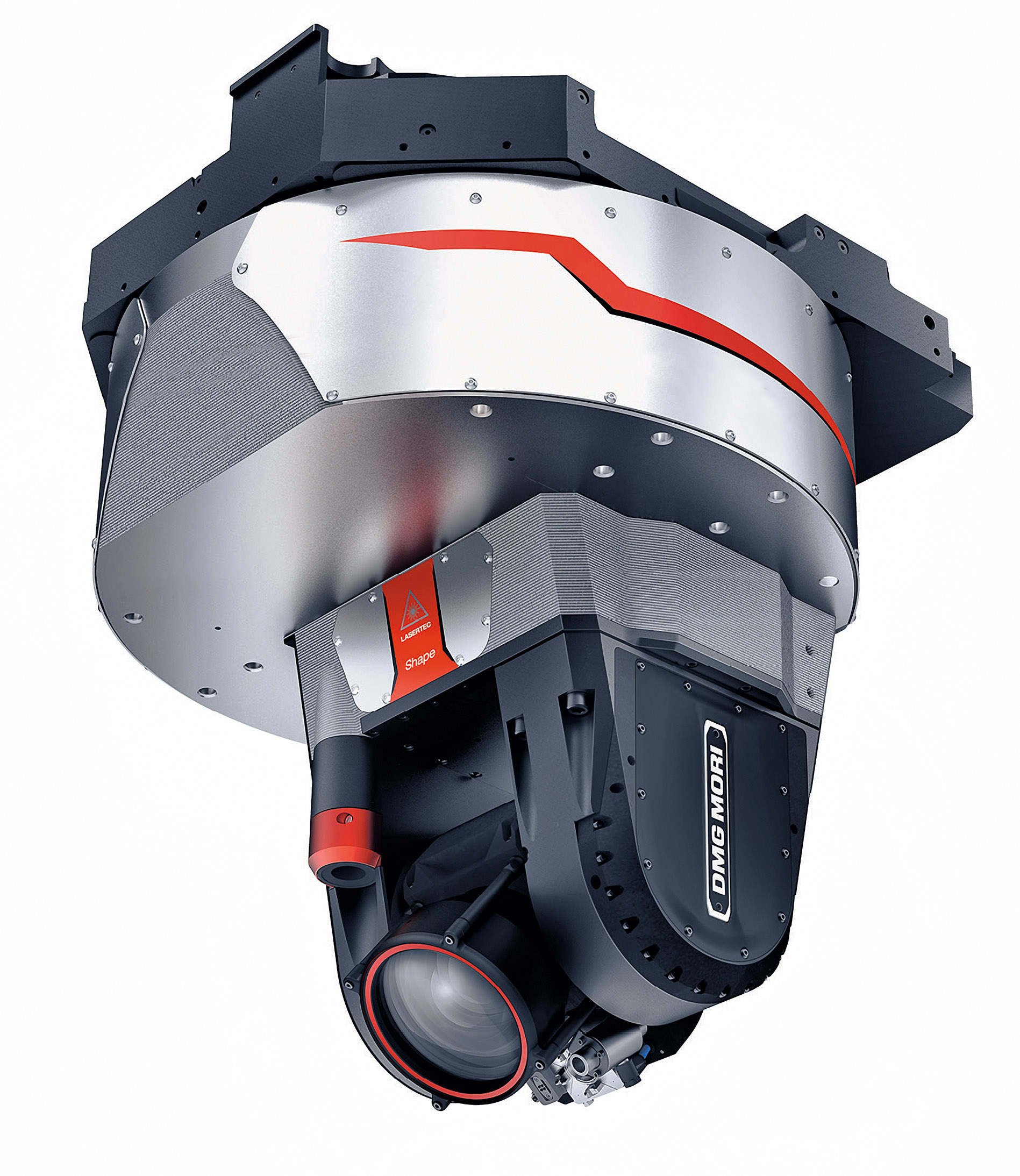
Using a newly developed additive manufacturing laser head, the purpose of the LASERTEC 400 Shape is to apply defined surface structures to existing plastic injection molds and press tools which improve the form and/or function of parts that they produce, such as scratch resistance or water repellence.
Understanding Filament Properties
The laser scanning head of the LASERTEC 400 Shape.
The laser features 100W of power with a switchable pulse length and frequency up to 1 kHz. An F-Theta scanning lens provides the system with 3D processing optics that allow the system to apply features onto existing 3D surfaces. The print head has two degrees of movement with ± 200 degrees rotation and a swivel range of -100 to +135 degrees, allowing it to process undercuts.
DMG Mori suggests that laser machining is more ecologically sustainable than conventional etching, while offering greater freedom of design and repeatability. See also: 3D Printing Tungsten Carbide: How Hot-Wire Laser T…. The system is marketed as being able to reach seemingly inaccessible portions of a part, including deep and narrow features, saying that even filigree cavities can be filled with the ablation process.
<iframe width=”560″ height=”315″ src=”https://www.youtube.com/embed/WoqrVStf7tc” frameborder=”0″ allow=”accelerometer; autoplay; encrypted-media; gyroscope; picture-in-picture” allowfullscreen></iframe>
Material Comparison and Selection
As discussed in a previous profile on the Japanese conglomerate, DMG Mori is one of the largest machine builders globally. This most recent addition to its systems portfolio builds off of the company’s more recent entry into additive manufacturing. DMG Mori offers a variety of hybrid manufacturing systems that incorporate DED laser systems into milling machines. With the acquisition of a majority stake in metal powder bed fusion system maker Realizer, the company began offering its own laser PBF printers in 2017.

Print Settings and Optimization
Two different technical surface structures ablated onto the surface of a mould.
DMG Mori has yet to combine PBF and machining processes the way that its competitor Matsurra has, but this Shaper line does operate similarly to Trumpf’s laser-based machining. Meanwhile, a hidden player with a huge stake in all manner of AM is Siemens, which produces hardware and software for managing systems like these. In the case of the LASERTEC 400 Shape, a Siemens 840 D solutionline provides control.
Strength and Durability Testing
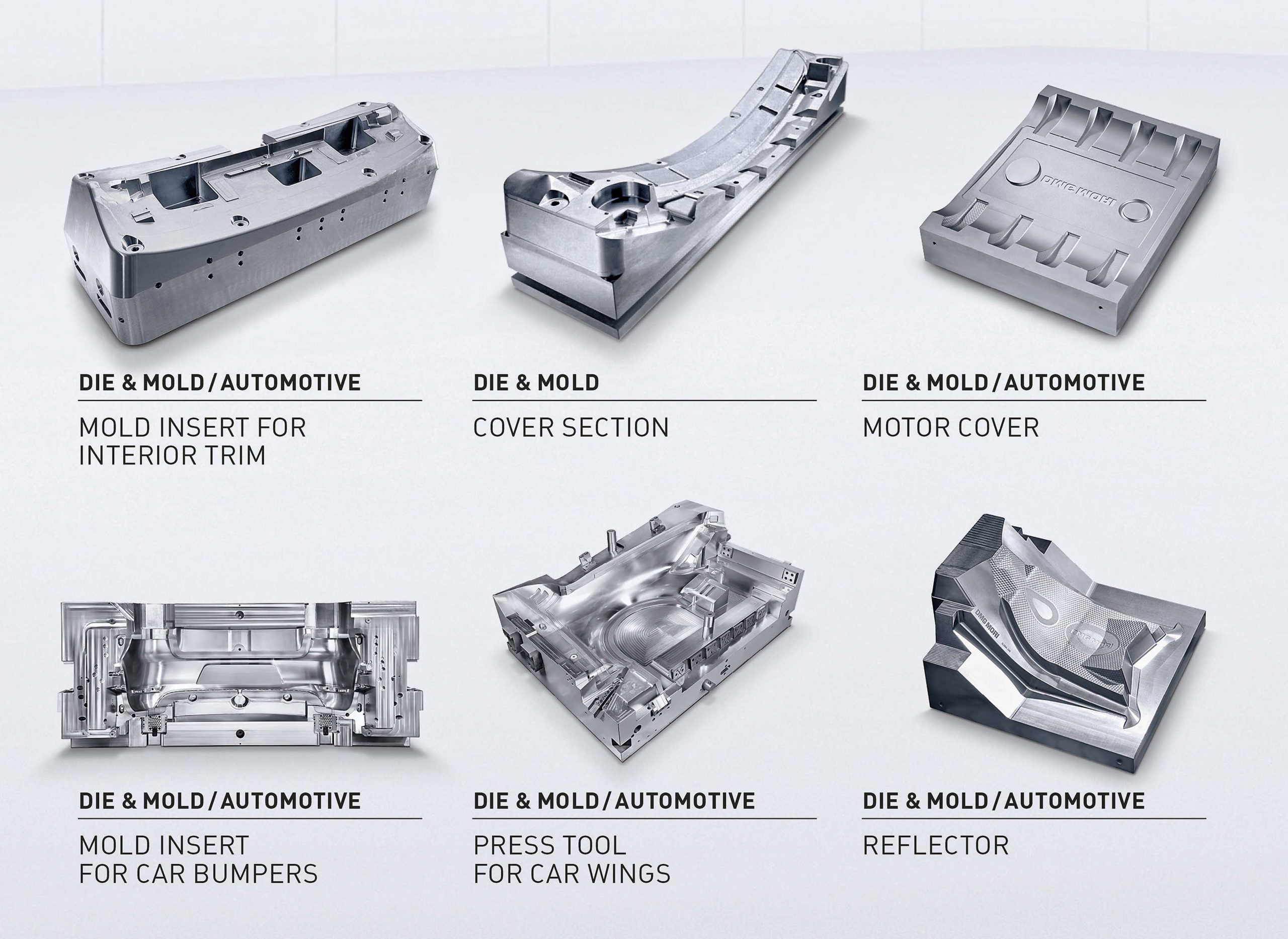
Mould applications for the LASERTEC 400 Shape.
Hybrid manufacturing has huge potential for the manufacturing of molds and dies. In addition to the ability to repair existing tools, it is possible that functionally graded materials can be used to create unique molds that take advantage of the properties of multiple materials. For instance, copper could be used as a heat sink in order to more quickly cool down the part after an injection molding cycle, while steel can be used to maintain the overall durability of the part. When complex features are possible (not often the case with directed energy deposition-based systems), conformal cooling channels can be added, which can also reduce cooling time.
To read more about the state of hybrid manufacturing, look for our series here. To read more about tools and dies, see this series.
Cost and Availability Considerations
The post DMG Mori Announces LASERTEC 400 Shape Laser Ablation System appeared first on 3DPrint.com | The Voice of 3D Printing / Additive Manufacturing.
Related Articles
Frequently Asked Questions
What is the best 3D printing filament for beginners?
PLA is the best starting filament — it prints easily at 190-220°C without an enclosure and produces good results. Once comfortable, PETG offers better strength and temperature resistance for functional parts.
How do I choose the right filament?
Consider the application: PLA for display models, PETG for functional parts, ABS/ASA for heat/sunlight exposure, TPU for flexible parts, and specialty filaments for engineering applications. Each has specific printer requirements.
What temperature should I print different filaments at?
PLA: 190-220°C nozzle / 50-60°C bed. PETG: 220-250°C / 70-80°C. ABS: 230-260°C / 100-110°C (enclosure needed). Nylon: 240-270°C / 70-90°C. Always check manufacturer recommendations for specific brands.
📌 Related Articles
- 3D Printing Tungsten Carbide: How Hot-Wire Laser Technology Creates Metal Harder Than Steel
- The Current State of Metal 3D Printing in 2020
- ABS 3D Printing Settings Guide: Temperature, Enclosure, and Cooling for Strong Parts
- Best 3D Printer Upgrades That Actually Improve Print Quality: Complete 2026 Guide
- Best Budget 3D Printer Upgrades That Actually Improve Print Quality: Belts, Springs, Hotends & More