
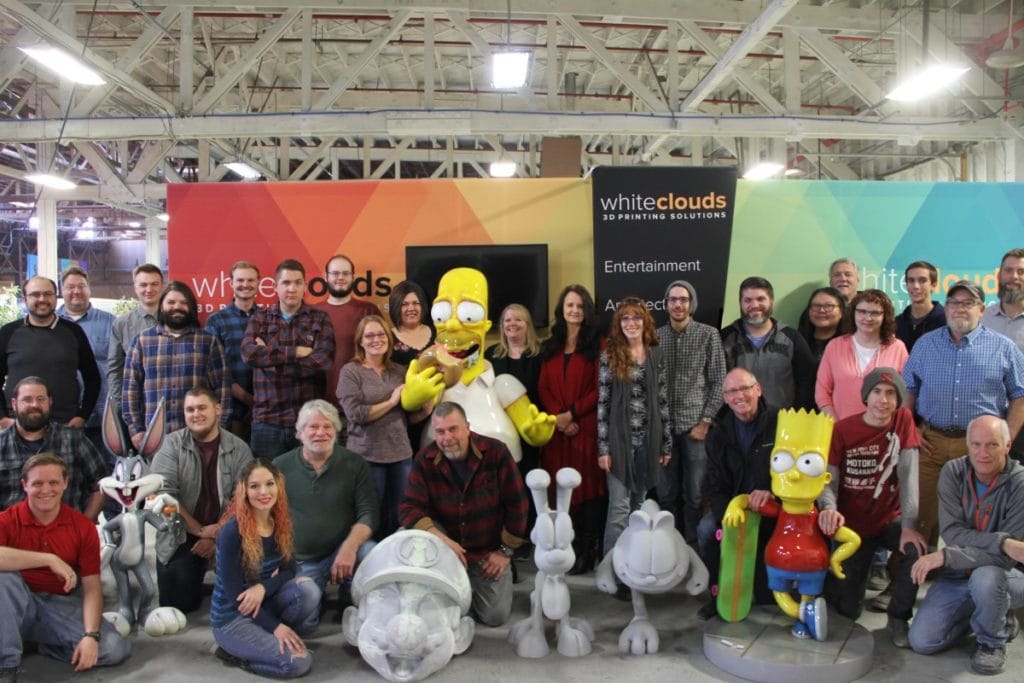
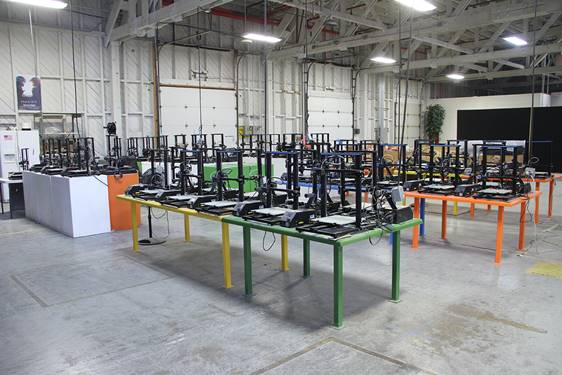
For a number of years now I’ve been advocating for the use of clusters of desktop 3D printers to manufacture. Whereas desktop machines years ago were not mature enough now and open cluster of FDM or SLA 3D printers could provide you with a cost-effective manufacturing solution. Not as accurate as industrial printers and lacking their reliability and repeatability the open systems would have a much lower part cost. At the same time, with no restrictions on materials you would have wider options in terms of materials and lower costs there as well. I’d always envisioned that systems such as Formlabs printers, Ultimakers and Prusa Originals would be used in this way. After all, a $1000 to $4000 investment per printer would be a worthwhile investment and pay itself back in higher reliability and longevity. I was completely dumbfounded when WhiteClouds contacted me to disclose that they have a print farm of 75 Creality systems.

I completely believe that clusters and farms of low-cost systems are the future for manufacturing for certain families of parts (B-side automotive above 10CM across for example), but not that low cost surely? We reviewed the Creality Cr10 V2 and were pleasantly surprised that it offered a lot of bang for the buck. But, the idea of using over 70 of the systems for production didn’t occur to me. WhiteClouds does do this and the firm also uses them to make some of the world’s largest 3D prints.

Understanding Filament Properties
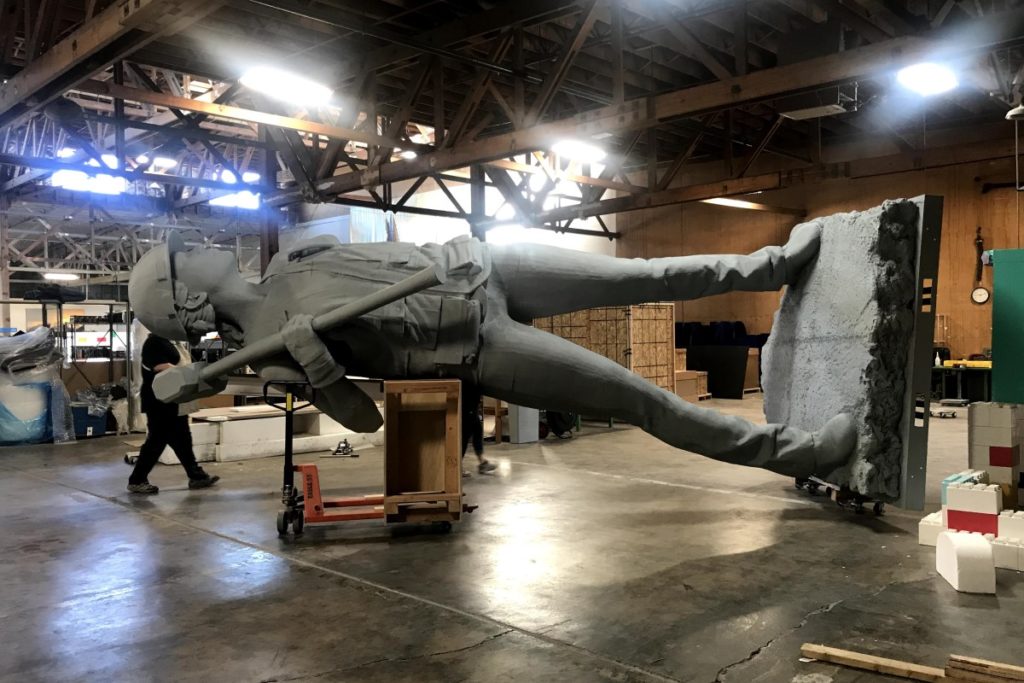
Started in 2013, WhiteClouds, has quite a specialization in large outdoor, trade show and entertainment models. The company marries artisans such as air brush artists, carpenters and painters with 3D printing to create large 3D printed items for many industries. The company has worked for some of the world’s largest computer games studios, the Milwaukee Bucks, the Chicago Bulls, Disney, Ford, Hasbro, Lowe’s, Marvel, Mayor League Baseball, Stanford and Walmart to create large 3D printed structures. Right now the company has released a 6 meter tall humanoid structure for a client.
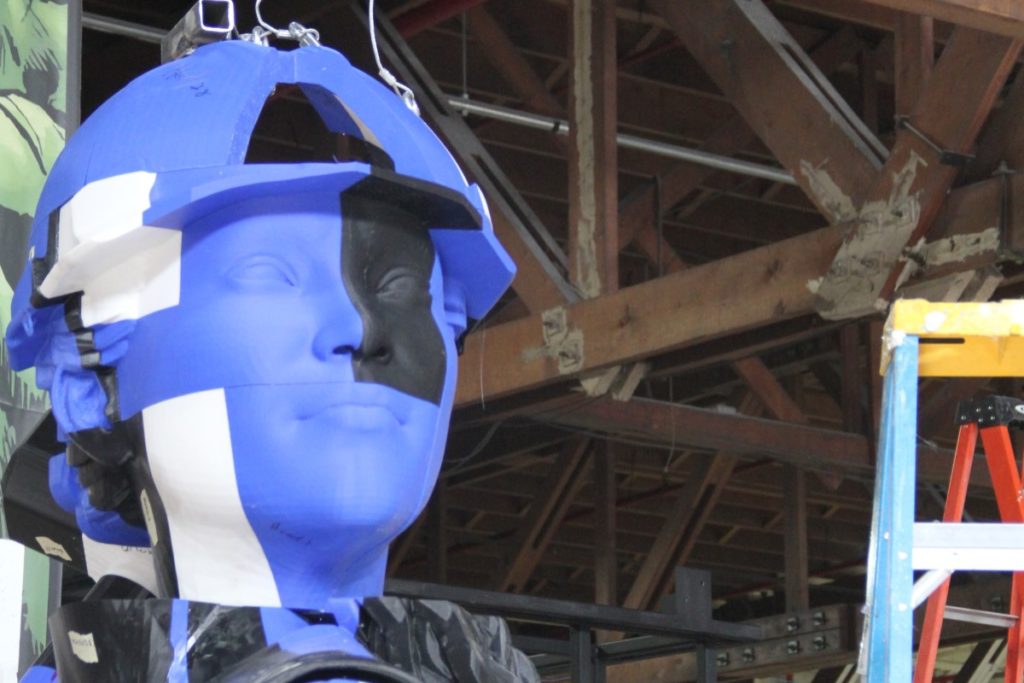
The company has 40 industrial 3D printers from the likes of Stratasys and 3D Systems and now has 75 Creality systems that print PLA. We interviewed WhiteClouds CEO Jerry Ropelato to find out more. Asked how he controls the systems, he says that, “We use the standard software that comes with the printers along with some in-house proprietary software to better manage the systems.” Jerry and his team “tested and researched the best low-cost printers and found Creality to be the best.”
Material Comparison and Selection
I wanted to know if more expensive printers aren’t better?
“That was our original thinking when we started the company. Early-on in our company, we spent millions purchasing high-end 3D production printers. What we learned is that customers are willing to pay high dollars for prototypes, but very little else. With the high-costs associated with consumables, equipment costs, maintenance costs, machine longevity, environment setup requirements found in production 3D printers, they can be 100 to 1,000 times more costly when compared to low-end 3D Printers.”
Print Settings and Optimization
It is important to note that when switching to production, costs are supposed to dramatically fall and this is something other 3D printing firms are also finding out. Prototyping is a nice warm bath but its chilly out there on the factory floor. What about the quality of these low-cost systems?
“The quality and reliability has improved dramatically over the last few years in the low-end 3D printers and we are moving more and more to using these types of 3D printers. Cost is such a big issue in 3D printing that I do believe a lot of companies will look are more cost-effective solutions.”
Strength and Durability Testing
Overall I think that this is a telling development. It is notable that all of the major players left the low-cost 3D printing market because they didn’t want to join “a race to the bottom.” In the spirit of the Innovator’s Dilemma good enough $200 systems have been sold in their tens of thousands and now are moving into higher cost territory. It seems that desktop OEMs are now in danger of being disrupted themselves. If WhiteClouds’ experience leads to them expanding then perhaps more players in the market will look to lower-cost desktop systems for actual manufacturing applications.
PS, I know this is like our third Creality post in a week. This is a coincidence.
The post Whiteclouds uses a Printfarm of 75 Creality 3D Printers to Make Large Format 3D Prints appeared first on 3DPrint.com | The Voice of 3D Printing / Additive Manufacturing.
Related Articles
Frequently Asked Questions
What is the best 3D printing filament for beginners?
PLA is the best starting filament — it prints easily at 190-220°C without an enclosure and produces good results. Once comfortable, PETG offers better strength and temperature resistance for functional parts.
How do I choose the right filament?
Consider the application: PLA for display models, PETG for functional parts, ABS/ASA for heat/sunlight exposure, TPU for flexible parts, and specialty filaments for engineering applications. Each has specific printer requirements.
What temperature should I print different filaments at?
PLA: 190-220°C nozzle / 50-60°C bed. PETG: 220-250°C / 70-80°C. ABS: 230-260°C / 100-110°C (enclosure needed). Nylon: 240-270°C / 70-90°C. Always check manufacturer recommendations for specific brands.
📌 Related Articles
- Best 3D Printer Upgrades That Actually Improve Print Quality: Complete 2026 Guide
- Best Budget 3D Printer Upgrades That Actually Improve Print Quality: Belts, Springs, Hotends & More
- Prusa Research Mini+ vs Prusa MK4: Full Specs Comparison & Buyer’s Guide
- ABS 3D Printing Settings Guide: Temperature, Enclosure, and Cooling for Strong Parts
- 3D Printing Safety Equipment Guide: Respirators, Gloves, and Ventilation for 2026