
Chinese researchers from the School of Mechanical and Electronic Engineering at Lingnan Normal University are examining ways to improve the use of microfluidics, outlining their research in the recently published ‘3D Printed Reconfigurable Modular Microfluidic System for Generating Gel Microspheres.’
In this study, the research team developed an interconnected network of microfluidics meant to prevent common challenges—especially limitations for designers in creating more complex systems. Reconfigurable microfluidics are meant to form more integrated systems, allowing for biochemical functions such as:
- Emulsion generation
- Multi-organ chips
- Gradient generation
- Biochemical analysis
“Existing systems often use a monolithic approach, where chemical reactors, sensors, valves, pumps, and detectors are integrated on a single chip,” explain the researchers. ”The typical fabrication methods of monolithic microfluidic systems, which include soft lithography, hot embossing, and femtosecond laser writing, are time consuming and often expensive. Additionally, the complicated fabrication processes would require more attention to the quality control.”
The Role of 3D Printing in Medicine
A breakdown within a monolithic system then requires a complete reconstruction of the entire microfluidic system—adding time and expense to a research project. With a modular system, specific parts can be replaced when an issue arises—and they can also be designed and tested separately before integration into the entire system. Modular devices can be constructed quickly—in mere minutes—but they must also be finished with extra bonding and sealing, requiring added time, expense, and expertise.
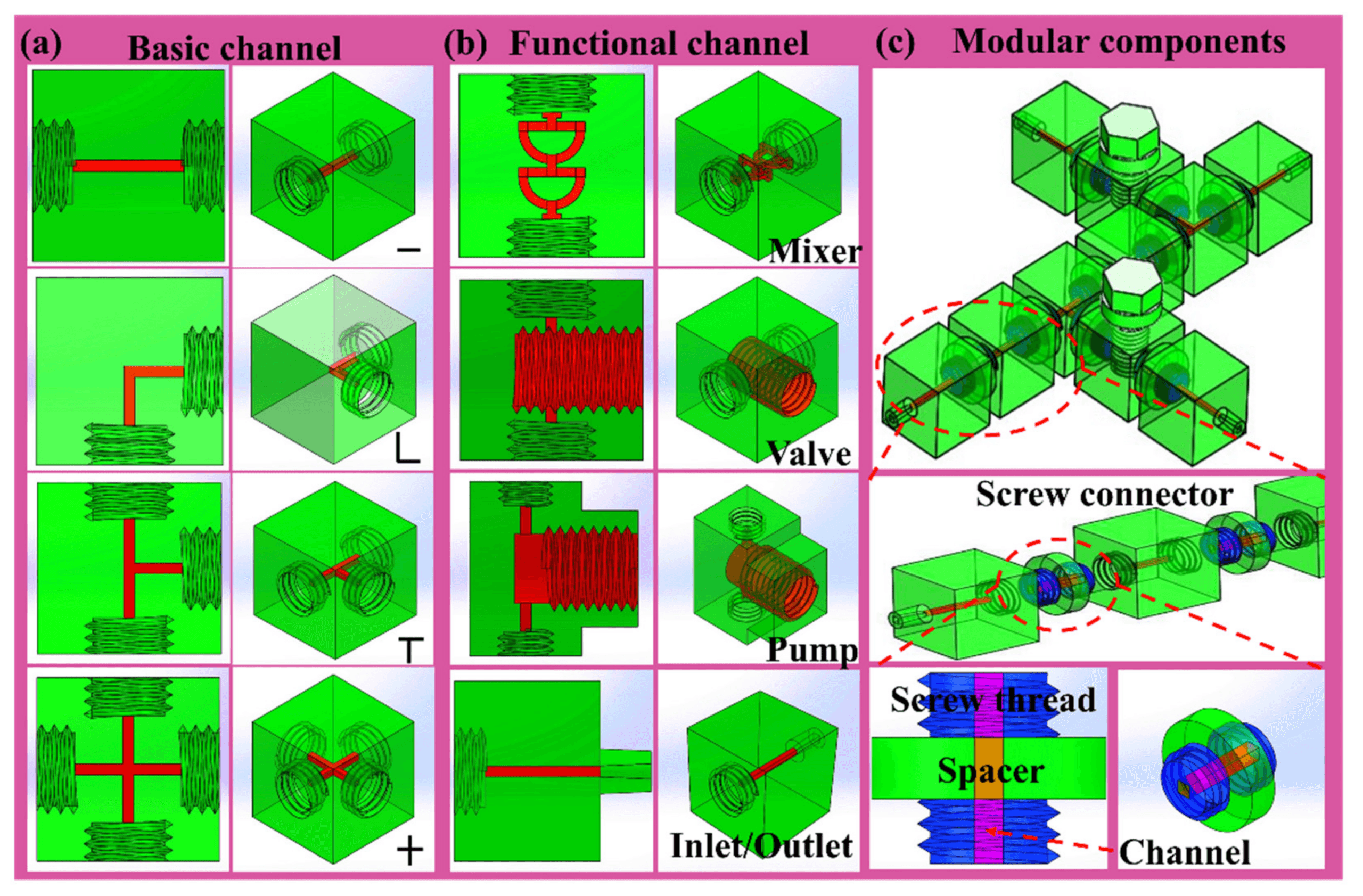
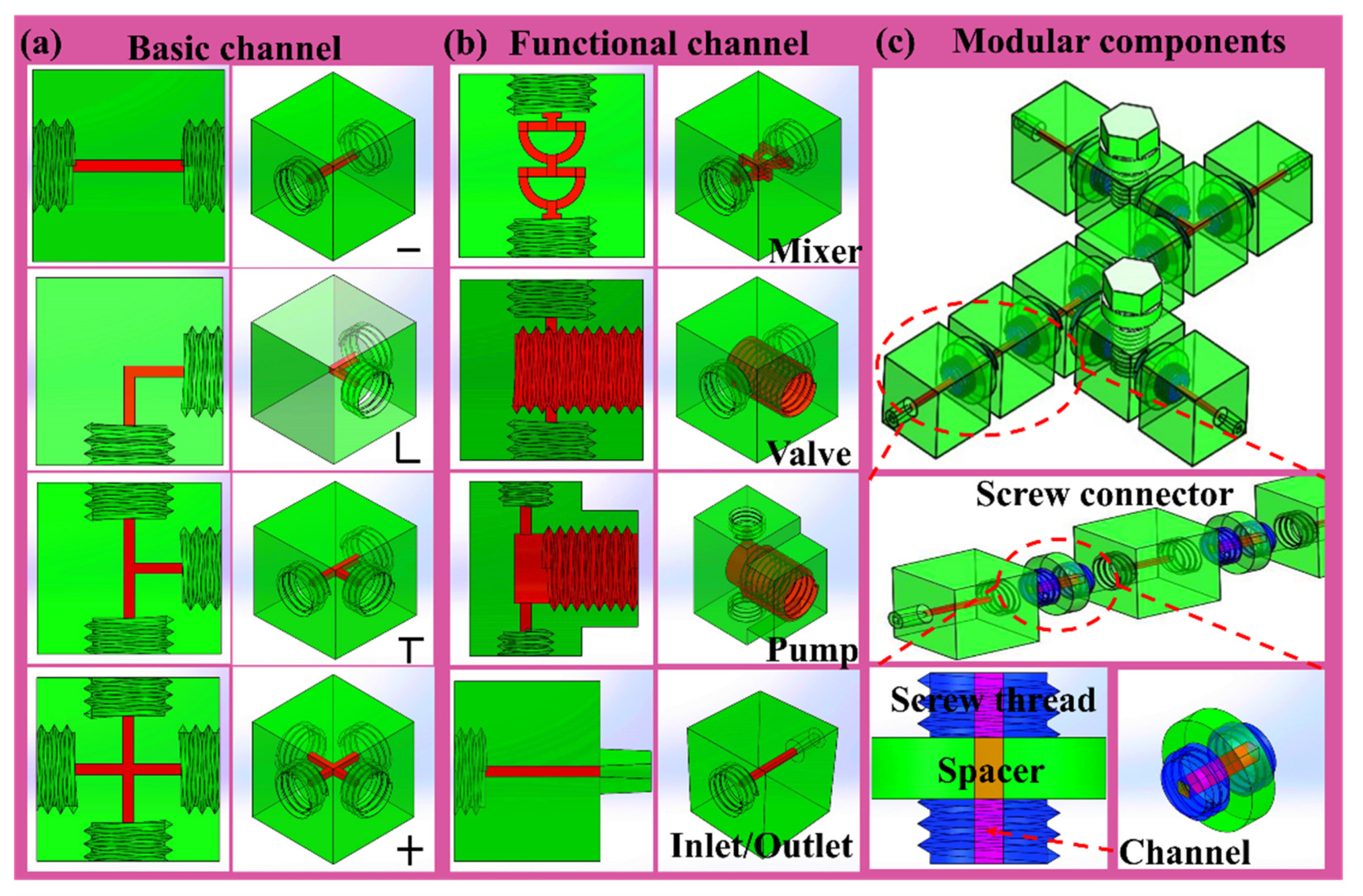
The modular system specific to this study offers advanced microfluidics with varying geometries. They make up a complex system yet are simple to put together consisting of a screw fastener and an assembly module. Each module is assigned a function, whether it serves as an inlet or an outlet, as a channel, valve, reservoir, or has another purpose.
Biocompatible Materials and Processes
Schematic illustration of 3D printed microfluidic modular components. (a) basic microchannel unit. (b) functional microchannel unit. (c) multifunctional microfluidic system. The device consists of multiple basic channels and functional channels using screw connector.
The researchers designed the 3D model samples (measuring 10 x 10 x 10 mm3) with SolidWorks and then 3D printed them on a ProJet®D3510 SD, using VisiJet® Crystal material (and VisiJet® S300 for waxy support material). After 3D printing, the modules were connected via screw pin connectors.
Clinical Applications and Case Studies
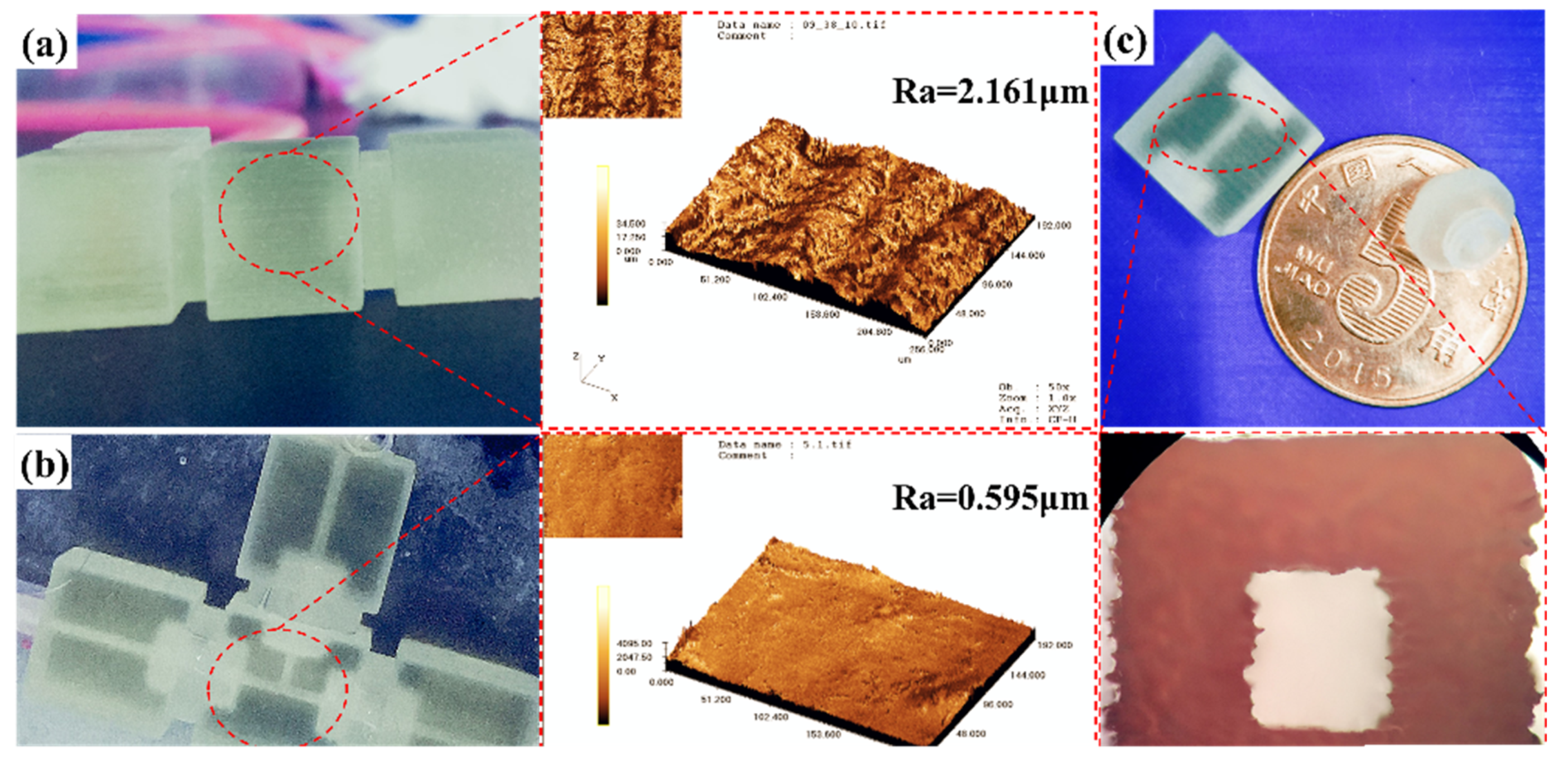
Micrographs of the chip surface quality. (a) surface quality and surface roughness before treatment. (b) surface quality and surface roughness after polishing and polydimethylsiloxane (PDMS) treatment coating. (c) image of 3D printed module components.
Surface quality was deemed excellent, and both surface polishing and the use of PDMS coating were ‘very effective.’
Regulatory Considerations and Safety
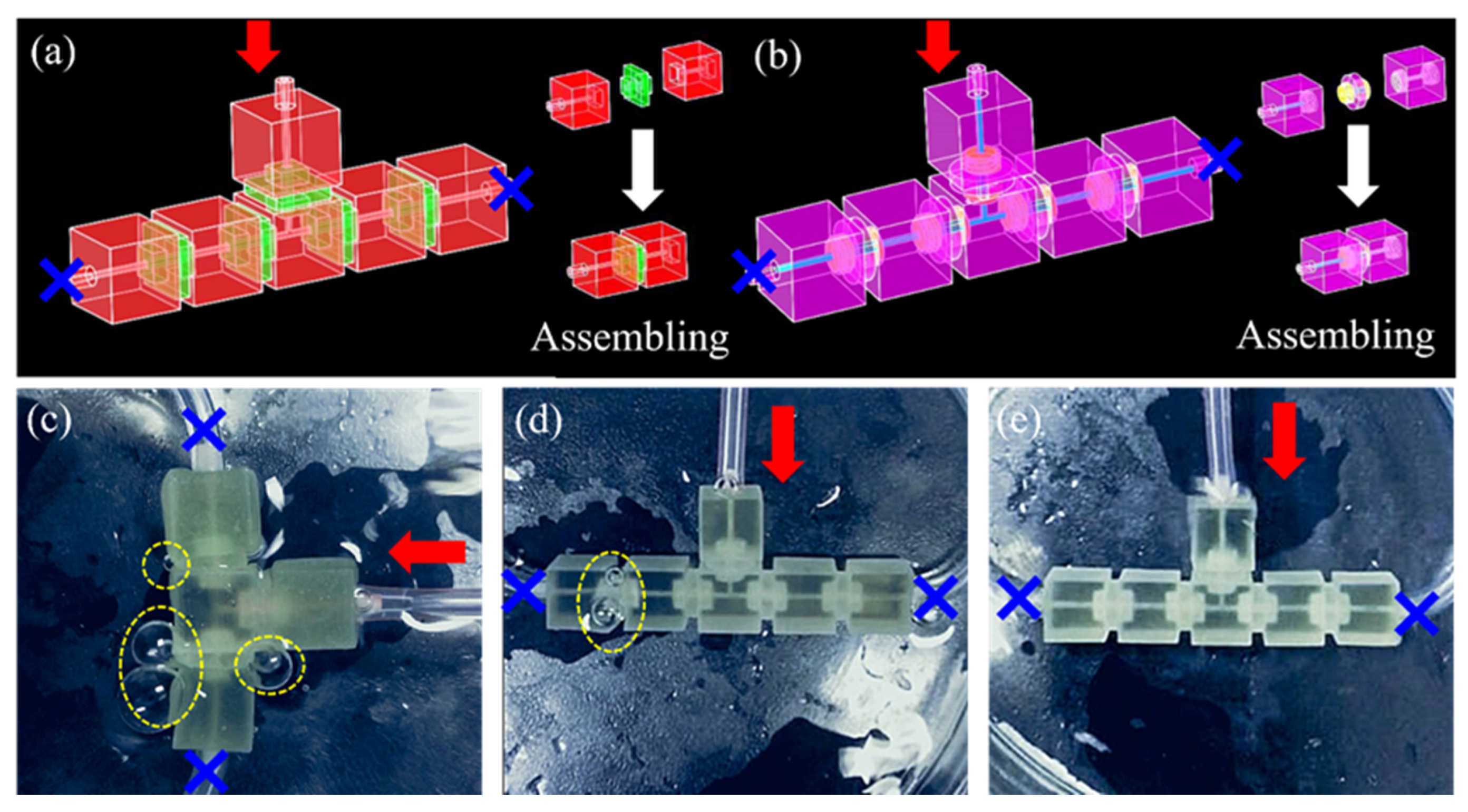
Connectivity of the modular microfluidic system. (a) schematic of modular assembly of embedded connections. (b) schematic illustration of modular assembly with threaded connections. (c) leakage experiment of embedded connected microfluidic system. (d) leakage experiment of threaded connected microfluidic system (untightened thread). (e) leakage experiment of threaded connected microfluidic system (tightened thread).
Testing also entailed evaluation of the screw fastener through employing an embedded connection, and ‘untightening’ and tightening of the thread. Digital pressure gauges were also used to test for leaks.
Research Breakthroughs and Innovations
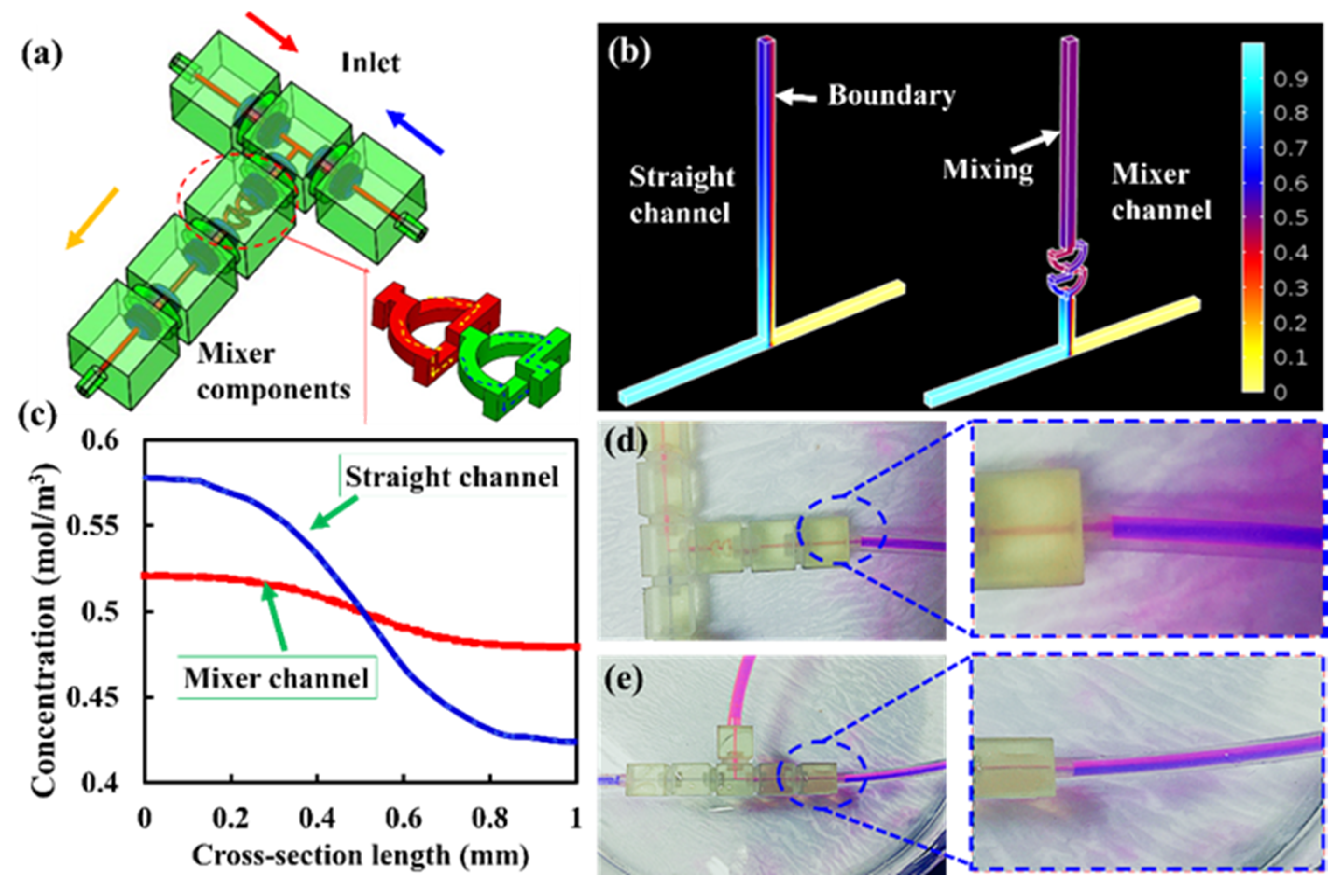
(a) schematic illustration of microfluidic system assembly with mixed channel module. (b) simulation of mixing effects for straight channel and mixer channel modules. (c) normalized concentration of the outlet for the straight channel and mixer channel modules, respectively (the terminal of the microchannel). (d,e) mixing effects of fluids in straight channel and mixer channel modules.
“… the method of screw connection was simple and fast,” explained the researchers. “It could be disassembled and reassembled repeatedly to build different functions of novel microfluidic system. It is widely applied in biochemical fields such as fluid mixing and droplet generation. Importantly, the threaded connection provided high fluid pressure, avoiding fluid leakage problems, and expanding its application.”
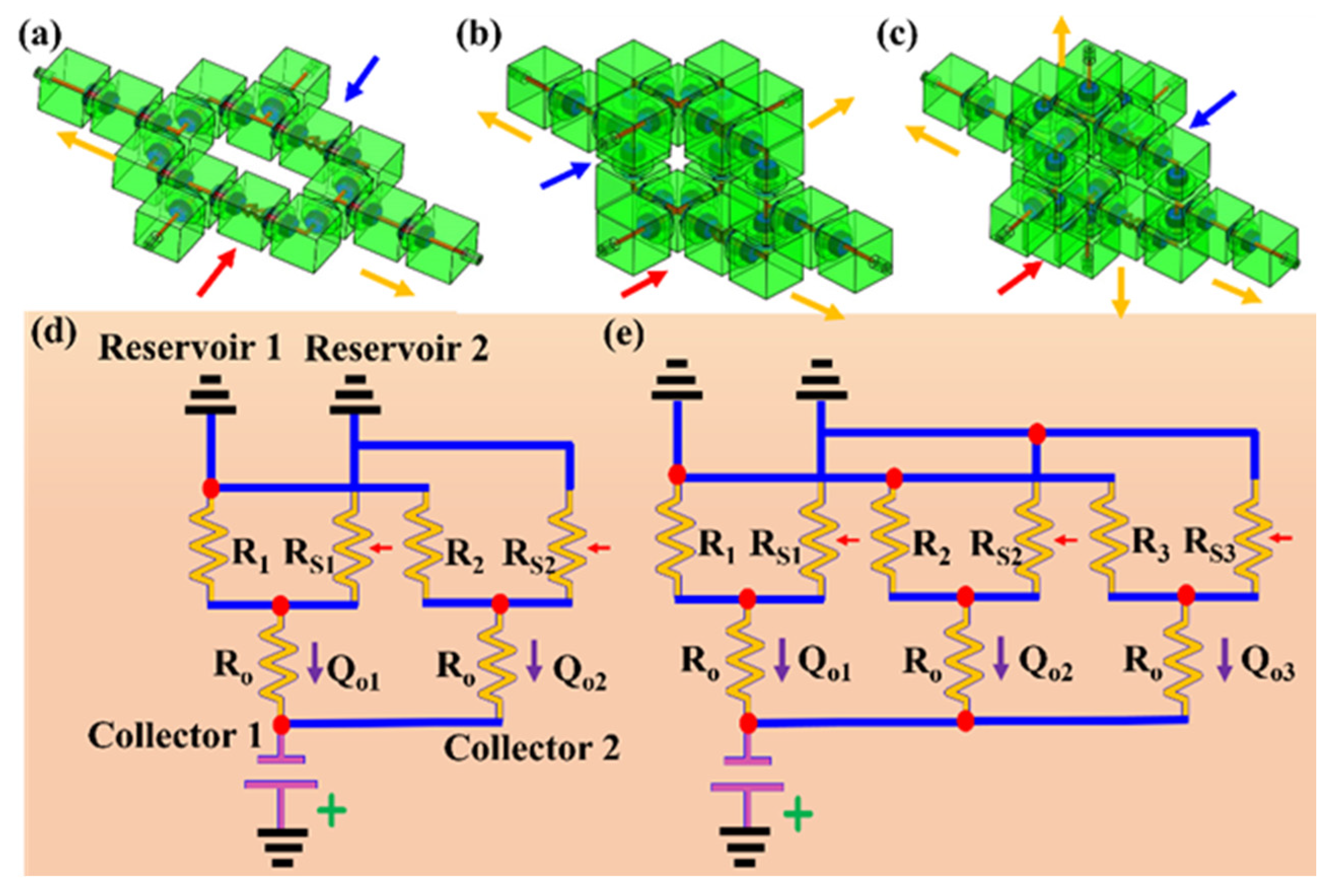
The tunable mixer with (a) two, (b) three, and (c) four outlets. (d,e) comparison of equivalent circuit models for two- and three-outlet parallelized configurations of the tunable mixer system.
The Future of Bioprinting and Medical AM
The range of sample modules were all connected with the screw fastener, and ultimately because of the ease in assembly, the researchers stated that this system would be suitable for non-expert users.
“Furthermore, the integrated microfluidic device was also applied as multi-analyte mixing and multi-emulsion generation. This modular microfluidic system has a tremendous potential for realizing mass-production complexes and multiplex systems for the commercialization of the microfluidic platform,” concluded the researchers.
The Role of 3D Printing in Medicine
Microfluidics continue to be a source of research and study for scientists today, in work with organ-on-chips, integration with sensors, and with projects requiring miniaturization. What do you think of this news? Let us know your thoughts; join the discussion of this and other 3D printing topics at 3DPrintBoard.com.
[Source / Images: ‘3D Printed Reconfigurable Modular Microfluidic System for Generating Gel Microspheres’]
The post China: Researchers Test 3D Printed Modular Microfluidic Systems appeared first on 3DPrint.com | The Voice of 3D Printing / Additive Manufacturing.
from Your daily news from 3DPrint.com http://bit.ly/3b9iW8x
Related Articles
Frequently Asked Questions
How is 3D printing used in medicine?
3D printing is used in medicine for surgical planning models, custom implants, bioprinting tissue scaffolds, drug delivery systems, dental aligners, and prosthetics. It enables patient-specific solutions that improve outcomes and reduce surgery time.
What materials are biocompatible for 3D printing?
Common biocompatible materials include PEEK, titanium alloys (Ti6Al4V), bio-ceramics (hydroxyapatite), medical-grade resins, PLA for temporary implants, and hydrogels for bioprinting. Material choice depends on the application and required mechanical properties.
Is 3D printed medical equipment FDA approved?
Yes, several 3D printed medical devices have FDA clearance, including orthopedic implants, dental restorations, and surgical guides. Each device must go through the appropriate regulatory pathway based on its risk classification.
📌 Related Articles
- Best 3D Printer Upgrades That Actually Improve Print Quality: Complete 2026 Guide
- Best Budget 3D Printer Upgrades That Actually Improve Print Quality: Belts, Springs, Hotends & More
- Prusa Research Mini+ vs Prusa MK4: Full Specs Comparison & Buyer’s Guide
- ABS 3D Printing Settings Guide: Temperature, Enclosure, and Cooling for Strong Parts
- Bambu Lab P1S vs Bambu Lab P2S: Full Specs Comparison & Buyer’s Guide