
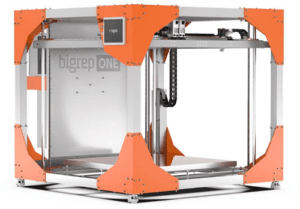
We’ve got news about 3D printers in today’s 3D Printing News Briefs, as BigRrep has shipped its 500th large-format 3D printer. Peopoly is developing new 3D printers for its Phenom series, and startup Excelencia is offering a 3D printing service for large objects. Moving on, MPA, NAMIC, and SSA have launched a Joint Industry Program for 3D printed maritime parts.
BigRep Ships 500th Industrial Large-Format 3D Printer
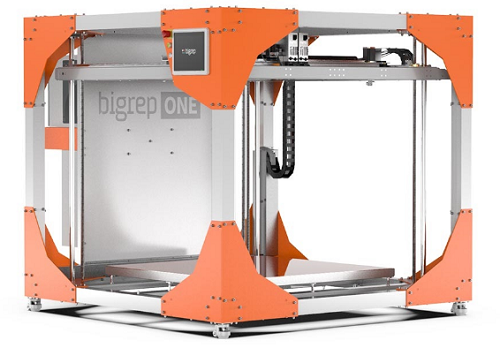 Large-format 3D printing leader BigRep, founded in 2014, just announced that it has shipped its 500th industrial large-format AM system. The company’s managing director, Martin Beck, said that this delivery shows how much all of the company’s industrial customers value BigRep products, which are utilized in a wide variety of applications. The 500th delivery was a BigRep ONE 3D printer, which was shipped to e-mobility tech company JAMADE GERMANY, creator of the AMAZEA underwater scooter – the first water sports mobility device that will use serial produced 3D printed parts at the consumer level.
“We are very excited about this delivery because it represents a new dimension of industrial AM in end-consumer products, both for us as a company and the industry,” said JAMADE Managing Partner and Technical Director Detlef Klages. “The new BigRep ONE will enable us to launch the serial production of AMAZEA as planned, completing our existing fleet of four BigRep ONE printers. We greatly value the printers’ cost efficiency, accuracy and quality when compared to the extremely high investment for traditional tools.”
How 3D Printing Responded to COVID-19
Peopoly Developed Two New Phenom Series 3D Printers
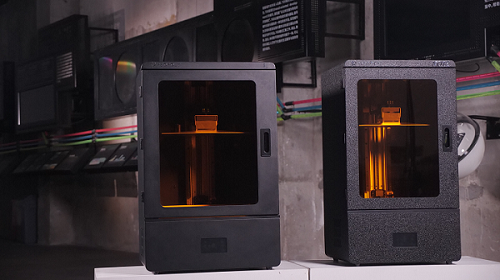 In October, Hong Kong company Peopoly launched its Phenom 3D printer series, which was well-received by industrial users due to a higher resolution print, shorter workflow, and reduced cost. So, using the same MSLA technology, the company, which was founded back in 2016, has developed two new systems for its third generation series: the extra-large Phenom L and the fast Phenom Noir.
The Phenom L has a build volume of 345.6 × 194.4 x 400 mm – over 50% larger than the original, which a 20% faster rate of print speed. It also features new build plate designs, which improves the post-processing experience and simplifies the workflow for larger prints. The Phenom Noir has a monochrome LCD panel, designed for enterprise 3D printing applications, that reduces UV light waste, which Peopoly says makes the system run five times faster than the Form 3. With its 293.76 × 165.24 x 400 mm build size, it’s also nearly 13% bigger than the original Phenom.
HP and the Pandemic Manufacturing Shift
Excelencia’s Launches 3D Printing Service for Large Objects
Supply Chain Disruptions and Digital Solutions
MASSIVIT project
Spanish 3D and textile 3D printing distributor Excelencia Tech just launched earlier this month with two big projects. First, the startup is an official distributor for MASSIVIT 3D printers, so it’s focusing on selling these. Secondly, Excelencia is promoting its XL MEDIA Project, which is a service it offers for 3D printing very large objects on its MASSIVIT systems. The 3D printers the startup owns are pretty costly, which is why Excelencia is promoting the use of them to companies that need to print large objects, but can’t afford to purchase their own large-format printer.
“Nowadays, if one of our 3D printings have to be done by a “traditional” 3D printer, it will take couple of weeks and an enormous budget to succed. So we offer the chance to create your 3D products using our machine without buying it, to understand and check all advantatges that Massivit’s machines have,” Miguel Preda Lliso, the Marketing and Business Development Manager for Excelencia, told 3DPrint.com.
Medical PPE and Equipment Production
“With our technology we can do giant products (about 180 cm) in less tan 48 hours and without generating as much waste as traditional machines (our machines just use as much kilos of material as the product weight).”
Phase 2 of Joint Industry Program for 3D Printed Marine Parts
 Singapore’s National Additive Manufacturing Innovation Cluster (NAMIC), along with SSA and the Maritime and Port Authority of Singapore (MPA), has launched the second phase of a Joint Industry Programme (JIP) for the 3D printing of marine and maritime parts. See also: Best 3D Printer Upgrades That Actually Improve Pri…. Phase 1 was completed in October, and Phase 2 consists of the call for proposals from classification societies or AM technology suppliers that would like to participate in the JIP as an industry consortium leader. The objective of this JIP, which has the potential to spin off further developmental projects in the future, is to establish the technical feasibility, regulatory requirements, and commercial viability for creating 3D printed marine parts.
“Maritime assets are capital intensive, and downtime is costly,” the JIP Challenge Statement reads.
Lessons Learned for Future Emergencies
“Replacement of marine spare parts involves many actors in the supply chain, and can be costly in terms of inventory, logistics, and cost of spare parts (especially for obsolete parts).”
The JIP is also working to shine a light on some of the opportunities, and challenges, involved in deploying 3D printing for marine parts, such as approval and certification processes. The application deadline for this phase is 6 pm on April 6, 2020.
Discuss these stories and other 3D printing topics at 3DPrintBoard.com or share your thoughts in the comments below.
How 3D Printing Responded to COVID-19
The post 3D Printing News Briefs: March 16, 2020 appeared first on 3DPrint.com | The Voice of 3D Printing / Additive Manufacturing.
from Your daily news from 3DPrint.com http://bit.ly/3d46qJi
Related Articles
Frequently Asked Questions
How did 3D printing help during COVID-19?
During the COVID-19 pandemic, 3D printing enabled rapid production of critical medical supplies including face shields, ventilator components, nasal swabs, and PPE. Distributed manufacturing allowed makers worldwide to produce items locally without waiting for traditional supply chains.
What was the pandemic digital manufacturing shift?
The pandemic accelerated adoption of digital manufacturing including 3D printing, as companies sought more resilient supply chains. Organizations shifted from centralized to distributed production, using digital files to produce parts locally on demand.
Can 3D printing supply chains be resilient in emergencies?
Yes, 3D printing provides supply chain resilience through distributed manufacturing — designs can be shared digitally and produced anywhere with compatible equipment, eliminating the need for physical inventory and shipping of parts.
📌 Related Articles
- The Current State of Metal 3D Printing in 2020
- Best 3D Printer Upgrades That Actually Improve Print Quality: Complete 2026 Guide
- Best Budget 3D Printer Upgrades That Actually Improve Print Quality: Belts, Springs, Hotends & More
- 3D Printing News: Multi-Material Breakthrough and Aerospace Market Boom
- 3D Printing Tungsten Carbide: How Hot-Wire Laser Technology Creates Metal Harder Than Steel