
Russian researchers are experimenting with titanium implants meant to promote the reconstruction of the jaw after surgery, outlining their study in the recently published ‘Experimental Biointegration of a Titanium Implant in Delayed Mandibular Reconstruction.’
Surgery to remove an oral tumor usually also results in the need for mandibular reconstruction. And while implants are commonly required in reconstruction, the authors point out that not much is known about how bone integrates into a titanium implant, leaving them to examine the process further.
Unfortunately, surgery to remove cancer in the area of the jaw can be disfiguring, as well as making it difficult to chew. In reconstructing the area, surgeons are becoming more used to inserting titanium implants to replace tissue, beneficial due to its structure and biocompatibility.
Many methods revolve around grafting bone for replacing the deficiency in the mandibular area, whether including the use of an implant or not. Risks include resorption, challenges in rehab later, and delayed infection. There is also a common need for ‘secondary revisional procedures,’ which are obviously counterintuitive to the efficiency of what is initially assumed to be a one-time reconstruction.
The State of Metal 3D Printing
As 3D printing becomes more accessible, affordable, and acceptable for use in the medical field, better options are becoming available for creating implants that can be customized completely to the patient, including those who are considered complex.
“The efficacy of mandibular reconstruction with direct implant prosthesis is a controversial topic, yet, in cancer patients with aggravating comorbidities, the best solution can be achieved by individually printed prosthetic mandibular implants,” explain the researchers. “The osseointegrative capabilities of modern porous titanium implants is high, and current technological manufacturing progress, including selective laser melting and 3D printing, has increased the interest of surgical teams in implant-based reconstruction.”
Technical Challenges and Solutions
Undeniably, many questions remain around the topic of implant adaptation and the success of prostheses with additional implantation. The researchers delved further into the science of osseous integration with titanium implants in animals, post re-section, studying both the implanting and then the required removal of a prothesis meant to be temporary.
Material Properties and Performance
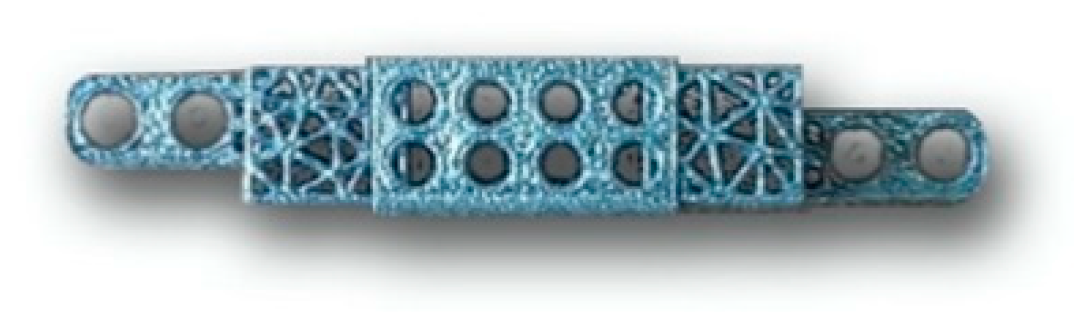
Model of a bionic titanium implant.
Titanium bionic implants, tetragonally shaped, were fabricated to mimic human bone. A Russian-made selective laser melting (SLM) printer was used with Titanium VT1-00 powder. For the experimental model, four adult ewes (from 1.5 to 2 years old) received implants in a fully approved research capacity.
Industrial Applications and Use Cases
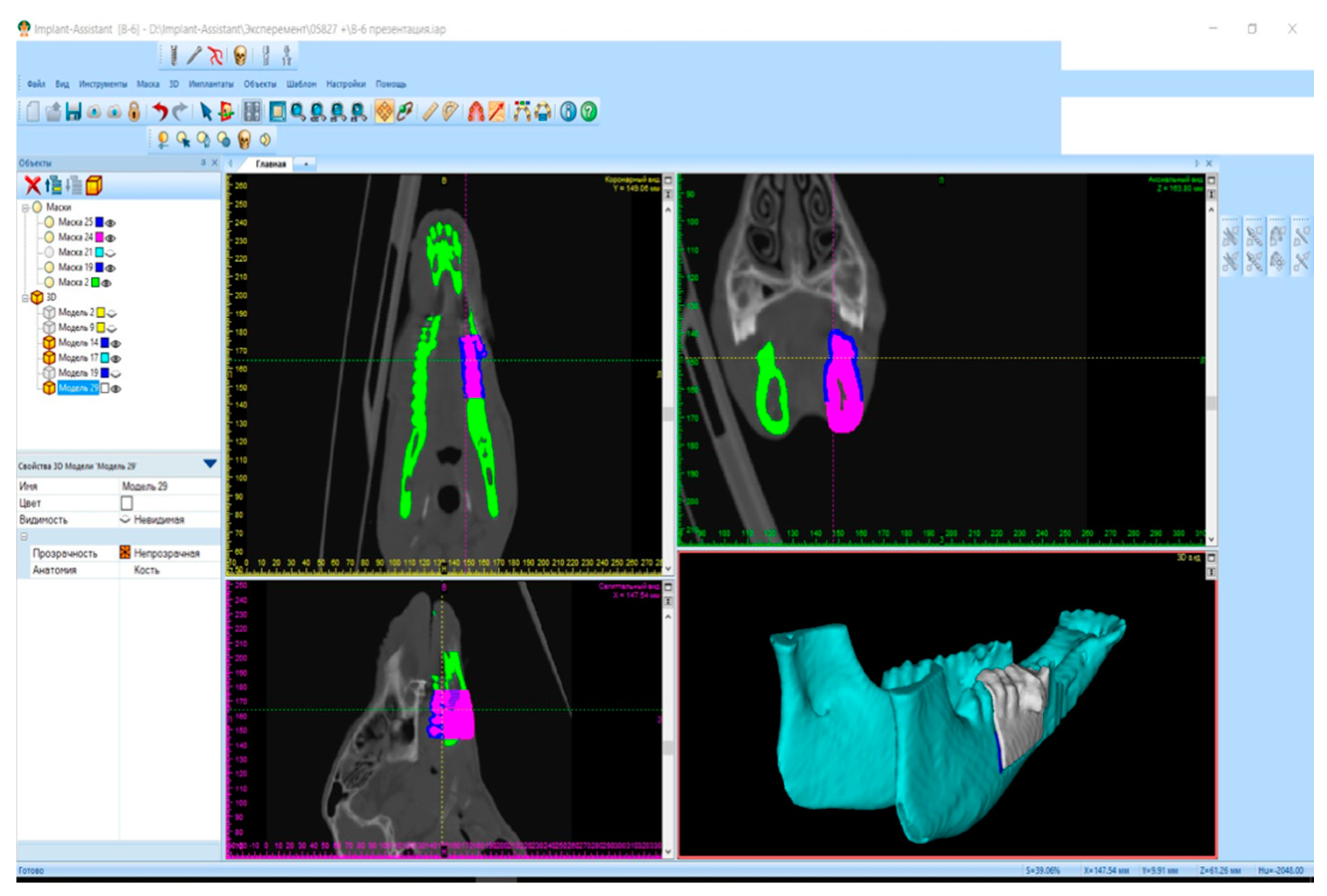
Modeling of titanium implant via ‘Implant Assistant.’
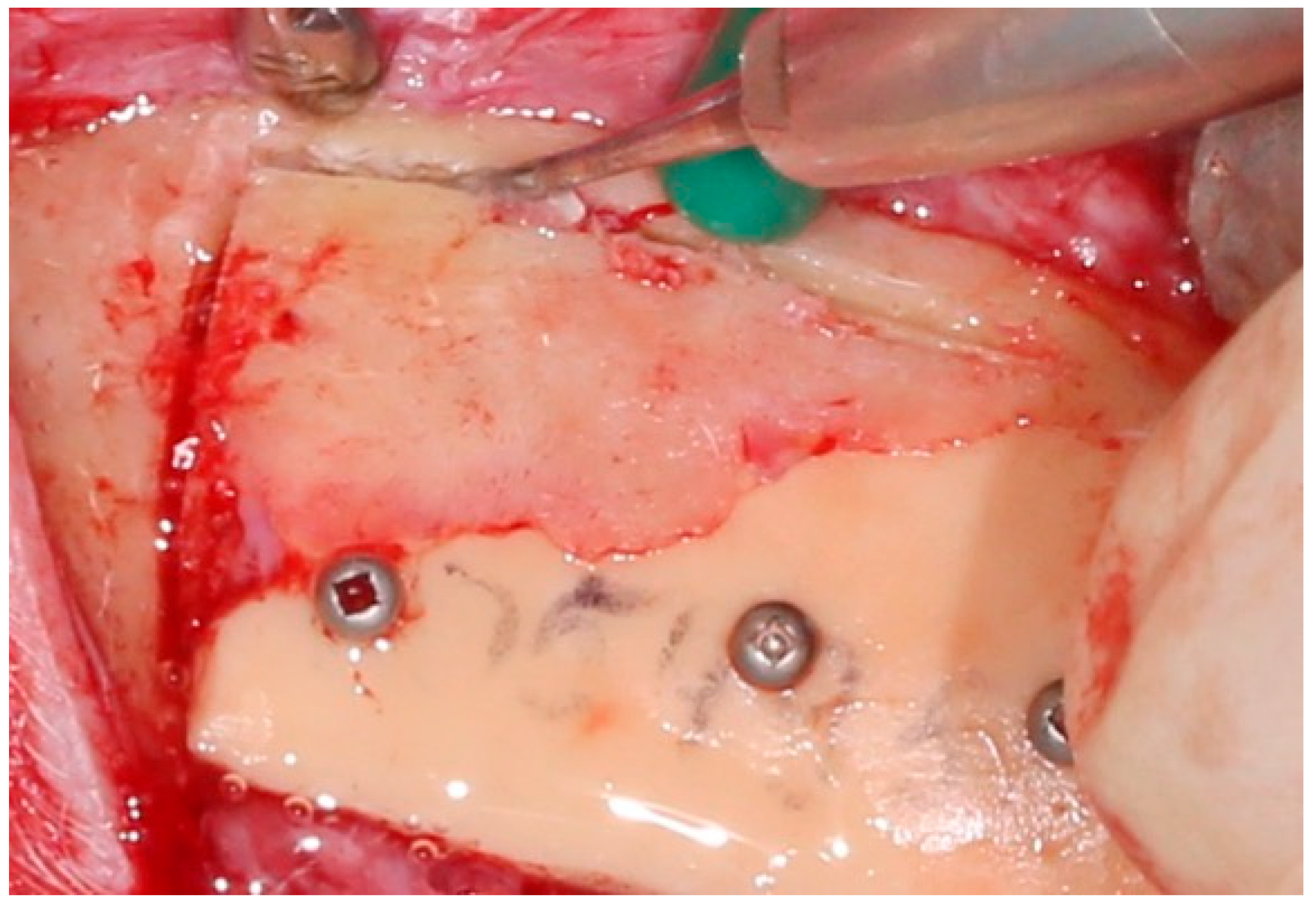
“The experiment protocol included the primary resection of the external cortical layer of the mandible at an extent of 3 cm, with consequent implantation of a sterilized plastic implant created via 3D printing,” stated the authors.
“A plastic implant was positioned into the mandibular defect and secured with standard orthopedic screws. Layered wound closure was performed with absorbable sutures. The skin was closed with non-absorbable material. This completed the first surgical stage of the experiment. As a result, all subjects received 3D modeled plastic implant for mandibular reconstruction.”
Comparing Metal AM to Traditional Manufacturing
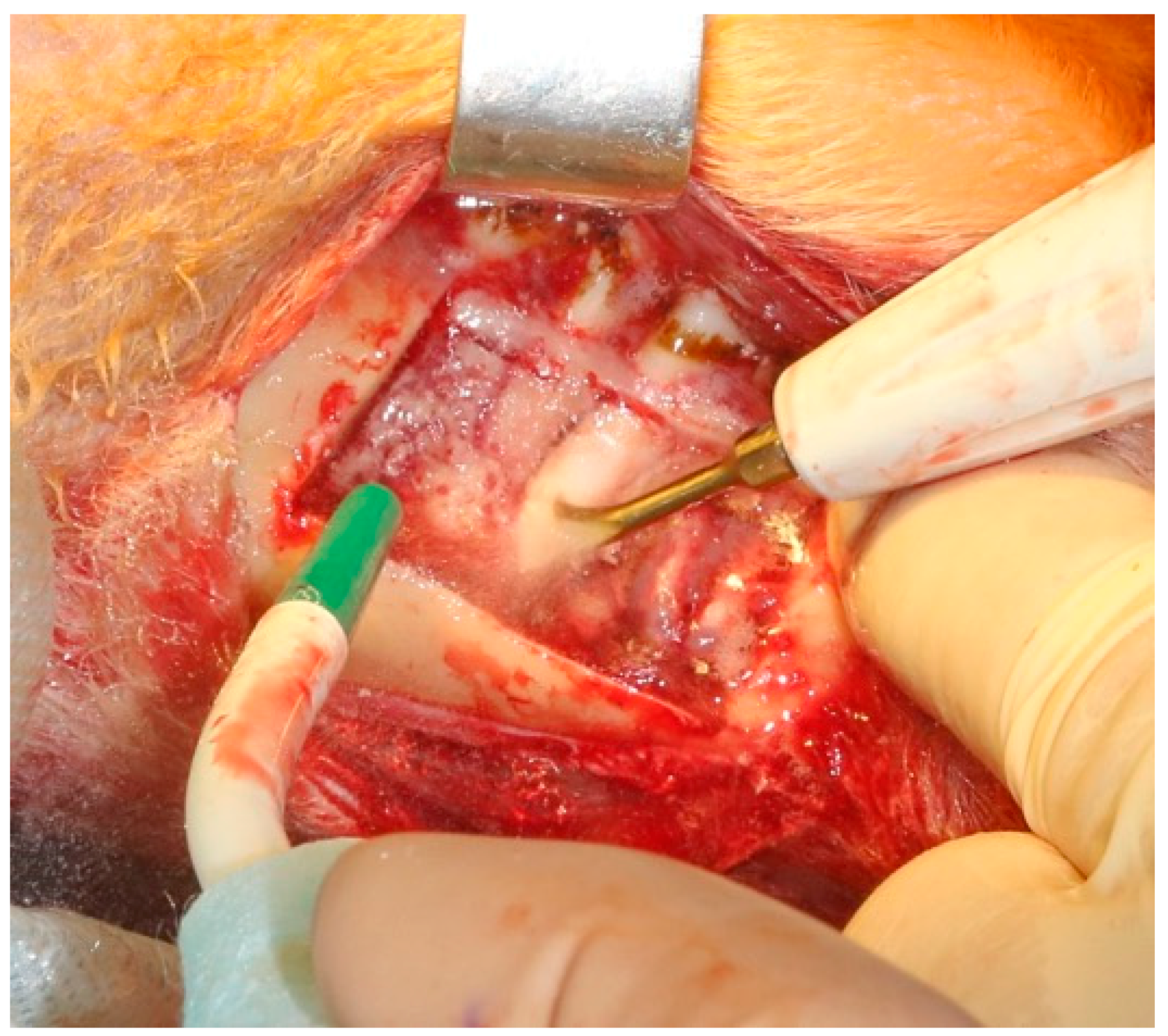
Surgical preparation of implant recipient zone in the mandible
Each subject then also underwent secondary surgical intervention but at different times—specifically, one, three, six, and twelve months later, after which they received a patient-specific titanium implant.
Future Developments in Metal Additive Manufacturing
Excision of the plastic implant three months after primary surgical intervention.
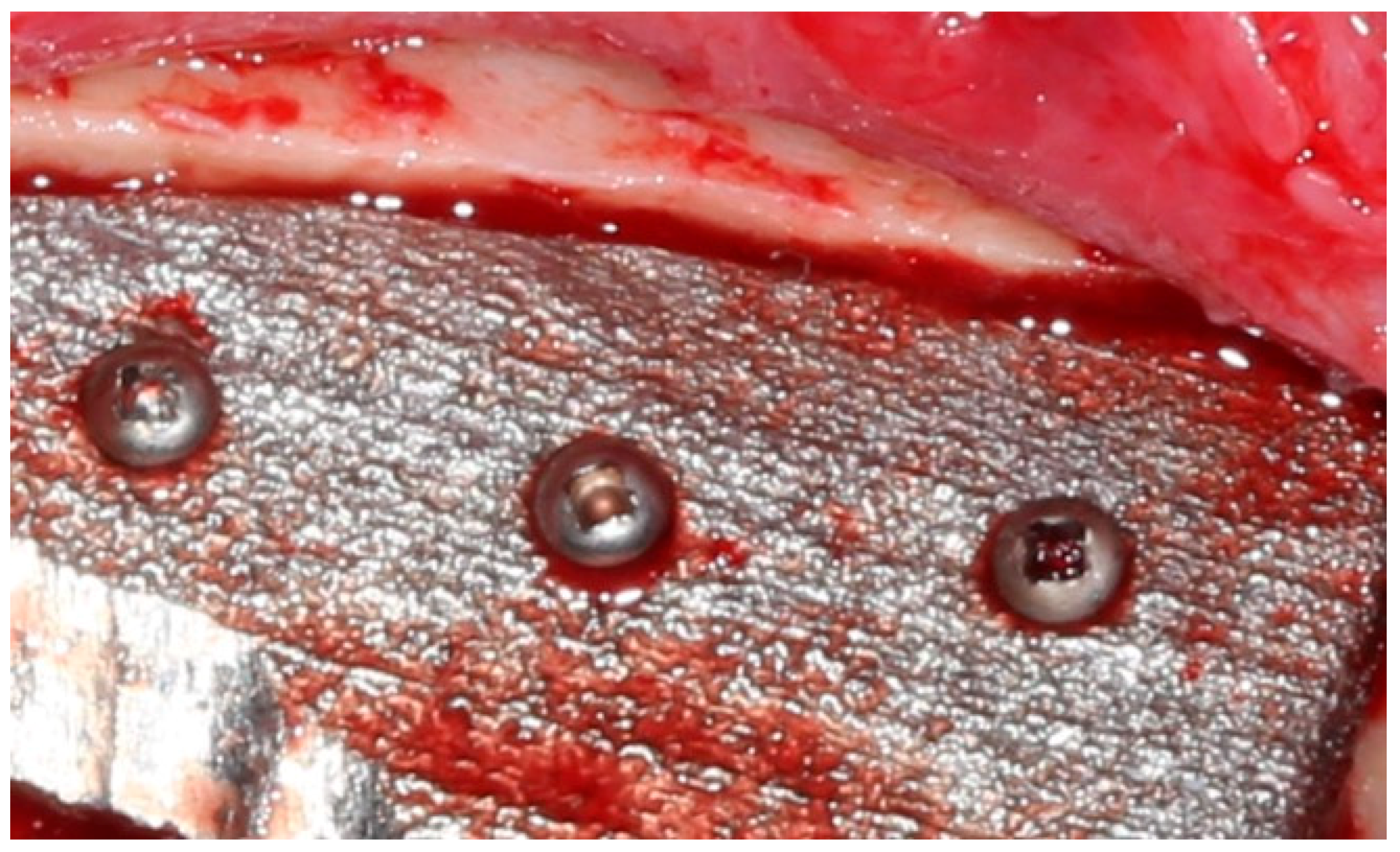
The researchers reported that it was ‘clearly established’ that the insertion of the implant led to tissue growth over the device, but with no inflammation detected.
“In all cases, the direct contact of osseous tissue with the titanium implant was established, which confirms the biointegration of the metal implant into the mandibular tissue. There were also areas of reorganization of osseous and soft tissue on the surface between the implant and bone with evidence of fibrous and bone integration into the implant.”
The State of Metal 3D Printing
“The authors conclude that the data obtained demonstrates that a porous titanium implant used in secondary surgical reconstruction provides significant osseous biointegration. This shows that it is possible and often advisable to postpone the implantation of a permanent implant in order to achieve better therapeutic results and account for possible complications after tumor resection.”
3D printing has played a role in numerous research projects focused on mandibular reconstruction as scientists fabricate innovative scaffolds, innovative methods for grafting, and 3D print other types of implants too.
What do you think of this news? Let us know your thoughts; join the discussion of this and other 3D printing topics at 3DPrintBoard.com.
Technical Challenges and Solutions
Excision of the plastic implant three months after primary surgical intervention.
[Source / Images: ‘Experimental Biointegration of a Titanium Implant in Delayed Mandibular Reconstruction’]
The post Russian Research Yields New Insight Into 3D Printed Titanium Implants for Mandibular Reconstruction appeared first on 3DPrint.com | The Voice of 3D Printing / Additive Manufacturing.
from Your daily news from 3DPrint.com http://bit.ly/3cbXz7G
Related Articles
Frequently Asked Questions
What is metal 3D printing?
Metal 3D printing (additive manufacturing) builds metal parts layer by layer using techniques like laser powder bed fusion, directed energy deposition, and binder jetting. It enables complex geometries impossible with traditional manufacturing while reducing material waste significantly.
How strong are 3D printed metal parts?
3D printed metal parts can achieve mechanical properties comparable to traditionally manufactured metals. Tensile strength and fatigue resistance depend on the process and post-processing, but many meet or exceed ASTM standards for wrought materials.
What are the main metal 3D printing technologies?
The primary technologies include Laser Powder Bed Fusion (LPBF), Electron Beam Melting (EBM), Directed Energy Deposition (DED), Binder Jetting, and Metal FDM (with bound filaments). Each has different strengths in terms of resolution, speed, and material options.
📌 Related Articles
- The Current State of Metal 3D Printing in 2020
- Best 3D Printer Upgrades That Actually Improve Print Quality: Complete 2026 Guide
- Best Budget 3D Printer Upgrades That Actually Improve Print Quality: Belts, Springs, Hotends & More
- The Ultimate Guide to 3D Printer Calibration: Complete Step-by-Step Manual
- Best 3D Printers Under $500: 2026 Comparison Guide