
Tennessee researchers have come together to pursue a more in-depth look at the science of 3D printing with metal, outlining their findings in the recently published ‘Dimensional Analysis of Metal Powder Infused Filament – Low Cost Metal 3D Printing.’
While fused filament fabrication (FFF) is one of the most standardized, and popular, forms of 3D printing today, there are still myriad challenges for users, depending on a range of projects and their respective requirements. In this study, the researchers added a unique twist by adding a small amount of PLA to metal powder, creating a composite that is still 90 percent metal, contributing to the process presented by the researchers: metal FFF (MFFF).
The State of Metal 3D Printing
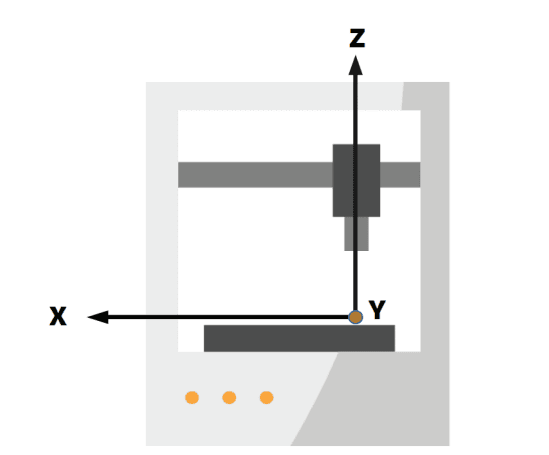
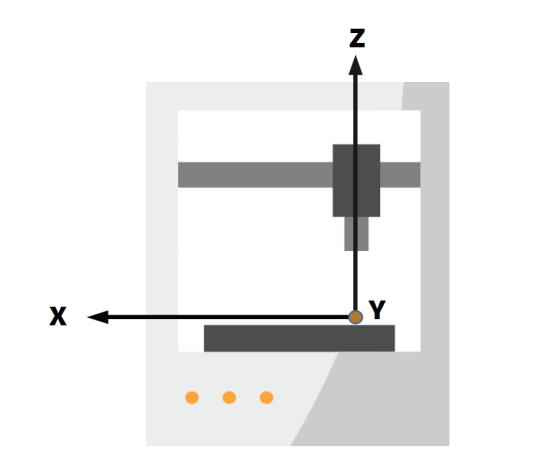
FFF 3D printing platform
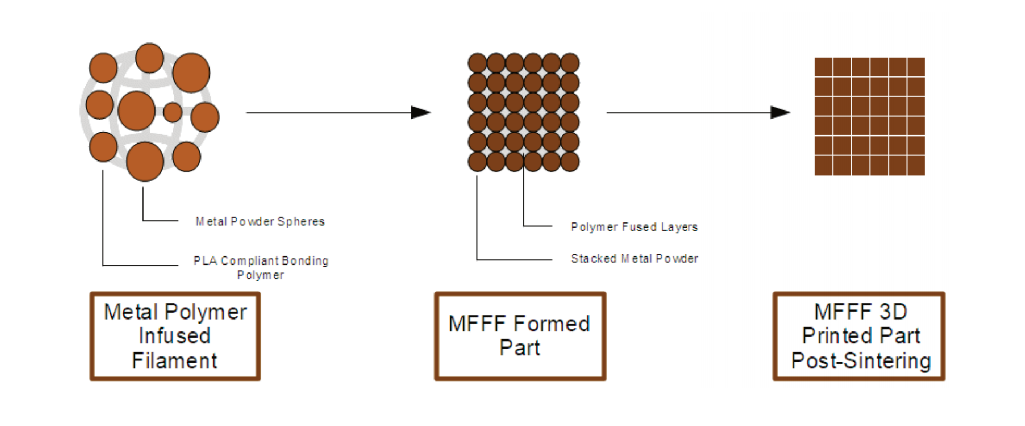
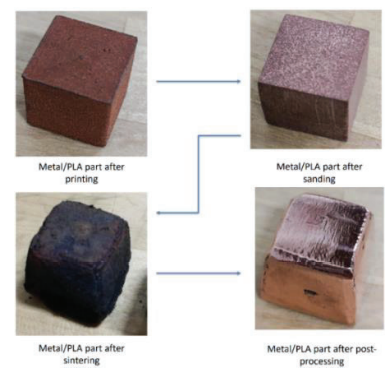
In using MFFF, metal-polymer composite parts can be created—while afterward sintered (heated to near melting) to remove the polymers, resulting in all-metal, and notably, creating the potential for ‘superior part complexity.’
Technical Challenges and Solutions
MFFF using MPLA material
The filament used in this study, referred to as MPLA (metal powder polymer composite material) offers superior composition, presenting a material that can be used with very little alteration to normal parameters for printing with the base matrix polymer.
“The settings that need to be modified are 100% infill, a decrease in printing speed (around 20 mm/s), and an increase in material flow (around 110%). Printing parameters can be further tuned with settings such as retraction and fan speed; however, the three aforementioned settings have the most influence on the printability of MPLA,” explain the researchers.
Material Properties and Performance
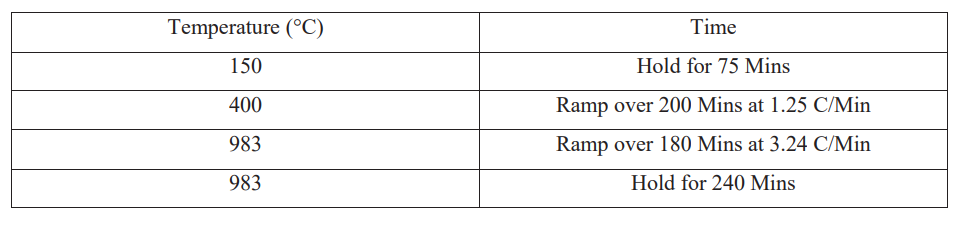
Description of the time and temperature sweeps used for the sintering process
The post-printing process involves high temperatures, requiring a kiln to complete the all-metal part, including:
- Crucible – suspends the specimen and refractory ballast
- Refractory ballast
- Furnace capable of 1200 C
Post-processing with metal 3D printing can be complex as industrial users must then eliminate traces of oxidation, plus any sources of contamination; in studying metal composites made up of a copper/polymer combination for this project, the researchers noted that in post-processing, copper oxide was not included. They also refer to past research noting that 3D printing with metal commonly produces defects resulting in ‘a loss of stress that the fabricated parts can withstand.’ Such processes require expense and added hours though.
“The current techniques that are able to utilize FFF technology for fabricating metal parts is indirect metal fabrication,” explain the researchers. “Through the process of casting, patterns and sand-formed parts can be indirectly formed using 3D printed parts that are used to generate a mold. These techniques encompass all of the expenses and safety requirements associated with casting to fabricate parts.”
Industrial Applications and Use Cases
The most common metal 3D printing techniques include SLM and DMD, along with the use of other composites created with nylon, ABS, and more.
“With a minimum dimensional loss of approximately 5%, the printing and sintering procedures could be tuned to acceptable levels for a specific application. See also: ABS 3D Printing Settings Guide: Temperature, Enclo…. These results solidify MFFF as a possible method of M3DP for future industrial and academic applications. Further work will examine the mechanical and microstructural properties to better account for the expected behavior of MFFF fabricated parts.”
Comparing Metal AM to Traditional Manufacturing
3D printing in metal continues to expand for users, mainly within heavy industrial use, and the study of composites continues too, from carbon fibers to the use of wood, the creation of a variety of nanocomposites, and more. What do you think of this news? Let us know your thoughts! Join the discussion of this and other 3D printing topics at 3DPrintBoard.com.
[Source / Images: ‘Dimensional Analysis of Metal Powder Infused Filament – Low Cost Metal 3D Printing’]
Future Developments in Metal Additive Manufacturing
The post Tennessee Researchers Analyze Low-Cost Metal 3D Printing with Composites appeared first on 3DPrint.com | The Voice of 3D Printing / Additive Manufacturing.
from Your daily news from 3DPrint.com http://bit.ly/37F72B4
Frequently Asked Questions
What is metal 3D printing?
Metal 3D printing (additive manufacturing) builds metal parts layer by layer using techniques like laser powder bed fusion, directed energy deposition, and binder jetting. It enables complex geometries impossible with traditional manufacturing while reducing material waste significantly.
How strong are 3D printed metal parts?
3D printed metal parts can achieve mechanical properties comparable to traditionally manufactured metals. Tensile strength and fatigue resistance depend on the process and post-processing, but many meet or exceed ASTM standards for wrought materials.
What are the main metal 3D printing technologies?
The primary technologies include Laser Powder Bed Fusion (LPBF), Electron Beam Melting (EBM), Directed Energy Deposition (DED), Binder Jetting, and Metal FDM (with bound filaments). Each has different strengths in terms of resolution, speed, and material options.
📌 Related Articles
- The Current State of Metal 3D Printing in 2020
- ABS 3D Printing Settings Guide: Temperature, Enclosure, and Cooling for Strong Parts
- Best 3D Printer Upgrades That Actually Improve Print Quality: Complete 2026 Guide
- 3D Printing Tungsten Carbide: How Hot-Wire Laser Technology Creates Metal Harder Than Steel
- 3D Printing Safety Equipment Guide: Respirators, Gloves, and Ventilation for 2026