
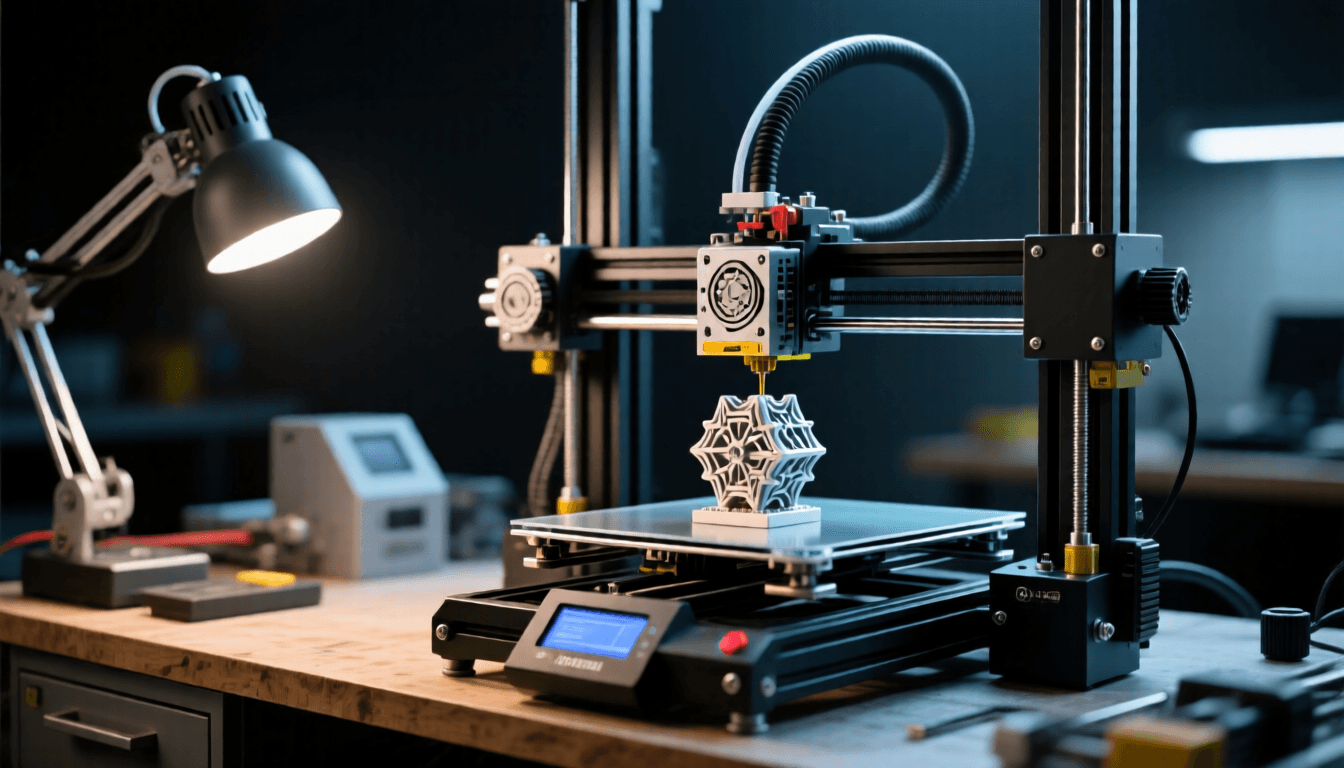
An international multi-event for the 3D manufacturing sector, called 3D Delta Week, will be taking place for the first time next summer. From June 7th through the 11th, 2021, four 3D manufacturing organizations in the Benelux region (Belgium, the Netherlands, and Luxembourg) invite you to come “Learn, Network and Explore in Manufacturing” about 3D software, 3D printing, virtual reality, model-based definition, PLM, and more during the immersive week-long event.
The four founding companies of 3D Delta Week stated together in a press release, “We’ll unite strong brands under one banner to create a world-class event. 3D Delta Week will be the annual meeting point for everyone involved in 3D Manufacturing, whether inside or outside the Benelux Delta. We are going to create value for users and providers.”
The Role of 3D Printing in Medicine

These organizations, actively supporting the 3D manufacturing sector for many years, that have been working together to plan the release of the international 3D Delta Week are:
- Flam3D, a neutral, non-profit association of companies and researcher institutes that are active in the 3D printing sector, and connecting supply and demand, in the Netherlands-Flanders region
- Mikrocentrum, an independent knowledge and network organization that’s supported the technical manufacturing industry with training and annual events for over fifty years. It also offers membership to its High Tech Platform network.
- Jakajima, an innovator matchmaker and initiator/organizer of global events and conferences for sectors like photonics, 3D and 4D printing, vertical farming, the Internet of Things (IoT), sustainability, and more
- Brainport Eindhoven, an economic development agency for the high-tech region of the same name. The agency promotes Brainport Eindhoven and offers business advice, creates and facilitates various projects, and develops economic strategy for the region.
“3D printing is still too unknown, according to various studies. The manufacturing industry does not always see how they can apply the technology to their advantage. This is partly due to the complexity and diversity of 3D printing,” Kris Binon of Flam3D explained about the origins of the collaborative 3D Delta Week event. “With over 25 different printing technologies, it is not immediately clear what you can use for which application.”
Biocompatible Materials and Processes
The overall goal of this new event is to help the economic region become more competitive by continue to develop 3D manufacturing so it can reach its full potential.
“On the other hand, we can safely say that the Benelux area (the Delta) is a top region in terms of 3D printing, with a lot of academic and applied research, a particularly high number of printers and numerous promising start-ups and enterprises. On the user side, we see a multitude of application areas – all in all, a versatile and high-quality ecosystem. If we connect this more and give it a better podium, the Low Countries will be widely recognized as one of the leading 3D print regions,” said Ruben Fokkema of Brainport Eindhoven.
Clinical Applications and Case Studies
These four founding organizations have been collaborating in the field for years already, so this work developing and planning 3D Delta Week was a natural next step. Before COVID-19 hit and in-person gatherings were generally discouraged, the partners were meeting to discuss how best to pull off an across-borders event that will have something for everyone in the 3D manufacturing field.
Mikrocentrum’s Tom Wessels said, “3D Delta Week is about bundling the offerings of the different parties in order to generate a concentration of knowledge, products, services and a glimpse of the future.”
Regulatory Considerations and Safety

The event will give attendees from the Benelux region, and the rest of the world, the chance to present on 3D manufacturing technology during that week however they may choose, in order to network and share experiences and knowledge with others. Together, Flam3D, Mikrocentrum, Jakajima, and Brainport Eindhoven will host activities that are geared towards specific users, suppliers, R&D and industry, and sectors. About a dozen activities have been planned already, including an aerospace 3D printing conference, a 3D printing R&D day, and a conference on 4D printing and metamaterials.
“We know that a lot of other innovations and initiatives are also possible this week – think of demos, company visits, sector-specific matchmaking or master classes,” explained Pieter Hermans of Jakajima. See also: Best 3D Printer Upgrades That Actually Improve Pri…. “We explicitly invite all other commercial, research institutions and non-profit organisations to contribute to the 3D Delta Week.”
Research Breakthroughs and Innovations
The four partners expect many other organizers to join before the event goes up in September of 2021 (hopefully this pandemic is a thing of the past by then), so keep an eye on the 3D Delta Week website for information on submitting proposals for activities, conferences, and events, and how to register.
(Source/Images: Flam3D)
The post 2021: 3D Delta Week Focused on 3D Printing in the Benelux Region appeared first on 3DPrint.com | The Voice of 3D Printing / Additive Manufacturing.
from 3DPrint.com | The Voice of 3D Printing / Additive Manufacturing https://bit.ly/3k4mNbt
Frequently Asked Questions
How is 3D printing used in medicine?
3D printing is used in medicine for surgical planning models, custom implants, bioprinting tissue scaffolds, drug delivery systems, dental aligners, and prosthetics. It enables patient-specific solutions that improve outcomes and reduce surgery time.
What materials are biocompatible for 3D printing?
Common biocompatible materials include PEEK, titanium alloys (Ti6Al4V), bio-ceramics (hydroxyapatite), medical-grade resins, PLA for temporary implants, and hydrogels for bioprinting. Material choice depends on the application and required mechanical properties.
Is 3D printed medical equipment FDA approved?
Yes, several 3D printed medical devices have FDA clearance, including orthopedic implants, dental restorations, and surgical guides. Each device must go through the appropriate regulatory pathway based on its risk classification.
📌 Related Articles
- The Current State of Metal 3D Printing in 2020
- Best 3D Printer Upgrades That Actually Improve Print Quality: Complete 2026 Guide
- Best Budget 3D Printer Upgrades That Actually Improve Print Quality: Belts, Springs, Hotends & More
- 3D Printing News: Multi-Material Breakthrough and Aerospace Market Boom
- 3D Printing Tungsten Carbide: How Hot-Wire Laser Technology Creates Metal Harder Than Steel