
Orthobroker, a Belgian-based specialist with more than 10 years of experience in the development and sales of orthopedic devices, is launching the OrthoSOLID® platform in collaboration with Twikit.
OrthoSOLID® enables the creation of 3D printed made-to-fit products based on measurements or 3D scans. It offers a range of orthotic products, such as orthoses and helmets, to CPO’s through an easy-to-use interface. The platform makes the transition towards a digital workflow accessible by translating craftsmanship into a digitized environment, without infringing on the core values of the professional.
As such, OrthoSOLID® is targeting orthopedic technologists and prosthetists who want to make this transition to additive manufacturing simply and professionally. It is designed in such a way that the orthotic specialist does not require preliminary CAD knowledge to work with it.
The platform is powered by TwikFit. The cloud-based software solution from Twikit which enables distributed end-to-end workflows for made-to-fit orthopedic products and wearables. By offering advanced integration possibilities, TwikFit enables the complete flow from 3D-scan till the actual digital manufacturing.
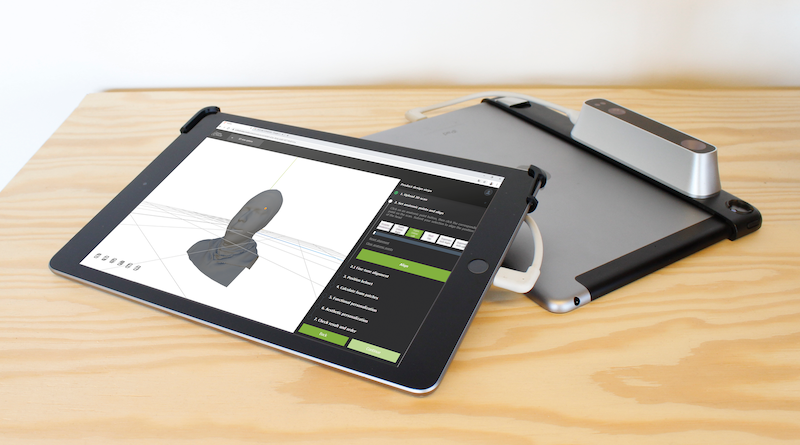
User Interface OrthoSOLID®
According to Patrick Garmyn, Director at Orthobroker “Additive manufacturing will be a transformative game-changer for the orthotic and prosthetic industry. As a big part of the sector works in a traditional way, it’s trivial to have an easy-to-use software platform with included product models, to enable a smooth onboarding.”
The OrthoSOLID® platform will be updated with new designs regularly. The initial portfolio exists of a Protective Helmet (CASC) and a Wrist-Hand-Arm Orthosis (CARPI). In the second version (December 2020), new product designs such as an Ankle-Foot Orthosis (PES), Elbow Orthosis (LBOW), and a Trans-Tibial Prosthetic Socket (XTEND TT) will be added.
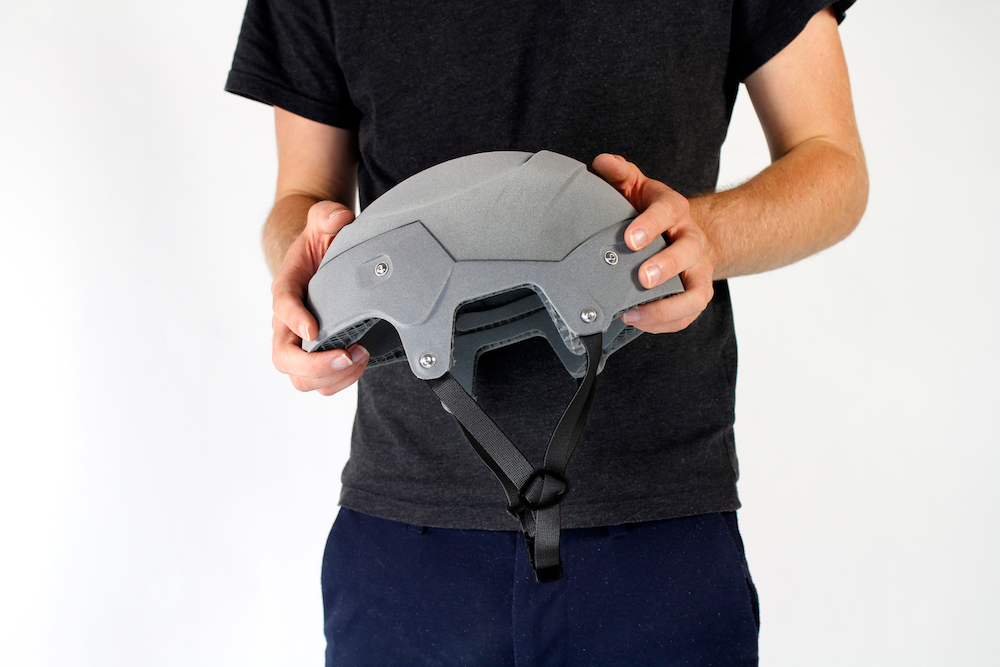
Protective Helmet (CASC).
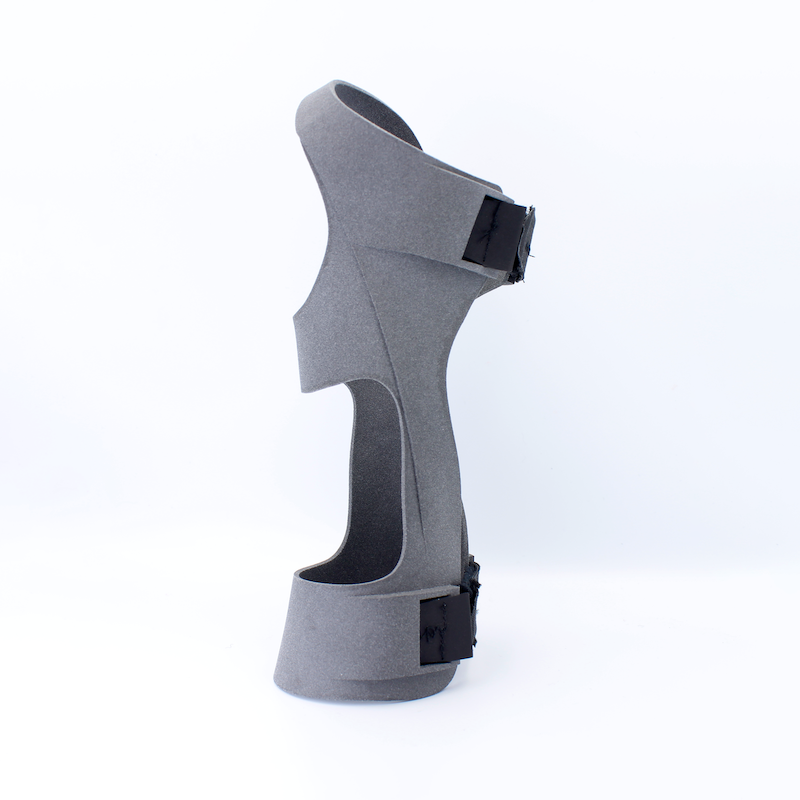
Wrist-Hand-Arm Orthosis (CARPI)
The innovative product portfolio is an essential part of the offering and builds upon the market experience of Orthobroker. 3D printed orthoses in the right materials generate huge innovative progress compared to traditional production techniques. Additive manufacturing technology in combination with intelligent design, therefore, creates added value for all parties. Orthotic specialists should see OrthoSOLID® as a tool to expand their business since it will not replace them. It is an extension that has to be combined with their expertise in delivering an optimal patient experience.
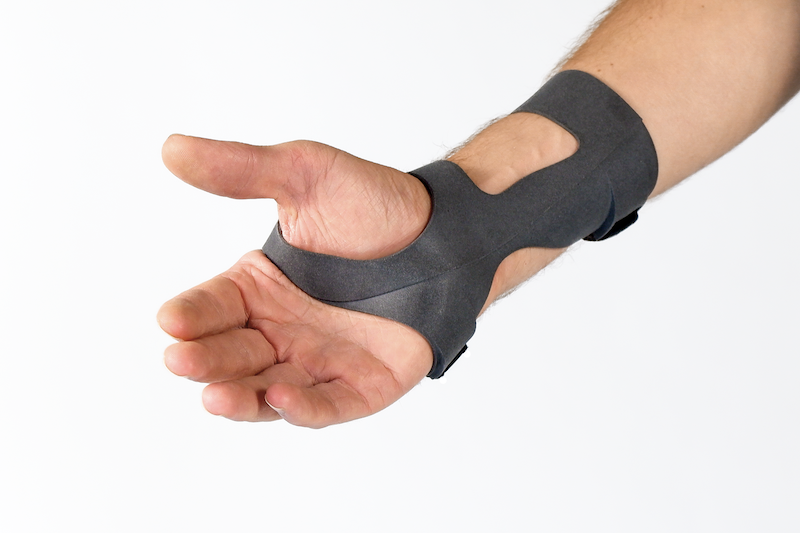
Wrist-Hand-Arm Orthosis (CARPI)
The advantages of a digital workflow displays the current market trend of switching to additive manufacturing techniques. The professional workflow of the orthotist has now been translated into an intuitive concept plan. Starting from taking a scan, then aligning it with the product and fitting the product around the scan, and printing the result, an orthotic device is made-to-measure. An orthosis or prosthetic socket realized by this process increases patient comfort, improves mobility, and ultimately functionality during immobilization.
The first range of products is manufactured using HP MultiJet powder bed printers and initially with the materials PA11, PA12, and TPU. In later phases other production techniques and materials can be added depending on the product’s needs and quality standards.
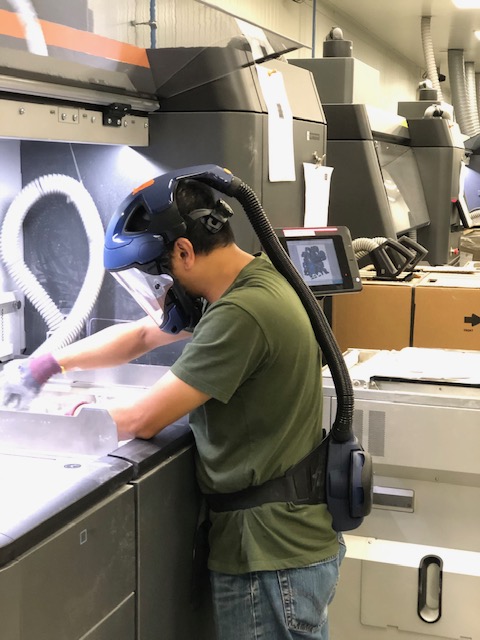
Post-production of the Wrist-Hand-Arm Orthosis (CARPI)
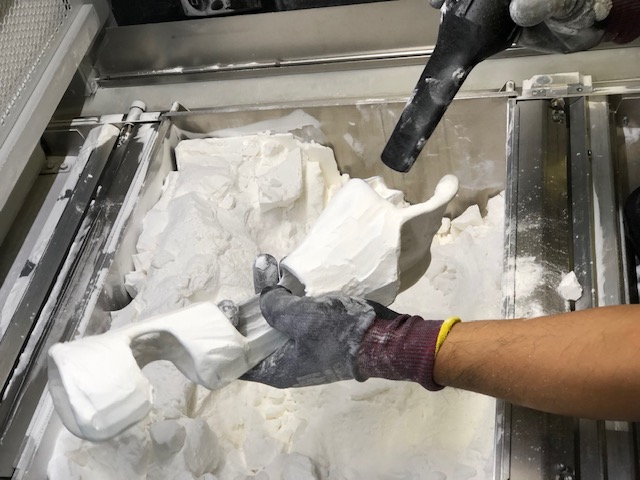
Post-production of the Wrist-Hand-Arm Orthosis (CARPI)
The selection of the right materials for each design is crucial. Different materials possess different properties. Matching the right materials and properties to the right design increases the quality of the final product. Being able to work with 3D scanners eliminates the need for molds, and thus saves a lot of working time. This makes the process more time and cost-efficient.
Numerous tests have been run to select the right printer, printing profiles, materials, and product designs. The quality and durability of each product are guaranteed by Orthobroker.
Contact for OrthoSOLID®
ORTHOBROKER – Belgium
info@orthobroker.com
www.orthosolid.com
OrthoSOLID® is a brand of Orthobroker
Contact for Twikit
TWIKIT -Belgium
The post OrthoSOLID®: An Innovative and Intuitive Online Platform to 3D Print Orthotic Devices appeared first on 3DPrint.com | The Voice of 3D Printing / Additive Manufacturing.
from 3DPrint.com | The Voice of 3D Printing / Additive Manufacturing https://bit.ly/30nUs8m
Where to Buy Filament
Disclosure: Some of the links below are affiliate links. If you make a purchase, we may earn a commission at no extra cost to you. This helps support this site.
- TPU: Hatchbox
Looking for Filament? Check the best deals on Amazon:
These links go to Amazon with our affiliate tag. If you prefer to support local retailers or buy directly from manufacturers, we encourage that as well!
Related Articles: Novel Technology Uses PVA to 3D Print Medical Devices · Novel Technology Uses PVA to 3D Print Medical Devices · CollPlant & United Therapeutics Expand Collaboration to 3D Print Kidneys
Frequently Asked Questions
What is the best 3D printing filament for beginners?
PLA is the best starting filament — it prints easily at 190-220°C without an enclosure and produces good results. Once comfortable, PETG offers better strength and temperature resistance for functional parts.
How do I choose the right filament?
Consider the application: PLA for display models, PETG for functional parts, ABS/ASA for heat/sunlight exposure, TPU for flexible parts, and specialty filaments for engineering applications. Each has specific printer requirements.
What temperature should I print different filaments at?
PLA: 190-220°C nozzle / 50-60°C bed. PETG: 220-250°C / 70-80°C. ABS: 230-260°C / 100-110°C (enclosure needed). Nylon: 240-270°C / 70-90°C. Always check manufacturer recommendations for specific brands.
📌 Related Articles
- The Current State of Metal 3D Printing in 2020
- Best 3D Printer Upgrades That Actually Improve Print Quality: Complete 2026 Guide
- The Ultimate Guide to 3D Printer Calibration: Complete Step-by-Step Manual
- 3D Printing Tungsten Carbide: How Hot-Wire Laser Technology Creates Metal Harder Than Steel
- Best Budget 3D Printer Upgrades That Actually Improve Print Quality: Belts, Springs, Hotends & More