
Disclosure: As an Amazon Associate, 3dput.com earns from qualifying purchases. This supports our independent testing and reviews.
Why 3D Printing Safety Matters
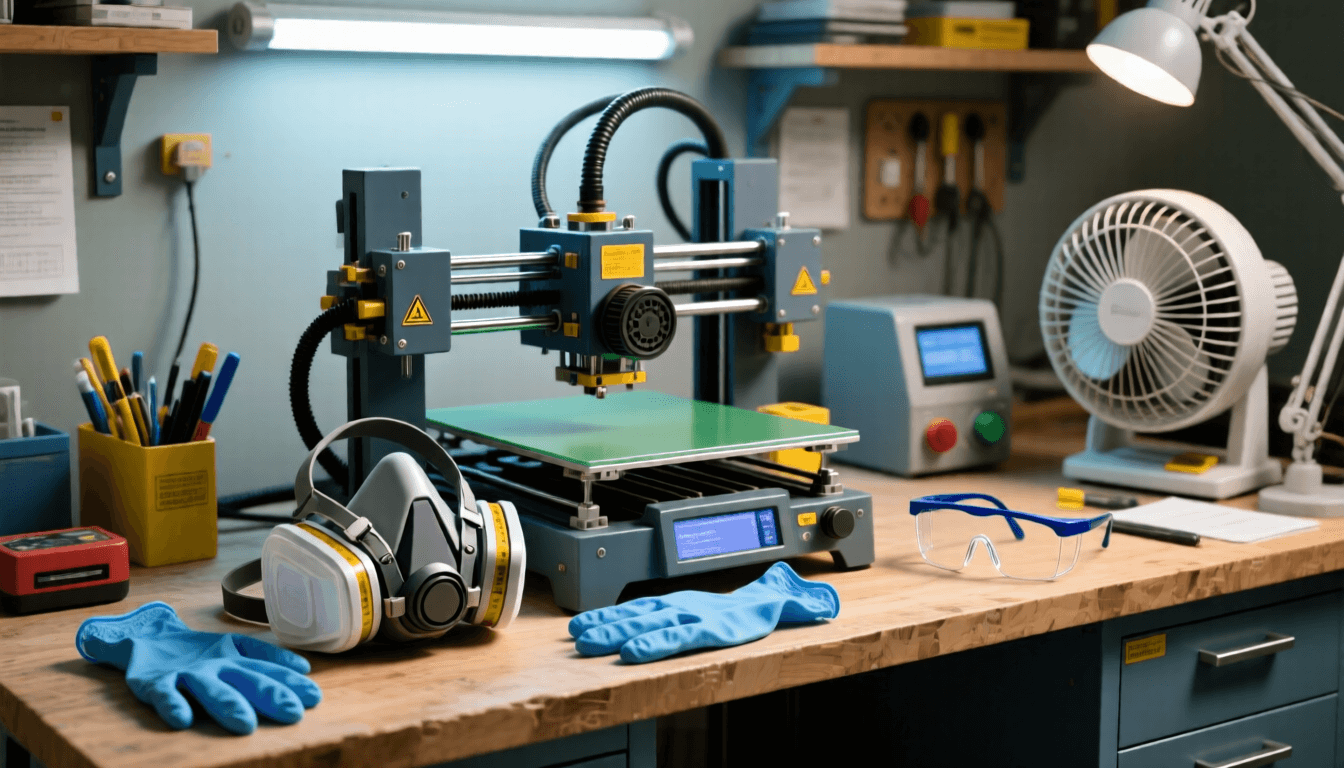
3D printing has revolutionized manufacturing and prototyping, but it comes with significant safety risks that every user must understand. Whether you’re printing with PLA, ABS, PETG, or resin, proper safety equipment isn’t optional—it’s essential for protecting your health. In this comprehensive guide, we’ll cover all the safety gear you need for safe 3D printing in 2026.
The risks associated with 3D printing include:
- Ultrafine particles (UFPs) from melted filaments
- Chemical fumes from different materials
- Nanoparticles from resin printing
- Physical hazards from hot parts and moving components
- Eye strain from UV exposure (resin printing)
Essential Respiratory Protection
Your lungs are your most vulnerable organ when 3D printing, as they can absorb harmful particles and fumes directly into your bloodstream.
N95 vs N100 Respirators
For general filament printing, an N95 respirator provides excellent protection against most particulate matter. For resin printing or working with ABS, consider upgrading to an N100 respirator for maximum protection.
Product Comparison
| Product | Category | Best For | Check Price |
|---|---|---|---|
| N95 respirator | 3D Printing Safety Equipment : Respirators, Gloves, and Ventilation | Safety protection | Amazon → |
| N100 respirator | 3D Printing Safety Equipment : Respirators, Gloves, and Ventilation | Safety protection | Amazon → |
| half-face respirator | 3D Printing Safety Equipment : Respirators, Gloves, and Ventilation | Safety protection | Amazon → |
| full-face respirator | 3D Printing Safety Equipment : Respirators, Gloves, and Ventilation | Safety protection | Amazon → |
| PAPR system | 3D Printing Safety Equipment : Respirators, Gloves, and Ventilation | General use | Amazon → |
Half-Face Respirators with P100 Filters
For regular or intensive 3D printing, a half-face respirator with P100 cartridges offers superior protection and comfort for extended use. These create a sealed fit and can be used with various cartridge types for different chemicals.
Full-Face Respirators
>
When working with resins or high-temperature filaments, a full-face respirator provides complete protection for both your respiratory system and eyes. This is especially important when mixing resins or cleaning printed parts.
Powered Air Purifying Respirators (PAPR)
>
For professional or industrial settings, or for those with respiratory sensitivities, a PAPR system provides the highest level of protection with positive pressure airflow, eliminating the need to breathe through filter resistance.
Hand and Skin Protection
>
Your hands are constantly exposed to heat, chemicals, and sharp edges during 3D printing operations.
Heat-Resistant Gloves
>
When handling hot print beds, freshly printed parts, or heated nozzles, heat-resistant gloves are essential. Look for gloves made from materials like Kevlar or Nomex that can withstand temperatures up to 400°F (200°C).
Nitrile Gloves for Chemical Protection
>
For resin handling and cleaning, nitrile gloves provide excellent chemical resistance. Unlike latex, nitrile doesn’t cause allergic reactions and offers superior protection against resins and solvents.
Cut-Resistant Gloves
>
When dealing with sharp metal parts, bed leveling screws, or broken filament, cut-resistant gloves made from materials like Dyneema can prevent serious injuries.
Eye Protection
>
Your eyes need protection from UV light, chemical splashes, and physical debris.
Safety Glasses
>
Basic safety glasses are essential for all 3D printing activities. Look for glasses that wrap around your eyes for side protection and are rated for chemical splash resistance.
UV-Blocking Safety Glasses
>
For resin printing, UV-blocking safety glasses are crucial to protect your eyes from harmful UV light emitted by UV curing lamps and printers.
Goggles for Maximum Protection
>
When working with chemicals or in environments with significant airborne particles, chemical splash goggles provide the highest level of eye protection with a complete seal around your eyes.
Ventilation and Air Filtration
>
Proper ventilation is one of the most important aspects of 3D printing safety, as it removes harmful particles and fumes from your breathing zone.
Fume Extractors
>
For small to medium printers, an fume extractor positioned near the printer can effectively capture and filter harmful particles and fumes at the source.
Activated Carbon Filters
>
Activated carbon filters are essential for removing chemical vapors from ABS, PETG, and resin printing. Replace these regularly according to manufacturer recommendations, typically every 3-6 months depending on usage.
HEPA Filters
>
For particulate matter removal, HEPA filters capture ultrafine particles that standard filters might miss. See also: Best 3D Printer Upgrades That Actually Improve Pri…. These are especially important for users with respiratory sensitivities.
Room Air Purifiers
>
Complement your printer ventilation with a room air purifier that has both HEPA and activated carbon filters to clean the general air quality in your workspace.
Enclosure Ventilation Systems
For printers with enclosures, proper ventilation is still critical to prevent fume buildup inside the enclosed space.
Enclosure Fans
>
Add filtered enclosure fans to actively circulate air and filter contaminants within the printer enclosure. These create positive airflow to push fumes out.
Charcoal Filter Kits
>
Many manufacturers offer charcoal filter kits specifically designed for their printer enclosures. These are designed to fit perfectly and provide optimal filtration.
Resin-Specific Safety Equipment
>
Resin 3D printing requires additional safety precautions beyond standard filament printing.
Nitrile Gloves (Double Gloving)
>
For resin handling, wear double layers of nitrile gloves to provide maximum protection against skin contact with uncured resin.
Resin Trays with Lids
>
Use resin trays with secure lids to prevent spills and evaporation when not in use. This reduces both chemical exposure and waste.
Resin Cleaning Containers
>
Keep resin waste and cleaning supplies in dedicated chemical-resistant containers to prevent cross-contamination and proper disposal.
UV Protection Equipment
>
Beyond UV-blocking glasses, consider UV-protective clothing when working with UV resin curing to protect your skin from prolonged exposure.
Fire Safety Equipment
>
While rare, 3D printer fires can happen, so having proper fire safety equipment is essential.
Fire Extinguishers
>
Keep a Class B fire extinguisher rated for flammable liquids (electrical fires) near your printing area. Know how to use it before you need it.
Fire Suppression Blankets
>
A fire suppression blanket can quickly smother small fires before they spread. Keep it accessible near your printer.
Workspace Organization and Safety
>
A well-organized workspace is a safe workspace.
Cable Management
>
Use cable management solutions to prevent tripping hazards and reduce fire risks from tangled cables that can overheat.
Anti-Fatigue Mats
>
Standing for long periods during printing operations can cause fatigue and reduced awareness. Anti-fatigue mats provide cushioning and improve comfort during extended printing sessions.
First Aid Kits
>
Keep a well-stocked first aid kit specifically for 3D printing injuries, including burn treatments, eye wash, and materials for chemical exposure.
Safety Monitoring Equipment
>
Technology can help you monitor air quality and safety conditions in your workspace.
Air Quality Monitors
>
Use air quality monitors to track particulate matter and VOC levels in real-time. See also: ABS 3D Printing Settings Guide: Temperature, Enclo…. These can alert you when levels become dangerous.
Temperature and Humidity Sensors
>
Monitor your workspace environment with temperature and humidity sensors to ensure optimal conditions for both printing and operator comfort.
Professional Safety Equipment
>
For commercial or educational environments, additional safety measures may be required.
Safety Signage
>
Post clear safety signage in your workspace to remind users of proper procedures and emergency protocols.
Safety Training Materials
>
Keep safety training materials readily available for reference and training new users on proper safety procedures.
Maintenance and Replacement Schedule
>
Safety equipment requires regular maintenance and replacement to remain effective.
Filter Replacement Schedule
>
- HEPA filters: Every 6-12 months depending on usage
li>Activated carbon filters: Every 3-6 months
li>Respirator cartridges: Replace when you smell chemicals through them
Equipment Inspection
>
Inspect all safety equipment monthly for:
-
li>Damage or wear
li>Filter saturation
li>Seal integrity (for respirators)
li>Expiration dates
Emergency Procedures
Prepare for emergencies with clear procedures:
Chemical Exposure
>
If exposed to chemicals:
-
li>Move to fresh air immediately
li>Remove contaminated clothing
li>Flush skin with water for 15+ minutes
li>Seek medical attention if symptoms persist
Fire Emergency
>
In case of fire:
-
li>Evacuate the area immediately
li>Use appropriate fire extinguisher if safe to do so
li>Call emergency services
li>Do not attempt to rescue equipment or prints
Conclusion
>
Investing in proper 3D printing safety equipment isn’t just about compliance—it’s about protecting your health and ensuring you can enjoy this amazing technology for years to come. By following the guidelines in this guide and equipping your workspace with the recommended safety gear, you’ll minimize risks and create a safer environment for yourself and others around your 3D printing operations.
Remember that safety is an ongoing process, not a one-time setup. Regular maintenance, proper training, and staying informed about new safety developments will help you enjoy 3D printing while keeping yourself protected.
Frequently Asked Questions
How is 3D printing used in medicine?
3D printing is used in medicine for surgical planning models, custom implants, bioprinting tissue scaffolds, drug delivery systems, dental aligners, and prosthetics. It enables patient-specific solutions that improve outcomes and reduce surgery time.
What materials are biocompatible for 3D printing?
Common biocompatible materials include PEEK, titanium alloys (Ti6Al4V), bio-ceramics (hydroxyapatite), medical-grade resins, PLA for temporary implants, and hydrogels for bioprinting. Material choice depends on the application and required mechanical properties.
Is 3D printed medical equipment FDA approved?
Yes, several 3D printed medical devices have FDA clearance, including orthopedic implants, dental restorations, and surgical guides. Each device must go through the appropriate regulatory pathway based on its risk classification.
📌 Related Articles
- Best 3D Printer Upgrades That Actually Improve Print Quality: Complete 2026 Guide
- ABS 3D Printing Settings Guide: Temperature, Enclosure, and Cooling for Strong Parts
- Best Budget 3D Printer Upgrades That Actually Improve Print Quality: Belts, Springs, Hotends & More
- Bambu Lab A1 vs Elegoo Centauri Carbon: Full Specs Comparison & Buyer’s Guide
- Prusa Research Mini+ vs Prusa MK4: Full Specs Comparison & Buyer’s Guide