
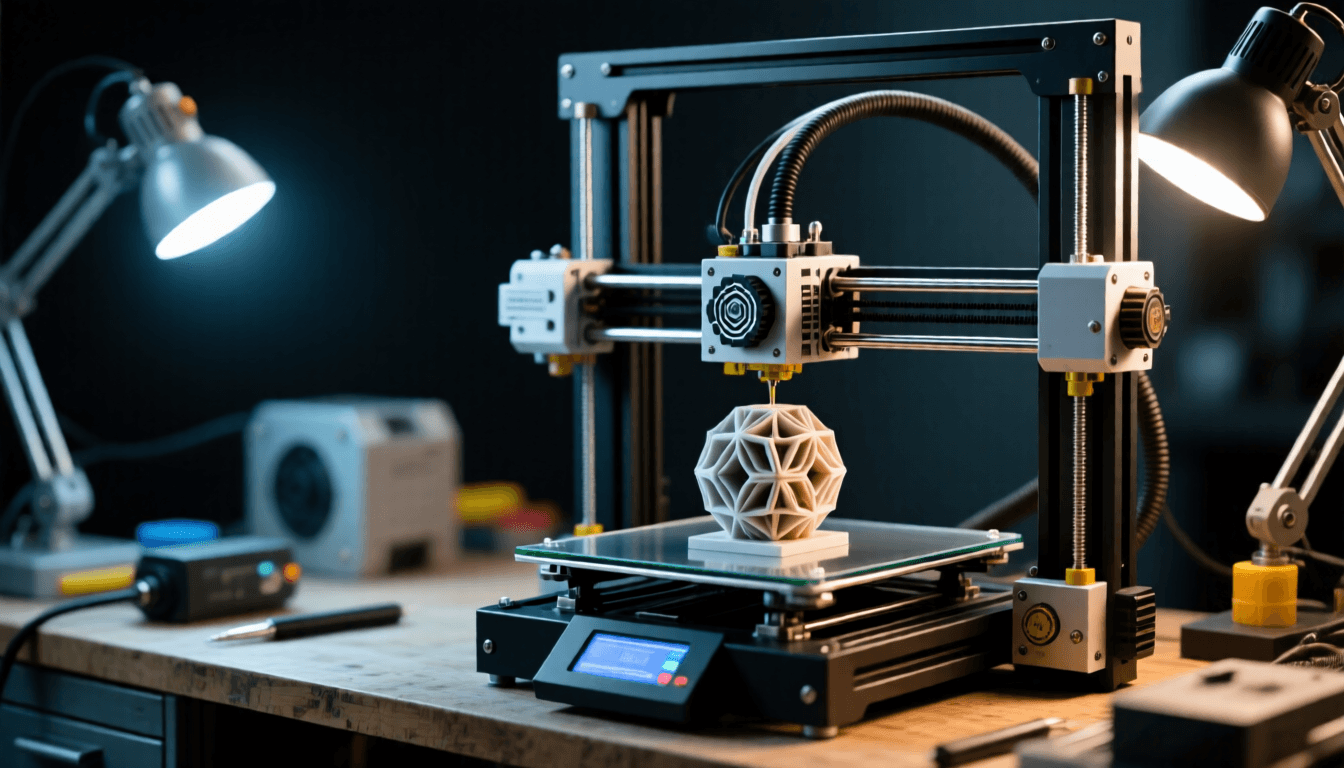
Performance and Print Quality Comparison
Both the Anycubic Kobra S1 and Anycubic Kobra 2 Neo are capable printers, but they target different priorities. Understanding where each excels helps you match the printer to your specific needs rather than relying on spec sheets alone.
Disclosure: As an Amazon Associate, 3dput.com earns from qualifying purchases. This supports our independent testing and reviews.
Anycubic Kobra S1
Anycubic Kobra 2 Neo
Build volume is often the first spec people compare. The Anycubic Kobra 2 Neo offers more build space. For most users, anything above 220×220mm is sufficient for daily printing. Larger volumes become important for cosplay armor, functional enclosures, and batch production.
Hotend temperature directly affects material compatibility. The Anycubic Kobra S1 reaches higher temperatures (320°C), which unlocks engineering materials like polycarbonate and carbon-fiber nylon. If you only plan to print PLA and PETG, both printers handle these equally well.
Enclosure is a significant differentiator. The Anycubic Kobra S1 features an enclosed build chamber, which is essential for printing ABS, ASA, and other warp-prone materials. An enclosed printer also reduces noise, contains fumes, and maintains stable temperatures for more consistent results. If you plan to experiment with engineering filaments, the enclosed option provides a clear advantage.
Print speed depends on the motion system, input shaping support, and firmware optimization. Both printers support modern speed techniques, but real-world results depend on your specific models, materials, and quality settings. In practice, both achieve excellent results at 100-200mm/s, with the potential to push higher for draft-quality prints.
Who Should Buy Each Printer?
The Anycubic Kobra S1 is ideal for users who prioritize controlled environment for engineering materials. This printer suits makers who want controlled environment for engineering materials without compromise.
The Anycubic Kobra 2 Neo is ideal for users who prioritize larger build volume for big projects. This is a strong choice for anyone who wants larger build volume for big projects and reliable performance.
Our Verdict
Both printers represent good value in their respective categories. The choice ultimately comes down to your specific requirements:
- Choose the Anycubic Kobra S1 if controlled environment for engineering materials is your top priority
- Choose the Anycubic Kobra 2 Neo if larger build volume for big projects matters more to you
- If you’re still unsure, consider which brand has better local support and community resources in your area — this often matters more than minor spec differences
Frequently Asked Questions
Are these printers suitable for beginners?
Both printers feature auto bed leveling and user-friendly interfaces that make them accessible to beginners. The learning curve is similar for each — expect to spend 30-60 minutes on initial setup and a few days of experimentation before achieving consistently good results. Active online communities for both brands provide ample support for newcomers.
Which printer is better for functional parts?
For functional parts in PLA or PETG, both perform equally well. For engineering materials (nylon, polycarbonate, carbon-fiber composites), the printer with higher hotend temperature and enclosure (if applicable) has a clear advantage. Review the spec comparison table above for the specific thermal capabilities of each model.
How do maintenance costs compare?
Annual maintenance for both printers typically runs $30-80 and includes replacement nozzles ($5-15 each), build surface replacements ($10-25), and occasional PTFE tubing or belt changes. Parts availability is good for both brands through their official stores and third-party suppliers. Neither requires significantly more maintenance than the other.
Can I upgrade these printers later?
Yes — both platforms support common upgrades: Klipper firmware (for faster printing via input shaping), upgraded hotends (for higher temperatures), and improved extruders. The modding community for both brands is active, with detailed guides available on Reddit and YouTube. Budget $50-150 for meaningful upgrades that extend the printer’s capabilities.
Anycubic Kobra S1 vs Anycubic Kobra 2 Neo — Which 3D Printer Should You Buy?
Choosing between the Anycubic Kobra S1 and Anycubic Kobra 2 Neo? This side-by-side comparison breaks down every spec that matters — build volume, print speed, features, and real-world usability — so you can make the right call for your workspace and budget.
Quick Answer
Our pick: Anycubic Kobra S1. It wins on more key specs including build volume, temperature range, and convenience features.
Specs Comparison Table
| Specification | Anycubic Kobra S1 | Anycubic Kobra 2 Neo |
|---|---|---|
| Build Volume | 250 × 220 × 220 mm (12,100 cm³) | 250 × 250 × 250 mm (15,625 cm³) |
| Frame Type | Open | Open |
| Max Hotend Temp | 320°C | 260°C |
| Max Bed Temp | 120°C | 100°C |
| Extruder Type | Direct | Direct |
| Hotend Type | Bowden | Bowden |
| Auto-Leveling | None | None |
| Enclosed | ✅ Yes | ❌ No |
| Heated Enclosure | ❌ No | ❌ No |
| Input Shaping | ❌ No | ❌ No |
| WiFi | ❌ No | ❌ No |
| Power Loss Recovery | ❌ No | ❌ No |
| Filament Sensor | ❌ No | ❌ No |
| Spool Sensors | ❌ No | ❌ No |
| Multi-Material | ❌ No | ❌ No |
| USB Media | ✅ Yes | ✅ Yes |
Anycubic Kobra S1 — Strengths & Weaknesses
Pros
- 12,100 cm³ build volume — good for medium-sized prints
- 320°C max hotend temp — supports engineering materials like ABS, PETG, nylon
- Enclosed frame — better temperature control for ABS and ASA
Cons
- Enclosed frame takes up more desk space
- No WiFi — requires USB/SD card for file transfers
- No auto-leveling — manual bed leveling required
- No input shaping — may show ringing at higher speeds
- No power loss recovery — power outage means a failed print
Anycubic Kobra 2 Neo — Strengths & Weaknesses
Pros
- 15,625 cm³ build volume — excellent for large prints
- 260°C max hotend temp — best for PLA and PETG
Cons
- No enclosure — limited for engineering materials like ABS
- No WiFi — requires USB/SD card for file transfers
- No auto-leveling — manual bed leveling required
- No input shaping — may show ringing at higher speeds
- No power loss recovery — power outage means a failed print
Build Volume Comparison
The Anycubic Kobra S1 offers 250 × 220 × 220 mm (12,100 cm³) while the Anycubic Kobra 2 Neo provides 250 × 250 × 250 mm (15,625 cm³). The Anycubic Kobra 2 Neo has significantly more build space.
Temperature & Materials
The Anycubic Kobra S1 reaches 320°C and the Anycubic Kobra 2 Neo reaches 260°C. See also: Best Budget 3D Printer Upgrades That Actually Impr…. Both printers can handle standard PLA and PETG.
For ABS and ASA printing, only the Anycubic Kobra S1 has an enclosure, giving it the edge for temperature-sensitive materials.
Which Should You Buy?
Choose the Anycubic Kobra S1 if you need 12,100 cm³ build volume and a fully enclosed frame.
Choose the Anycubic Kobra 2 Neo if you prioritize 15,625 cm³ build volume and a compact, open-frame design.
Recommended Filament Settings
Looking for the best print settings for your new printer? Check out our Filament Settings Web App for community-tested temperature, speed, and retraction recommendations for Anycubic Kobra S1 and Anycubic Kobra 2 Neo.
All specifications are sourced from our Filament Settings Database and manufacturer data. For the latest pricing and availability, check the product pages linked above.
Frequently Asked Questions
What is the best 3D printing filament for beginners?
PLA is the best starting filament — it prints easily at 190-220°C without an enclosure and produces good results. Once comfortable, PETG offers better strength and temperature resistance for functional parts.
How do I choose the right filament?
Consider the application: PLA for display models, PETG for functional parts, ABS/ASA for heat/sunlight exposure, TPU for flexible parts, and specialty filaments for engineering applications. Each has specific printer requirements.
What temperature should I print different filaments at?
PLA: 190-220°C nozzle / 50-60°C bed. PETG: 220-250°C / 70-80°C. ABS: 230-260°C / 100-110°C (enclosure needed). Nylon: 240-270°C / 70-90°C. Always check manufacturer recommendations for specific brands.
📌 Related Articles
- ABS 3D Printing Settings Guide: Temperature, Enclosure, and Cooling for Strong Parts
- Best Budget 3D Printer Upgrades That Actually Improve Print Quality: Belts, Springs, Hotends & More
- Best 3D Printer Upgrades That Actually Improve Print Quality: Complete 2026 Guide
- Bambu Lab A1 vs Elegoo Centauri Carbon: Full Specs Comparison & Buyer’s Guide
- Prusa Research Mini+ vs Prusa MK4: Full Specs Comparison & Buyer’s Guide