

Instead of metal braces, clear aligners, also known as invisible aligners, are becoming increasingly popular for straightening out pearly whites. According to NewMouth, some of the most popular brands of clear dental aligners include byte, Candid, Invisalign, and SmileDirectClub, and these last two both have something else in common as well: they use 3D technology in their workflows.
The hardware for these produce clear dental aligners comes from a number of companies in the AM industry, including Prodways, EnvisionTEC, Structo, and Formlabs. In the broader spectrum, Sam Wainwright, the Dental Product Manager for Formlabs, said at AMS 2020 in February that 36% of dental labs in the US use 3D printing technology, and we’re seeing AM dental applications, including aligners, continue to evolve.
Founded in 2014 by Marina Domracheva, MD, medical technology company 3D Predict makes innovative dental aligners that are driven by artificial intelligence (AI) software, which it refers to as “one-of-a-kind” in a press release sent to 3DPrint.com.
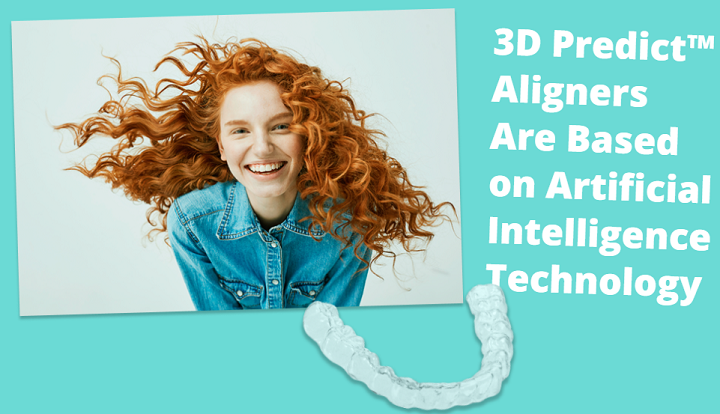
“3D Predict has the right combination of commitment, technology and flexibility to see the unseen and look beyond the evident in 3D planning and customer support,” the website states.
The Role of 3D Printing in Medicine
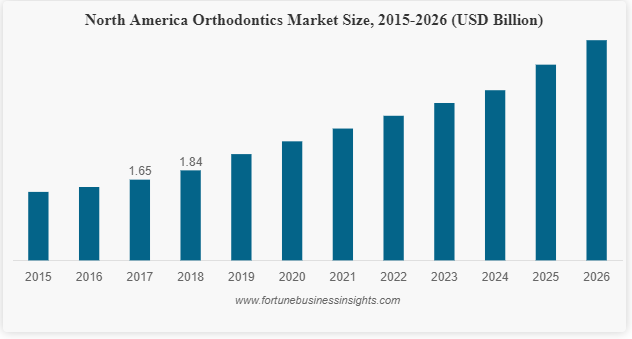
Five million patients across the US begin orthodontic treatment each year, making it an almost $2 billion market, and of that large number, roughly four million are not cut and dry cases, but moderate or complicated ones. So it’s a pretty booming business, to say the least.
“The growing orthodontics market is driving an even greater demand for more effective treatment models. We saw a way to combine clinical experience and cutting-edge technology to equip orthodontists with a dental device to treat even the most complex cases with greater precision and efficiency,” 3D Predict’s Founder and CEO Domracheva explained.
Biocompatible Materials and Processes
3D Predict received FDA clearance for its AI-driven dental aligners in February, and is now launching the product at its new US headquarters in New York.
These aligners differ from braces and other aligners because the company completes a Deep CBCT® Analysis of both the bone and root; 3D Predict does not use roots taken from an anatomical library. The patented, proprietary software then creates extremely precise 3D models of the whole smile, including the crowns, and these models are used to design patient-specific dental aligners, which the company states are able to prevent “anatomically impossible” tooth movements. This results in a 30% treatment time decrease, and 50% fewer teeth alignment corrections, allowing orthodontists to “increase their margin and save time for new patients” using far more effective aligners.
Clinical Applications and Case Studies
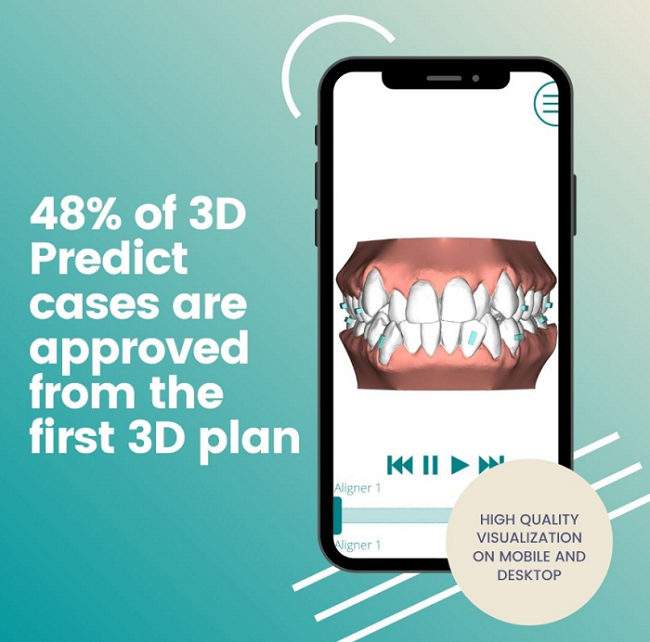
The software fuses data on the whole tooth, and the information is sent to the orthodontist, so they can have a clearer idea about any possible issues, like root collision, that could come up during treatment. A color map of the 3D model shows the distance from the root to the bone, and allows orthodontists to see just how the roots will move while they’re being treated with the aligners, so that they can come up with a safe, predictable plan that will mean patients will have to come back at least five less times for corrections.
“The application of technology in aligners equips doctors with a depth of information about the tooth that was previously not available. 3D Predict gives us meticulous detail using data that allows doctors to analyze the tooth as a whole yielding better outcomes for the patient,” said Dr. Maria Sokolina, DDS, who practices in both New York and New Jersey.
Regulatory Considerations and Safety
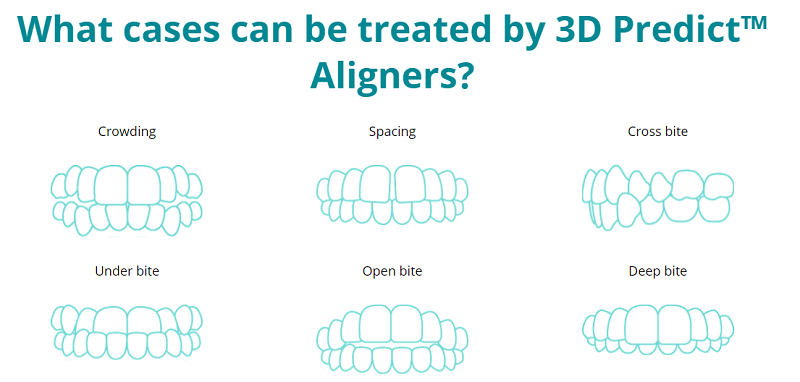
Once the treatment plan is in place, the aligners are then 3D printed out of a BPA-free, crack-resistant, transparent plastic. See also: 3D Printing News: Multi-Material Breakthrough and …. 3D Predict’s 3D printed dental aligners can treat a number of different cases, such as an under bite and crowding.
“As a result of today’s COVID restrictions, currently more and more doctors are making their choice in favor of clear aligner therapy versus braces,” Domracheva stated. “Treatment using clear aligners requires less frequent and shorter consultations with less manual procedures, so it is safer and more convenient for doctors and patients in the current environment.”
Research Breakthroughs and Innovations
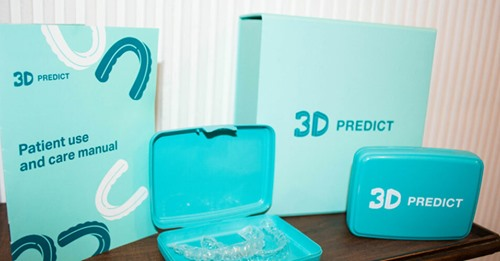
(Source/Images: 3D Predict)
The post 3D Predict’s AI-Driven Software to Make 3D Printed Aligners in US appeared first on 3DPrint.com | The Voice of 3D Printing / Additive Manufacturing.
from 3DPrint.com | The Voice of 3D Printing / Additive Manufacturing https://bit.ly/3l1AoAR
Frequently Asked Questions
How is 3D printing used in medicine?
3D printing is used in medicine for surgical planning models, custom implants, bioprinting tissue scaffolds, drug delivery systems, dental aligners, and prosthetics. It enables patient-specific solutions that improve outcomes and reduce surgery time.
What materials are biocompatible for 3D printing?
Common biocompatible materials include PEEK, titanium alloys (Ti6Al4V), bio-ceramics (hydroxyapatite), medical-grade resins, PLA for temporary implants, and hydrogels for bioprinting. Material choice depends on the application and required mechanical properties.
Is 3D printed medical equipment FDA approved?
Yes, several 3D printed medical devices have FDA clearance, including orthopedic implants, dental restorations, and surgical guides. Each device must go through the appropriate regulatory pathway based on its risk classification.
📌 Related Articles
- The Current State of Metal 3D Printing in 2020
- 3D Printing News: Multi-Material Breakthrough and Aerospace Market Boom
- 3D Printing Tungsten Carbide: How Hot-Wire Laser Technology Creates Metal Harder Than Steel
- The Ultimate Guide to 3D Printer Calibration: Complete Step-by-Step Manual
- Best 3D Printer Upgrades That Actually Improve Print Quality: Complete 2026 Guide