
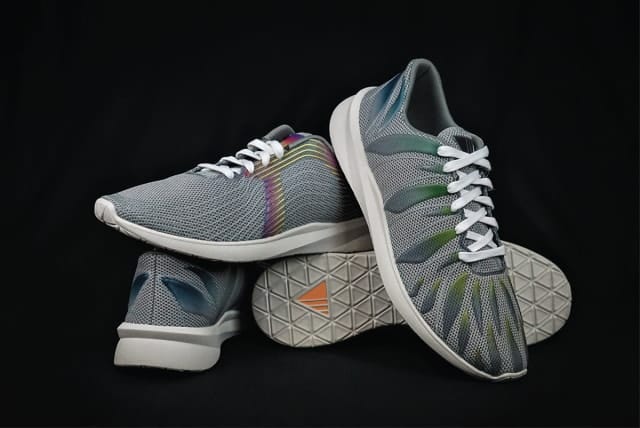
SmarTech Analysis has put out its latest report about additive manufacturing (AM) in the footwear industry, titled “3D-Printed Footwear 2020-2030, an Analysis of the Market Potential of 3D Printing in the Footwear Industry.” According to the report, 3D printing for footwear is expected to reach $4.2 billion in revenues by 2025.
While it has long been used for design and prototyping purposes, AM for footwear has been gaining traction as a means of producing end parts, with an increasing number of large brands exploring the use of the technology for 3D printing midsoles and insoles. Even 3D printed shoe uppers are becoming a reality. The trend seems to indicate that large-scale mass production of footwear components using 3D printing is just around the corner.
In fact, according to SmarTech, end use parts will represent $3 billion of the total footwear sector by 2028, with uppers experiencing the quickest growth. So far, uppers have struggled the most in terms of printability, due to the fact that they are traditionally made from cloth, a material not easily managed by 3D printing.
Voxel8 has developed a technology for printing material onto fabric, specifically for uppers. One design studio has used continuous vat photopolymerization for 3D printing complete shoes. SmarTech claims that 3D printing of uppers via thermoplastic extrusion and powder bed fusion (PBF) in limited or serial production presents a crucial opportunity.
How 3D Printing Responded to COVID-19
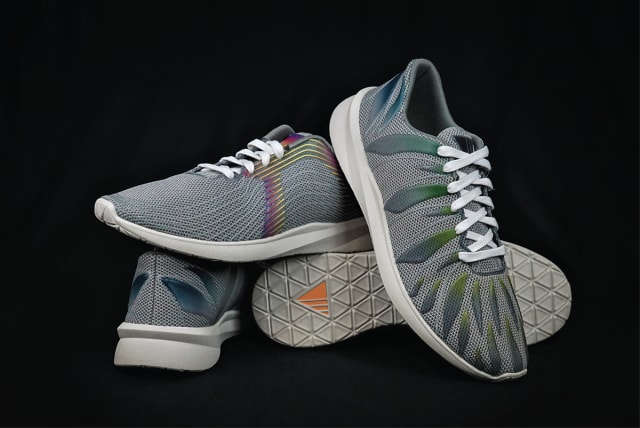
Uppers 3D-printed by Voxel8’s Active Lab solution. Image courtesy of Voxel8.
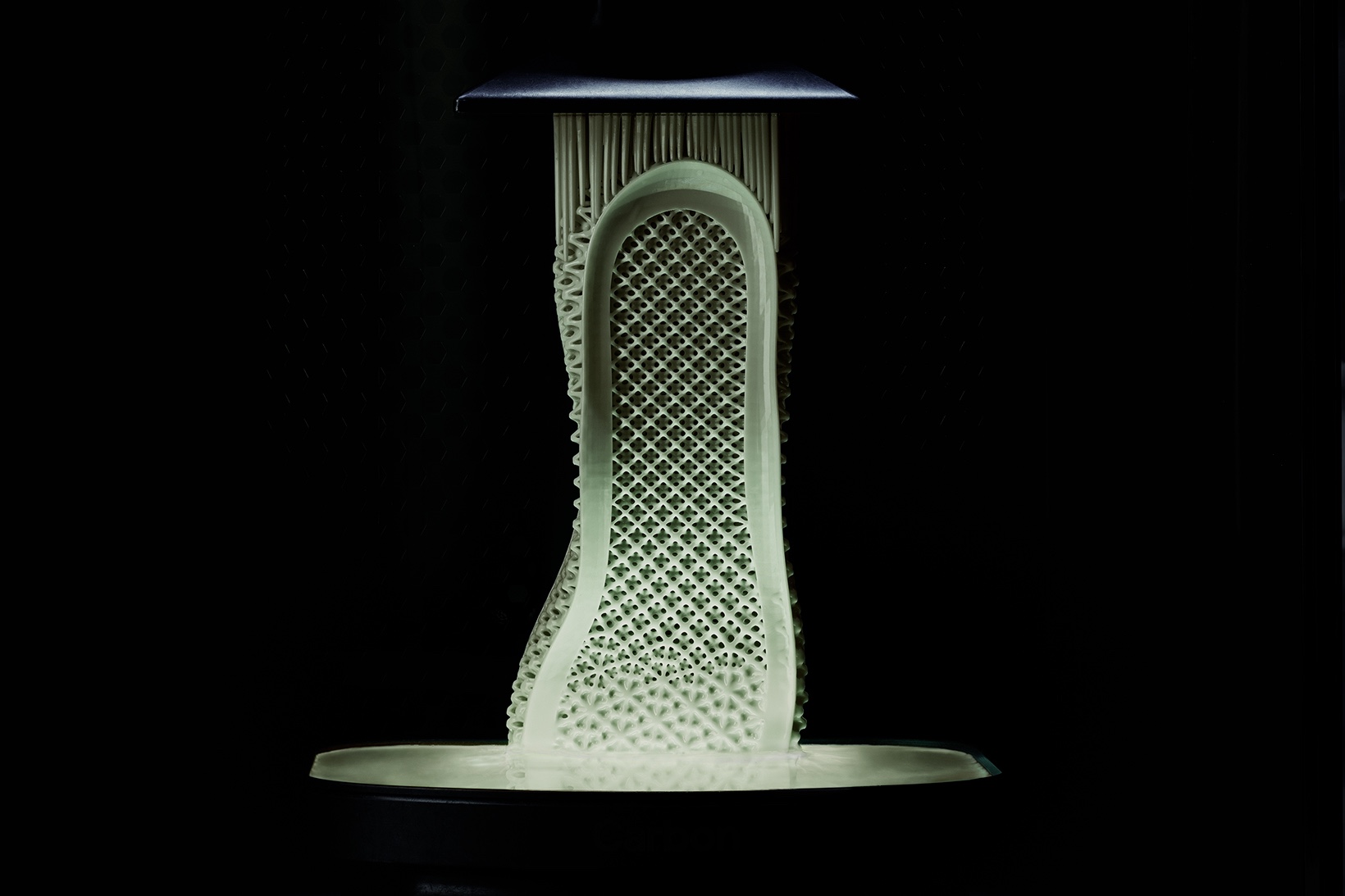
At the moment, vat photopolymerization has been perhaps the most widely used process for 3D printing end parts for shoes. The partnership between Carbon and Adidas has been the most significant in this regard, with the apparel maker using Carbon’s continuous digital light processing technique to produce shoe components in large batches.
SmarTech sees vat photopolymerization remaining the dominant technology in footwear over the next ten years, but sees PBF increasing its presence, nearly growing to the same market share as vat photopolymerization by 2028. The market research firm anticipates PBF machines sold to the footwear industry valuing $154 million by 2028, compared to vat photopolymerization reaching $176 million. PBF is thought to play a role in mass customization of insoles, midsoles and footwear more generally.
HP and the Pandemic Manufacturing Shift
The Adidas Futurecraft sole. Image courtesy of Carbon.
The SmarTech report explores the industry fully, providing revenue opportunities throughout the segment as it discusses the effects of 3D printing on production, from prototyping to tooling and final part production. Included in the report is an analysis of AM hardware, materials, services and software are transforming alongside footwear.
For the first time in this edition of the report, SmarTech has provided a geographic breakdown with forecasts for each segment of the industry, including hardware, materials and applications. See also: The Current State of Metal 3D Printing in 2020. In particular, there are in-depth, data-driven analyses and projections of final parts and revenues for 3D printing of midsoles, insoles and uppers across the coming ten years.
We’ve seen numerous leaders in sports apparel turn to 3D printing for end parts, including Adidas, Nike, Reebok, New Balance, Under Armour and Timberland, all supported by companies familiar to the 3D printing industry, such as Carbon, voxeljet, HP, Voxel8, Kings3D, Formlabs, Stratasys, 3D Systems, EOS, Prodways, BASF, and German RepRap. To provide the most up-to-date information about the endeavors pursued by these entities, SmarTech has interviewed them extensively.
Supply Chain Disruptions and Digital Solutions
To learn more about the report and for its table of contents, visit the SmarTech Analysis website.
The post 3D Printed Footwear to Generate $4.2 Billion by 2025 appeared first on 3DPrint.com | The Voice of 3D Printing / Additive Manufacturing.
from Your daily news from 3DPrint.com https://bit.ly/2FAiKVe
Related Articles
Frequently Asked Questions
How did 3D printing help during COVID-19?
During the COVID-19 pandemic, 3D printing enabled rapid production of critical medical supplies including face shields, ventilator components, nasal swabs, and PPE. Distributed manufacturing allowed makers worldwide to produce items locally without waiting for traditional supply chains.
What was the pandemic digital manufacturing shift?
The pandemic accelerated adoption of digital manufacturing including 3D printing, as companies sought more resilient supply chains. Organizations shifted from centralized to distributed production, using digital files to produce parts locally on demand.
Can 3D printing supply chains be resilient in emergencies?
Yes, 3D printing provides supply chain resilience through distributed manufacturing — designs can be shared digitally and produced anywhere with compatible equipment, eliminating the need for physical inventory and shipping of parts.
📌 Related Articles
- Best 3D Printer Upgrades That Actually Improve Print Quality: Complete 2026 Guide
- The Current State of Metal 3D Printing in 2020
- Best Budget 3D Printer Upgrades That Actually Improve Print Quality: Belts, Springs, Hotends & More
- 3D Printing News: Multi-Material Breakthrough and Aerospace Market Boom
- The Ultimate Guide to 3D Printer Calibration: Complete Step-by-Step Manual